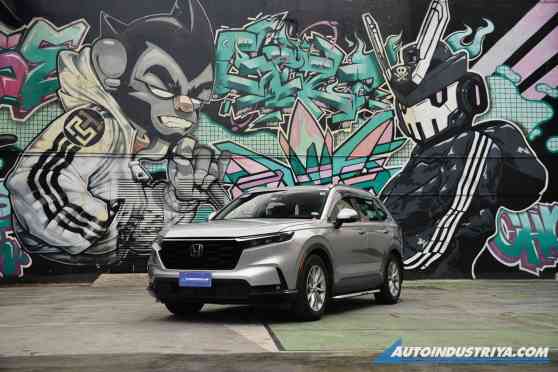
2025 Honda CR-V 1.5 V Turbo CVT

- Make: Honda
- Model: CR-V V 1.5L Turbo CVT FWD
- Engine: 1.5L DOHC 16V Inline-4 VTEC Turbo
- Max Power: 190 PS @ 6000 rpm
- Max Torque: 240 Nm @ 1700 - 5000 rpm
- Transmission: CVT with paddle shifters, FWD
- Price as Tested: ₱2,100,000
8/10
8/10
8/10
9/10
5/10
7/10
The cost of the badge
Growing up, I used to think that having a powerful engine and go-kart-like handling on a vehicle was all that was needed when buying a new car. I can forego ride comfort or having high-tech gizmos because, at the time, all that mattered to me was a car that could go fast on the track and the open road. Frankly, I was all-in on the experience of what it was like to drive a car at full tilt.
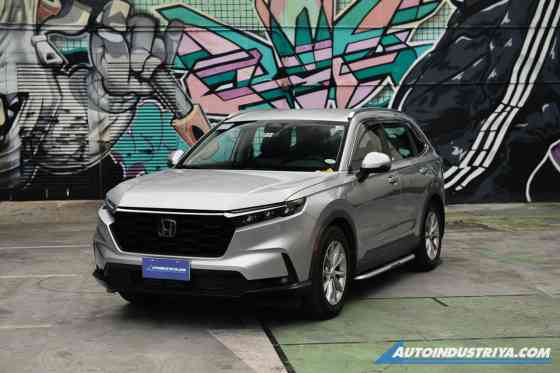
Fast forward to the present day, and here I am typing away on my laptop, already missing the soft ride, cold aircon, and nifty features of the 2025 Honda CR-V. It always surprises me how time (and maturity) can change one's priorities and preferences. Yes, I still want a fast car that can thrill me but I'd much rather have a comfy vehicle that keeps me cool, and has more features than your man cave.
That's where the base model CR-V V comes into play. We've already driven the top-of-the-line RS e:HEV and the mid-range VX AWD versions of the sixth-generation CR-V so it was only natural for us to try out the entry-level V FWD. While it may be considered the base model of the bunch, Honda made sure it had an extensive level of equipment available. But is the entry-level version worth getting over the mid-range VX and the range-topping RS e:HEV?
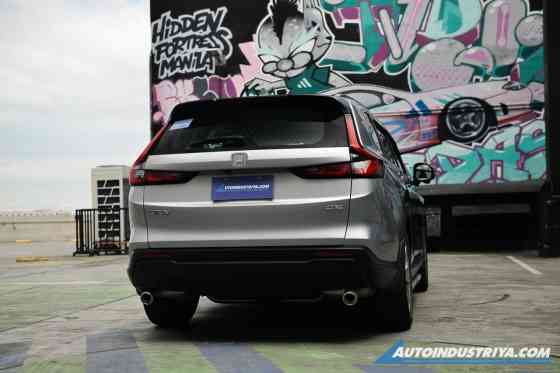
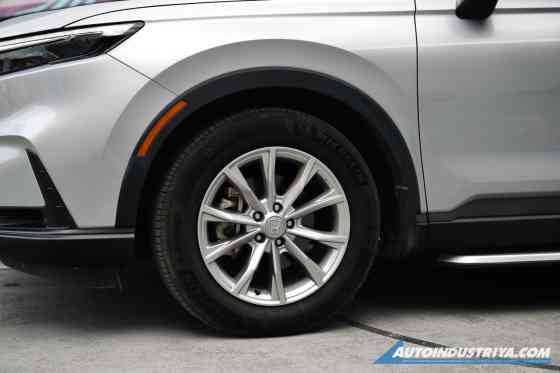
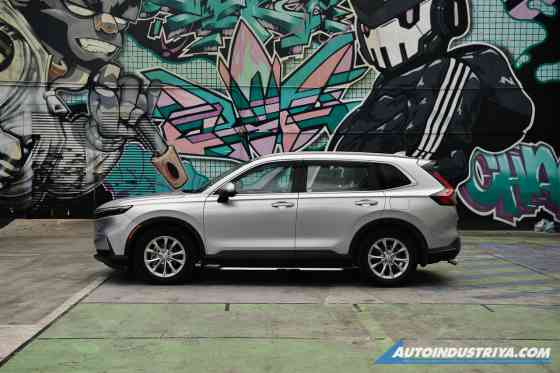
We already know how the CR-V looks and the base model V shares pretty much of its looks with the VX. From the sleek 18-inch alloy wheels, automatic LED headlights, sporty front grille, sharp LED taillights, and the power tailgate, the “entry-level” variant doesn't look basic. However, this particular unit comes with some neat accessories like exhaust tip finishers, a rear organizer to protect the third-row seats, side window deflectors to keep the rain out, and running boards for easier ingress/egress from the vehicle.
So the exterior is almost the same as its VX sibling. But does the V variant also look basic on the inside? On the contrary, Honda is serious about its upmarket aspirations and it's quite clear with the level of equipment they gave the CR-V. Despite being the entry-level model, the V variant still comes with plenty of toys and amenities.
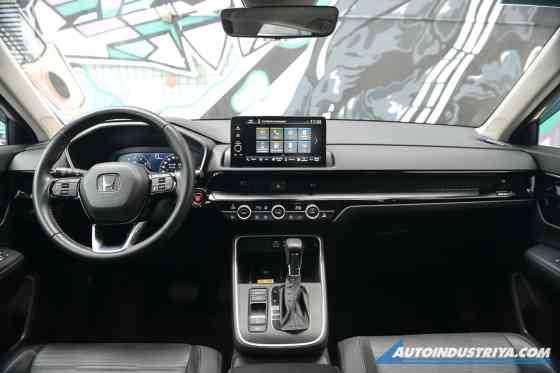
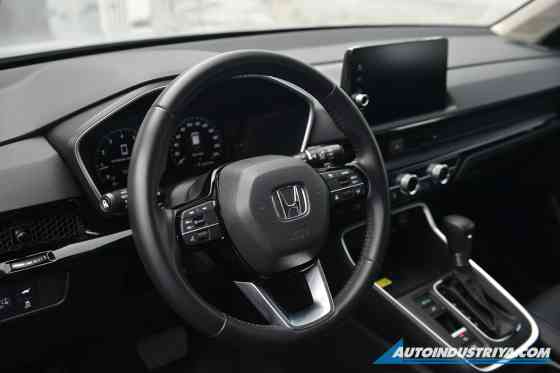
Perhaps my favorite is the memory seat function for the driver. One would normally find this on more premium vehicles, but Honda made it available across all variants. Personally, this is a godsend as I'm very particular with my driving position. This means I don't have to figure out my preferred setting should someone else adjust the seat while I am away. Perhaps my only complaint is that it only has a manual tilt/telescopic steering adjust, but I'm just nitpicky.
Another key feature I liked in the CR-V is the new dual-zone climate control system. Unlike the previous generation which made use of buttons and touchscreens to manage, Honda listened to customer feedback (i.e. criticism) and went for something more ergonomic. Thanks to the dials, it's now easier and safer to adjust the climate control without having to avert your eyes from the road. Props to Honda for listening to customer feedback.
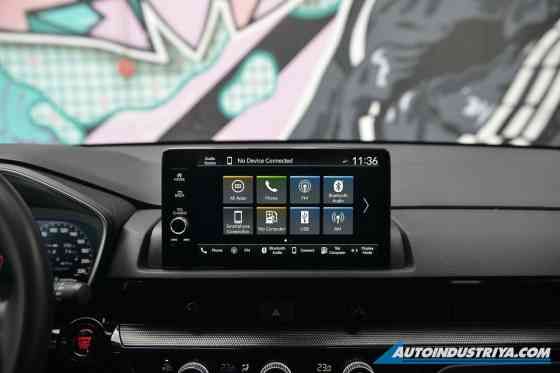
The base model CR-V may have a smaller touchscreen than the top-of-the-line RS e:HEV but at least Honda made sure it has wireless Apple CarPlay. Android Auto is also standard although you still have to use a cable to pair your phone. If other brands like Hyundai and Chery can make wireless Android Auto available for their customers, I believe Honda should also make it standard. Hopefully, they rectify this in a future update since we're already paying for a crossover that's well over PHP 2 million.
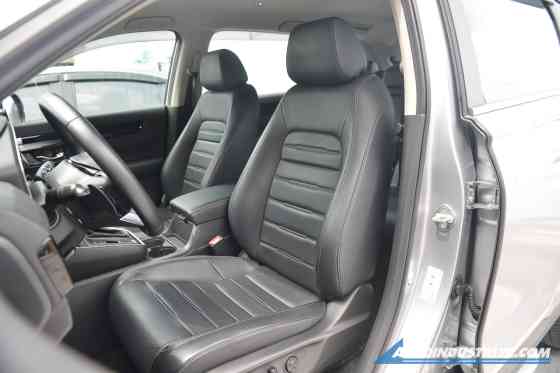
Acres of soft-touch materials, piano black trim pieces, and high-quality leather on the seats further give the CR-V a sense of comfort. It's no luxury SUV, but Honda's attention to detail on the latest CR-V makes it have a cozy interior. This is apparent whether you're seated at the front or in the second row.
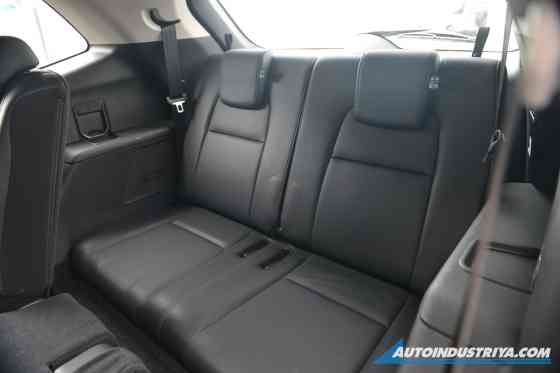
As for the third-row seats, they're best left for the kids or for small adults who don't mind sitting in the very back during short trips. While I can easily fit my 5'7 frame in the very back, the trip would rather be uncomfortable and bad for my back and my legs. Yes, you can slide the second-row seats for extra legroom but if Honda was indeed serious about fitting two people in the very back of the CR-V, they could have at least extended the rear overhang or lengthened the wheelbase.
While it looks like the lack of space in the third row was my only complaint with the CR-V, I do have to mention that Honda could give the CR-V slightly better build quality, particularly in the cabin. That's because some parts of the interior feel a bit flimsy like the center console. Whenever I engage the electronic parking brake (EPB), parts of the center console move as if they were not built-to-spec.
Under the hood, the CR-V V gets its power from a 1.5L VTEC Turbo four-cylinder engine. Like its AWD sibling, the FWD V makes 190 PS at 6000 rpm along with a generous 240 Nm of torque that's available between 1700 – 5000 rpm. Power is then transferred to a CVT that drives the front wheels while paddle shifters allow drivers to have a bit of fun should they prefer to “change” gears while on the road.
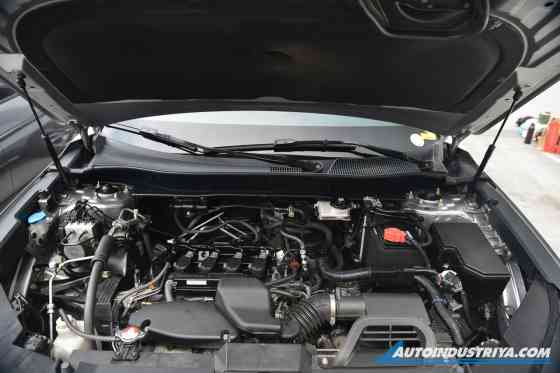
While it may lack the instant jolt of torque of the CR-V e:HEV, the 1.5L VTEC Turbo does make up for its more linear power delivery. Yes, it's got a turbo but Honda tuned the powertrain to generate torque more smoothly. While I do enjoy the hybrid's EV-like pull more, the VTEC Turbo's milder nature is a welcome change.
Off the line, the VTEC Turbo can be spritely should the driver wish to drive the crossover spiritedly. Set the CVT to Sport and the revs climb faster and stay more within the powerband. Give the accelerator some juice and the engine can easily reach highway speeds although e:HEV owners will miss the (almost) instantaneous torque.
When you're finished having fun behind the wheel, the CR-V reverts into a comfy and relaxing crossover. Turn on Econ (Eco Mode) and the CR-V relaxes and becomes a docile vehicle. Keep a light foot on the accelerator pedal and the CR-V rewards drivers (and occupants) with a hush
What needs improvement, however, is its fuel consumption. Despite the CVT doing its best to keep the revs low, the 1.5L turbocharged powering the CR-V engine still needs to move a relatively huge crossover. In slightly heavy traffic conditions, the crossover was able to return about 7.5 km/L. It becomes better, however, in light city traffic as it can easily average up to 10 km/L. On the highway, the turbocharged CR-V was able to sip fuel at around 18 km/L.
Should your route cover mostly highways and expressways, the VTEC Turbo is relatively fuel-efficient. But if your daily route consists of gridlock traffic in the city, better expect to visit the pumps every so often.
As a Comfortable Runabout Vehicle, this definitely shined in the comfort department. Like the previous generations, the latest CR-V delivered a soft and pliant ride which made short work of speed bumps and potholes. Even pock-marked streets didn't bother the CR-V that much as the dampers ensured the cabin remained composed.
The top-notch noise, vibration, and harshness (NVH) lessening complements the CR-V's comfy ride. Honda did not skimp on sound insulation and used thick glass to keep outside noise and vibration at bay. Tire noise was almost non-existent even when you're traveling at highway speeds which impressed us, to say the least. All of these means you can relax and keep your cool while driving and get to enjoy your favorite tunes or podcasts without much of a bother. Heck, there were times I wanted to stay inside the CR-V to enjoy the silence, a pun not intended for fans of Depeche Mode.
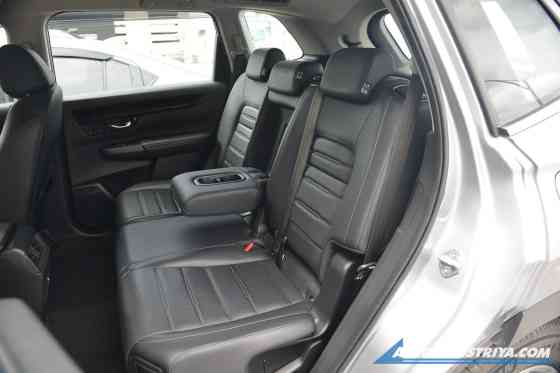
The sixth-generation CR-V may have grown in size (and in price) but Honda was still able to deliver a value-packed base model version of its latest compact crossover. Despite being the most “affordable” version, the CR-V V FWD still packs plenty of amenities one will appreciate. Sure, it loses some niceties that can only be found on higher-grade models but at least it still comes with Honda Sensing for extra peace of mind.
But at PHP 2.1 million, the CR-V is still quite the pricey 7-seater compact crossover. Combined with a small third row and fuel consumption that can be quite hard on your wallet should you daily it in the city, some buyers might be swayed by more affordable brands that are easier on the wallet and more spacious despite the CR-V's heritage. They're actually shifting to a premium brand strategy, which has its risks.
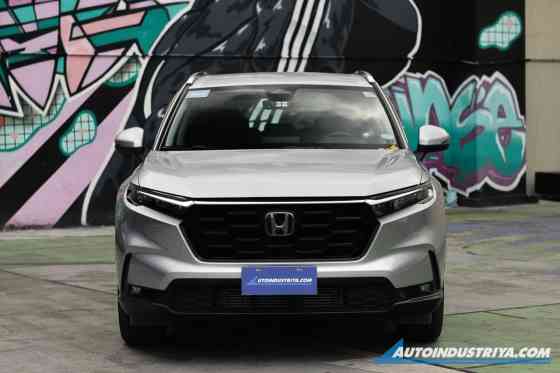
Is heritage enough to sell and claim a "premium" strategy? They make good cars, but Honda really needs to work on its ways to keep their pricing inflation in check because, at this rate, their models may end up out of reach of even their most brand-loyal customers.