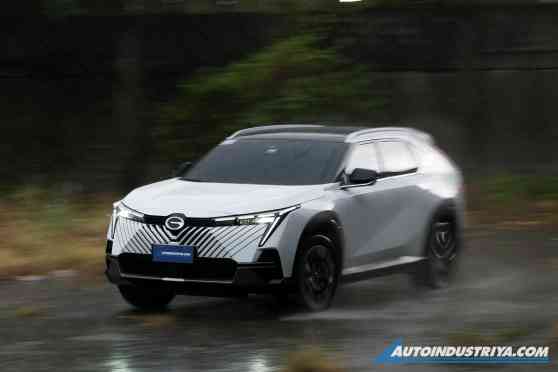
2025 GAC Emkoo Hybrid

- Make: GAC
- Model: Emkoo Hybrid
- Engine: 2.0L HEV with 2.1 kWh Li-ion
- Max Power: 238 PS
- Max Torque: 300 Nm
- Transmission: DHT, FWD
- Price as Tested: ₱1,698,000
8/10
9/10
7/10
8/10
7/10
8/10
Finding the missing ingredient
Sometimes, it only takes one missing ingredient for a car to go from good to great. It could be an additional word on the feature list, a lower price tag, or a little tweak on how it drives.
One such example is the GAC Emkoo. From our previous reviews of the GL and GE variants, we found it to be a solid C-segment crossover that’s fairly priced with the number of features, its striking looks, and how it drives. Yet somehow, there's something missing that you can't really point out, and consumers could agree since a smaller sibling called the Emzoom is getting more attention in the GAC lineup with its boy-racer styling and an equipment list that’s not normally seen in crossovers.
Let’s see if the GAC Emkoo in its hybrid form can change all that.
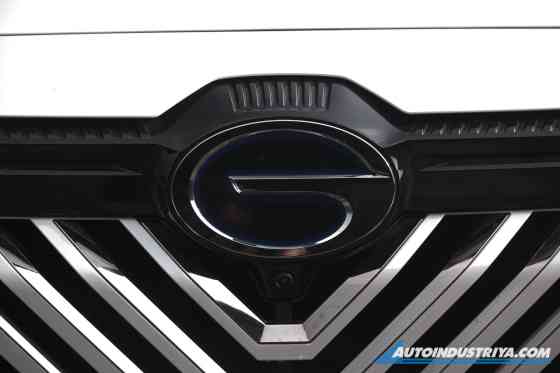
From the outside, you can’t really tell the difference between the hybrid Emkoo from its ICE counterparts unless you look closer up front. The hybrid Emkoo has a blue halo badge, which is a common trend for manufacturers to use in their electrified vehicles. Among those include the likes of Toyota and Honda - now GAC has done the same for the hybrid Emkoo. Perhaps, that’s the joint venture effect since GAC has a partnership with the two Japanese brands in China.
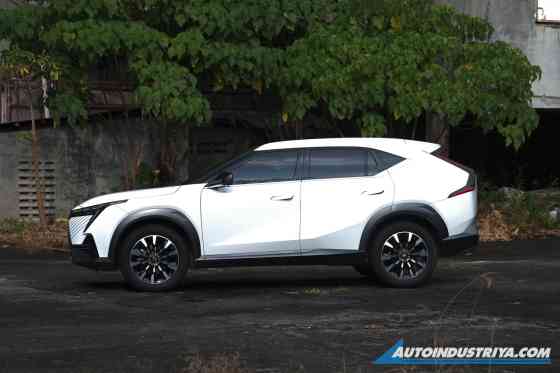
Some production vehicles with futuristic concept car styles don’t always fare well to the test of time. It’s been two years since we first saw the first PH-spec Emkoo at MIAS, but the design is rather holding up well considering there have been a lot of crossovers launched in the market lately.
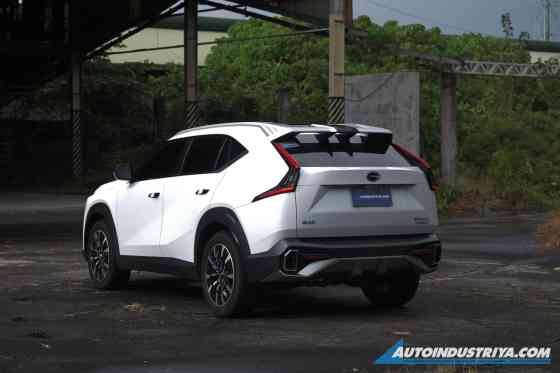
The edgy styling cues, the steep rake at the back, the strong creases, and the use of thin LEDs on both the headlights and taillights remain unique, but I’m still really not a fan of the HDMI port-shaped faux exhausts at the back. Nevertheless, the Emkoo remains an attention-grabbing crossover whenever you see one on the road.
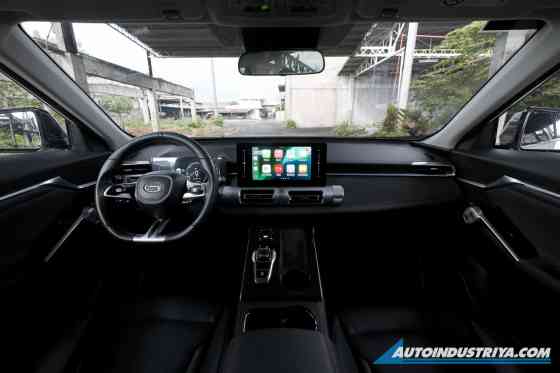
Inside, the Emkoo Hybrid shares the same interior layout as its ICE counterparts. That means you still get the clutter-free design, the lift tabs for the door handles, and the canister-like treatment done on the part of the central A/C vents. Only when the digital screens turn on is where the difference shows. Instead of an RPM tachometer, the Emkoo Hybrid has a power gauge that reads Charge, Eco, and Power. On the 10.1” touchscreen, there’s an additional graphic that shows how the hybrid powertrain is currently performing.
In terms of aesthetics, it’s still as futuristic as it was two years ago. But then again, it remains to have its quirks when it comes to user-friendliness. There’s still no Android Auto for non-Apple smartphone users, and the Emkoo is still heavily screen-dependent for basic interior functions like A/C fan speeds and adjusting the sound volume.
GAC can also work on repositioning the Start/Stop button as there was a time I found myself turning off the Emkoo when I was supposed to just turn on the hazard lights. It just so happens that the two buttons are placed close to each other at the center console. So in most cases, I had to take my eyes off the road to adjust a couple of basic settings.
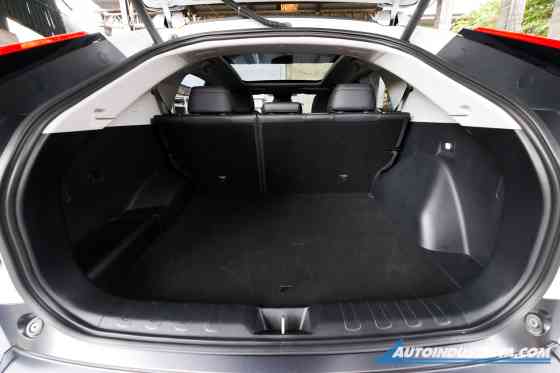
Apart from that, however, the Emkoo in its hybrid form has inherited the generous cabin space for both passengers and cargo that we really like. With all the seats up, the Emkoo Hybrid can fit in things up to 34.5” long, 41” wide, and 29” tall in its cargo area. In case you’d need more for your stuff, then the second row folds in a 60:40 split so you can put in things up to 50” long.
Some hybrids tend to sacrifice a few things to accommodate components needed for electrification such as a smaller cargo area or removing spare tires to put in the hybrid batteries. But in the Emkoo Hybrid’s case, cargo space is not compromised and there’s still a donut spare underneath the floorboard of the cargo area which is a good thing.
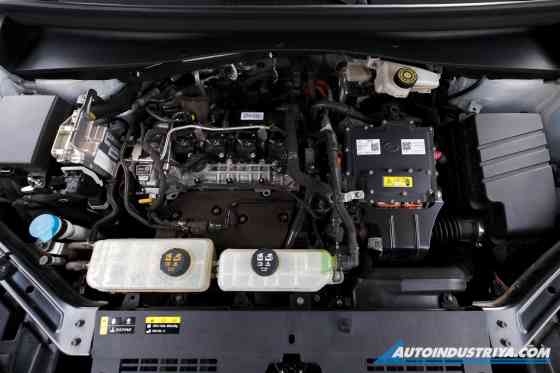
Pop the hood, and you’ll see a different motor. The Emkoo Hybrid has a bigger, but naturally aspirated 2.0-liter Atkinson cycle four-cylinder engine connected to an electric motor to form the hybrid system. Together, the system makes 238 PS and 300 Nm of torque. With a dedicated hybrid transmission or DHT, the planetary gear sets and clutches manage the power flow to the front wheels to seamlessly transition between engine and electric power, or both.
My first drive with the Emkoo Hybrid was when GAC invited us to take the crossover to Tagaytay, and I already had a feel of how it performs on the twisties and at highway speeds. But my most recent seat time with the crossover has enabled me to see how it behaves in the city.
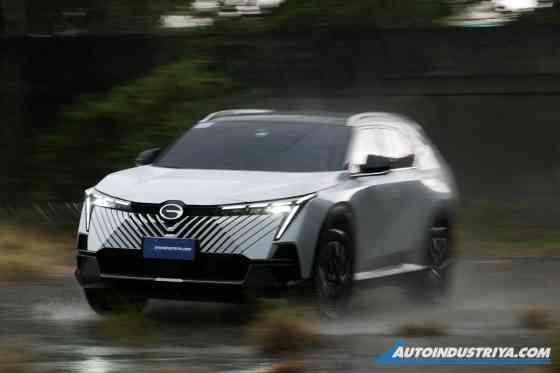
As my daily driver to and from the office, the Emkoo Hybrid exhibits better driving refinement than the ICE version with the 1.5 turbo and the dual-clutch transmission. The gas version’s wet DCT can tend to get jerky at times at low speeds, but with the hybrid, it’s just smoother whenever you encounter stop-and-go traffic. That’s because most of the time, the powertrain is just on EV mode. But even if the battery juice runs out, the system transitions to engine power seamlessly.
Likewise, the hybrid system is simple and straightforward for the end user as you don’t need to fiddle much with buttons and modes to maximize efficiency. Under comfort mode, city fuel consumption is around 16.4 km/l at 19 km/h average. On the highway, I even averaged up to 26 km/l. It’s not a boring hybrid either, as the 300 Nm of torque can easily light up the front wheels and take you on a mad dash.
In terms of driving dynamics, I believe the CR-V e:HEV still delivers the more engaging drive but the Emkoo will be appreciated by those who seek better comfort and NVH on a C-segment hybrid crossover. I think it’s safe to say the Emkoo is the middle ground between the RAV4 HEV and the CR-V e:HEV. It’s close to the comfort of the RAV4, but it’s also close to the liveliness of the CR-V.
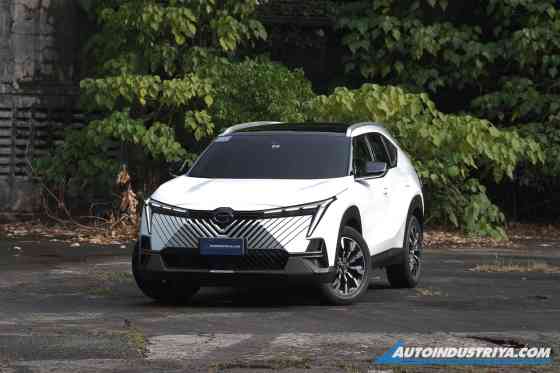
At PHP 1.698 million, the GAC Emkoo Hybrid may look like a bargain compared to the two Japanese crossovers I’ve mentioned. But mind you, its crossover rivals from China are just as competitive price-wise. There’s the BYD Sealion 6 that offers more EV range with its PHEV system for less dough, and the GWM Haval H6 HEV that’s recently had a price cut.
So was the hybrid powertrain the missing ingredient that makes the Emkoo go from good to great? It’s a definite yes when we talk about the product alone. But for pricing, I guess GAC can still find a way to make it more competitive. The market is ever-changing, and GAC simply needs to adapt to not get caught in the crossfire of the price war.