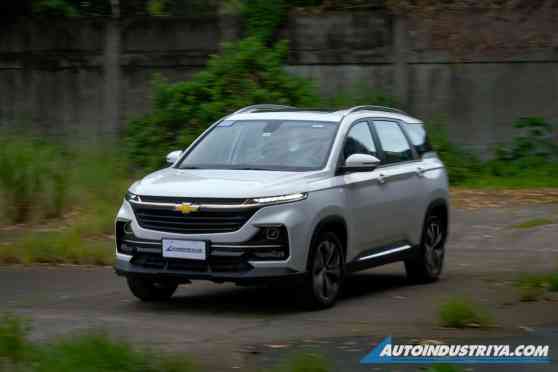
2025 Chevrolet Captiva Premier 1.5T CVT

- Make: Chevrolet
- Model: Captiva Premier 1.5T CVT
- Engine: 1.5L DOHC 16V Inline-4 Turbo Intercooler
- Max Power: 150 PS @ 5200 rpm
- Max Torque: 255 Nm @ @ 1600 - 3600 rpm
- Transmission: CVT with manual select, FWD
- Price as Tested: ₱1,408,000
7/10
8/10
7/10
7/10
8/10
7/10
New and Old
If there’s one thing automakers need to remember when it comes to selling cars, people want familiarity. Whether it’s a familiar nameplate or an ergonomic cabin, drivers and passengers will always look for something that looks, feels, and sounds recognizable to them.
So when Chevrolet Philippines brought back the Captiva name last year, we were curious about its return. Does using a familiar nameplate give Chevrolet a better chance at capturing a market? And just how practical and affordable is the Captiva compared to its nearest MPV rivals?
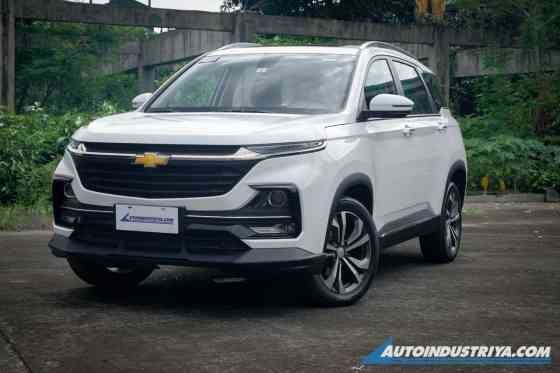
Yes, we said MPV. While we know the Captiva as a compact crossover, the all-new "Captiva" made its Philippine comeback as a three-row 7-seater crossover MPV. That means a more spacious cabin and a more family-friendly interior. It also gets a new 1.5L turbocharged engine under the hood and plenty more amenities.
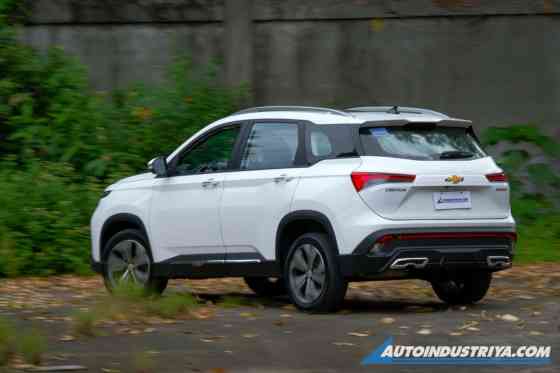
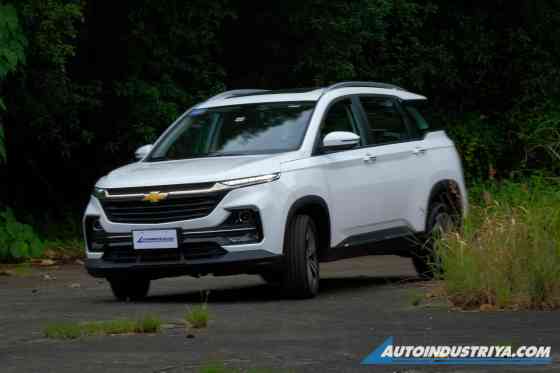
Before we get ahead of ourselves, the all-new Chevrolet Captiva you’re seeing now is a SAIC-GM-Wuling-based vehicle: the Baojun 530. It serves as the second generation model of the nameplate and despite already collecting some years, the 2025 Captiva still looks fresh and stylish.
To be honest, I wasn’t particularly fond of the Captiva’s face when I first saw the images. But in the metal, it grew on me. The black grille along with the faux metal accents and LED daytime running lights give the vehicle a handsome appearance. Combined with the black body cladding that surrounds the vehicle, the all-new Captiva gets a more rugged look which suits its overall appearance.
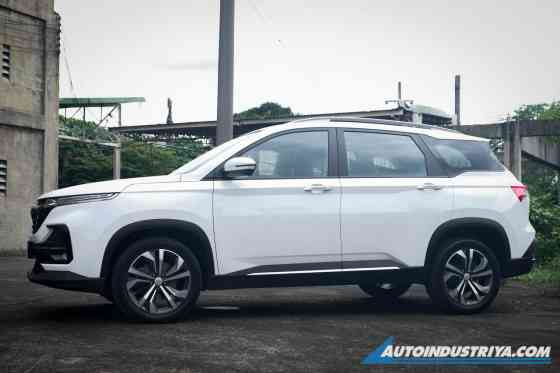
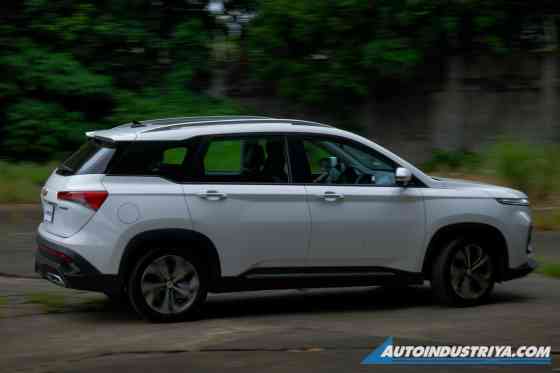
The length-to-height ratio is what really gives off the MPV vibe with the Captiva. Try viewing the Okavango and Innova from the side and you'll know what we mean. Apart from the fact it now has three rows of seats, the side profile of the Captiva is longer and more squared-off which allows it to have more cabin and cargo space which we’ll get to later. While some may find this design unconventional, I actually like how Chevrolet was able to incorporate it into the all-new Captiva.
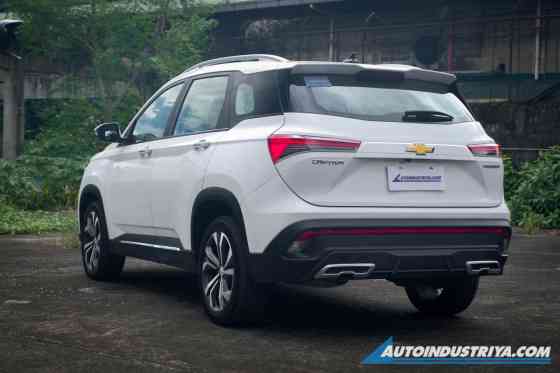
Combined with the massive tailgate with integrated LED taillights, the result is a cleaner and more cohesive design. Perhaps the only exterior feature I wish Chevrolet changes are the faux dual exhaust ports that look more tacky rather than sporty. But overall, the 2025 Captiva is a looker although some might say it’s due for a facelift already.
Climb aboard the Captiva and you’ll be greeted by a simple yet ergonomic cabin. It may not be the most stylish of interiors but everything is where you’d expect them to be. From the gear selector to the tablet-inspired touchscreen infotainment that supports Apple CarPlay and Android Auto, the dashboard is neither garish nor boring.
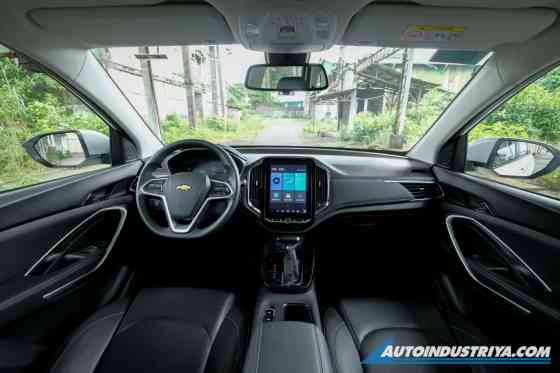
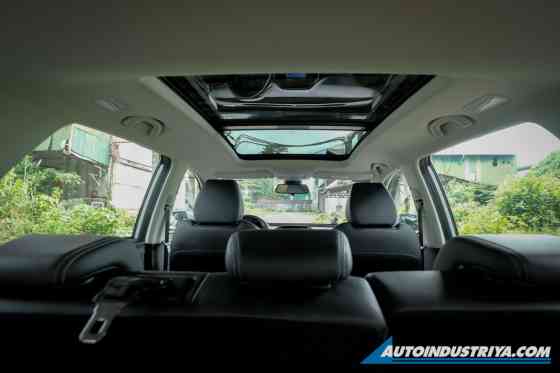
Splashes of gloss black and faux metal accents spruce up the cabin while the leather seats give an air of sophistication complete with contrast stitching. It also has a panoramic sunroof as standard although I’d prefer mine with a solid roof. That's just my preference as I wouldn’t want to deal with extra heat inside the cabin brought about by a panoramic glass roof if I forgot to close the retractable blind on a hot summer day.
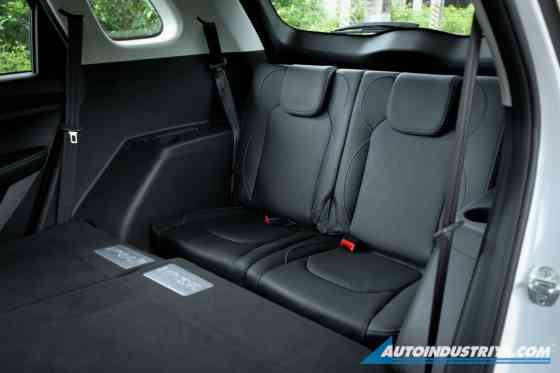
Since it has a third row, I was curious if it would be able to comfortably fit my 5’7" frame. After a quick test and a short drive around the office, I’m happy to say the Captiva’s third row isn’t so bad. It had decent legroom which can be extended thanks to the sliding second-row seats and comes with integrated cupholders and USB charging ports. Perhaps my only complaint would be the lack of air vents for the third-row passengers which can be quite concerning, especially on a long road trip when it starts to get stuffy in the Captiva.
While I do like the tablet-like touchscreen infotainment, I’m not a fan that almost all of the in-car controls are placed on the media display. While it saves on wiring and programming of buttons, having only the screen to manage everything could pose a problem should it break. There’s also the matter that you have to take your eyes off the road just to change certain vehicle settings.
An experienced driver who knows his/her vehicle can make adjustments to functions by feeling out a button. You can't really do that on a touchscreen. It does come with shortcuts to help you get to your preferred menu quickly but you still have to take your eyes off the road.
There are no physical buttons or dials to adjust the climate control which is a downer. That means you have to be precise with the fan speed or temperature while you’re driving. I also don’t like how the system frequently and automatically switches from recirculating to fresh air which can be irritating when you’re behind a smoke-belching vehicle.
Another aspect of the vehicle that needs improvement is the driver’s seat. I’ve sat on countless seats but the one on the Captiva needs a bit more comfort. For starters, it needs better thigh support and better shoulder/side supports. Whenever I have to make tight turns, I feel like I’m going to slide off due to the lack of side support. On long road trips, taller individuals may feel their thighs becoming sore or numb due to the lack of lower leg support.
For an MPV, the Captiva is lacking quite a bit when it comes to cubby holes and storage bins. Compared to one of its closest rivals such as the Mitsubishi Xpander, those expecting plenty of places to store small items might be disappointed with Chevy’s offering. Hopefully, they rectify this on a future update since MPVs are known for having that kind of feature.
Last but not least, the heavy use of hard plastic throughout the cabin. While I do understand the vehicle was built to spec for a particular price point, this top-of-the-line Captiva is selling for over PHP 1.4 million which means some might expect the MPV to make use of more soft-touch materials. We're hoping this can be changed in a future refresh.
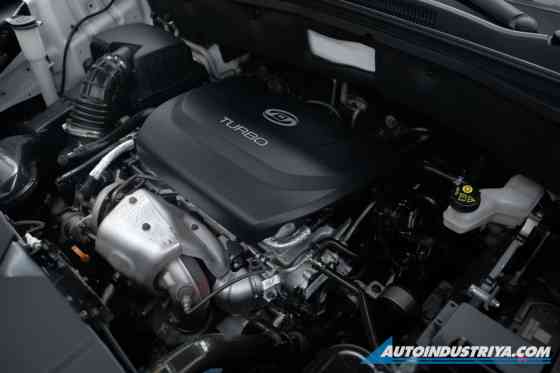
Under the hood, the 2025 Captiva is powered by a humble 1.5L turbocharged four-cylinder engine. It makes 150 PS at 5200 rpm and 255 Nm of torque between 1600 - 3600 rpm. Power is then sent to the front wheels via a CVT. With over 250 Nm of pull available, the engine has more than enough grunt to ferry a fully loaded Captiva. But it was how it delivered the power that impressed us more.
We were expecting the turbocharged Captiva to pack quite a punch which is good for power but not exactly great when you prefer to be smooth. Fortunately, Chevrolet tuned the 1.5L turbo engine to have linear power delivery which is a good thing. Yes, the powertrain may not be as exciting as other turbocharged vehicles but that’s not a bad thing especially when you have the family with you.
Complementing the engine is the CVT which I’m happy to report is equally smooth and doesn’t have the rubber band effect of its competitors. The CVT feels like a traditional torque converter automatic which means it doesn’t slip and delivers all available power to the front wheels. Chevrolet even gave it Sport Mode (S) and manual mode to allow drivers to make use of the “simulated” gear ratios.
Sport Mode is particularly useful when I need to make quick overtakes on the highway or along town roads while the manual mode is a godsend when I have to climb or descent steep gradients Rather than mash the throttle while going up, I can just go through each “gear” and make use of all available torque with ease. Alternatively, using manual mode means I can engage engine braking when going down mountain roads or ramps without having to ride the brakes.
Ride comfort is good although those seated in the back and third-row might feel a degree of stiffness. However, this could have been deliberate since this is a 7-seater after all. When it’s all packed with cargo and more people, ride quality becomes better but only just. As far as Noise, Vibration, and Harshness (NVH) deadening is concerned, it’s better than the likes of the Toyota Veloz and Suzuki XL7; but those don't exactly set a high bar.
Despite the initial praise I have for the 2025 Captiva, I wish Chevrolet would give it better handling and steering. Yes, it’s a family MPV meant to deliver utmost comfort but Chevrolet could have at least made sure the vehicle delivered steering feedback. Sometimes it felt like the steering wheel wasn’t hooked up to anything and the numb sensation from the steering wheel also didn’t help.
As far as fuel consumption is concerned, the Captiva was able to deliver admirable results. In light city driving, the 7-seater was able to average up to 11 km/L. Out on the open road, it was able to sip fuel between 16 - 17 km/L with just me inside. While still admirable, expect the Captiva's fuel consumption to go down once you fill it up with cargo and people.
With a price tag of PHP 1.408 million, the top-of-the-line Captiva Premier is pricier than most compact MPVs. However, the vehicle is larger and offers more interior and cargo space than its closest rivals. It also has a turbocharged engine which means it can get off the line quicker compared to a naturally aspirated engine. The interior looks good although it could do with softer materials and less hard plastic to justify its sticker price of over PHP 1.4 million.
Overall, the Captiva presents itself as a feature-packed and spacious MPV. However, it's due for a refresh and could do with better materials and a slight redesign. In addition, we hope it gets intelligent driver aids in a future update since some of its rivals have them as standard.