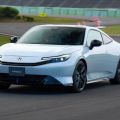
Why we should give VinFast a break

What we drove, saw, and experienced with VinFast in Vietnam
Everyone seems to love to pick on VinFast.
Just do a quick search for VinFast review on Google, Facebook, or YouTube and you’ll come across all kinds of negative reviews about the brand and their vehicles. Phrases like "Don’t Buy This", "Horrible", or "Worst Ever" are just some of the choice terms to describe VinFast’s models from reviewers in the USA, Europe, or pretty much everywhere.
So you can understand my my hesitation when VinFast messaged me to join them for a familiarization tour. I do have a bit of a reputation as one of the more brutally honest editors and reviewers in the local automotive media, and joining a trip with an OEM that has a perception of lackluster automobiles… well, what could go wrong?
In the lead-up to the flight, it seems the heavens weren’t on their side. The storm that passed through the Philippines then went on to hit Vietnam even harder. Severe flooding was happening in Hanoi, so much so that I had asked repeatedly if we were pushing through. They said yes, which is why it felt odd to see so much flooding on the outskirts of the city as we flew over. Just as we landed, the skies began to open up and would continue to do so for the next few days. Maybe we were the lucky charms.
As we rode the bus to the hotel, you couldn’t help but feel how big VinFast’s parent company is: VinGroup. Everywhere I look, I see Vin-Insertbusinessnamehere: VinCom (buildings, malls), VinHomes (real estate), VinMec (hospitals), VinFa (pharmaceuticals), VinUniversity, VinPearl (resorts, hotels), and many more. Think about it this way: VinGroup is basically Ayala, San Miguel, Unilab, and SM all rolled into one. And to think that all of this started from an instant noodle company founded by the chairman in post-Soviet Ukraine after he graduated from university in Moscow.
Given the breadth of the business portfolio of VinGroup, we could say that automotive was a logical next step. I can imagine the collective gasps at the board meeting when the VinGroup chairman put the bold question on the table: Can we build our own automotive brand to design, manufacture, and sell automobiles and motorcycles as a Vietnamese OEM, as well as export the same to the world? I’m pretty sure -based on what we know of Asian culture- that no one dared to counter the can-we with should-we.
That’s all just conjecture on my part, but however it went down, VinFast is here. And the ambition is huge.
All around Hanoi, we see VinFast. All kinds of models, being ridden or driven by all kinds of Vietnamese. There are many examples of the VF9 luxury SUV, the VF8 SUV, the VF e34 (many operating as the GSM taxi), VF6, VF5, and the VF3. It’s hard to tell most of these apart, to be honest, and it’s even harder to distinguish all the VinFast motorcycles all around. Even the buses are VinFast or VinBus, too.
Looking around, I think I could manage driving here perfectly, given the bumper-to-bumper and mirror-to-mirror kind of maneuvering needed here. There is absolutely no quarter given, especially in the Old Quarter of Hanoi. You cannot hesitate much because if you’re indecisive on the road, you won’t get to your destination quickly. The same goes for when you cross the street. You just keep walking across at a steady pace and trust that the hundreds of motorcycles approaching you will ride around you like a school of fish swims around a diver.
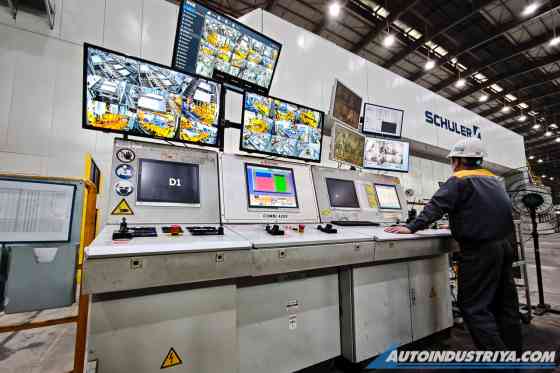
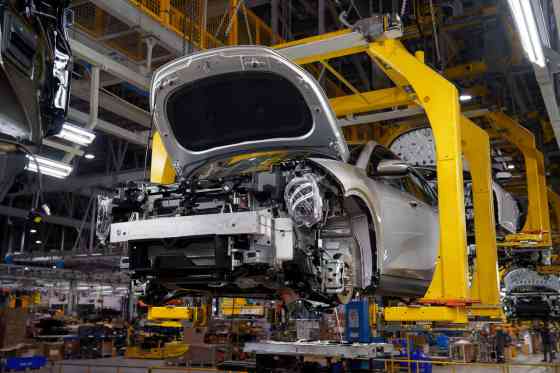
They had scheduled visits to the VinMec hospital and VinUniversity, but what I really wanted to see was the factory at Hai Phong and -to my surprise- VinFast said yes to taking video and photos of the welding line, press shop, and final assembly. OEMs just don’t do that, and often these restrictions just make the visit not worth doing. VinFast wants to buck that trend, as they do with any other trend or rule of the industry.
I had expected a Vietnamese manufacturing engineer or manager to show us around, but instead, an Indian gentleman joined us for the visit and tour inside the facility. He must have been hired from another OEM, and it turns out he started in Mahindra and Tata, then moved to Ford to work in Thailand (both at AAT and FTM), as well as helped set up the factory in Pretoria, South Africa.
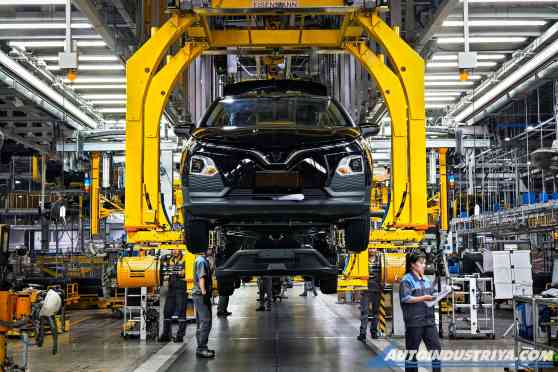
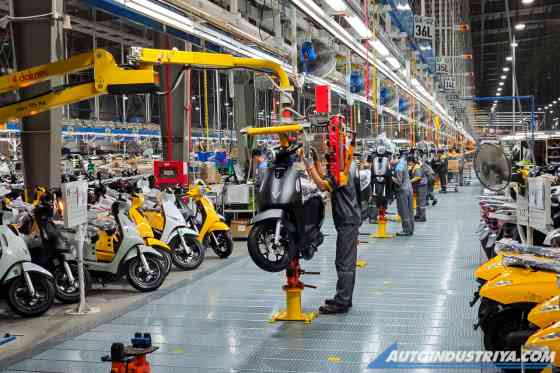
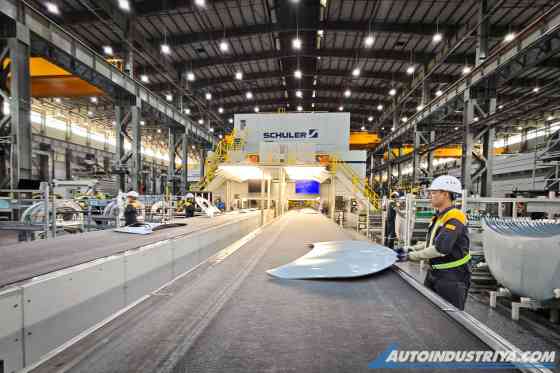
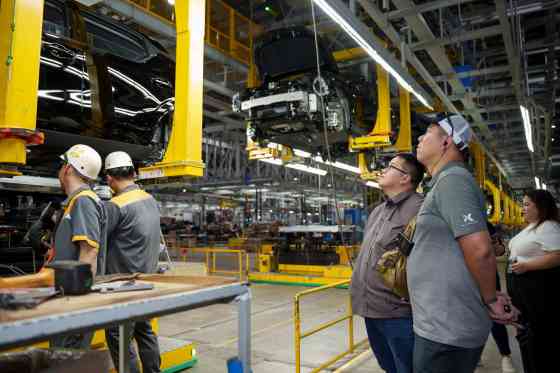
So yeah, there is a lot of experience just with this executive alone. He took us around the press shop, where we were shown the many dies they used in their huge stamping machines. The welding line was rather interesting, as the spacing of the monocoques being assembled signified full steam ahead for production. And as with any factory, there were a lot of robots as expected. We saw several VinFast models having their undercarriages fitted and the battery packs installed, as all that VinFast makes are BEVs. They even brought us to the motorcycle lineup, where we got to try a few of their scooters and long-seat mopeds.
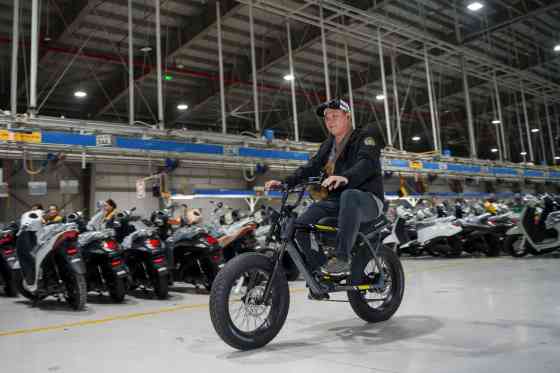
Impressive as the scale of the factory is, how much they’ve utilized automation, and the many AGVs (robotic mini tractors) on the floor pulling parts carts from the stock room to the line, it has to be said that I noticed quite a few things that needed improvement. The way the discarded boxes and metal are arrayed inside and outside could be much better organized; this is a factory after all, and organization is key. Perhaps the most unusual was the e-moped they had us try. It was fresh from the assembly line, but after one trip on the hallway its pedal just popped out. Apparently, the set screw for it wasn’t tightened enough.
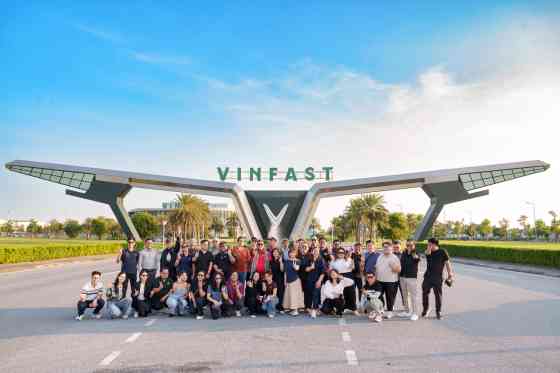
More than that, perhaps they should emphasize workplace safety more. On the entrance to the factory, I took a photo with the sign that said it had only been 15 days since the last incident. That's a pretty short amount of time, and l can see why. Case in point: while the welding line was nice to see from the hallways and from the catwalk, the sparks thrown by those robotic arms tasked with spot welding the monocoques were flying towards and above me at several points.
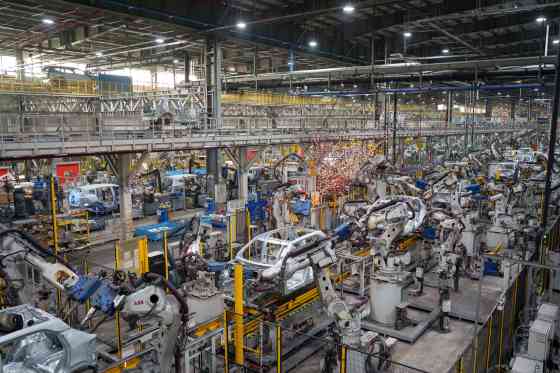
There was no plexiglass shielding to prevent that, nor were there warning signs that the sparks would fly in our direction. It's not a good thing to have hot, burning slag being thrown up towards you, especially when we weren't wearing hard hats, eye protection apart from those among us wearing glasses, nor were we wearing any kind of fire-retardant material.
Other than those, it seems production is going well despite a lot of media and content creators taking pictures. I’m putting this all here because I know they’ll read my observations and hopefully implement some changes. But now we get to the real meat of the visit: the cars.
VinFast opened up its interesting test track to us. I say interesting because it’s like they built their own mini expressway where you can push the speed well into the triple digits. There was an urban parking lot and roundabout on one end, as well as a massive skid pad on the other. I’ve never seen a setup quite like this, and I definitely found it to have a lot of potential. Oddly enough, there were no cones or other markers for us to abide by; it was a bit of a free-for-all. That’s fine, so let’s get on with it.
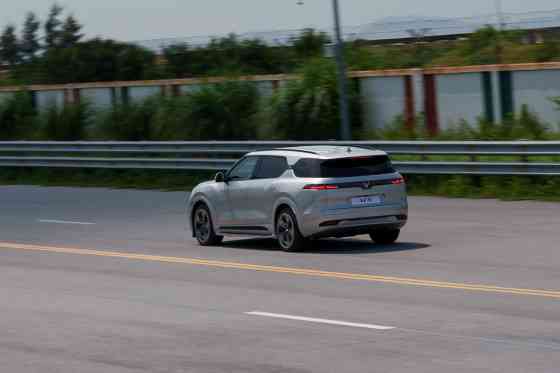
The VF9 was first on my list, and it certainly doesn’t disappoint. This is VinFast’s current flagship model, and it definitely looks the part of a luxury SUV. I do wish it had more ground clearance and a higher roof, but there’s no denying that the ride is comfortable, and the relaxation seats in the back would make it great for the CEO.
As a drive, the VF9 is definitely quick. Remember the mini highway I mentioned? I pushed the VF9 from a standstill up to 100 km/h, and yes, it is quick at just about 7 seconds. Considering the 5.1 meter length, the 2.9 metric ton curb weight, and the many amenities, that’s rapid. I even pushed up the speed to 175 km/h before needing to brake, and it worked well, though the response at the start was a little slower than expected. Handling was middling at best, given the weight, but the dual motor all-wheel drive setup with 402 horsepower was definitely interesting when cornering. I would want a longer drive and ride of this when I get back to Manila, but the problem is the pricing at PHP 5.3 million.
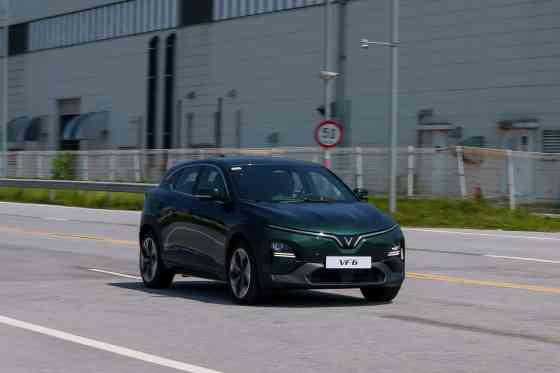
The VF6 wasn’t as impressive as I hoped it would be. Yes, it’s definitely a major step up from the VF5 I got to try last year, which was frankly disappointing. The front clip isn’t to my liking, but the side does look good, as does the back. The cabin has a very driver-oriented focus on ergonomics in how the main infotainment is canted towards the driver. The safety package is also great, as this has 8 airbags, ADAS, and more.
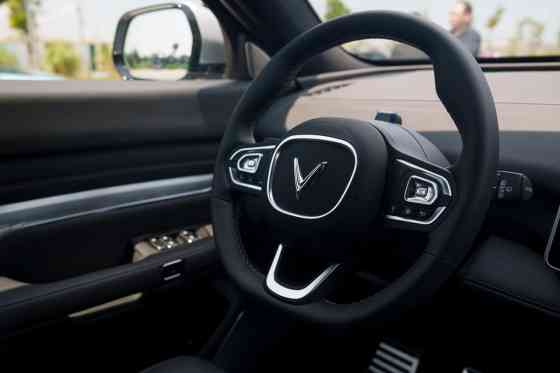
Enjoyable as the 204 PS is, as good as the claimed range of 480 km is on a full charge, and as quick as the top up (25 minutes from 10 to70%) could be if you found a DC fast charger, some things need work. Throttle response wasn’t great, even in sport mode, and the lane keep assist was a bit too aggressive in how it jerks the wheel, in my opinion. What I really found odd was the telescopic function on the steering wheel. Even after adjusting everything, it seems it was designed for someone with my length of legs, but arms that are much longer. It just felt odd, and at PHP 1.6 million, a battery electric crossover should not feel odd.
By far my favorite vehicle here is the cheapest one: the VF3. I really like it, so much so that I could consider this to be a possible choice if I were in the market for a city runabout EV.
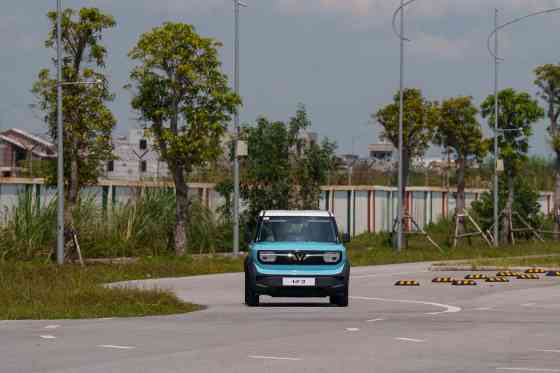
The style is to my liking, as if the FJ Cruiser and the Mini Cooper had a baby. I like how it violates one of the rules of car design (the size of the wheels relative to the wheelbase), so much so that it reminds me of the Bit Char-G toys with the comically large wheels and shrunken body. I like the honest interior with no fluff, up to and including the exposed painted body panels inside. I like the cabin, the steering wheel, and even the infotainment unit.
As a drive on their test track, I can toss this around all day long and have a smile on my face at the end of it. It’s not fast by any stretch of the imagination; we tested the 0-100 km/h of it, and I think we got 21 seconds on the timer, but that was with three of us in the car. The VF3 only has 41 PS and 110 Nm of torque, so that was expected, but it certainly is fun even though it’s heavy.
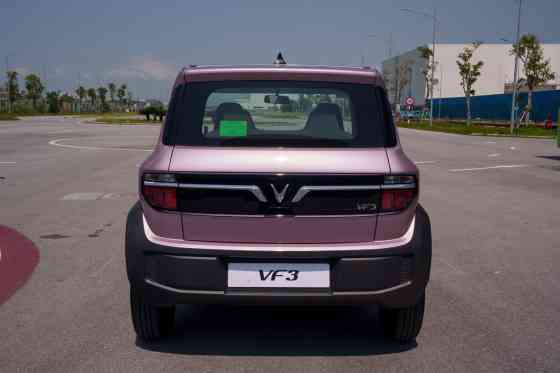
The 215 km range isn’t a problem for a car meant to be an urbanite, but what is a problem is the fact that they chose to fit this only with a CCS2 DC-only fast charging port. This cannot use the common Type-2 AC charger you’d find in malls. It just makes no sense for VinFast to handicap itself with a model that could be their best shot at widespread market acceptance, and I really hope for their sake they change it quickly.
That is a recurring theme. VinFast could benefit from a bit of a slow down, and spend more time consulting with more automotive experts, car owners, EV owners, and motoring media. A series of honest focus group discussions could do VinFast a lot of good for the future.
I do have high hopes for VinFast in the next few years. They’ve made some key hires in project management, particularly a Brit who is also named Vince, and he was very keen on hearing my input on the cars. He has over 3 decades of experience with many British brands at home, like Bentley and Rolls-Royce, as well as several EV brands while on a stint in China. He joined VinFast for another project, but quickly got shuffled into the other projects already entering production, so the changes aren’t there yet. In time, maybe we will see what changes.
On the Philippine front, they hired an executive very familiar to us: Toti Zara. I had met him when he was the president of Nissan Philippines, but he has had a long career with Toyota, General Motors, GT Capital, and Ayala, among others. He brings some fresh ideas into the fold, like the guaranteed residual value program as well as the authorization of large third-party automotive garages (e.g., Motech) as official service stations, more new dealerships, among others. These ideas -if implemented- will be key to the brand moving forward in the Philippine market.
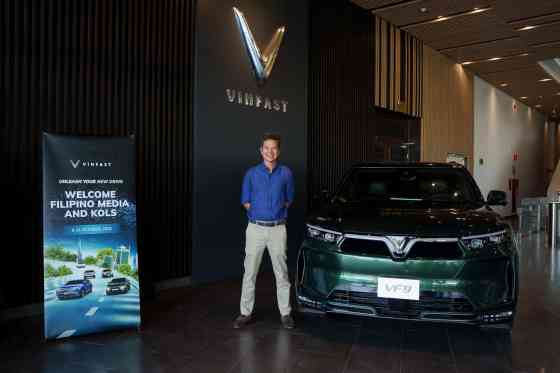
We have also heard some, uh, whispers of upcoming VinFast models that are entirely new when it comes to the platform, promises of quality being stepped up, and improvements in product spec (Type-2 AC charging for the VF3, please). All this will be rolled out in due time, and if they get it done, then they’ll have a chance to turn things around because there is something different about this company, the people, and what it represents.
In them, I see what the Philippines -what Filipinos- could and should have been. Our rice institute taught the Vietnamese how to grow rice on a larger scale, but now they export rice to us. We wish we could enjoy affordable and fresh vegetables and meat in our capital as they would on a sidewalk in Hanoi and Ho Chi Minh (Saigon). We wish we could see Made in the Philippines on the tags of the many brands that we see on shelves, but Made in Vietnam seems to be much more common. Heck, we wish we had coffee as good and as renowned as what the Vietnamese drink, so much so that Starbucks isn’t paid much attention to there.
More than that, we wish our founding fathers had won their revolutionary fight for freedom 125 years ago, like the Vietnamese did 50 years ago. I can’t help but cheer them on for the courage to dare to set up VinFast as boldly as they did, while no major corporation in the Philippines has dared to invest in starting an OEM to build cars with the intent to export them to the world. There’s only so long that we can consider the jeepney as our only contribution to the automotive world.
It's easy for many to dismiss VinFast because they are outsiders in the global OEM landscape. It's like you're a new student on your first day in an international school, and you’re the only Southeast Asian there among Europeans, Americans, Japanese, Koreans, and Chinese. And they all happen to be upperclassmen too. You don’t belong, and chances are you’ll sit alone at the cafeteria table until you make friends and earn respect. That's VinFast right now.
As the new kid, it’s not really fair to measure them by the same yardstick, metrics, and expectations for already established automotive OEMs. The company is barely 8 years old, while other brands they aim to emulate are close to a century old or even more. Many of these brands encounter problems and recalls, but they got a pass despite the issues. Why not VinFast?
We’ll do well to remember that the story was the same for the Japanese OEMs in the sixties, the Korean OEMs in the nineties, and the Chinese OEMs in the last decade, and now it’s Vietnam’s turn to weather the negative feedback and drive forward. They just need a break; a chance to show us they can be taken seriously by the world, and that begins by improving the vehicle design, product planning decisions, factory safety, and so on and so forth. What they’ve actually got right is the marketing, communications, and being fantastic hosts overall, but these need a stronger foundation to anchor on. The future products -whether new generation and facelifts/upgrades- will build the foundation of what they need, and it will take quite a bit of work to get it going in the right direction.
Please don’t rush it, VinFast. Do it VinProper.