2026 Toyota Vios Ativ: When you HEV big shoes to fill

What we liked (and didn’t like) with the 2026 Vios Ativ HEV
Undisputed. Reigning. Defending. Number One.
Those are the words that best describe a pound-for-pound boxing champion, but also fittingly define Toyota’s domination of the Philippine market. For years, that has been the status quo, and one nameplate sits at the very top of it – the Vios. While the new age of electrification has well and truly begun in the Philippines, the naturally-aspirated, ADAS-less, hybrid-less Vios remains the best-selling vehicle in the country by a huge margin.
One brand and model is looking to take a big chunk out of that this year: BYD and their Seal 5 plug-in hybrid sedan. Offering long-range capabilities, much bigger size, and exceptional efficiency for more or less Vios prices, the Seal 5 is starting to be a common sight not just as a private vehicle, but also for fleet use, such as taxis and ride-hailing companies.
Numbers-wise, we’ll get to know the difference once 2025 ends. But one thing’s for sure – Toyota is not looking to wait for the sales reports; they’re on the move to respond and defend their crown.
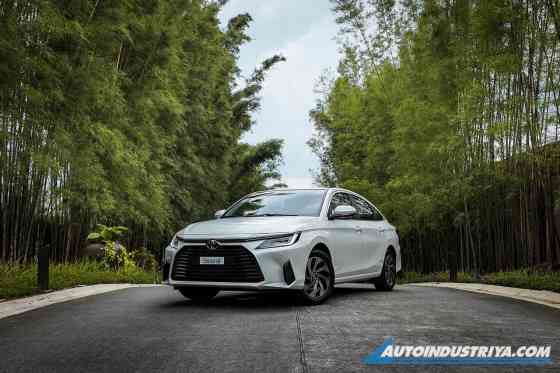
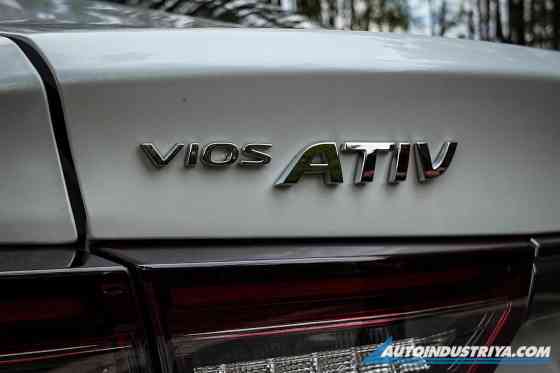
Enter the all-new Ativ – Toyota’s own full hybrid sedan that promises the efficiency of an electrified vehicle, along with the value proposition that Chinese car manufacturers are banking on to gain a foothold in the market. Quite simply, it’s the model that’s got some big shoes to fill. Not just as a successor of the Vios, but also for the Toyota brand itself.
Before its public launch on October 24, we were able to experience the Ativ for ourselves in a short drive from Makati to Tagaytay and back. How did it fare? Read on to find out.
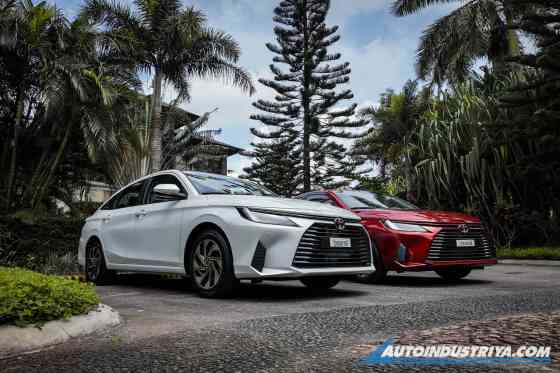
Upon arriving at the starting point in Makati, five units of the all-new Ativ were out for us to test – three were HEVs, one was the 1.5G non-hybrid, and the other was the 1.3E non-hybrid. Fortunately, we were assigned the top-spec HEV for the drive. I shared the car with Zach, along with two of our media friends, for the drive up to Tagaytay.
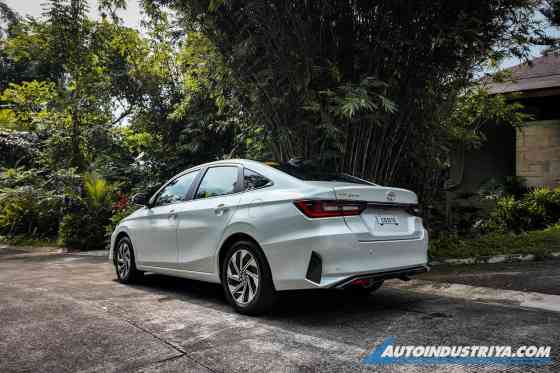
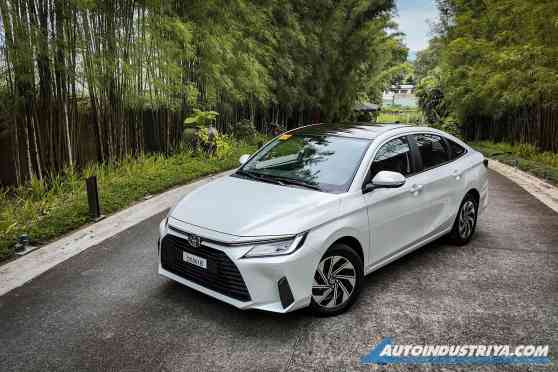
The all-new Ativ looked visually bigger than the older Vios the moment I first saw it in the metal. The roof had a more rounded shape that tapers to the fastback-style rear, which could have altered my visual perception of the car.
I was actually surprised to find out the length, width, and height are more or less the same as the older model, but perhaps what made me think it was bigger was the increase in wheelbase. Toyota stretched the gap between the front and rear wheels by almost 3 inches, and doing that had a major effect on the dynamics of the car.
The moment we left Makati, the all-new Ativ demonstrated a comfier ride than the older version. And yes, that was the case even with the tires being inflated to over 40 psi. Once the pressures were corrected, the ride comfort got even better.
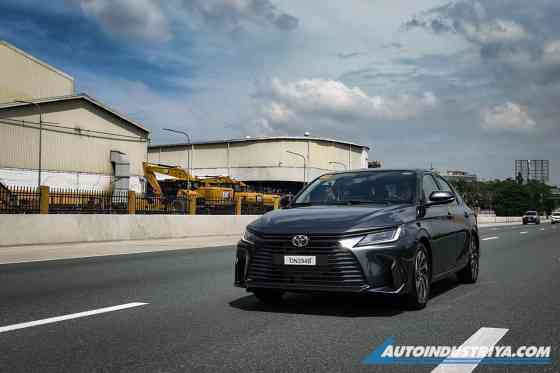
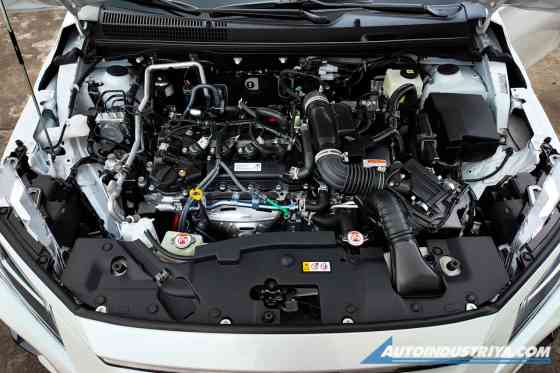
The DNGA platform did not quite impress us on models like the Avanza and the Yaris Cross, but Toyota seemed to have got it right with the Ativ. We know that the Ativ shares its hybrid powertrain with the Yaris Cross – a 1.5-liter 2NR-VEX with 111 PS. And during my experience with the latter, the switching between electric and ICE can let out a very noticeable sound and vibration. But again, surprisingly, that wasn’t the case for the Ativ as it operated smoothly and quietly.
As we entered SLEX, I was also able to get a feel for the Vios Ativ’s newest trick – Toyota Safety Sense. In particular, it’s the Radar Cruise Control I made good use of as the roads going south are clear from heavy traffic on a weekday morning. Just a few more moments later, and my time behind the wheel was up as we reached the first stop at a gas station in Eton Greenfield.
If you’re searching for fuel efficiency figures on this write-up, here it is: 26.5 km/l at an average speed of 65 km/h. It’s close to the claimed 29.4 km/l, but spoiler alert – that’s the closest we could get for this drive. The rest of the roads going to Tagaytay will mostly consist of uphills and slow-speed traffic, which will definitely take a hit on fuel economy.
True enough, by the time we reached Anya Resort in Tagaytay, it was down to 18.8 km/l. Still good numbers nevertheless, as it was achieved with four people on board. At this point, we were all given ample time to shoot and take a good look at the model. This has also somehow given me the time to see the areas that Toyota could have done more for the Ativ.
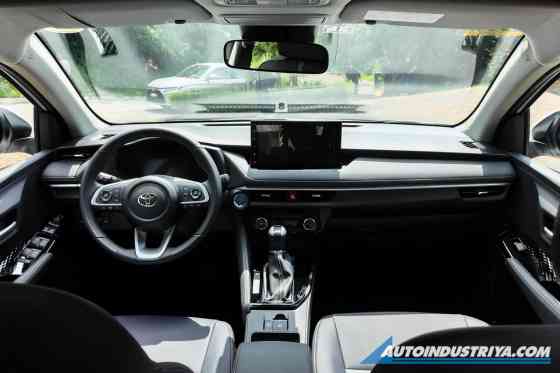
Let’s start with the positives first. The interior is definitely a step up from the previous model, not just in style, but in the choice of materials. Soft touch surfaces and real stitching now line the dashboard and the seats, and the good thing is that it applies even to the 1.3 E variant. The HEV comes with leather seats, while the lower-grade models get fabric. Wireless smartphone connectivity and automatic climate control with rear A/C vents are also now standard on all variants, which is a great thing.
Speaking of the latter, the auto climate control system was taken from the Yaris Cross. If you use ride-hailing services often, you’ll know that the Vios isn’t exactly known for having ice-cold aircon. But based on my experience, that has changed with the all-new Ativ as it can keep both front and rear occupants cool with ease.
Now, on to the not-so-good bits. The older Vios, as we know, is made locally at Toyota’s Santa Rosa plant, so everything is designed for a left-hand drive market. The all-new Ativ, on the other hand, is sourced from Thailand, which is a right-hand drive market. Philippine-made counts for a lot to us, and it's a real shame they won't produce this hybrid here.
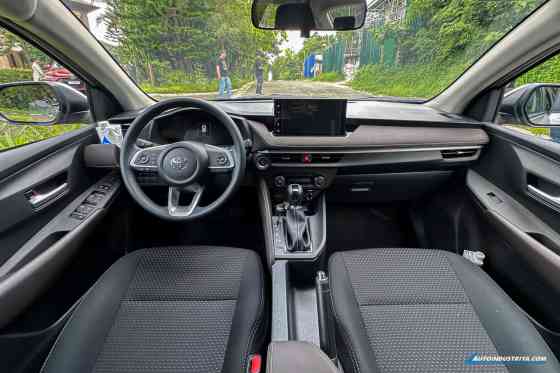
That also means you’ll see some bits and pieces that are still in RHD orientation. Those include the sun visors, which have the vanity mirror on the driver's side instead of the passenger's. Likewise, the handbrake lever is also positioned on the right side of the center console for the lower-spec models. Those are not exactly deal breakers, but not optimum either if we talk about packaging.
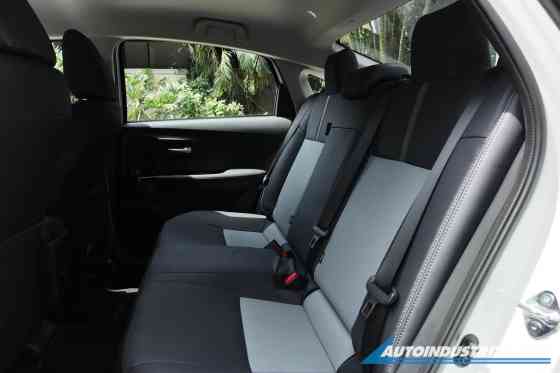
Speaking of which, there are a few things I wish Toyota could have done more. The Ativ does not have rear armrests, and the seats themselves don’t fold down either. While it has a generous boot space, it can’t quite expand to be more versatile.
Still, efficiency is going to be a strong suit for the Ativ, as after going as low as 15 km/l after the shoots, the Ativ’s meter climbed back to 20.9 km/l when we returned to Makati. That accounts for some standstill traffic and slow-moving moments in the areas in Sta. Rosa-Tagaytay road and the CALAX interchange in Mamplasan.
As I’ve experienced it, the Ativ isn’t perfect by any means. It’s equal to the Seal 5 Premium in terms of pricing at PHP 1,198,000. In terms of size, it’s going to be outmatched. Likewise, despite its impressive efficiency, the 36-liter fuel tank of the Ativ means it’s likely to get out-ranged by the Seal 5, which could do over a thousand kilometers with its plug-in hybrid setup. Power figures also suggest it could be outrun in a straight line. With me saying all of this, it’s easy to say the Ativ could start its life in the Philippine market on the back foot.
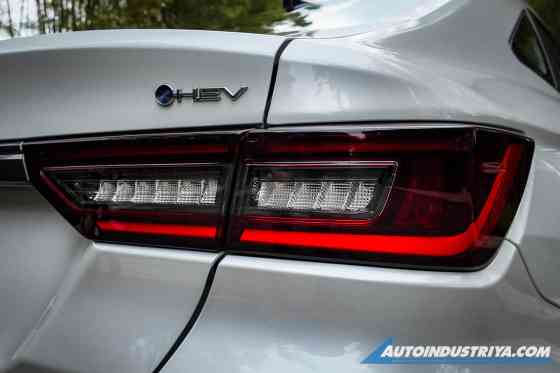
However, the simpler full hybrid setup could be easier to maintain, and Toyota’s aftersales network means it’s easier to keep it on the road. The value of the T-badge is still enough for most buyers to trust it, even though many of these Daihatsu-made-but-Toyota-branded models have reduced the luster a bit. And while its competitors are still in the process of encountering and ironing out issues about those factors I mentioned, that’s where Toyota can pull its ace card and close the sale.
As history shows with the Corolla, the Land Cruiser, the Fortuner, and the Vios, the Ativ doesn’t need to outclass its competition pound-for-pound; it just needs to outlive it and play the long game.