Inside BYD: The giant behind the new energy shift in PH

A closer look inside BYD’s home turf
There are plenty of things you can think of achieving in a span of two years. But if we’re being honest, few wouldn’t have thought the same timeframe would allow BYD in the Philippines to take the new energy vehicle market by storm.
Ever since it joined forces with a conglomerate that has its hands on everything, BYD, together with ACMobility made new energy vehicles more accessible to Filipino buyers than ever before. From the Seagull, to the Sealion 6, and right down to the Tang, the quality and value for money that BYD vehicles offer, along with the establishment of the electric ecosystem by Ayala’s industrial might, has turned what was once a niche curiosity into the mainstream.
As impressive as this local growth story is, it’s obvious that BYD still has a playbook that gives it an edge over the rest of the competition. Otherwise, the formula could have propelled hundreds of other brands from the PRC into the same meteoric rise, but we all know that's not the case. It’s BYD that clearly stood out from the rest, and the answers simply cannot be found here in the Philippines. For that, you have to look at where it all began – China.
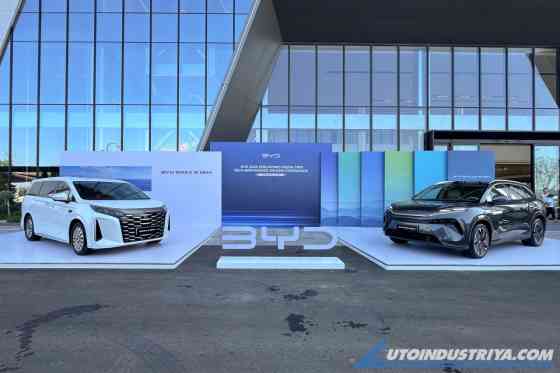
When you visit BYD in their home city of Shenzhen, it’s clear that BYD’s current momentum only scratches the surface of what’s to come.
Shenzhen might be a city best known for being the "sorting center" for your favorite online shopping platform, but this is also where BYD’s story began. If you’re a millennial, there’s a high chance you might have purchased a BL-5C battery for your Nokia phone back in the day, which was made by them. But now, that same site in Shenzhen has become the beating heart for BYD Auto’s global operations.
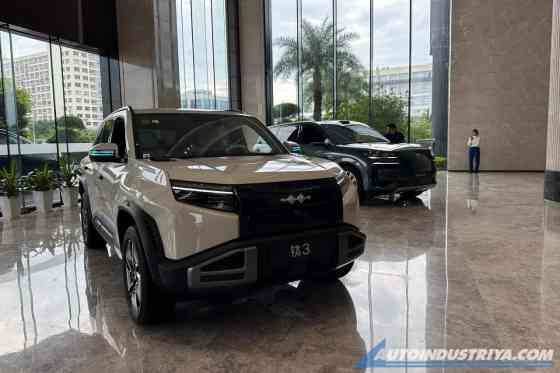
Unfortunately, we were unable to visit the brand’s comprehensive test center, which housed three major laboratories for crash testing, NVH, and electromagnetic compatibility (EMC). During our trip, the super typhoon that ravaged the country was also threatening to inflict damage in the city of Shenzhen. Nevertheless, the HQ Tour still provided us with plenty of insights into how BYD operates.
Perhaps the most glaring takeaway from Shenzhen is how straightforward the HQ visit was. Apart from the customized welcome banner and the proprietary photo ops, there were no cheesy words, nor fancy presentations saying why we should write about their cars and their technology. They quickly got down to business with facts and numbers to show.
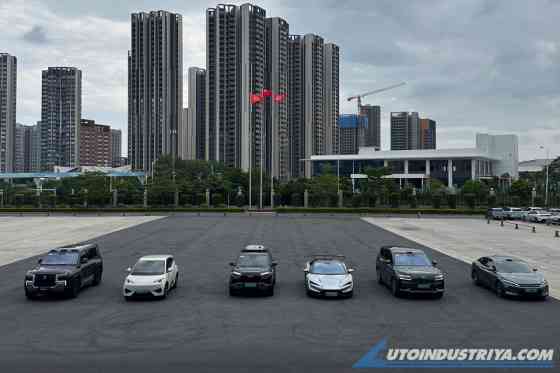
The flagship vehicles were simply out on display and welcomed us outside, while the safety of the patented BYD Blade Battery technology was demonstrated to us through a nail penetration test. It caught us quite off guard with the explosion of the normal NCM battery, but the Blade battery was simply punctured without any drama at all. The only main flex I saw was their “Wall of Patents” – a wall that featured a fraction of their 30,000-plus patents dedicated to the advancement and improvement of BYD technologies, but even that was accompanied by the pictures of the engineers responsible for it.
Likewise, the Q&A session with BYD’s Asia Pacific Auto Division General Manager Liu Xueliang was done in a very formal setting, like a session in the senate, but without the grandstanding antics that we normally see in the local news. Mr. Liu went on to say that the rapid rollout of new vehicles will continue for the Philippine market, as they believe in their vision of offering a BYD model that caters to all the mobility needs of our motoring public, which will soon include commercial vehicles.
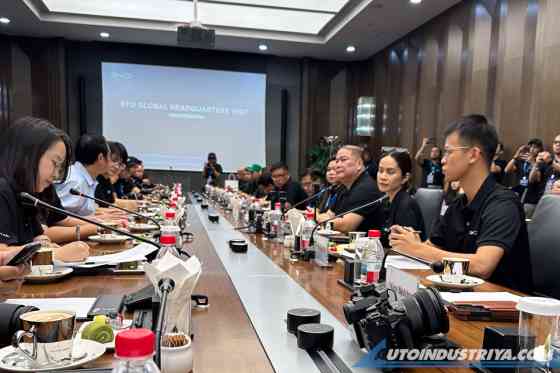
The Asia Pacific region is also seen by BYD as a place for plenty of growth, as they plan to add more production hubs in Cambodia and Malaysia, apart from the existing ones in Thailand and Indonesia. While it’s not surprising that our country won’t have a BYD production hub soon, that doesn’t mean we won’t benefit from it either.
For now, our country is getting vehicles straight from Shenzhen. But once the zero-tariff EO for hybrids and EVs doesn’t get amended past 2028, BYD vehicles can still have competitive prices should BYD Cars PH source out vehicles from the ASEAN hubs because of AFTA. That somehow allows BYD to sustain its momentum not just in the Philippines, but for the entire region.
As much as we wanted to soak in the sights around Shenzhen’s Dameisha Beach by the end of the day, it was time for us to leave and fly to our next destination – Zhengzhou. Honestly, it’s a city I never heard of until this trip, but the ancient Shang dynasty capital is actually rich in history - apart from having the world’s largest iPhone factory.
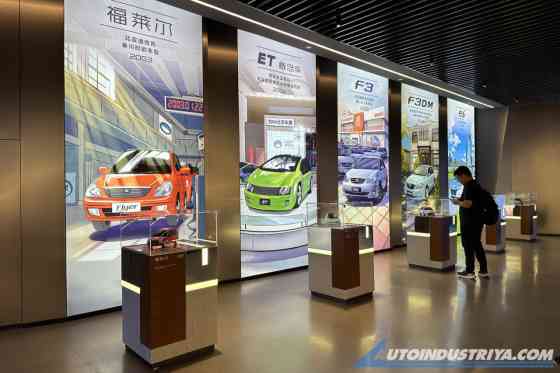
Those things I got to discover on our third day, but not without going into China’s first new energy vehicle museum, which was built by BYD first. They officially call it the Di-Space New Energy Science Museum, which offers an interactive learning experience for visitors when it comes to exploring the field of new energy vehicles.
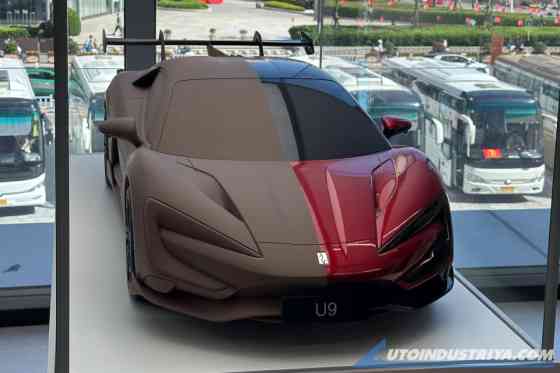
Each floor covered a different section, with the first floor showcasing the timelines of BYD from rolling out its first vehicle to its current models. The second floor covers the process of how vehicles are built from clay models to actual pieces, along with the engineering behind the manufacturing process.
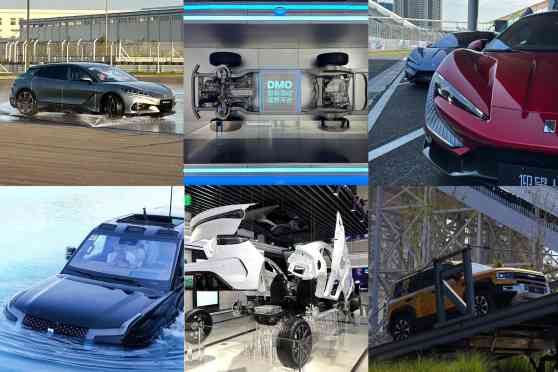
The third floor highlights BYD technologies, such as the Blade battery and its latest DM-I, DM-P, and DMO technology. Lastly, the fourth and fifth floors are interactive spaces that allow visitors to engage in hands-on activities.
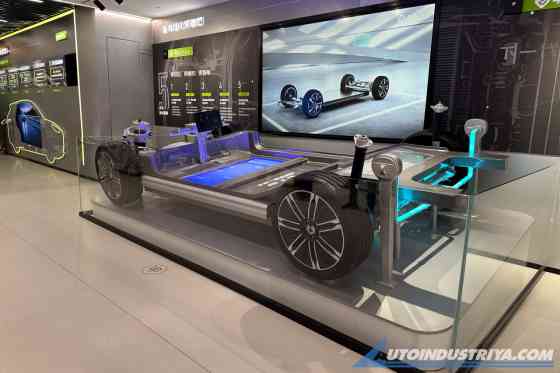
It’s one thing to read and be educated about vehicles and their related technologies, but nothing beats experiencing them firsthand. And as for us in the Philippine media contingent, we got what we wanted on the final day when BYD took us to their newly opened Zhengzhou all-terrain circuit.
Unlike the Shanghai and Zhuhai circuits, the entire land area of the Zhengzhou circuit is surprisingly small. For reference, it’s no bigger than the Clark International Speedway complex. The track length is actually less than 2 kilometers, but BYD was able to maximize the real estate to fit in multiple experience zones to test the capabilities of their NEVs.
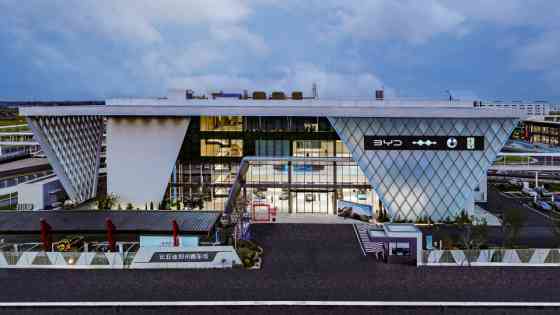
There’s a wide paddock area where you can lay out cones for autocross, slalom, and other driving exercises, a separate area for the indoor sand dune, a wading pool, a low-friction ring, an off-road park, and even kick plates plus low-friction rings to simulate icy road conditions and practice car control in emergencies. Honestly, as I saw how BYD was able to fit in these facilities in a small area, I really wished the tycoons and billionaires could make one of these at home.
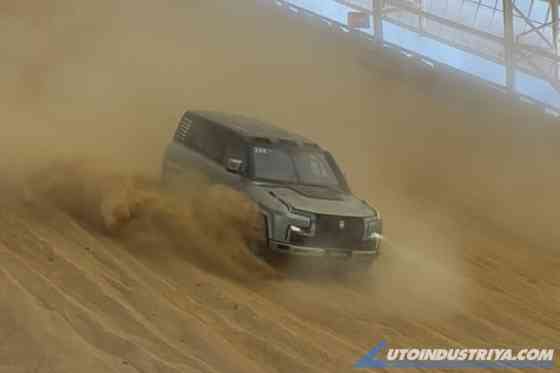
The indoor sand dune featured the Yangwang U8 SUV, where it climbed a 28-degree incline that’s almost 30 meters high. With a quad-motor powertrain, the U8 effortlessly made it to the top of the dune and back down, even with four people onboard. Likewise, BYD gave us a firsthand experience of the U8’s emergency float mode in the wading pool, proving their viral video is indeed no fluke. The SUV floated over a 1.7-meter deep water and was able to maneuver forward and turn without water intrusion inside the cabin.
Speaking of the off-road park, the Fangchengbao (or Leopard) Bao 5 was no slouch either. Its off-road modes basically made a 4x4 pro out of me, making quick work of the steep inclines, declines, and off-camber areas of the obstacle course through the Bao 5’s crawl mode. I didn’t even have to use the gas – all I did was turn the steering wheel to navigate through, and the SUV did the rest for me.
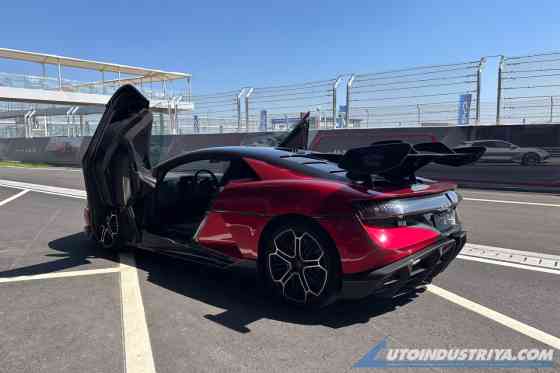
For the track experience, BYD brought out the Yangwang U9. Personally, I would have wanted to drive it in anger, but a shotgun ride sufficed after reaching over 170 km/h from a standstill in less than 550 meters. Even as a racecar driver, it’s my first time to experience such brutal forces pinning me down to the U9’s seat. I can only imagine what it’s like going all the way to 496 km/h – the record set by the Xtreme version of the U9.
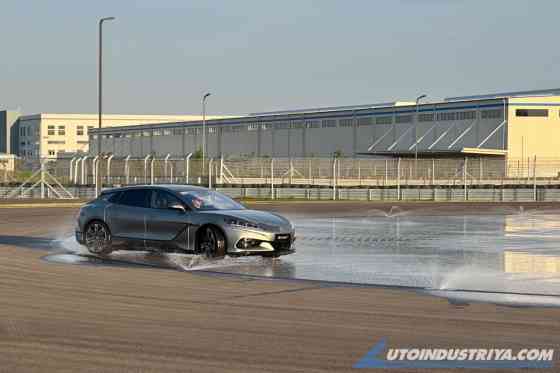
What I really enjoyed the most and capped off my day was doing low-friction ring drifts with the Denza Z9 GT. After driving mostly front-wheel-drive or all-wheel-drive cars at home, sustaining a controlled drift with a 900-plus horsepower EV was an experience for the books. Interestingly, we didn't have to bother with LIDAR and experience autonomous driving, which somehow resonates with the Chinese automakers pulling back on these technologies.
As the trip ended, I reflected on the contrast between what BYD offers in the Philippines today and the vehicles that we experienced in China. On one hand, there are the practical, attainable NEVs that are quickly climbing sales charts and winning over the hearts of motorists. On the other hand, there are the record-breaking, cutting-edge vehicles like the Yangwang U8 and U9 that show just how high BYD can aim. It’s a broad spectrum that only a few automakers can cover, but the message for me is clear - BYD is showing that it’s capable of playing at both ends.
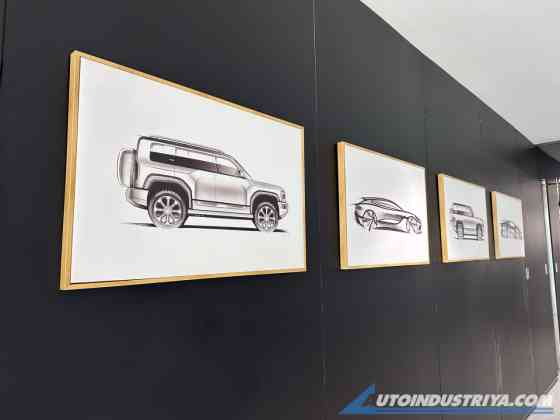
The balance between accessibility and ambition is there to see. And pretty soon, those groundbreaking technologies we saw in the flagship vehicles would eventually trickle down to the rest of the BYD lineup. For me, that probably is the formula, or the playbook, as to why BYD has quickly become the world's NEV leader in a very short period of time.
In the local setting, with ACMobility furthering the infrastructure and BYD supplying the products, we’ve come to a point that electrification is no longer a distant dream - it’s already here. After stepping into BYD’s world in China, I can only say that the story we’re witnessing so far is just the beginning.
The amount of scale, technology, and momentum behind BYD suggests that their influence will only grow stronger as electrification becomes more widely accepted, reshaping not just how we drive, but how we think about the future of mobility.
What BYD needs to avoid is the pitfall of any fast growing brand: customer care. As we've seen from sad tales of car brands that grew exponentially then fell from grace, the focus shouldn't just be about rolling out one impressive car after another. Stories of unsatisfactory service practices and repair parts not being delivered on time, unavailable, or lacking, are starting to be shared by some owners expressing their disappointment. Before a lit-up matchstick turns a small flame into a grassfire, BYD and ACMobility need to work together to not just have the extinguishers ready, but actually prevent it from the beginning.
Time and again, it's been proven that after-sales service will always be key to having a lasting presence, especially in the Philippine market. And if BYD and ACMobility want that, they should also show their best foot forward in keeping the existing ones on the road.