Grip The Future: We test the new Yokohama Advan dB and Sport EV

Driving Yokohama's expanded Advan line
There was a time when the word Advan elicited oohs and aahs from the enthusiast crowd. Actually, it still does.
For many years, Yokohama Advan -particularly the Neova- was the standard tire that we wanted if we needed grip for the dragstrip or for the track. These tires offered superb grip for our tuned Japanese compacts and had (and still have) one of the most recognizable tread patterns around.
What many might not be familiar with is that the brand Advan has already branched out and diversified. Yokohama uses it to denote its premium tire line and has specialized variants depending on the car type, the driving style, and other specific attributes a driver may want to enhance.
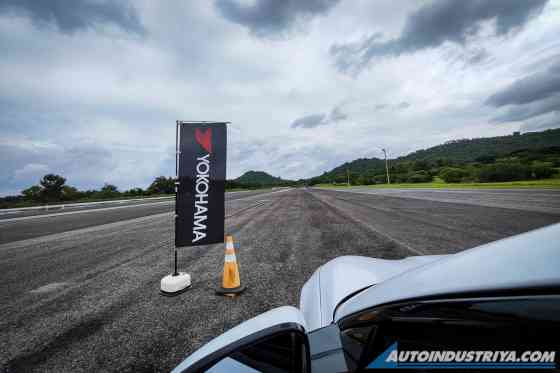
That’s why we found ourselves in the middle of a forest in Thailand on a test track far away from any competitor cameras. Yokohama wanted us to try some of their latest and more focused offerings on the Advan line: the Advan Sport EV, and the Advan dB.
If we look at the auto industry, the landscape has changed. Yes, new models are using more advanced powertrains, but it was really the arrival of many Chinese brands that promise more and have radically upgraded quality control that prompted change, particularly from the legacy brands from the US, Korea, and Japan.
That holds even more true for the tire industry, as drastically cheaper tires from China (and even Taiwan) have captured a sizeable chunk of the entry-level market primarily because of price. I mean if you’re looking for a tire to just keep your affordable compact crossover or sedan going, you’d be looking at a Chinese tire costing half or even a third of the legacy brand.
So Yokohama had to shift and focus more on the customers that demanded no compromise. They want to focus on customers who want a combination of exceptional refinement, confident handling, proven durability, superb wet/dry braking, and from a brand that is trusted; the price is secondary, as they find value in the combination of those attributes.
Enter Advan.
Yokohama has steadily been growing their Advan line, and they wanted us to try them out. The first is the Advan dB; as the name implies, it’s a tire focused on delivering comfort through refinement. That means it’s a great choice for a larger D-segment saloon like your Camry or Accord, premium vehicles like a 5-Series, or crossovers for an even quieter ride on the highway.
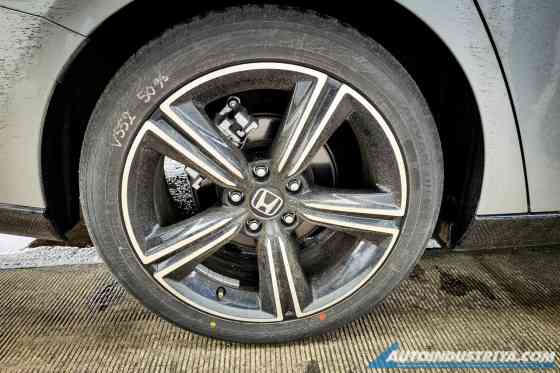
The Advan dB has already been around for quite a while, but Yokohama has been quietly (no pun intended) developing the concept further. The previous V552 was already known for superb silence, braking, and handling confidence, Yokohama wanted the tire to retain those qualities when the tire is already worn out to about 50% of its life. The result is the V553.
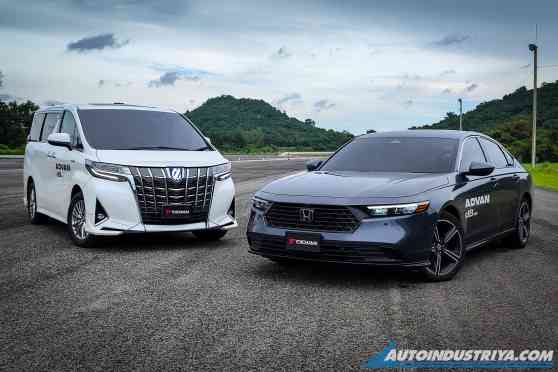
We had several cars to test out on their very large skidpad with various surfaces to test. What we found unique was that they had three identical Honda Accords each fitted with the Advan dB in various stages of treadwear. One Accord had a used set (about 50%) V552, another had a new (barely scrubbed) V553, and another had a used (also about 50%) V553.
Without a doubt, the new V553 was good; quiet and smooth on the rougher surfaces, but also confident with the rapid lane changes. But that was to be expected as the tire was new. When I got behind the wheel of the worn V552, the story was different; there was more noise, and there was more understeer on the wet parts (they had a tanker spraying water on the surface) because there wasn’t as much tread depth for water clearing.
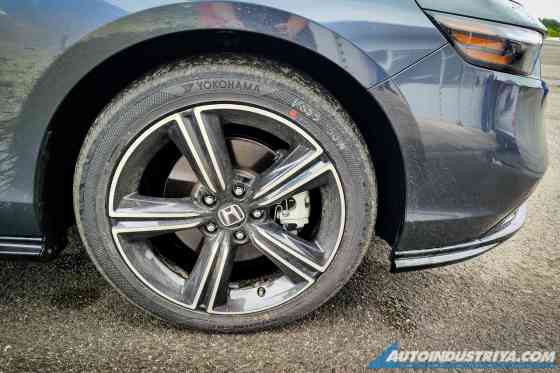
I had expected the worn V553 top to behave the same way as the worn V552, but it really didn’t. No, it won’t be as good as a new V553, but it wasn’t far off. It was good, even when I stomped on the brakes for the rapid lane change (AKA moose test).
While most tire brands tend to focus on a tire’s performance when new, we usually don’t get to test what these are like when worn, which is why it was certainly interesting from my point of view. But what I was really looking forward to was the other tire model: the Advan Sport EV.
Yes, Yokohama now has a specific tire that has been engineered and optimized for models such as a Tesla, Mustang Mach-E, Ioniq, and even a Taycan. All these vehicles use one or two (or even more, depending on what other models exist) electric motors that spin the wheels and tires.
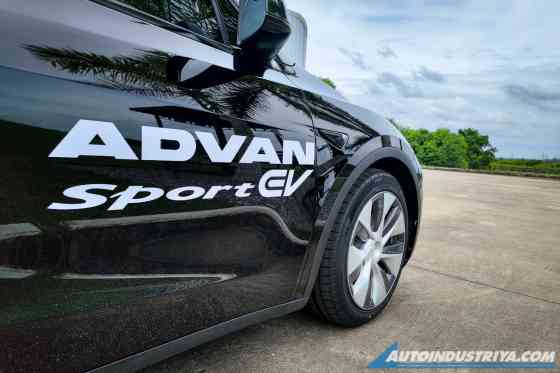
In most cases, you can just put normal tires on a HEV, PHEV, or BEV. Chances are it will run just fine. But unlike a conventional internal combustion engine with a transmission, anything that uses an electric motor to rotate the tires presents some very specific challenges. Chief of these challenges is the massive amount of torque that an electric motor can deliver to the ground. A tire for an EV must be able to stand up to that brutal treatment because, well, an EV driver may want to put the pedal to the metal to see what the fuss is about.
That’s why when we looked at the size chart that Yokohama had for the Advan Sport EV, we saw only the highest speed ratings for the best performance. Many performance cars or sports coupes tend to use tires that are Z or V-rated, but Yokohama had even higher W and Y ratings (270 km/h and 300 km/h, respectively) for the Sport EV. Those are ratings usually reserved for exotic supercars.
There’s also the challenge of noise. Yes, the motors on EVs are library quiet; these things make virtually no sound because there are no noisy valves, pistons, belts, or combustion. There’s also no vibration because a motor doesn’t have reciprocating parts (e.g. pistons). That presents a challenge for a tire manufacturer because EV owners will be able to hear and feel more of the tire if it's not optimized for that application.
What Yokohama did for the Sport EV was to go all in. No compromise. They designed the optimal tread pattern, focused on low rolling resistance, enhanced the grip offered, and did something that I haven’t seen on any other tire with my own eyes: a layer of foam inside the tire. Yokohama calls it Silentfoam, and it’s meant to reduce the noise even further. Consider me curious.
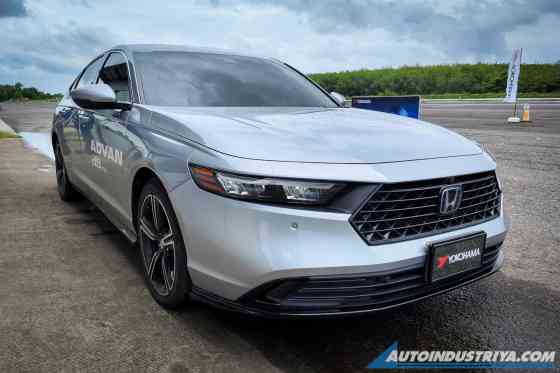
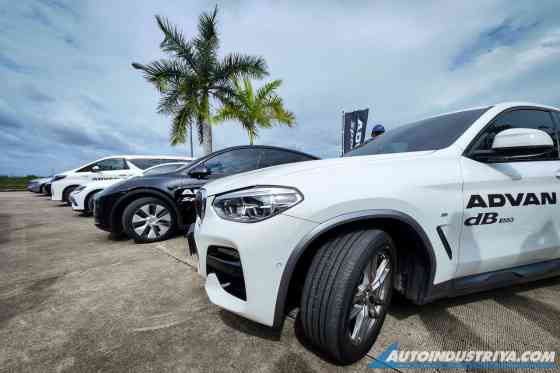
We took the Alphard HEVs, Camry HEVs, Tesla EVs, and BYD Seal EVs on the test track, the banking, the emergency lane changes, the handling course, and literally have nothing to report. That’s because the tires performed as advertised. If anything, we’re hearing more of the wear and tear of the test cars themselves like little rattles and such, because the tires are doing such a good job.
Yokohama did their homework, and it shows. The only thing that I’d like to figure out is how the Sport EV can be fitted with a patch inside (there are lots of debris on our roads) given the presence of the foam, but I’m sure that’s a problem for another day.
These new Advan Sport EV and dB V553 tire models will be offered in the Philippines. Whether for your premium saloon or supercar-slaying EV, Yokohama will be ready.
What I’m really curious about is the new Geolandar All Terrain (A/T) tire of Yokohama I saw at the test center for my truck, but that’s something I’m sure we’ll try out another day.