Grassroots & Humble Beginnings: How Greenhills car culture started

How a shopping center became associated with cars and motorsports
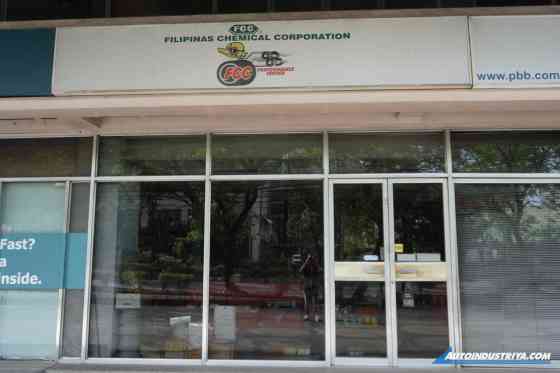
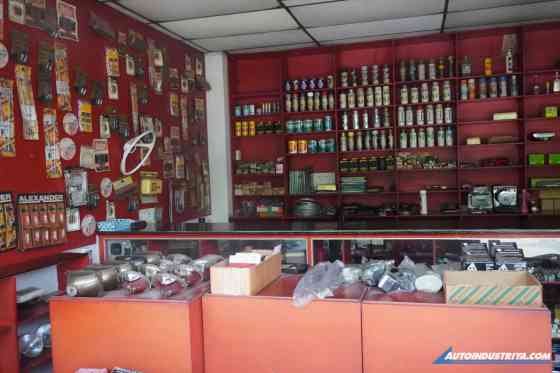
For a certain generation, the mere mention of Greenhills brings back a flood of memories, from gastronomic delights at long-gone restaurants to afternoons at the Greenlanes bowling alley and aimlessly strolling through its iconic shopping arcades. But for car enthusiasts of that era, Greenhills meant something else entirely. It was about late nights at the Creekside parking lot, swapping stories and tuning tips with fellow gearheads. That or shopping for Weber emulsion tubes or main jets at FCC, and the laid-back nights spent downing beers and throwing darts at Halfway Inn.
While the sprawling Greenhills commercial center is now widely known for its tiangge stalls, cellphones, clothing, and all sorts of bargains, it was a very different scene several decades ago. Back then, the area had a distinct charm, marked by places like the now-defunct Padilla shopping arcade, which was known for selling imported goods long before globalization became a buzzword.
Greenhills was also home to a number of iconic restaurants that shaped many childhoods and teenage years, Choo-Choo Junction, Arby’s, Magoo’s, and others that have since faded into memory. Today, only a handful of the old establishments endure: SGS House of Minis, Tropical Hut, Kimpura, and Chocfull of Nuts, standing like sentinels of a bygone era.
As for shopping, it was a bittersweet moment when Regina Gift Shop finally shut its doors a few years ago. Along with Nova Fontana sveral years earlier, serving as my go-to place for scale model car kits and R/Cs. Definitely a haven for hobbyists and collectors alike.
And of course, who could forget the vibrant nightlife? Whether it was a casual date or a fun night out with the barkada, bars like Jazz Rhythms, Reasons, Rhythm and Booze, and Tia Maria were usual go-to spots. Nights often ended with a hearty meal at Goodah! before heading home, full of stories and laughter.
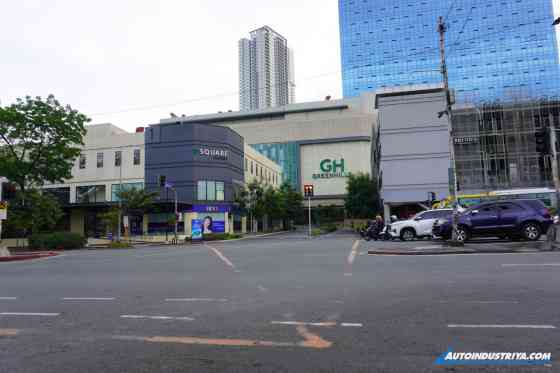
If you’ve visited Greenhills Shopping Center recently, you’ve likely noticed the dramatic transformation unfolding over the past few years. The once familiar structures have made way for modern developments, including the new Greenhills Mall, now standing prominently amid high-rise condominiums and sleek commercial buildings. Alongside this changing skyline, the surrounding streets have grown increasingly congested, with a steady stream of vehicles contributing to heavier traffic than ever before.
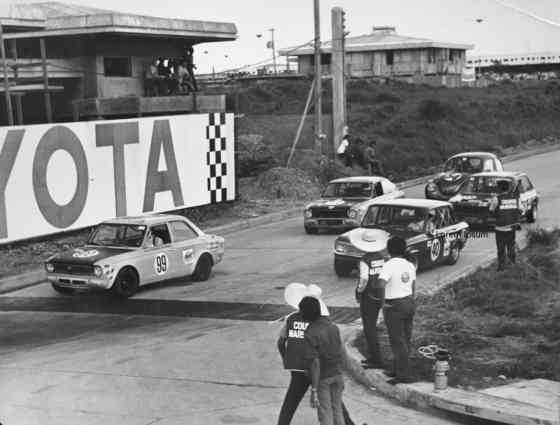
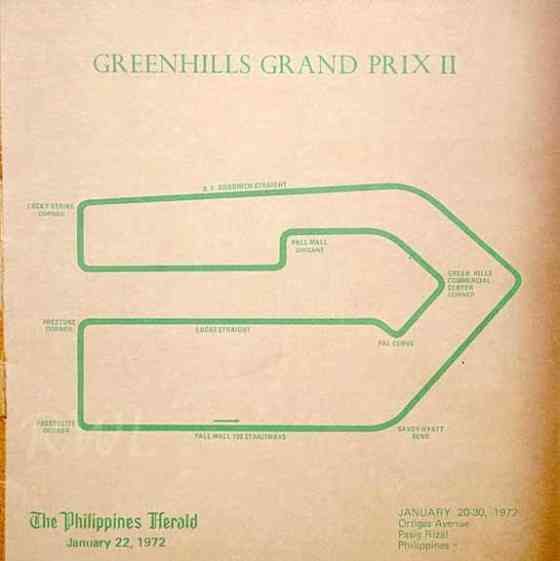
This stood in stark contrast to the 1970s, when the expansive Ortigas landscape was sparsely populated and free of towering buildings. It was during this time, in 1971, that Greenhills began to develop its unexpected connection with cars and racing. The inaugural Greenhills Grand Prix transformed much of Ortigas Avenue into a temporary racecourse, taking advantage of its wide, paved roads to host the thrilling event.
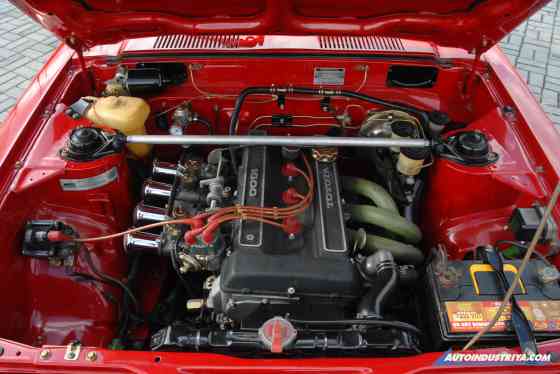
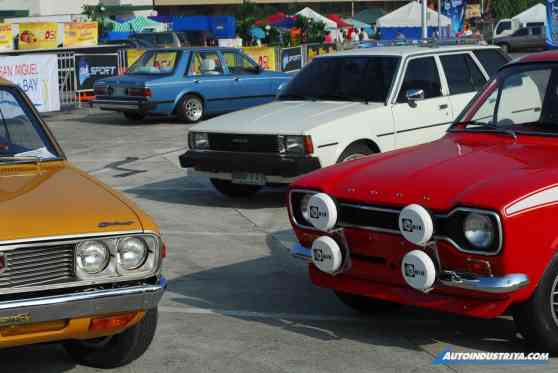
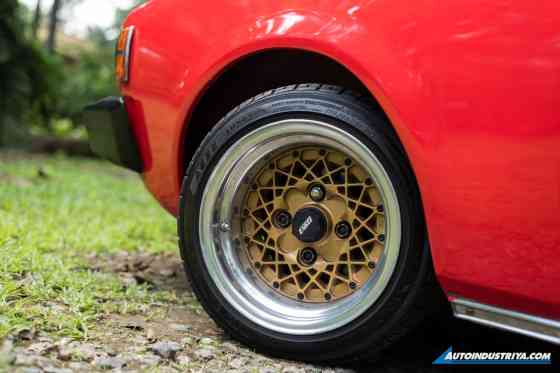
From the late ’70s through the ’80s, the Creekside parking area gradually evolved into a weekend ritual for car enthusiasts, a “tambay” spot long before the term became mainstream. It was the unofficial stage where modified cars were put on display, and only the best builds turned heads. To stand out, a ride had to tick all the right boxes: a flawless paint job courtesy of shops such as, Elite or Stars and Stripes, Enkei Apache wheels wrapped in Pirelli P7F or Yokohama A-008 rubber, a Britax ragtop sunroof, and that unmistakable exhaust note from a long-duration racing cam. Purists and gearheads alike would instantly recognize the deep, throaty growl emanating from either a Weber, Solex, or Dellorto twin side-draft carb setup, especially with polished velocity stacks.
Given that the Trans Sport Show and Motorshow took place only once a year, Greenhills provided a venue for car enthusiasts. One where they could gather to admire a collection of cool, modified rides and check out the latest in aftermarket styling trends. But it wasn’t all purely show n' shine. With easy access to nearby empty stretches of road, it quickly answered the question of who had the fastest car, spawning illegal drag racing that lit up the early hours of Saturday mornings.
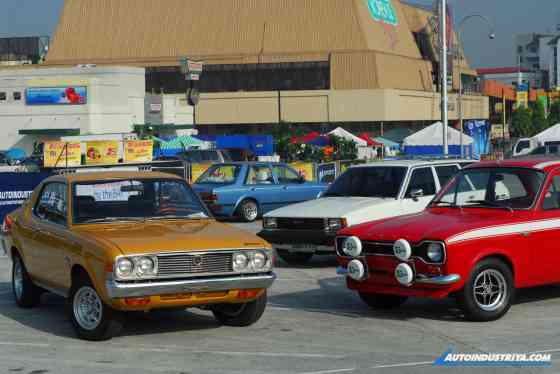
Without realizing it at the time, the regular car-related events happening around the area played a huge role in shaping our local car scene and culture. Greenhills, in particular, became a true melting pot for car enthusiasts, providing a common ground where like-minded, high-octane souls could gather and share their passion.
There was (and still is) nothing quite like seeing and hearing modified cars up close as each build sparked new ideas, pushed boundaries, and inspired others to take their own projects to the next level. In its own unique way, Greenhills helped cultivate generations of car lovers, even as the automotive hobby continued to evolve along with the rest of the local car culture.
This is why car meets remain popular to this day, often held in gas stations or mall parking lots. These gatherings are more than just a show of horsepower, they’re a celebration of shared passion, building camaraderie across various car clubs and communities. And, of course, they’re the perfect venue to flex those hard-earned mods.
While the heyday of cruising and racing through Greenhills may be long gone, many of the streets and landmarks still stand as silent witnesses to a vibrant past. They serve as a reminder of what once was, and the legacy it left behind. So let’s take a trip down memory lane as we revisit the places where the action happened and the lasting impact they had on our local car scene and motorsports community.
Greenhills Grand Prix (Ortigas Circuit)
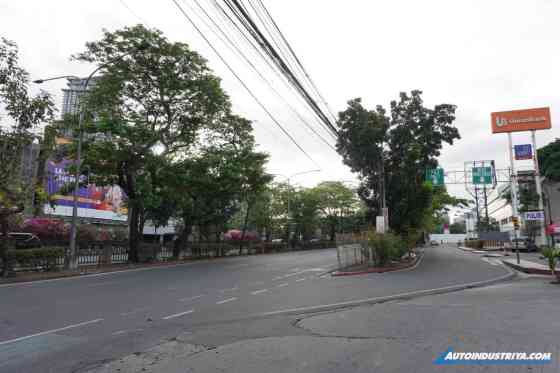
It’s hard to imagine today, but the streets surrounding Greenhills Shopping Center which we casually drive through today, was once part of a full-fledged racetrack. In 1971, the Automobile Racing Association of the Philippines (ARAP) organized the Greenhills Grand Prix, a thrilling street circuit that wound through the North Greenhills Subdivision and roared down a long stretch of Ortigas Avenue, from Wilson Street all the way to just before La Salle Green Hills.
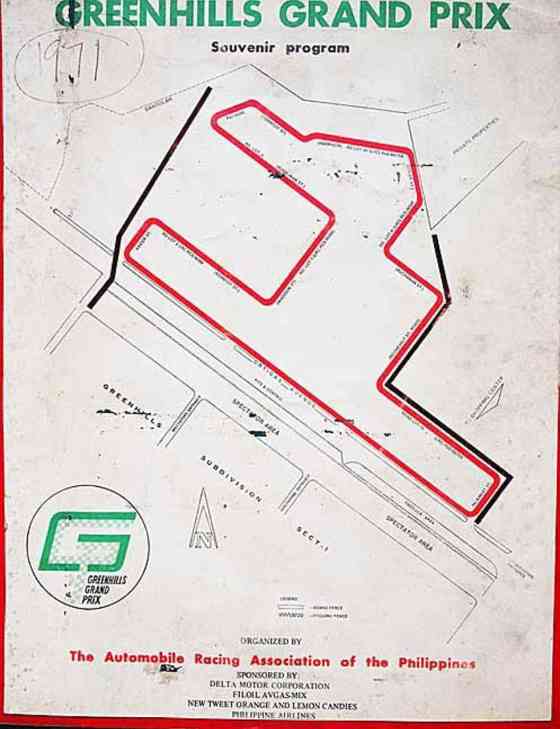
The circuit stretched 3.2 kilometers and featured 14 corners, with the service road in front of the Greenhills Commercial Center serving as the pit lane. It notably hosted intense battles between local motorsport legends like Pocholo Ramirez, Arthur Tuason, and Dante Silverio, who raced head-to-head with accomplished foreign drivers.
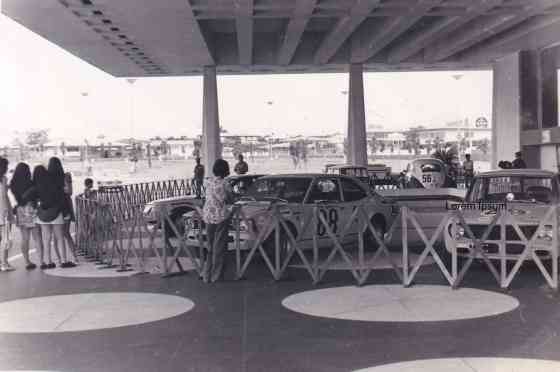
The second and subsequent Greenhills Grand Prix races were relocated to what is now known as the Ortigas Center Business District. It was here that local drivers competed against foreign racers who were driving open-wheel racecars.
Rally Flag Off
Throughout much of the 1970s and 1980s, the Auto Rally Club of the Philippines (ARCP) consistently organized rally events. Notably, it also hosted several international rallies that featured factory-backed works teams and renowned rally drivers from abroad. The ceremonial flag-off and Parc fermé were always held at the Creekside parking lot grounds, either in front of the theater or the area beside Ortigas Avenue.
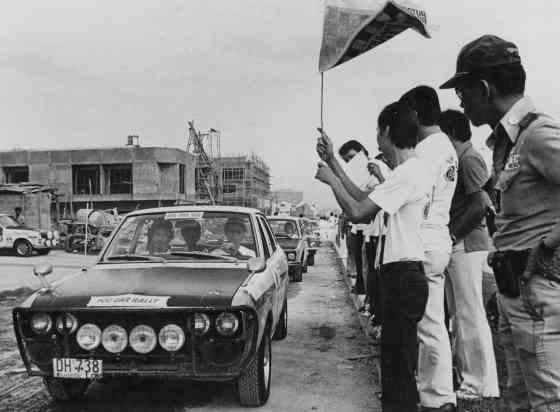
Back then, it was the only way a car enthusiast could see an actual racecar up close, adorned with its distinctive car number and decked out in vibrant livery, roll cages, fiberglass bucket seats, VDO/Veglia gauges, Halda Twinmaster Tripmeters, Cibie Oscar/S.E.V. Marchall fog lamps, mud flaps, rally tires, free flow mufflers, and aftermarket magnesium or aluminum alloy wheels. In a way, the venue itself played a role in promoting local motorsports.
Creekside Parking Area
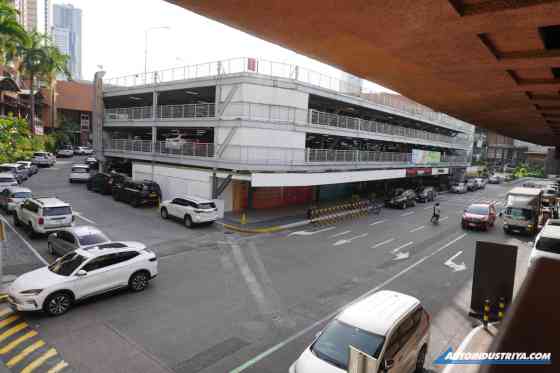
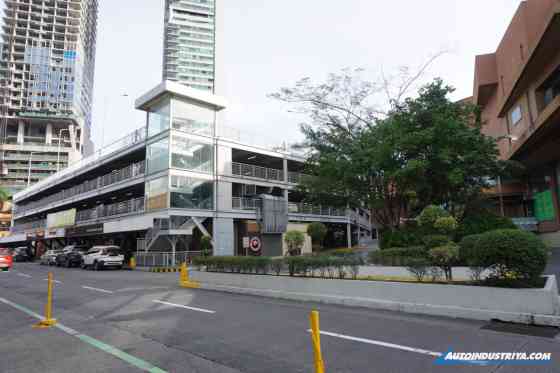
Right now, a multi-level steel parking structure stands prominently in front of the theater mall and the Promenade behind it. But back in the day, this entire area was nothing but a vast open-air parking lot known as the Creekside parking, named after the open creek with flowing water that once circled the perimeter of Greenhills.
Late at night, Creekside transformed into a lively hangout spot for car enthusiasts. As the shops closed, cool cars began rolling in, turning the lot into a mini car show of sorts. To really turn heads, you either needed a booming car audio system or a C-46/Cam5 race cam exhaust resonating through a 3-inch collector pipe.
But it wasn’t just about hanging out and showing off. This was where the fiercest match-ups and street challenges happened. You could always tell something was about to go down the moment groups with flashlights gathered around a pair of open hoods. They’d scrutinize each other’s engines, hunting for undeclared modifications, and tap on body panels to check which panels were fiberglass or aluminum. These details decided whether the race would start with a car length advantage, a plus start, or a straight heads-up, pantayan showdown.
Ortigas Avenue corner Connecticut Street
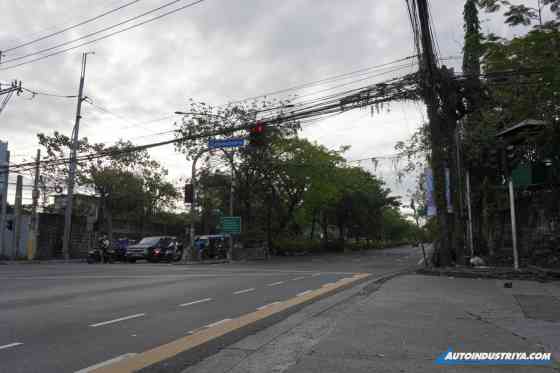
With a prominent corner gas station standing as the unmistakable landmark, this spot was a magnet for car enthusiasts throughout the eighties. After the match-up sessions and negotiations wrapped up inside the Creekside parking lot, everyone made their way here, the majority parked curbside as others gathered near the pumps. Final race preparations were in full swing: last-minute tweaks to the side draft carburetors, ignition timing adjustments, topping off with aviation fuel, swapping rear tires, and more.
The starting line was just beyond the intersection, heading toward EDSA, while the quarter-mile mark was right before the school. A U-turn slot a little past the finish line provided access to the opposite lane, allowing racers to circle back to the gas station. The illegal drag races were so frequent and widespread that several large metal signs once stood on the center island of Ortigas Avenue, boldly stating, “Drag racing is strictly prohibited”. Greatly summing up what it was alternatively used for on Saturday nights
White Plains Avenue
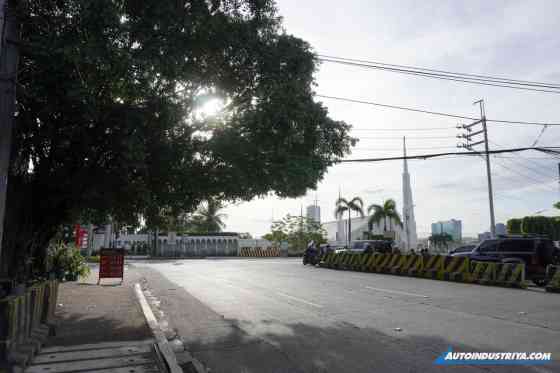
Not too far from Ortigas Avenue lies another former hotspot for illegal drag racing that's now a congested major thoroughfare. Hard to imagine, but it once echoed with the roar of high-revving engines and screeching tires. Believe it or not, there even used to be a traffic-light intersection between White Plains Avenue and EDSA where you could even turn left from EDSA into White Plains.
This spot became a go-to alternative whenever law enforcement cracked down on illegal racing along Ortigas Avenue. With a towering religious structure in the background, the makeshift starting line began just after crossing the intersection toward EDSA. The stretch was ideal: four lanes wide, smooth pavement, and flanked by concrete walls. It even offered ample space to decelerate, with the quarter-mile marker set just past the midpoint of the straight.
It was the perfect place for testing tune-ups or practicing power shifts. These days, though, it’s a far cry from its old self, choked with traffic and no longer suitable for racing. Still, for enthusiasts, it remains a tempting stretch for quick acceleration pulls during those rare, traffic-free moments.
Meralco Avenue corner Ortigas Avenue
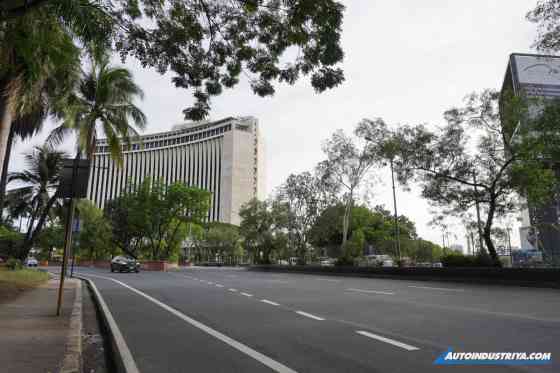
The Philippines’ pioneering car club, the “Camwreckers,” was behind a remarkable series of legal drag races held right at this bustling intersection. Hard as it is to imagine today, traffic must have been virtually nonexistent then, as organizers managed to temporarily close off the entire stretch on weekends. The iconic Meralco Building towered over the starting line, which was situated just after making a right turn from Ortigas Avenue onto Meralco Avenue, heading toward Julia Vargas Avenue.
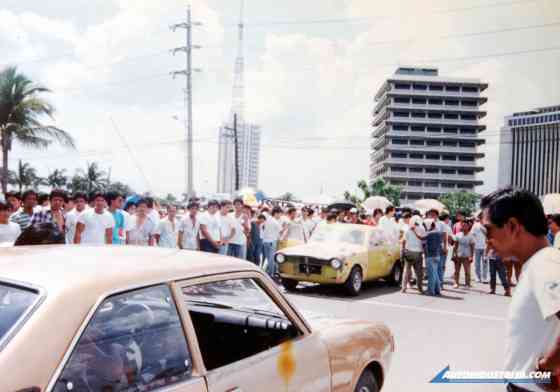
Of course, the actual finish line was located somewhere before the current flyover, which didn’t even exist back then. During those earlier days, the area was surrounded by vacant lots. In fact, much of what is now the bustling Ortigas business district that's lined with towering buildings was once open parking spaces. These lots not only served as the pit area but, on occasion, even hosted autocross events.
High-octane reminiscing
I hope this article rekindled fond memories of the old Greenhills that was once synonymous with cool cars, cruising, motorsports, racing, and of course, unforgettable good times. While I do not condone or support illegal drag racing, it’s important to understand that those were very different times. Aside from the JRC Ramrod Kartway in Libis, there were no proper racetracks like the ones we have today. Naturally, this lack of dedicated venues caused car culture to spill onto the streets.
In fact, by 1979, the government had imposed a nationwide ban on all forms of racing, prompted by growing concerns over safety and public order due to the rise of illegal street racing. Fortunately, the ban was lifted after two years, allowing legal motorsports to resume. Since then, a lot has changed, with different organizations and sanctioning bodies that has legitimized the sport. What's important is the passion for the automotive hobby and motorsports continues to thrive.
Special thanks to Racing with the Legends: The Documentary for their valuable insights and for sharing some of their incredible photos. This documentary is a must-see for any Filipino motorsports fan or car enthusiast, as it chronicles the development of racing disciplines in the country, ranging rom karting, rallying to circuit and drag racing.
In case you haven't seen it yet, here's the link: https://youtu.be/C08_RpAFuIk?si=MPUxC1NMUd52HaYL