First Drive: Did Mercedes-Benz get EV right with EQE?

We try out a dedicated EV from the three-pointed star
Car manufacturers are navigating an unusual automotive landscape when it comes to electrification. Market demands, local realities, and even political shifts means that the very ground that the industry is treading upon is shifting.
Just a few years ago, a lot of brands decided to go all-in towards full electrification especially in the luxury segment. However, as demand for EVs simmered down, manufacturers had to adjust their electrification targets to keep their competitiveness and ensure long-term sustainability.
Mercedes-Benz is one that went all-in, but had to realign their electrification commitments by altering strategies and changing product directions. From building vehicles dedicated to accepting battery electric propulsion, Mercedes is now shifting towards building vehicles to accept a diverse range of powertrains to meet differing needs across their markets.
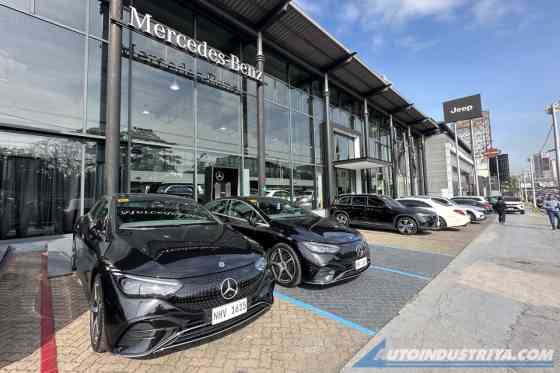
Long story short: they're cancelling the drive for full EV. But should they have? To learn more, we decided to try out the three-pointed star's dedicated EVs on a brief drive from their Greenhills dealership to Cavite. We want to see what the hubbub is all about.
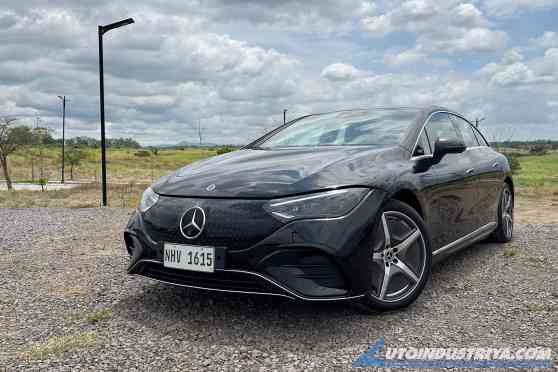
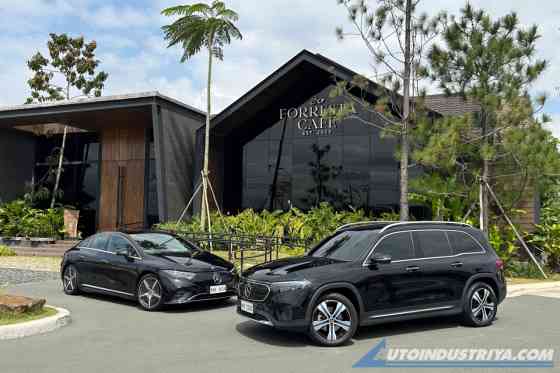
For this drive, they brought out the EQB crossover and the EQE sedans for us to try out.The one I had was the EQE 350+ AMG Line – an executive sedan with a few sporty bits thanks to the AMG Line treatment.
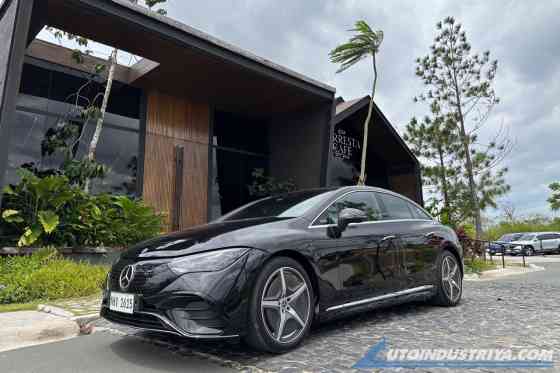
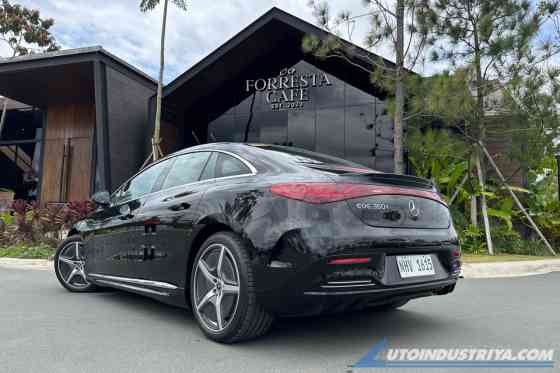
At first glance, it’s clear that Mercedes chose aerodynamic efficiency over its traditional styling with the EQE. As a car built on the dedicated EVA platform, the sleek silhouette reminds me of the early streamliner sedans. Being the variant with the AMG Line treatment, it has aerodynamic covers on the spokes of the large wheels – again designed to slice through the air smoothly and reduce turbulence. But when you see that big three-pointed star up front and the black exterior color, it all still screams luxury.
Inside, the EQE will wow you with the quality of the materials inside. With the AMG Line, you get sporty accents such as alcantara trimming, red stitching with red seatbelts to boot, while the dashboard is patterned with the brand’s three-pointed star in similar fashion as you would see in premium designer bags.
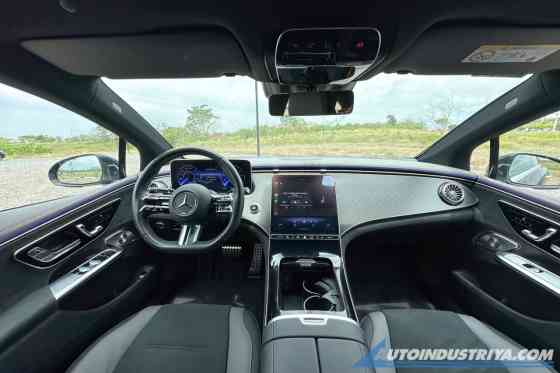
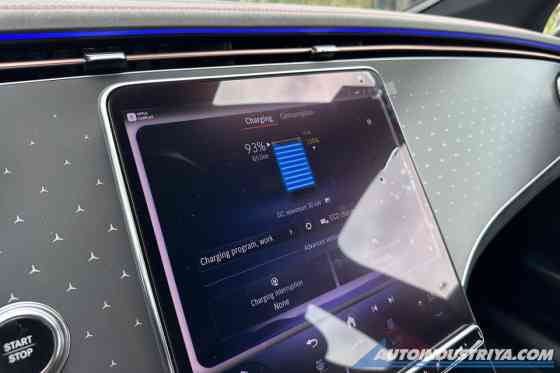
It features large screens for the instrument and infotainment screen, but unlike other manufacturers that use a panoramic layout, Mercedes chose the portrait-style direction to also integrate basic interior functions such as the climate control to the screen.
However, when it comes to luxury, there are a few things that Mercedes might have forgotten to tick on the features list with the EQE. While the Burmester surround sound system is there, I’m surprised the EV does not have a panoramic sunroof. There’s also the lack of goodies that pampers rear-seat passengers such as privacy blinds on the windows.
In terms of space, the EQE’s cabin impresses on the legroom and there's lots of elbow room to play with. But the windows are rather small so claustrophobes might not get that comfortable inside. The dedicated skateboard EV platform did its wonders for the living space, but the aerodynamic shape and the placement of the batteries came at the expense of a few things. I'm surprised at the small boot of the EQE, which could be an issue for customers who commonly place things such as golf bags at the back. There's no other workaround to it either, as there's no frunk or a folding rear seat function.
Once we were on our way to Forresta Café though, that’s where the EQE showed its inner Mercedes-ness. We took the EDSA route going to SLEX then climbed up to Skyway, and that was where the signature Mercedes comfort and refinement showed. There’s much to like about the buttery smooth ride despite the low profile tires, and the EQE just wafted along in graceful tranquility while doing 80 to 90 km/h at the expressways.
When it was my turn behind the wheel, it’s nice to know the EQE’s electric powertrain enables you to do fine control of the throttle, the brakes, as well as the regenerative braking. We kept it at its default setting for the short drive, and it all feels natural – it won’t decelerate rapidly like most EVs with one-pedal modes, but at the same time you feel the system giving back lost energy to charge the batteries.
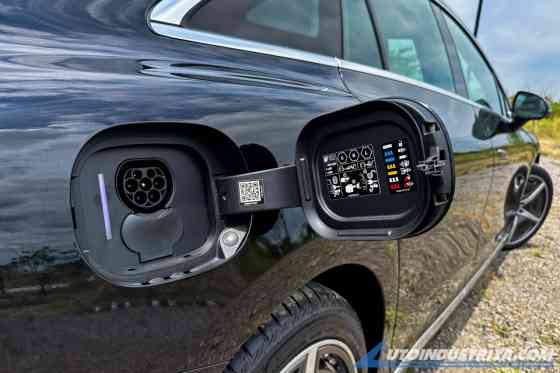
While it does have 292 PS and 565 Nm of torque, power isn’t delivered in one big lump but in a rather progressive way. That’s a check for the EQE being an executive saloon rather than being a sporty sedan even with the AMG Line treatment. On our short drive, we only managed to consume 10% of the EQE’s 90 kWh battery on the back and forth trip. That includes idle time with the auxiliaries turned on as we were shooting the EQE.
I could have shared a bit more with a longer, and a more comprehensive seat time with the EQE. But as a key takeaway, I find that there’s a few things that can be further addressed with the all-electric Mercedes. They have the comfort and on-road refinement on point, but the quest to maximize EV range with its body style has somehow compromised a few things such as boot space, interior ergonomics, and a couple of missing rear-seat amenities – those elements are things we’ve become accustomed to when we take a look at executive saloons.
We understand Mercedes’ ambition to reimagine a traditional executive saloon for the electric age, and that takes a lot of bravery. Results could have gone either way, and unfortunately it hasn't quite paid off for the three-pointed star brand. That is something that BMW has somehow minimized, or even improved when they stuck to tradition with the 5-series platform while becoming capable of accepting electric, hybrid, and full ICE power. So maybe we’ll see the lessons learned by Mercedes when the next electric E-Class comes out.