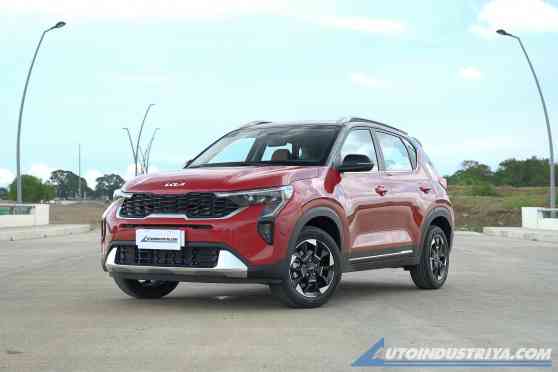
First Impressions: Does the 2024 Kia Sonet hit the right notes?

A quick drive aboard Kia’s latest baby crossover
If you live and work in the Metro, you’ll know that subcompact hatchbacks are one of the most ideal cars to own. Take me for example.
The small footprint means I can easily park the car in spaces most SUVs and pickups can’t, while a full tank can last me over a week with its ability to sip fuel. The good power-to-weight ratio also makes my hatchback such an agile and fun car to drive. But as the saying goes, there’s no such thing as the perfect car. With the way my car is set up, it’s not going to be the ideal car for the rainy season that just started.
That brings me to Kia’s latest offering. It’s as big as a small hatchback, but with a whole lot of extra ground clearance since it’s an A-segment crossover – it’s the 2025 Sonet. We briefly had the chance to drive Kia’s newest baby, and it’s indeed hitting the right notes.
The Sonet is succeeding the Stonic in Kia’s local model lineup. If there’s one thing I immediately noticed upon arriving at our shoot venue, the Sonet clearly has more SUV pretensions than the one it’s replacing.
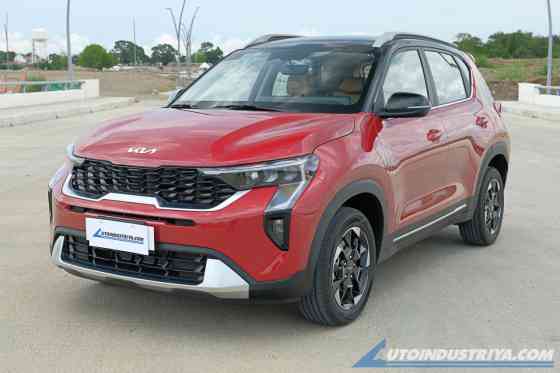
Don’t get me wrong, the Stonic does have curb appeal but it looks more like a raised hatchback with black wheel arches and running boards to make it look rugged. The Sonet, on the other hand, has more of that SUV vibe with its more upright stance and the numbers do prove it right.
The Sonet is only 10mm longer than the Stonic (4100 mm vs 4110 mm), but it’s significantly taller (1533 mm vs. 1642 mm) - almost as tall as the bigger Seltos. As I was saying earlier, the Sonet has more ground clearance. On the spec sheet, it says the minimum is set at 205 mm. We did our own measurements as well and found the front bumper to indeed be over 200 mm clear from the ground, and that goes somewhere around 220+mm on the running board.
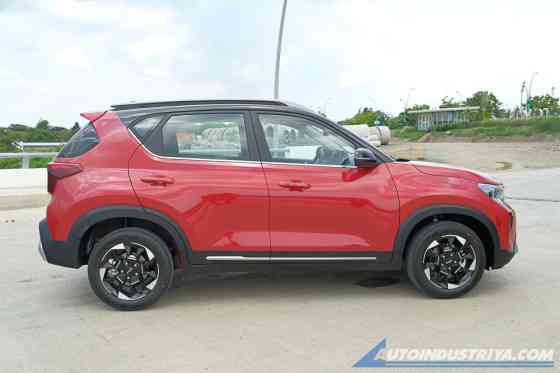
Design-wise, the Sonet has that typical Kia execution where you really can’t point out something particularly odd in terms of looks. We like the huge grille in front with traces of the tiger nose design, the way it blends into the stylish LED headlamps with the C-shaped DRL light signature, and some of the silver accents that go along with it.
Kia retained the two-tone paint scheme for the new model. The red and black that we had didn’t show it much, but the white and black combo makes the Sonet look like a baby Sorento from the front.
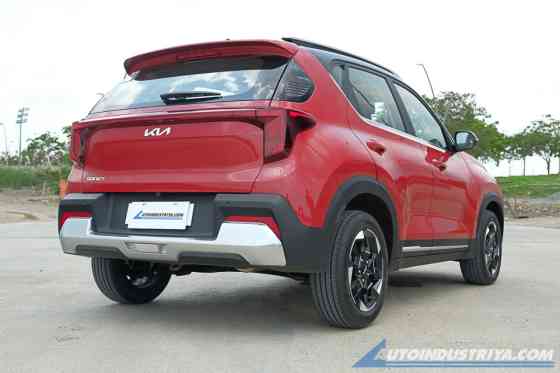
On the side though, what I found eye-catching was the treatment done to the C-pillar. It’s flanked by windows, paint matched to the body, and goes all the way up to the roof and around the other side like a big spoiler. Someone in the Kia design studio must have really liked the Dodge Charger Daytona. At the back, the Sonet gets a full-width LED light bar that gives a more striking appearance.
Kia also follows the two-tone motif for the Sonet on its 16-inch wheels. While it already looks good stock, the five-lug bolt pattern means there are plenty of aftermarket wheels to choose from should future owners feel the need to do so. Also, the Sonet has four-wheel disc brakes – a major plus since it’s not normally offered as standard in this category.
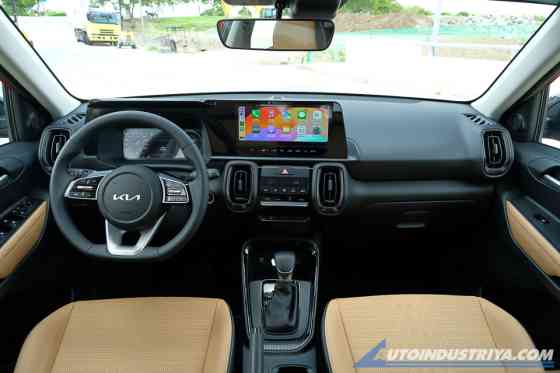
Inside is where the Sonet feels a lot more bang up-to-date than the Stonic, but it’s also where you see bits and pieces shared with Kia’s sister company, Hyundai. For one, the bezel that houses the digital instrument cluster and infotainment touchscreen looks similar to the one on the Stargazer. But for the Sonet, Kia did better execution by having it finished in piano black from the get-go. Likewise, the graphics on the screens, while slightly revised, will look familiar if you’ve driven the Creta.
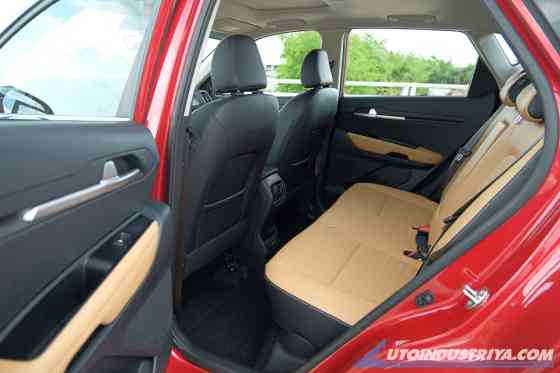
What you’d like about the Sonet is how loaded it is in terms of features. You have single-zone climate control (SX only), push-button start, and leather seats with perforations so it’s breathable. Connectivity? There’s wireless Apple CarPlay and Android Auto standard across all variants. Charging? There’s a wireless pad (SX only) in the front with some sort of vent to keep things cool and Type C ports at the back, just below the rear A/C vents. It even comes with a sunroof as an added bonus.
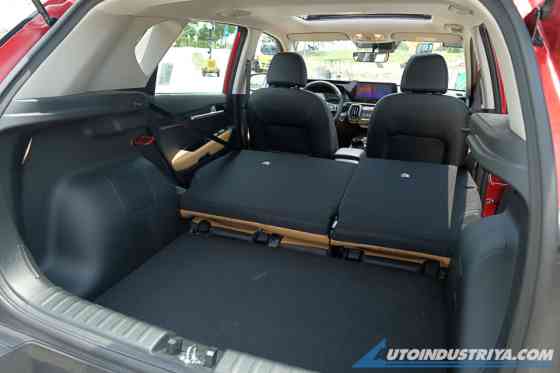
Surprisingly, the back seat of the Sonet has a decent amount of foot and legroom even for a 5’9” guy like me. I was expecting it to be quite cramped given its dimensions, but that didn’t seem to be the case in our brief experience with the crossover. Cargo space is also respectable for a vehicle of this size as we measured the cargo area is around 26 inches long, 38 inches wide, and about 33 inches tall.
The floorboard in the cargo area conceals the 15-inch spare tire, and the back seats fold in a 60:40 configuration (SX & EX variants only) though it’s not a totally flat affair if you need to expand the cargo area for your stuff. With the second-row seats folded, the cargo length extends to 54 inches.
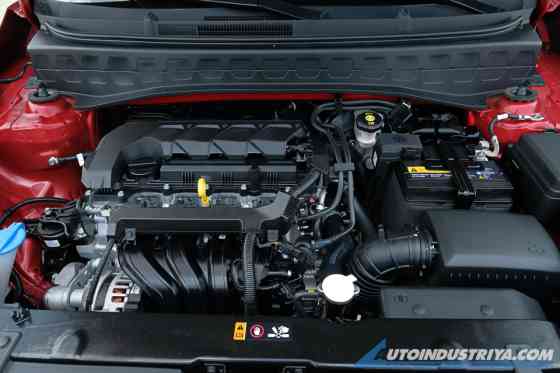
Powering the Sonet is the familiar 1.5-liter, four-cylinder Smartstream G engine that’s shared with the non-turbo Seltos, as well as the Creta and Stargazer. It’s making more power than the 1.4-liter Stonic, delivering 115 PS and 144 Nm of torque to the front wheels via an IVT, but buyers have the choice of opting for a 6-speed manual on the base LX version.
We drove the Sonet around the urban spaces of Vermosa, and it’s in these kinds of places that I feel is where the crossover will mostly be driven. In these conditions, the Sonet feels at home with minimal pedal effort to get the car going, and a light feel from the crossover’s electric power steering. The transmission responds pretty well to sudden throttle applications while the disc brakes offer plenty of stopping power for its size.
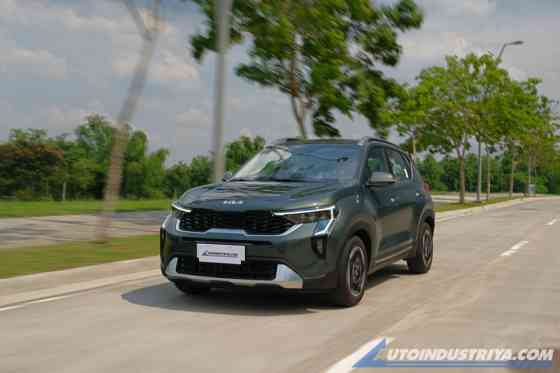
The small dimensions of the Sonet mean it’s a given that the vehicle is very maneuverable and parking is easy with the addition of a rear camera with predictive steering lines. It was almost 40 degrees Celsius when we had the crossover, but the A/C unit did a good job of keeping the cabin cool while we were shooting.
But with the taller ground clearance, driving manners also lean over to the SUV side for the Sonet. First, the positive things – high driving position giving the feeling of height, and good vision when driving around town. The comfort-tuned suspension will be appreciated when you encounter the country’s pockmarked roads, but not so much when the car starts leaning to one side when you try to carve corners at an eager pace.
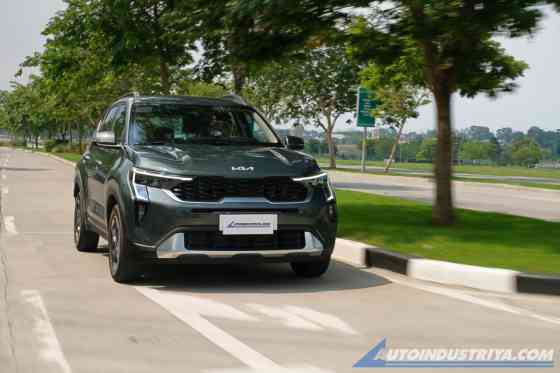
Then again, that’s not what the Sonet was made for. I’ll go back to what I said earlier - there’s no such thing as a perfect car. The Kia Sonet won’t be able to corner as fast as my Yaris, and won’t quite give me the kind of driving fun I’m looking for. That is because it’s meant to be a daily driven personal car. Any day of the week and regardless of the weather outside, the Sonet should deliver comfort and practicality for a reasonable price of admission. It's kinda like singing in a videoke - hit the right notes, time it perfectly, and your score will be fine.
Fuel economy, engine performance on highways, overtaking power, and its intelligent Drivewise features are some of the things we haven’t tested yet, but those should be covered once we can do a more comprehensive review of the Sonet. But personally, I’m more interested in what the lower-spec models are like, as those fall under the PHP 1 million peso price range.