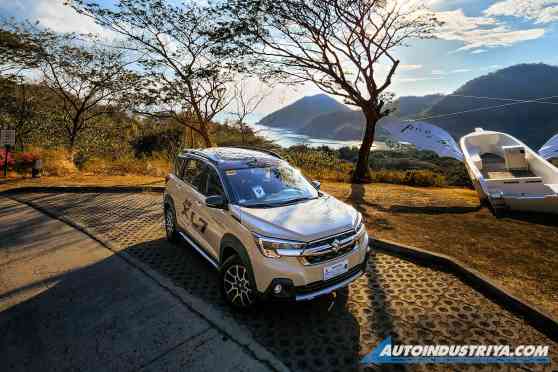
2024 Suzuki XL7 Hybrid: We drove 70 km using just 1.47L of fuel

First Drive: 2024 Suzuki XL7 Hybrid from Kawit, Cavite to Nasugbu, Batangas
When we drove the Suzuki Ertiga Hybrid last year, we were impressed at just how more fuel-efficient it is than the non-hybrid version. Granted, it only comes with a mild-hybrid system that consists of a 12V lithium-ion battery and an integrated starter generator (ISG), but all of these help the MPV burn less fuel while also providing fuel-saving features.
However, we noticed that the fuel-saving benefits are only effective up to a certain point, particularly when tooling around town or in the city. On the highway, the Ertiga Hybrid's fuel efficiency began to dip due to the limitations of the 4-speed automatic transmission that's saddled along with the 1.5-liter engine. Over a distance of 80 km between Kawit, Cavite to Bay, Laguna, we were able to burn around 4.6 liters of fuel which was already great, but we feel that the MPV could do better.
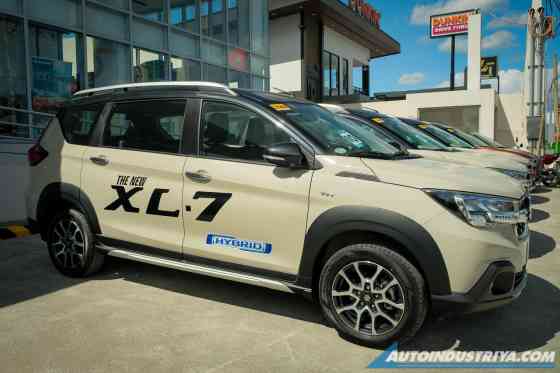
Fast forward a year later and we were now behind the wheel of the Suzuki XL7 Hybrid. Just like the Ertiga, the more rugged version of the MPV now also benefits from an electrified powertrain. But wait a moment, doesn't the XL7 Hybrid also use the same mild-hybrid 1.5-liter K15B as the Ertiga Hybrid? Will there be a clear difference between the Ertiga Hybrid's performance against the XL7 Hybrid? And have they worked out the limitations of the 4-speed automatic?
Just like last year's Ertiga Hybrid drive, our starting point for the XL7 Hybrid drive began at Suzuki Auto Kawit. However, unlike last year's destination in Bay, Laguna which took us to NAIAX, Skyway, and SLEX, our end point this time will be at a Phoenix gas station in Nasugbu, Batangas. This meant our route would cover a mix of provincial roads, and busy towns, through Kawit, General Trias, Tanza, Naic, and Ternate.
More importantly, we would also be passing through the twisty roads of the Nasugbu-Ternate Highway which I'll talk more about later. Suzuki even gave us the challenge to test just how fuel efficient the high-riding mild-hybrid MPV is by enticing us with prizes for the vehicle/team that will consume the least amount of fuel.
Since I was curious if Suzuki had made any changes to the mild-hybrid system, I volunteered to be the first driver on our team. After getting some breakfast and checking our route, we were on our way to Batangas. Despite Suzuki giving us a fuel eco-run challenge, we drove the Ertiga normally and did not resort to hypermiling techniques. Heck, we didn't even turn off the air-conditioning as we wouldn't want to sweat under the intense summer heat.
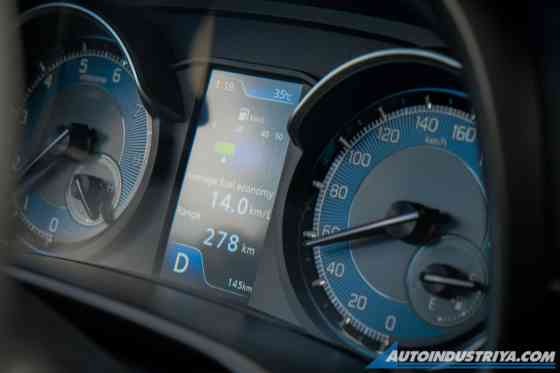
Through light city traffic in Kawit and General Trias at an average speed of around 40 – 50 km/h, I was easily able to average up to 14 km/L which was impressive. When we passed through the busier portions of Tanza and Naic complete with stop-and-go traffic, I was expecting the average fuel consumption to dip to around 9 km/L. Surprisingly, however, the XL7 Hybrid was able to return between 11.5 km/L to 12 km/L. This was made possible thanks to the auto start/stop function of the mild-hybrid system which allowed the MPV to save on fuel while stuck in traffic.
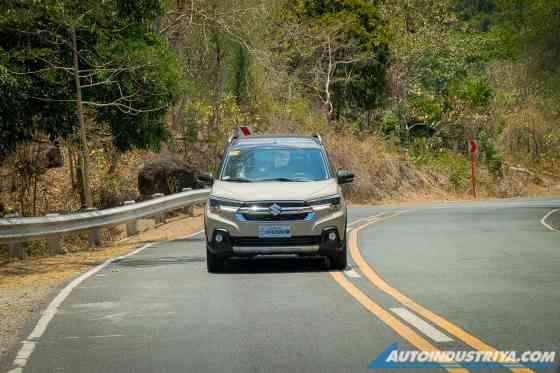
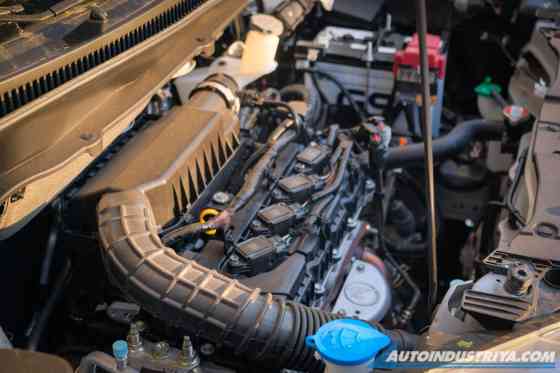
When the roads finally cleared again on our way to the Nasugbu-Ternate Highway, I was more than eager to test out the handling capabilities of the XL7 Hybrid. But before we were able to test it, we had to take on the steep hills of the popular road. With just a 1.5-liter engine assisted by an ISG along with a 4-speed automatic, I wasn't expecting anything stellar with the powertrain. However, I noticed that the ISG provided a bit of a boost, especially when we had to climb incline after steep incline. There is still no replacement for displacement in the case of the XL7 Hybrid when going uphill, but every little bit of help is welcome, especially when you set the transmission to the second gear (2).
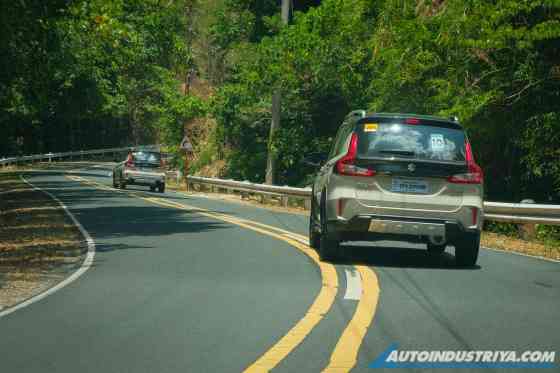
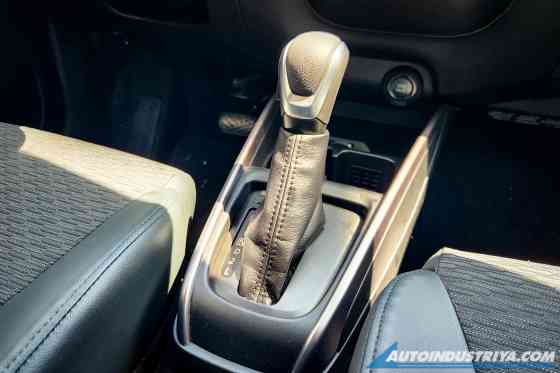
The 4-speed automatic is as reliable as ever but I do feel that it's due for a replacement. With its limited set of gears, it's not exactly suited for everyday highway driving. But when you have to take on steep hills, the 4-speed auto still does an excellent job. What it lacks in extra cogs it makes up for it in having tall gears which is useful when you want to get over a hill as quickly as possible.
Sure, you do have to kick up the revs to maximize every ounce of power & torque, but that's a given when you have to climb steep roads. It may be considered archaic by some but the 4-speed automatic gearbox is still proving its worth in the likes of the XL7 Hybrid.
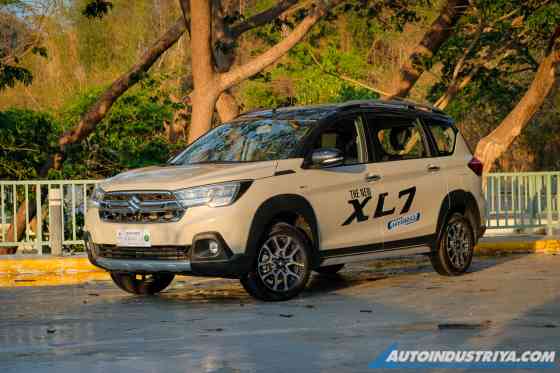
Now we've come to what I consider one of the best attributes of the XL7 Hybrid, the handling. Yes, it's a 7-seater MPV but since its platform is based on the Swift, the hatchback's nimble handing carried over onto the MPV. Paired with light steering, the mild-hybrid MPV was quite fun to chuck around corners. Even with three people in tow and with some luggage in the back, driving the XL7 Hybrid through the curves was quite enjoyable.
The XL7 Hybrid may not be available with a 5-speed manual but we were still able to eke out some fun on the corners with the 4-speed auto. Dropping the transmission into second gear just before entering a tight bend allowed me to maintain some speed while also taking advantage of engine braking. This is particularly useful (and fun) when driving on a curved road going downhill. At times, we even got to turn off the overdrive (O/D) when we needed to.
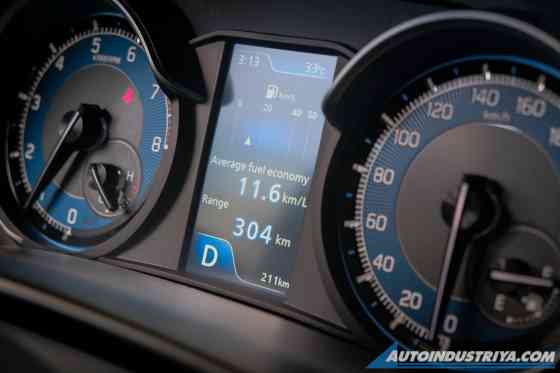
After having a bit of fun on the twisties, we now inched closer to the Phoenix gas station in Nasugbu. Despite tackling steep mountain roads and sweeping through the bends, were surprised to see that the XL7 Hybrid still managed to average up to 11.6 km/L. After covering just over 70 km, we finally arrived at the gas station and noticed the fuel gauge was still nearly full.
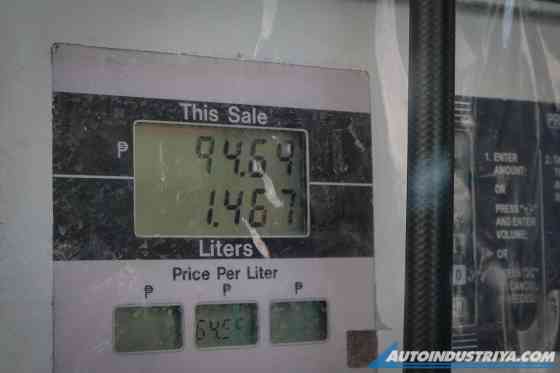
When it was time to top up the tank, we expected to spend some time on the pumps. In reality, it only took us just a few seconds to fill up. Believe it or not, we only got to burn 1.47 liters of fuel over a distance of 71 km. This translates to an average fuel consumption of 48.4 km/L which surprised even us. However, the team that burned the least amount of fuel only consumed 1.06 liters of gasoline, resulting in an average fuel consumption of 67.8 km/L.
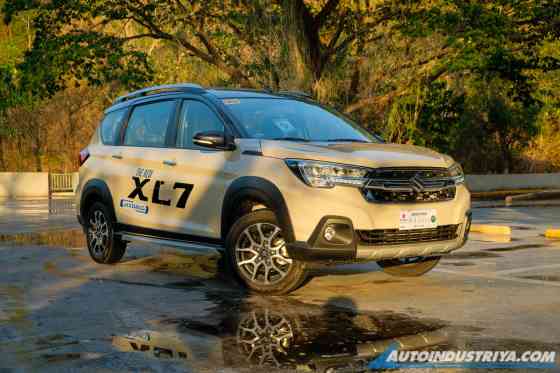
I had to ask the other team what methods they used but they only said that they just drove normally like we did. Still, props to them for proving that the XL7 Hybrid is capable of consuming less fuel despite being a mild-hybrid MPV.
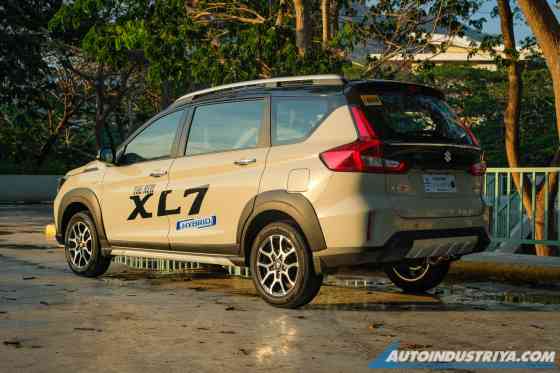
The Ertiga Hybrid may be good but there were points to improve with the mild-hybrid MPV, especially when it came to driving at highway speeds. Fortunately, it looks like Suzuki was taking notes and made several improvements when they applied the mild-hybrid system to the XL7. In addition, it seems they were able to work out some of the issues of the 4-speed automatic transmission.
On one stretch of road, we were able to get the XL7 Hybrid to 80 km/h and noticed that the rev counter hovered at around 2,000 rpm. On the Ertiga Hybrid before, the engine was turning over near 2,500 rpm at the same speed.
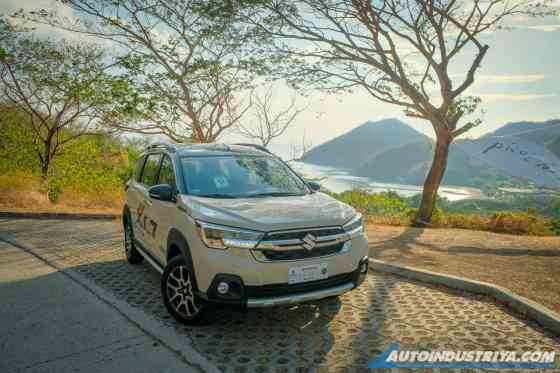
Granted, the 4-speed auto in the XL7 Hybrid is still ripe for replacement by a newer 6-speed automatic (already in use in the Indian-spec Ertiga Hybrid & XL6 Hybrid) to maximize fuel efficiency. But overall, those who want a fuel-sipping 7-seater MPV that can carry the family along with plenty of cargo need not look far with the Suzuki XL7 Hybrid.