
Chen Zheng and driving the future of Geely Design

Geely Design: Marrying tech, AI, global and Chinese aesthetics
Every time an automaker says we can interview one of their executives, I always approach it with cautious optimism.
While we are always eager to hear what they have to say about their manufacturing, engineering, development, design, vehicle timelines and the like, we know the answers will be carefully vetted to be in-line with the company’s philosophies. In other words: safe answers only.
That was certainly the case when we were speaking to the person driving Geely Design. He spoke of concepts, artistic approaches, and an unusual utilization of certain digital tools.
All of us seated across from him had puzzled looks about the things we heard; there were so many things that we were having a challenging time understanding. That was when I broke protocol and asked a question from left field:
“What was your design inspiration when you were young?” I asked. “Where did this whole thing start?”
“Walkman.” he said.
His answer bewildered me at first, but the more I thought about it, the more I realized he gave us the key to connecting everything he said for the last 60 minutes.
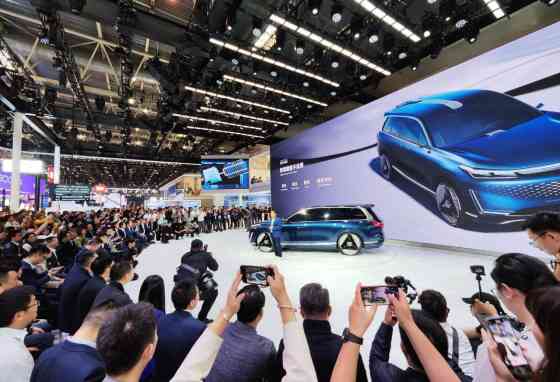
Let’s wind the clock back a few hours to the moment we entered the venue for the first day of Auto China; the premier motor show that is being held in Beijing this year. And the first thing I noticed wasn’t the cars; rather, it was the presence of so many foreigners.
I mean I am a foreigner here too, but I’m talking about automobile industry executives from Germany, UK, France, Japan, United States, and many more. I bumped into the CEO of a major Japanese automaker that I met on a few occasions, and we chatted for a minute before he was whisked away by his staff to his next meeting. I said hello to the designer of another automaker from the States, and a chief product engineer from another brand from Europe.
"What moves Chinese customers today will move the world tomorrow" were words of the chairman of a major German automobile manufacturer last year, and now we’re seeing the net effect: many of them converged here for the opening day of the show.
Quickly I paced through the halls until I reached the Geely booth, put down my bag on a seat and waited for the reveal to happen with about 20 minutes to spare. That’s the way it is with these major international auto shows; you need to get your spot right away, unless you prefer to stand and get blocked by everyone else.
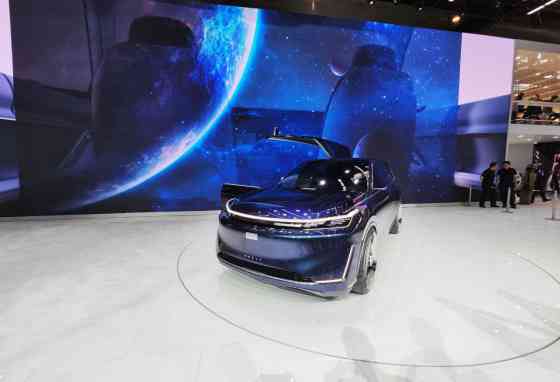
When the covers did come off the centerpiece of the Geely booth, it was definitely something that catches the eye: it was no supercar or sports car or desktop walpaper for a young boy’s iPad, but rather an SUV that seeks to redefine what space in a mobility vehicle could be like. A vision of a future that automakers are starting to explore more and more, with the technology that Geely is starting to flex such as the high range plug-in hybrid system, artificial intelligence assistance, and so many more.
Geely calls it the Galaxy Starship. For a Star Trek fan such as myself, it certainly had appeal.
I had a mission at the Geely booth, and that was to speak with Chen Zheng. He holds the position of Vice President at Geely Auto and his portfolio is head of Geely Design. He was already standing there next to the other executives beside the Galaxy Starship for the photo op. It’s easy to pick him out of the line of senior Geely executives. You just need to know what details to look for.
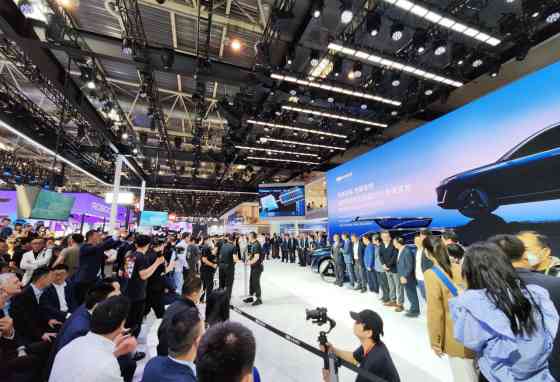
Their suits or jackets aren’t the same shade of corporate black as everyone else’s, and sometimes the pants don’t match. The haircut is done with more attention to detail either through length or styling. And there’s always an element of unique non-conformity somewhere that effortlessly takes one’s personal style in a different direction be it a belt, the shoes, the frame of the glasses, the way the watch is worn, beads, or other bracelets that seem out of place, yet somehow finishes it very well.
The Italians call it sprezzatura, and Chen Zheng -being a Chinese auto designer that spent time in Italy- certainly exudes it.
“I lived in Italy for around 15 years,” said Zheng. “I started working in design management in italy since 2006. From Turin to Milan, even within the same era and the same country, different regions' cultural temperament can significantly influence aesthetics.”

Traditionally, Italy is seen as the center of design worldwide. Be it fashion, architecture, automobiles, or even culinary design, Italy is where it is at. But like toppings on a pizza, the challenge is getting it all to coalesce, to come together in a right way by design.
“As Chinese brands expand globally, accommodating diverse needs will lead to a re-adjustment of brand elements, resulting in different products or solutions. Over the past year, we have undertaken extensive preparations and research for going global, fully aware of the 2 significant differences in the acceptance of design and aesthetics across different regions and cultural backgrounds,” continued Chen Zheng. “Geely's design network connects Shanghai and Hangzhou Bay in China, Milan, and Turin in Italy, forming a global design layout across two countries and four locations.”

Now that trend is also going in the other direction. Remember what we said about the presence of so many foreign executives at the show? Well, it seems they are also establishing their own design centers here.
“We can see many international counterparts come to visit which remind me that in the past, Chinese automakers established overseas design centers twenty years ago, and now many foreign designers actively come to China and establish design or R&D centers in China. For example, in Shanghai, there are nearly 50 auto brands that have set up their design and R&D centers, which is a unique phenomenon in the worldwide.” said Zheng.
All -not just most- of the world’s automobile marques want to make a connection in China, an auto market that is fast becoming a powerhouse on the world stage. Connection is also going to be the key Zheng’s challenge in driving Geely Design in the direction he wants to take it.

“Today, as we can see on the stage that Starship open our whole new understanding of car space, we realize that space can be connected with sky and earth, from interior to exterior, inner to outer, and also the digital to physical world.”
These aren’t just concepts; Geely is making it a reality. Zheng motions to a colleague to hand him his bag, and he pulls out his notebook full of sketches and prints. He flips open to a page showing the roof of a vehicle he designed, and points to the object that has been neatly integrated onto the roof. It’s actually a drone and antenna that takes imagery and data from Geely’s low earth orbit satellite network (yes, they have their own LEO satellites) and allows for certain things like autonomous driving. That’s just one of the kinds of connections they are making.
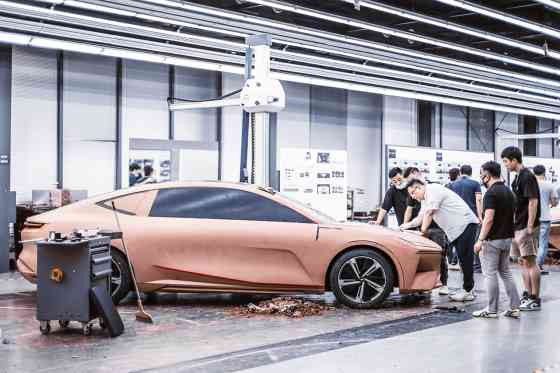
Whenever we meet an automotive designer, it’s usually at a studio or a design center full of clay models, big drafting tables and big screens, and they’re eager to show us the process from sketch to CAD to clay and to final or near-final mock-up. But Zheng is embracing something new entirely: they are trying out a design that started from artificial intelligence.
“The design inspiration for this car is entirely derived from AI, which has given us great insights. Based on this inspiration, we started imagining a very romantic scene: on the lakeside yard of West Lake, the surface of the lake sparkles with the Milky Way at night,” said Chen Zheng, surprising all of us journalists seated in front of him.
He speaks with an animated passion about AI. That’s why they are trying to incorporate it into so many things about the vehicles, including the Yinhe (or Galaxy) Starship and other models to follow. Moreover, he believes that AI is unlocking new things for them as designers, so much so that he posits the thinking that automobile designers should incorporate the ability to translate AI concepts into something for people. Design is going to be the bridge between the needs of humans and the thinking of AI.
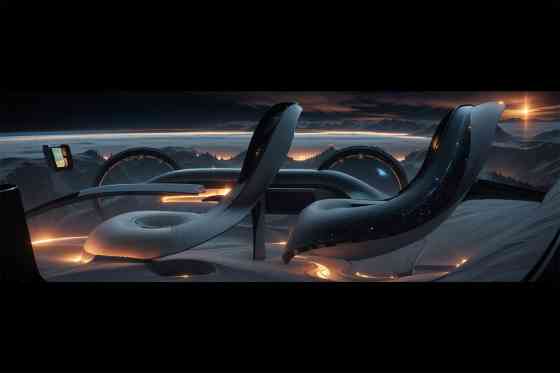
The original AI render of the Geely Galaxy Starship
“All designers are driven by passion. Passion is the core of innovation. We've established an important connection between AI and passion, but many people believe that artificial intelligence lacks passion. Science and technology are perceived as cold and emotionless; they lack feeling and warmth.”
“But design has such kind of mental power to warm that. Technology and humanity are two sides of the path, and design bridges the gap, transforming cold and impersonal technology into something warmer and more human,” continued Zheng.
In all honesty, by this point I’m a bit overwhelmed. We’ve cycled through so many concepts that we don’t encounter as automotive journalists. If we were poets or creative writers or novelists, maybe, but not as people who evaluate, test, and present cars for a living. And I’m not so sure how to feel about having artificial intelligence come up with the design concept for car for me. So I asked Chen Zheng what car he drew as a kid. I wanted to know what inspired him to dive into this career path.
“When I was young, it was the Walkman, a portable music player. The Walkman of that time was remarkable; it was so compact yet packed with numerous functionalities,” said Chen Zheng, automotive designer.

I look at my Mexican colleague to left, and he had the same puzzled look as I did. An automotive designer that was more inspired by a portable cassette player from Japan than, say, an Italian supercar or German sport saloon or big American SUV when he was younger?
“Back then, my dream was to own my own portable music player because I could only borrow my sister's, and she had different music tastes than I did. Then came the CD player, followed by the iPod. It was a remarkable revolution that completely changed the business model and fundamentally altered the rules of the game. Later came the iPhone. Honestly, I personally prefer the iPod. The user experience with the iPod was completely different, as was the system. Without the iPod, there would be no iPhone.”
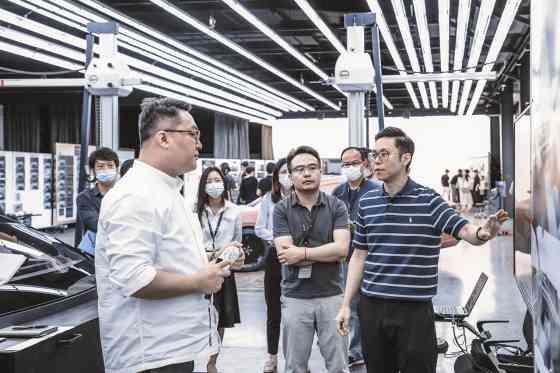
That’s when it clicked: Chen Zheng was someone who had a passion for tech, not necessarily cars initially. Sure, he has been on an automotive career path since 2002 with different manufacturers, but it really all began in personal devices and tech. Something more relatable, especially now given how tech has become so much more integral to our lives probably more so than automobiles. And that’s why he’s using more tech and integrating it into the design process.
That is the perspective that he brings, and that is the level of subtle connection between the ideas that Geely is exploring now with design, with the untapped potential of AI and technology, with customer needs, with Chinese aesthetics, with global aesthetics, and many more.
Chen Zheng’s job isn’t an easy one. It takes a brave chef to create a new dish we will enjoy once we taste it, even though we don’t understand it when it is first served. It takes a certain kind of architect to create a building that will stand the test of time, even though only a few may like how it looks when the ribbon is cut. It will take a certain kind of auto designer that can craft a car that serves an aesthetic purpose inside and out, even though the concept may be out of this world to us who drive now.
He and the team that works with him are the fresh sets of eyes that may open new perspectives that may not be yet explored in automotive design. They are showing us things that are ahead of our time.