Why I park overnight at NAIA

The Airport Parking Fee Question
“We’ll drive you to the airport tomorrow, anak.”
That was what my Mom and Dad said to me every time I was set to fly out of the country for my many work trips. Of course, given the often ungodly hours that I needed to be on the road to make it to a flight I was booked for, I always declined. Besides, it’ll cost too much fuel and time for them to have to bring me to the airport, and then drive back.
I don’t live in the NCR. I live in Antipolo. Given the time and distance, parking at the airport was the only reasonable option for me because the last thing I wanted at the time was for two senior citizens to be stressed out in traffic. How I wish they were still around because now the airport has jacked up the fees by a factor of 4.
I’ve been parking at NAIA T1, T2, and T3 (Edit: T4 apparently has parking across the street) for over a decade now, and back then parking was PHP 50 overnight. I kid you not, parking back then was ridiculously difficult, as the PHP 50 fee was basically nothing.
Then in 2013 (I think) the parking shot up to PHP 300, and I remember that shock because my salary can’t justify that expense. A typical 4-day work-related trip for a motorshow or drive event would mean I’d be spending anywhere between PHP 1200 to 1500 on parking instead of PHP 200 to 250.
So I took cabs to the airport. Cabs are fine and can be convenient, and the cost was comparable to parking. The real problem is going back; instead of just paying a fee and driving off, you’ll have to wait for a cab. That gets much worse especially if your return flight lands at peak hours. There’s also the problem that regular cabs refuse to drive such a long way and do not have a fare going back unless they live near my area and are waiting for a convenient go-home fare. And even if you wanted a regular cab, you’d have to go to the departure level and wait for a passenger to get dropped off.
If you take the airport taxi, then you’ll get a ride right away. The problem is that the metered taxi at the airport arrival area runs at a different rate than regular cabs. We have to get it out of our system that passengers from international flights are rich and oozing with $$$.
App-based ride-hailing changed that, but the taxis and airport taxis complained. So they were restricted at the airport, which didn’t last. There’s also the problem of surge and availability during rush hour. If it’s a rainy payday Friday, may the odds be in your favor.
So the PHP 300 per 24-hour rate didn’t look so bad for a fairly regular traveler. And for many years, that’s how it was. My system was stable and predictable… up until last week.
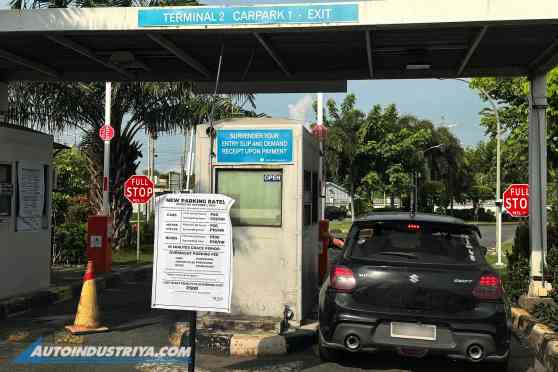
A memo from the now privatized NAIA management has infamously raised the parking fee. The PHP 300 overnight 24-hour parking fee was gone; the price skyrocketed to PHP 1200. Even for motorcycles, 24-hour parking is now PHP 480. NAIA blindsided us. Even passengers who parked before the immediate implementation of the fee but have to exit now have to pay the new fees.
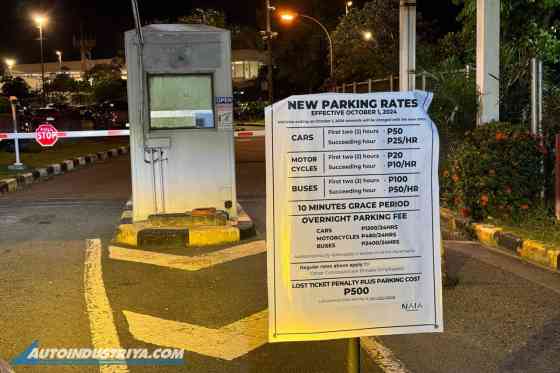
Some math: if I fly out for a typical trip wherein my car would be at MNL for 96 hours, I would now pay PHP 4,800. If my flight was out of CRK (Clark) I would have to prepare PHP 738 of toll fees on my RFID for the roundtrip, fuel up about PHP 1,200 worth of diesel (more than enough), and prepare a parking fee of PHP 1,000 (PHP 250 per 24 hours at CRK). Yes, it's more time, but it the whole thing would cost just below PHP 3,000.
The New NAIA Infra Corporation (NNIC), the San Miguel company that is now in charge of managing the passenger terminals at Metro Manila’s primary aerodrome, was quick to release a statement that the move to raise the fees wasn’t for profit. They say the goal was to clear the airport parking facilities of owner-parked vehicles that have no airport-related business or legitimate travel.
NNIC says there are a lot that have been taking advantage of the relatively affordable fees and were depositing their cars long term. And if we look at a map, we can see why: both NAIA Terminals 1 and 3 have become surrounded by new condominium developments, casinos, and hotels. There are even reports of concessionaires subletting their assigned slots for a fee to non-airport users. When NNIC raised the fees, they said it was targeted to discourage these practices.
If that is truly the intent, then they got the result they wanted. Photos circulating on social media showed near empty parking lots at T1, T2, and T3. Bravo! Indeed NNIC (as operator), MIAA (in its new regulatory function), and DOTr (as the umbrella agency for transport) were so successful in clearing up the parking lots that it looked like the pandemic all over again.
There is just one problem: there is no way to tell now whether the vehicles cleared were from (A) non-passengers taking advantage of the parking, (B) actual passengers, or (C) other people with legitimate airport business like employees.
There is no way to distinguish. Just as the cost made it prohibitive for abusive parkers, it also made it a hold-up for legitimate passengers, aircrew, and airport staff who also need space to park. By the way, for a lot of the airport staff as well as employees of concessionaires that usually park a motorcycle there, the entry fee and overnight fee (some do work overnight) also became way too much given local pay scales. Would an employee making just over minimum wage be able to park their Mio there? Not at the new costs.
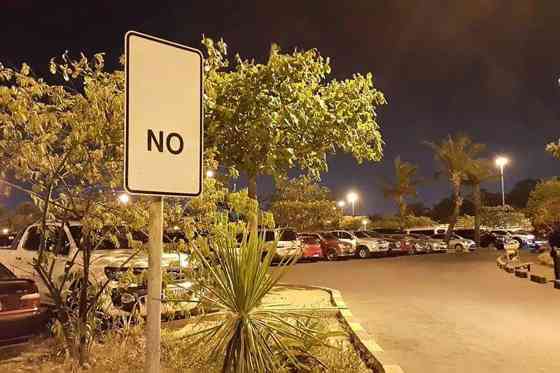
When we spoke to one of the attendants at the terminal parking booth, even they were shocked. The long-term parkers (passengers or otherwise; again, no way to tell) may not have enough cash on hand to pay the cash-only basis of the parking lots, so they get yelled at by the drivers. How do they adjust? The attendants presented their personal e-wallet accounts so the customer could pay them, and then they’d head to a place that would encash for them so they could balance their cashbox at the end of the shift. But they get deducted a fee for that; the inconvenience fee. The people at the tiny box office shouldered those fees for the big corporation and the big government agency.
If NNIC, MIAA, and DOTr are true about the intent that the high parking rates are for the benefit of passengers and not for profit, then it makes zero sense to also raise overnight fees so much for legitimate passengers that park, then fly, come back, and drive home. Now only the rich can afford to park there, but they rarely do because chances are they have drivers to bring them there. It’s the middle class that gets hit the most with this price hike. There needs to be a provision wherein an arriving passenger can present a used boarding pass, a passport stamp, or even some kind of proof of arrival to use a truly passenger-friendly rate.
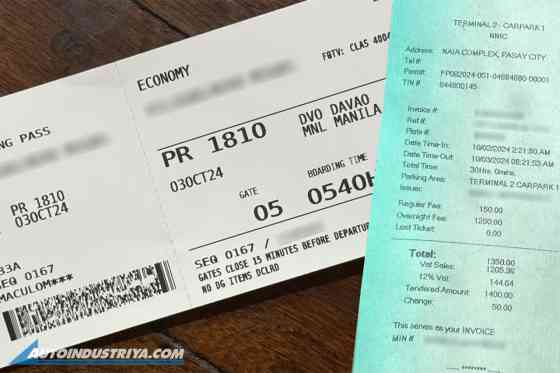
Some would say that parking at other international passenger terminals is much more expensive than NAIA, so we checked and converted directly based on today’s (9 October 2024) exchange rates. Below are the 24-hour rates, and some do vary as there are budget parking lots beside the airport or in the vicinity that are run by airport management.
LAX Los Angeles, USA: USD 60 (PHP 3,417) to USD 35 (PHP 1,993) with pre-booking
LHR London, UK: GBP 45.30 (PHP 3,378)
JFK New York, USA: USD 40 (PHP 2,278) to USD 35 (PHP 1,993) with pre-booking
SIN Changi, Singapore: SGD 40 (PHP 1,746) for first 24 hours with pre-booking
HND Tokyo, Japan: JPY 2,140 (PHP 820)
ICN Incheon, South Korea: KRW 9000 (PHP 423)
BKK Bangkok, Thailand: THB 140 (PHP 239)
There are a few surprises here, like how Changi isn’t the most expensive; Heathrow and LAX are. Also, we expected Haneda to be pricey, but it’s fairly cheap for overnight parking given how premium real estate is in Tokyo. The same goes for South Korea’s primary hub if you go to the parking tower. But Suvarnabhumi is the most surprising, as the long-term parking is just PHP 239.
The difference, however, is that the majority of the passengers from those airports do not really need to park because all those airports (except for LAX) have already active rail lines to make travel easy to and from the nearest city center. JFK has the Airtrain, Changi has its own MRT, London has Heathrow Express, Tokyo Haneda has both train and monorail, and Incheon has AREX. The train for LAX is under construction. Many of the major capital cities worldwide have some kind of rail connecting them to the major city centers that depend on it.
Rail is the great equalizer for all people regardless of salary and alphabetical class designations. But NAIA has zero. That's the result of decades of inaction, apathy, and the big C. Not that big C. The other one.
To be fair, DOTr does have trains on the way; there’s the Metro Manila Subway which will link to Terminal 3, but they revised their start of operations to 2029. Given the track record of delays with any infrastructure development, I won't be surprised to say it'll be delayed at least another 3 years after that. There’s also the MIA LRT1 station that is nearing completion and is scheduled to open by Q4 2024 (now), but the way it’s positioned at the corner of Roxas Boulevard and MIA Road means it’s much closer to the casinos and malls rather than the passenger air terminals.
Based on MIA Station’s location on Google Maps, it’ll take 55 minutes to walk the 3.9-km Terminal 3, 45 minutes for a 3.5-km walk to Terminal 1, and 36 minutes for the 2.5-km walk to Terminal 2. Terminal 4 is the closest to MIA Station at 1.9 kilometers, and even that walk is 27 minutes. And it's not a straight line; that's ground level. Try that with luggage.
Many statements indicated that the PHP 1200 parking fee was recommended by the ADB. SMC and NNIC have been very quiet on the matter, apart from the press release stating it was not for profit or revenue. What really hit a nerve were the comments of the SOTr during the 2024 Aviation Summit in Pasay City just last week. He told reporters there that there should be no overnight parking at the airport, and that parking should only be for passengers and people fetching arriving passengers.
Airport parking long-term for the duration of a trip was never the preferred option. As a car owner, I get nervous when I park at the airport that something may happen to the car (like that fire at T3 parking), but those who do park at the airport take the risk because it’s the only feasible one available.
If there was a rail network ready, then great! We’ll pick that. The P2P bus routes from malls also work, but these take way too much time and you’re at the mercy of EDSA traffic. Taxi or ride-hailing are no good either; it’s expensive and you’re also at the mercy of the already selective nature of the taxi business.
Not all of us are blessed with family that are willing to bring us to the airport and fetch us when we get back. For many passengers and aircrew, affordable parking at the terminal was the only option. If you want to weed out the parkers that take advantage of PHP 300, have them present a boarding pass with an ID or passport from the day upon exit. If they can't, then charge them the hold-up fee of PHP 1200.
Was that too much to ask for?