The NISMO Festival and what Nissan should be fighting for

We visit the 2024 NISMO Festival at Fuji Speedway
There is no fan quite like a Japanese fan.
You see them at sporting events like baseball games where they cheer and chant for their home team. They even wear crazy custom headwear during Formula One races. You see them at all kinds of shops at places like Akihabara, where they seek joy in the latest issue of a manga, the latest game, or the newest release of Gundam plamodels. There are even the avgeeks and railfans.
Once you're bitten, you’re bitten for life. That's what really starts it all. Just like the Nismo Festival.
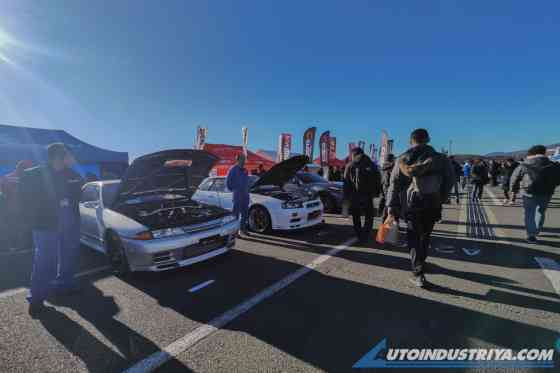
This event began when NISMO/Nismo/NisMo/Nissan Motorsport opened the doors of their shop -the very place where the racecars were being built- just about 40 years ago to the fans that cheered them on. From that simple fan appreciation day, it evolved into the NISMO Festival we know today: a high octane gathering of Nissan's racing drivers from various disciplines, current and historic racing machines, Japan's famous tuning shops, hobby brands, and of course, the clubs and the fans. Oh, and they hold it at Fuji Speedway.
Every time we pass through the entrance gates at this premiere racing circuit, it’s a special experience. Maybe it’s because of the history of this race course, the fact that we’re in Japan, the fact that the December chill is a fantastic break from our weather, or maybe because we can see a newly snow-capped Mount Fuji in the near distance. Whatever the reasons, visiting here just feels extra special even though there is a very dark cloud hanging above the NISMO Festival, the kind that we can’t see. But first, let’s go inside.
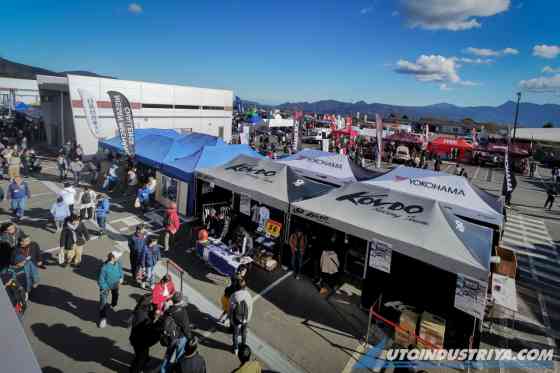
There are three main areas where you can truly enjoy your time at the NISMO Festival. There’s the parking area behind the main straight grandstand where many Nissan clubs gather. There’s a lot of NISMO and Nissan merch there. You can access the grandstand from there, and watch the proceedings. Just don’t forget the sunblock and a hat. While the wind is cold, the sun was out in full force.
The other area is where we spent most of our time, and that’s the paddock area just behind the pit building. Here is where you’ll find Japan’s famous tuning shops if you’re in the market for parts and in their very JDM grammer. 5Zigen, Bee*R, Fujitsubo, Mine’s, MCR, Evolve, Best R, Tomei, Cusco, HKS, and more are here.
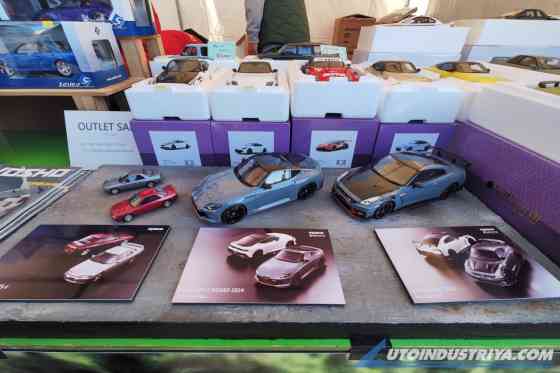
There are lots of parts for sale for various models like the GT-R, Z, and other Nissan models. I browsed as much as I could, but alas there were no NP300 Navara parts or accessories here. They don’t sell my pick-up in Japan. Sad.
But if I wanted to rack up a credit card bill, it was easy because of all the merchandise. Most of the T-shirts were about JPY 3000 to 4000. Jackets were considerably more. There were a lot of die casts from Kyosho and the like that were for sale, along with a dedicated Tamiya booth that had Philippine-made kits for sale. If you wanted to equip your garage with lit signages for NISMO and other famous Japanese tuner brands, there was a seller there. That’d look good if I had a mancave at home, but alas all I could afford were some stickers at about JPY 500 to 1000.
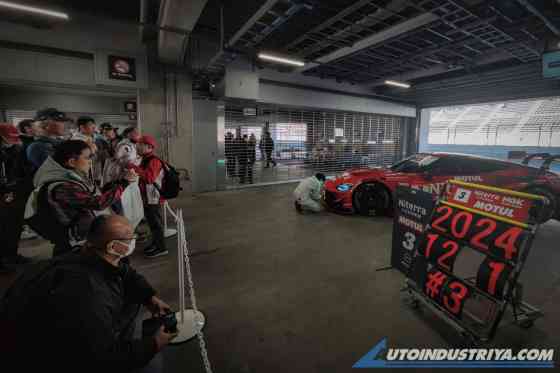
This was my third pilgrimage to Fuji for the NISMO Festival, and the real highlight of this annual event are the historic cars. Nissan has a great collection of all their road cars, sports cars and race cars; if you’ve ever played Gran Turismo, the very cars you see in the game -including the one-offs and rare ones- are in their collection. But instead of having to visit the Zama garage near Yokosuka where these are stored, NISMO brings the cars out to Fuji Speedway… and they run them.
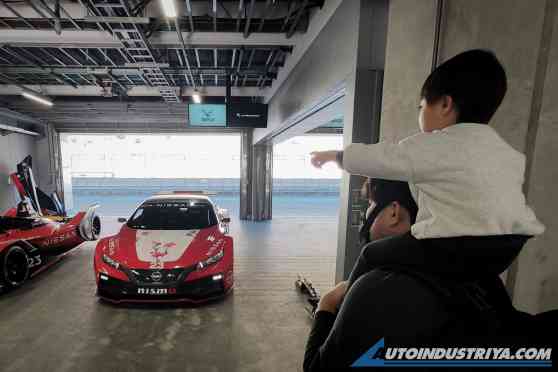
The pit area (which housed race teams during a race weekend) is transformed into a veritable museum where you can get up close to the cars they select to pull out from the Nissan Heritage Collection. Various generations of Z, GT-R, Kicks, and the many race cars through the decades are there like what they ran in Super GT and its previous iterations like the Japan Grand Touring Car (JGTC) Championship are there.
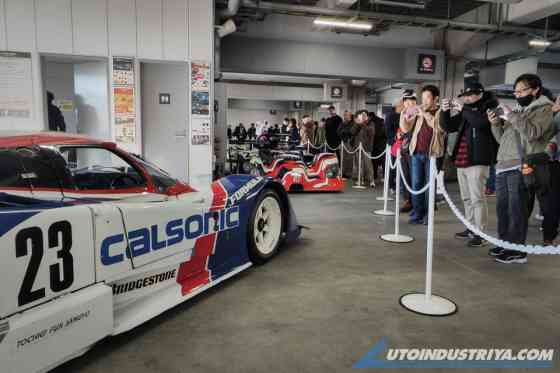
The 1999 Pennzoil R34 GT-R, the 1986 Amada R85V Prototype from Le Mans, the 1999 Nissan R391 Clarion from Le Mans and the 1991 Nissan R91CP Calsonic from the 24 Hours of Daytona are just a few of the notables. There are also the more modern models like the current Super GT Z cars and even the Formula E cars there. But the one that really catches my eye is the yellow NISMO 400R… that was one of my favorites when I first tried out Gran Turismo 2 as a kid.
The best part is that these cars aren’t here to be just on static display. All of the historic race cars are running, and if you’re lucky enough to be in the pit area when the fire them up, it will be music to your ears. The smell is also… nice.
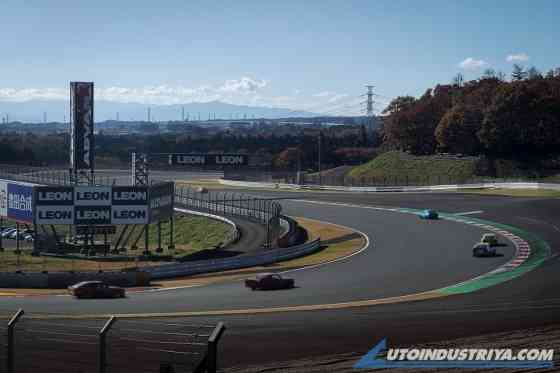
One by one, the heritage cars make their way onto the track and you can pick where you want to watch. The grandstand on the main straight is a good place to watch, as the cars really go flat out here, and are much louder than even Formula One cars of the current era. Personally, I prefer the grassy ampitheater area just behind the Fuji Speedway restaurant, as you can hear the drivers blipping the throttle as they heel and toe for the corner, then accelerate out.
What will really surprise you is the sheer number of people that make the pilgrimage to Fuji Speedway for the NISMO Festival. It’s not easy to get here, and it isn’t accessible by train like many places in Tokyo or Osaka. You have to make the journey by car, and then you pay JPY 2000 per person to get in. It’s not cheap, but the fans come out, including their kids.
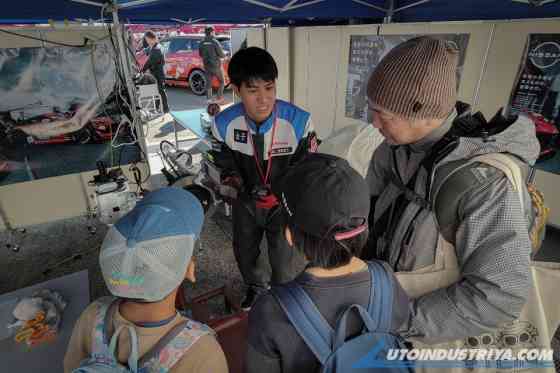
All around NISMO Festival, I see families. Fathers and mothers showing their sons and daughters the cars. They’re out there having picnics for lunch. They’re out in the booths learning how cars work including a booth where Nissan’s technical schools show how engines, electricals, and manual transmissions work to kids in an interactive manner. It’s a family day, and the previous generation is eager to pass on the passion to the next.
That is perhaps what makes the NISMO Festival so incredible to visit. The cars are great, but what’s even greater is the passion from the fans. There's just a collective vibe of automotive enthusiasm all around that's so palpable it's almost tangible.
This is what Nissan should be fighting for.
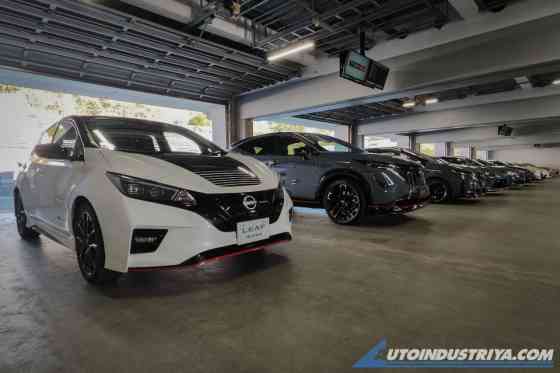
Right now Nissan is in trouble. Articles have come out citing a supposed insider that said the company has 12 to 14 months to go. It is said that Nissan has financial woes, and everyone is taking potshots. Past mistakes are being critiqued like bad directions and missed opportunities in EV even though they pioneered its popularity. They got left behind with that. Some are talking about old skeletons in closets or even top executives hiding in music cases.
They need a lifeline. An investor. Or investors. I hope they get a good one because this is a company that must not fail especially after all we’ve seen during our day at Fuji.
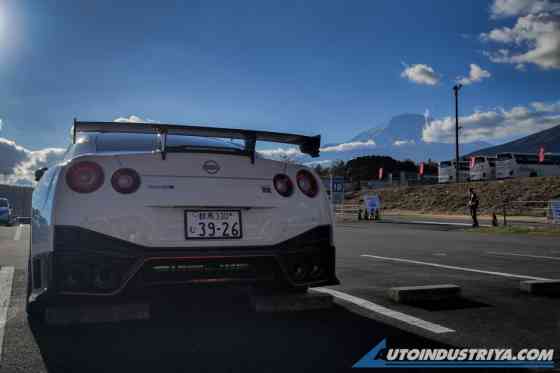
When they do, there needs to be a shift in Nissan's focus. For too long they've banked heavily on the big, continent-sized markets for their volume and profits, and now those markets have turned their backs on Nissan… like China. Maybe their attention shouldn't be there. Maybe the attention should be at the smaller, loyal markets that have been ignored for so long, or treated as second class when it comes to model range and allocation. Like ours.
They need to focus on the people that love their brand for what it represents and what it means to them, and not just as an appliance that works or a conveyance that gets them from A to B. The NISMO Festival is proof of that, and we wouldn’t want this grand gathering of Nissan’s faithful ending up as being the last.