How NCAP fails (and how it succeeds)

NCAP is here, but can it be beaten?
Just to make it clear: I am not a fan of NCAP.
I never felt that no-contact apprehension was necessary because it may curtail the very thing that motoring represents: freedom. I believe that our society has already become way too addicted to CCTV to the point that there doesn’t seem to be a difference anymore between the Philippines and China, on my many auto industry-related travels. Yes, every intersection in China’s major cities probably has at least 20 CCTV cameras; we are approaching the same level.
Sometimes I think that if there were as many CCTVs and high-resolution camera phones back when I was a teenager first exploring the freedom of driving, I probably wouldn’t have a license now. Why? I made a lot of mistakes and was responsible for a lot of, um, shenanigans. Nothing grievous, as back then, authorities looked the other way even if we drove hard and fast, so long as we didn’t destroy property or harm others. There are a lot of stories I can’t write or share, but ask your car enthusiast Tito about places like Lagro, Mindanao Ave, White Plains, Libis, or Marcos Highway, and chances are he will share the same.
Those days are long gone, especially in these days of cameraphone everything and CCTV everywhere. A string of fatal high-profile crashes has prompted the government to bring back MMDA’s version of NCAP from the abyss of the general TRO’d status of all NCAP programs. This is a classic case of us reaping exactly what we sowed.
But it’s not over yet. As with any program, there is always a chance that it will fail. We can look at the many programs that are technically being implemented but still an’t get up and running properly, or on time, or even at all. Think PMVIC, PETC, PUVMP, Cashless Tollways, LRT-4, Metro Manila Subway, North South Commuter Rail, having Government Offices in New Clark, so on and so forth. There are so many, and the problems are caused by a variety of factors.
So rest easy, and let’s talk about the ways NCAP can fail.
-
1. NCAP fails if used as a political lightning rod
We’ve seen this time and again: programs often get turned into an issue to prop up a politician’s prospects of getting votes. Especially in the run up to an election season, no politician wants to be seen as idle or as a proponent on certain issues if said issue will piss off a sizeable number of voters.
The best example was the 2019 signing of Republic Act 11235 or the Motorcycle Crime Prevention Act, but we know it more by its unofficial nickname: the Doble Plaka Law. While the intent was to target criminals using motorcycles (e.g., riding in tandem), it naturally infuriated the general motorcycle riding public at how discriminatory the law was and how it also meant they needed to pay to get new plates for easier identification. Needless to say, the motorcycle rider community has a significant vote count attached to it, and the result (while arguable) was that certain Senators (who allowed it to pass without questioning its provisions) weren’t re-elected in 2019. In the 2022 elections, the Senator who was the principal author of the law was also not re-elected.
If enough politicians use NCAP as a rallying point for a campaign, it can be stopped. If that is what you want, then call, email, or DM your local or national politician.

2. NCAP fails if there are unofficial exemptions
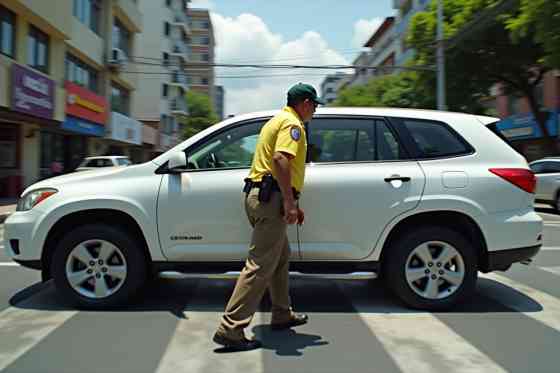
Selective or seasonal enforcement has been the perennial problem of motoring here in the Philippines. I’ll go out on a limb and say enforcers only seem to choose to apprehend what is convenient (e.g., number coding), but more importantly, they seem to turn a blind eye towards those who are inconvenient to apprehend.
To be fair, I understand. Why apprehend someone cutting in and out of lanes while in a heavily tinted 4x4 SUV? That driver and/or owner is probably well-connected, or perhaps even a politician. Even apprehending someone in a regular car can cause a headache, as a lot of drivers and riders look down on a lowly enforcer as no better than street sweepers. The typical perception: What does a “Metro Aide” know about dangerous driving when you don’t even have a car, a motorcycle, or a driver’s license? That’s a horrible thing to have to write, but that’s how a lot of motorists see enforcers.
That’s why NCAP exists: to take the burden and stress that may prevent even the most well-trained and very motivated enforcer from doing their job. And it also takes away any questions of lagay, kotong, or bribery of any kind. How do you argue with a CCTV camera and the people watching?
But here’s the rub: if NCAP is manipulated, twisted, or bastardized by the powers that be to look the other way to do a favor for anyone, be they affluent individuals, persons in power, or even someone playing the poverty card, then it should be scrapped. That would mean the rules will only apply to the middle class, which would literally be trapped in the middle.
The whole idea is fair enforcement that doesn’t look at social status, bank accounts, or ranks. Rules are rules, and if NCAP isn’t allowed to be what it was intended to be, then it will fail.
3. NCAP fails if it makes questionable NOVs
I’ve said it before: there has to be a credible person in front of any NCAP video feed before any notice of violation (NOV) is even considered, much less sent out. The said person cannot be a private employee working for a for-profit company, because I believe law enforcement of any kind should never be outsourced to the private sector. There has to be someone credible, like an HPG officer or a senior MMDA official (e.g., Bong Nebrija) in charge to oversee if what is happening is, in fact, a violation based on realities on the ground. Or the road.
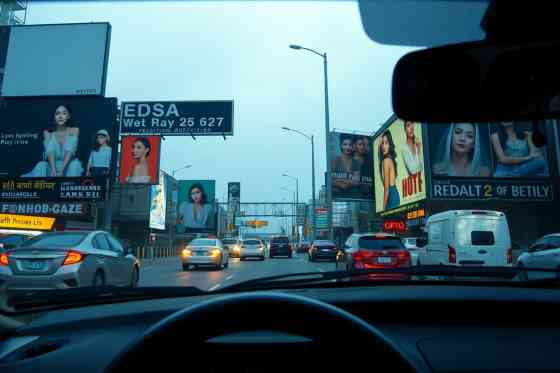
Driving here isn’t a simple black or white and right or wrong. There are circumstances and nuances to consider. For example, have you ever noticed how cluttered our roads have become when it comes to signposts? The field of view of the driver is a mess full of commercial signs like those overly bright LED advertising screens or the latest scantily-clad sensation on a big billboard. And amongst this mess, a driver has to recognize faded road markings, the INNER LANE MUST TURN LEFT post being obscured by an overgrown tree, and the NO RIGHT TURN ON RED being blocked by another that says there’s a drive-thru in 250 meters.
There are more things to consider, but you get the idea. A new hire sipping on a Starbucks in an air-conditioned room whilst looking at a screen may not pick up on these nuances and circumstances, but law enforcers and traffic enforcers who have experience on the ground will. If NCAP is allowed to make questionable calls detached from realities on the ground, then it is a failure.
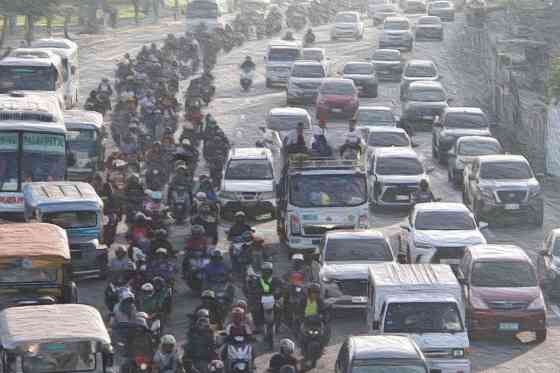
There are more ways NCAP can fail, but to be honest, I don’t want it to. I want NCAP to succeed because we're seeing motorists actually pay attention to intersection markings, red lights, and more. If you think about it, all they need to do is to make the flipside happen, and NCAP succeeds.
Any No Contact Apprehension Program can succeed if and only if it is allowed to become a credible enforcement program that is blind to rank, blind to economic standing, and has some real experience in charge.
If it is done right and establishes itself as an effective and credible program, then it can serve as an active deterrent to instill the discipline and adherence to basic rules in our motoring society. But I have always been a pessimist about these things. We have observed a long track record of positive (and expensive) government programs and initiatives get bastardized into destruction because of corruption, nepotism, and politics.
I sincerely hope this isn’t one of those times.