Can EDSA Rebuild truly fix EDSA?

The real problem with EDSA is not the pavement
Whenever a new, big-ticket government infrastructure project is pitched to us, we tend to look at it with optimism. Perhaps it’s in our nature to be positive in our thinking that one big project can solve a certain big problem, and it’s going to cost X much and take Y number of years, and that is that. At least that’s how it is usually presented to us.
As we have learned with experience and age, that is never really the case. It never just takes Y number of years; just look at the Metro Manila Subway project or that common station at North Avenue. It never costs just X much; just look at, well, all the projects that always tend to go over budget. And the end result typically under-delivers when faced with the exceedingly high expectations and hype. Just check the flood control projects being combed through now.
And then they pitched us the EDSA Rebuild program. Oh boy. Here we go again.
The pitch is that this grandiose construction project will result in an EDSA that has a smoother ride as they will literally demolish and dig up the pavement and put in fresh, more durable concrete with a layer of smoother asphalt on top. The road will also see its sidewalks demolished and rebuilt to be wider, and integrate with other pedestrian-friendly features like the promise of better overpasses, especially at Kamuning. More importantly, the busway will be improved with better stations and the like.
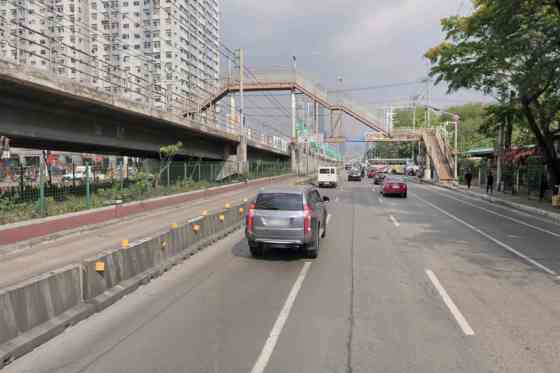
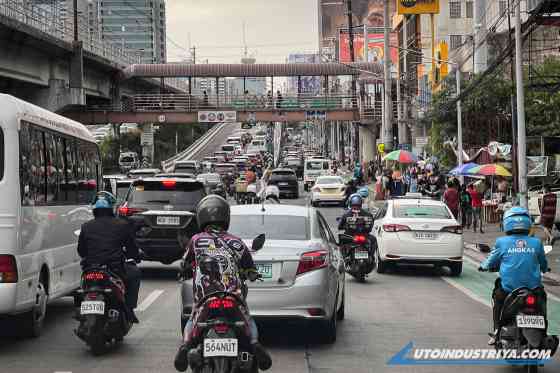
It all sounds great on paper and for the headlines, but past experience taught us to take it not just with a grain of salt, but a bucketload of it. The time it will take will never be what the DPWH or MMDA told us; it will likely be double. And that means we have to deal with the carmageddon for longer. Yes, they came up with plans to mitigate the effect on traffic by working on one segment and one lane at a time and bringing forth another road rationing scheme in odd-even, but traffic will still be hell.
The more time it takes, the more it will cost. I would not be surprised if the final bill is double the PHP 8.7 billion they have announced. The certain delays, unforeseen costs, inflation costs on materials, and even the SOPs (sigh) will make sure that the budget stated will not be anywhere near the proposed amount. That is not a guess; that is an inevitability. And we’re not even talking about the economic costs of time lost in traffic for goods, for services, and for people.
The pain can be worth it if it really fixes the issues of EDSA. But something tells me it won't. I don’t see it improving traffic flow in any meaningful way.
 5
5
Why? To me, EDSA Rebuild looks more like a big beautification program. The focus is almost entirely on putting in new pavement, new sidewalks, new busway stations, and the like. Yes, all are very valuable, but they're not addressing some of the major problems on the road: the flow.
Just like how water flows through a river, the efficiency of a road depends largely on how well vehicles can move along without getting impeded, slowed down, or stopped completely. And EDSA is a hodgepodge of many things (or everything) that slow down or interrupt the flow. It has potholes, irregular patches on all lanes, steel plates to cover up open holes pending work, barriers for the bus lane, and so on and so forth. We can continue ad nauseam, but you get the idea.
EDSA Rebuild can fix those things, but it can’t fix one fundamental issue: the structures that impede the fast lanes and even the bus lane. The best examples are the left-turn flyovers.
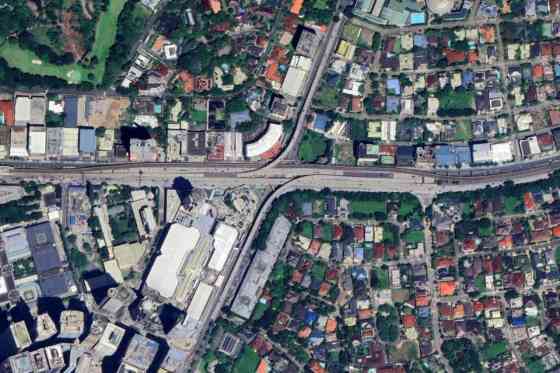
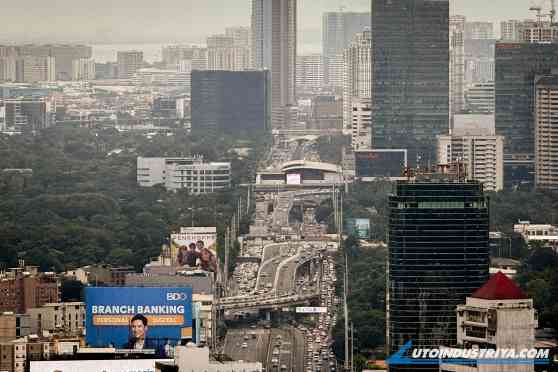
Let’s take the interchange at the corner of EDSA and Ortigas Avenue as the prime example. From a casual look, it doesn’t seem like there’s anything wrong with it apart from being a busy section at any given time of day. There is a flyover that allows traffic going straight on EDSA to go south or north to bypass the intersection, and the flow of which is routinely managed by the MMDA. There’s also an MRT and a Carousel bus lane for public transport. The real problem, however, is the positioning of the left turn flyovers to get to Greenhills and to go eastward to Ortigas. These flyovers have an entry ramp and exit ramp on what would be the fast or overtaking lanes of EDSA and Ortigas.
If you have driven in any other country where you drive on the right (like us) and have a modern interchange network, what you will notice is that to enter the interchange to make a left, you need to keep right. That’s because the ramp is positioned on the slowest lane of the road and not the fast lanes. This logic is similar to our expressways (except for the Skyway, for some reason), wherein the exit is on the right. This kind of logic generally allows the fast lane to remain unimpeded.
That is also why there is a lot of awkward traffic in the area, as motorists who want to avoid the at-grade intersection have to rip over each other to cross several lanes (including the EDSA Carousel lane) to get to the left-turn flyover. Yes, there is the intersection underneath where you can turn left, but people will still prefer to use the flyover, even if it means cutting all those lanes and impeding traffic to get there.
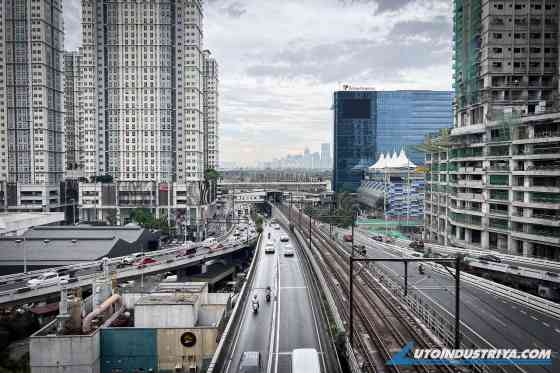
Other interchanges are more correct, like the Magallanes interchange, wherein, to turn left onto SLEX, you keep somewhat to the right. The same can’t be said of other left-turn flyovers on EDSA, like EDSA to Rockwell, Ayala to EDSA, Buendia to EDSA, BGC to EDSA, and EDSA to Tramo. These flyovers force traffic going straight to keep right, compressing and interrupting the flow. There is also the U-turn lane at the corner of Bonny Serrano near Camp Crame that impedes the flow on what would be the faster lanes. If there are civil engineers who want to chime in, drop a comment below.
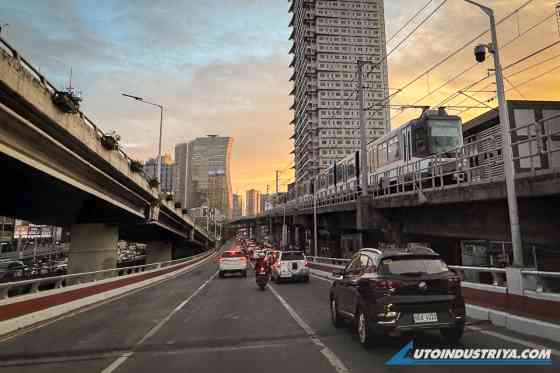
You can spot how glaring the Ortigas interchange error is by looking at how the MRT-3 (which was completed after the completion of the Ortigas interchange) had to adjust and divert to the Greenhills/POEA/OWWA/DMW side because of these left-turn flyovers impeding its path. Yes, si MRT-3 ang nag adjust, and correcting such a problem is virtually impossible now because it would mean moving MRT-3 and the flyovers. Not going to happen.
I'm actually glad they didn't push through with the "grand" EDSA Rebuild. I'm glad they're going to have to rethink how to get it done properly, especially in light of all these flood control corruption scandals. But even if they do push through (which they will at some point), don't expect that the heavy traffic and ensuing carmageddon will be worth it because the project still won't fix the core problems of EDSA that are set not in stone, but in high-pressure concrete.
Yes, it will be nice to have an EDSA with smoother pavement, better Busway stations, better overpasses and sidewalks for pedestrians, so on and so forth, but at its core, EDSA Rebuild seems more like a grand reblocking and beautification project. Rainy payday Friday traffic will still be hell because the flow of traffic is still far from optimal.
The only real solution? Railways, both elevated and underground. And lots of it.