Tourism: Is it really more fun in the FEE-lippines?

The Philippines is slowly becoming famous for overcharging tourists, local and foreign alike
NOTE: The image above is an AI-generated illustration.
The Philippines is a beautiful country. There’s no denying that. But with so many stunning places to visit, why do we still lag behind our neighbors, Thailand, Vietnam, Malaysia, and Indonesia, when it comes to tourist arrivals?
In 2025, the Department of Tourism claims to have attracted 6.48 million tourists, both foreign and returning Filipinos, falling short of the Philippine government's 8.4 million tourist arrival target. Vietnam, in contrast, welcomed 21.5 million tourists. Thailand attracted 32.9 million, despite missing its 36.7 million target by 7.23%. Even Singapore, which is only slightly larger than Metro Manila in land area, welcomed nearly 9 million more tourists from January to November than the Philippines did last year.
But let's get away from the numbers and speak of experiences. Late last year, I had the opportunity to take a group of foreign visitors -fellow motorcycle enthusiasts- on a cross-country tour around scenic places in the country - most of them have expressed that they will never want to come back, but more of this later.
What are we doing wrong?
Last weekend, I tried to take my family along on a road trip and a nice car camping experience as a welcome break from the city. It was also a means for us to contribute to the local economy as advised by our government. This trip really helped put things into perspective, and what we personally observed on the ground made things so much clearer.
Just a bit of background: I love traveling, whether on two wheels or four. Over the years, my adventures have taken me to most of the country’s well-known tourist destinations, as well as to places only more adventurous travelers usually reach, often on adventure or dirt bikes. In 2024, I also completed a full Philippine Loop, driving a BMW X5 across Luzon, Visayas, and Mindanao.
So yes, I’ve seen a lot of the country, and I have a fair idea of what traveling around the Philippines is really like. But it was only during this recent trip aboard the new Suzuki Fronx to Lake Tabeo that things truly clicked as to why we continue to lag in tourist arrivals: we create friction for visitors before they even get to enjoy our country.

Welcome to the FEE-lippines
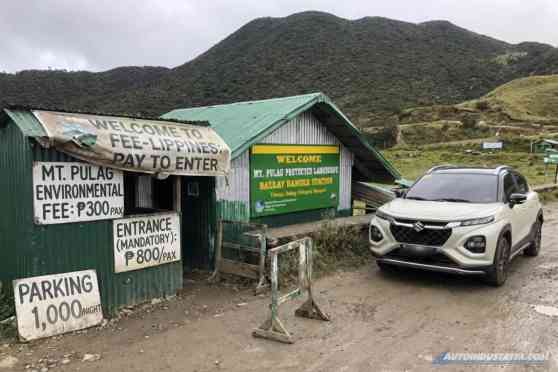
What was supposed to be a simple car-camping trip near a picturesque lake quickly became a deal-breaker. Upon arrival, we were informed of an entrance fee of PHP 800 per person. For a family of four, that already amounted to PHP 3,200. On its own, that might still be acceptable. But that wasn’t the end of it.
My wife, who spoke directly with the locals, claimed that she was also told there was a PHP 1,000 overnight parking fee. What was never clearly explained was whether the earlier PHP 800 per person charge already covered the fees imposed by the Department of Environment and Natural Resources (DENR), the Kabayan local government, the barangay, or any other charges tied to a simple car camping, or if these would be additional fees to be paid.
After everything was tallied, a family of four looking to do nothing more than camping would have had to shell out several thousand pesos. And this was for basic camping, like setting up a tent next to the car, grilling food under the moonlight, and using a functional but far-from-decent toilet for the next day’s morning rituals. And yes—every visit to the toilet also comes with a fee!
For context, if I added a little more to that amount, it would be roughly what I paid to stay at a proper hotel in Baguio during my BMW i4 drive. That stay came with comfortable beds, hot showers, clean bathrooms, a free buffet breakfast, and complimentary parking.
That contrast lays bare just one of the many dysfunctional characteristics of our tourism industry: it's practically a hold-up.
We weren’t asking for luxury, and we could afford the fees at Lake Tabeo. But paying for value is very different from being nickel-and-dimed by a system that can’t even justify its own charges. And where are these fees going anyway? Let’s stop pretending these fees benefit the local population and Mother Nature. On the ground, what people actually get are crumbs of government service, with health centers stripped bare of supplies, mobile units left to rot, facilities that don’t function, poor sanitation, schools struggling with too few teachers and textbooks, and a public system that consistently fails to deliver even the most basic necessities.
This also reminded me of an adventure ride to Mt. Pinatubo. The Capas LGU charged us a hefty fee of PHP 1,070 per rider even before our tires tasted the lahar trails. Later, along the route, the Aetas told us they, too, had to pay the barangay “fees” just to be allowed to sell fruits and other handmade items to tourists on their own land. A few months after that, tensions boiled over, with the Aetas pushing back after being denied fair compensation and recognition of their ancestral domain.
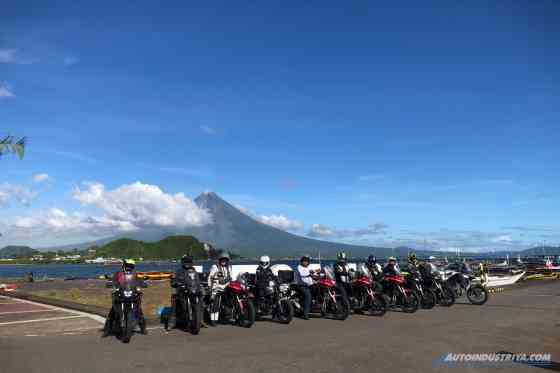
Now, let me rewind to November 2025, during a Luzon–Visayas ride with ten foreign riders on big bikes. It was an ideal opportunity to hear unfiltered feedback about the Philippines from the perspective of first-time visitors. These riders weren’t new to travel, as they had just come off motorcycle tours across different parts of the world and chose the Philippines as the final stop of their 2025 riding season before heading home for the holidays.
Airport and water
The first thing they complained about was the airport. Seven out of ten called it chaotic, with taxis overcharging and often refusing to use the meter on the way to their hotels. Then, at the hotels, they noticed staff who seemed unprepared or were not trained well to handle guests properly.
But what surprised me most was the water; yes, the very water we drink every day. By the third day, several of them were having stomach issues because many had been used to drinking water from the tap in their home countries. Switching to bottled water and a little medication solved the problem, but it raised a bigger point: it’s not just the water itself. Many restaurants handle food and drinks in ways that make tourists uneasy, like serving ice that has been sourced from suppliers that may have little to no standards in food safety.
And the food? Unless it’s from top-tier restaurants, portions are small, presentation is lackluster, and what’s on the plate rarely matches the social media photos or even the menu description. And we weren’t exactly eating at street stalls or cheap restaurants.
But the real kicker? Our pride and joy, San Miguel Pale Pilsen, was served warm every single time. Yes, warm—every time. You can imagine the collective raised eyebrows from my foreign companions.
0-star hotels that charge 5-star rates
I used to think I was the only one noticing how even “budget” hotels in the Philippines charge an arm and a leg for services that barely match their price. I was wrong. On this trip, the foreign riders were unanimous: “Your hotels here in the Philippines are sh*tty.”
For them, a hotel costing around USD 100 per night falls far below the standards of even cheaper hotels they’ve stayed in abroad, with Thailand often giving the most value for the money. Here, they complained about non-working hot showers, beds infested with mites, and a long list of other issues.
Sure, there are nicer hotels here, but those start at USD 200 to 300 per night, well above what comparable hotels cost in other countries, making them inaccessible to the average traveler seeking value.
Ports are a disaster
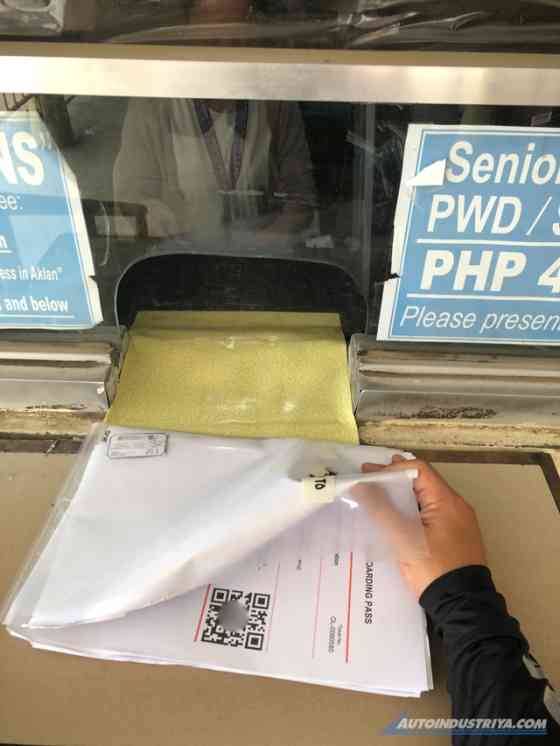
The Philippines is made up of thousands of islands, so naturally, traveling between them means hopping on a Roll-on, Roll-off (RoRo) vessel. You’d think that in this day and age, booking a trip and paying online would be as simple as clicking a button. You’d be wrong. The government, in a brilliant display of backward thinking, still requires all online bookings to be reverted to manual.
What does this look like in real life? Instead of gliding through the port gates, you have to bring printed copies of your online booking, line up at the ferry’s ticketing office so they can convert it to a manual receipt, then trek over to the Philippine Ports Authority (PPA) and, if applicable, the LGU’s port office to pay yet another fee and collect another manual receipt, including arrestre fees which technically shouldn’t even apply to motorcycles or light vehicles. Only after all that bureaucratic juggling can you finally wait to board the ferry.
If that sounds exhausting, it gets worse. The ticketing office usually doesn’t open until two hours before departure, and with long lines, manual processing, and lots of cargo trucks that are also trying to board the ship to avoid delays, you’re lucky if you actually get on the ferry on time. Isn’t that the whole reason online booking exists? Apparently not in the Philippines. At RoRo ports, “efficiency” is just a suggestion.
And if you’re not a frequent traveler, here’s a fun bonus: a scavenger hunt. You need to show your OR/CR at the Philippine Coast Guard (PCG) office to get a tiny paper stamp stapled to your ticket. These PCG offices are often outside of the port, so finding them can feel like a scavenger hunt. Coincidence? Maybe. Or maybe it’s just a clever way to make sure fixers stay employed. And don’t even get me started on the horror stories [insert: SOPs] truck drivers shared with me while we waited for the ticketing offices to open.
Again, FEE-lippines
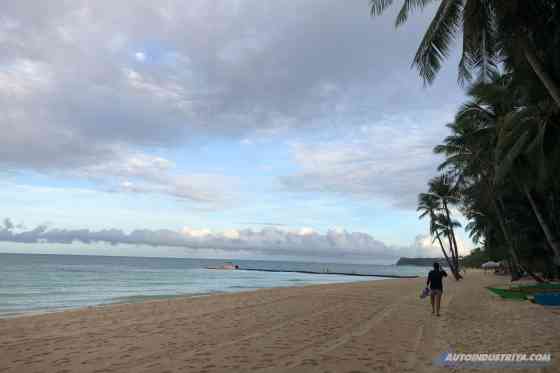
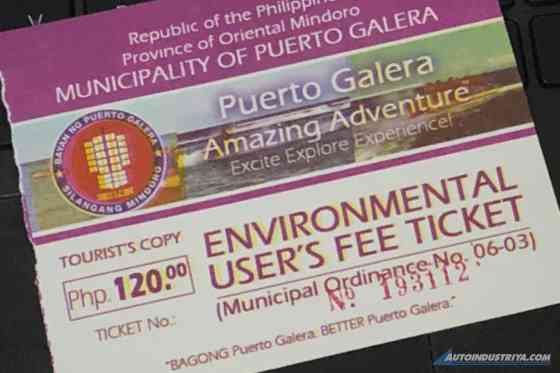
Of course, the tour included giving our guests a great time at the world-famous Boracay. But reaching those pristine white beaches comes with yet another layer of fees like environmental fees, LGU fees, and a bunch of other charges that often leave tourists confused and with a bad taste in their mouths, not to mention that staying there is very expensive vs the value it offers besides the white sands.
It’s not just Boracay. Many other tourist destinations have the same problem, like multiple overlapping fees, poor signage, and unclear processes, which create a bad first impression before visitors even get to enjoy the scenery. And what does our country generally offer? Slow or poor service, unreliable internet, bad roads, limited food options, many opportunistic locals or businesses, and a transport system that still feels stuck in the 1960s.
Back in Manila, I asked one of my guests for his overall impression. His answer? “Your country is beautiful, but this is probably the first and last time I’ll visit—unless it’s Anjeleeez (Angeles City), where I’m going to have lots of fun,” and this was being said with a negative connotation.
Individually, many of these issues might be dismissed as minor inconveniences (our RoRo ports remain a serious problem, though, FYI Department of Transportation), but together, they form a pattern that is impossible to ignore, and perceptions matter. No matter how breathtaking our beaches and destinations are, or how much the Department of Tourism and the Tourism Promotions Board spend taxpayer money on glossy campaigns, the message falls flat when basic travel standards, hygiene, and convenience are neglected. Add confusing and overlapping fees at every turn, visitors, foreign or local, won’t just be frustrated; they’ll leave and choose other destinations instead. And while we nickel-and-dime visitors into frustration, neighboring countries roll out comparable (or even better) natural beauty with fewer barriers and happily reap the rewards of our self-inflicted losses.
This, perhaps, is why the country is gaining a new reputation among travelers. Welcome to the FEE-lippines.