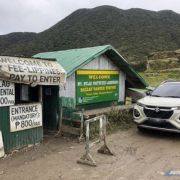
Full EV camping: What could possibly go wrong?

We went full EV car camping and regretted it
Battery electric vehicles (BEVs) have come a long way. Early on, these vehicles were largely confined to urban use, where access to charging stations and close proximity to the driver’s home made the BEV a viable option for daily commuting.
Today, many BEVs are venturing further than before. A growing number of electric vehicles now offer the range, capability, and features needed for weekend getaways and light adventures. This emboldened manufacturers to shift how these vehicles are marketed.
At Autoindustriya.com, we like to experience things firsthand, so I reached out to Omoda & Jaecoo, and they handed over the key (err, remote) of their most capable SUV: the EJ6.
Our goal: Can we take a real BEV on a family camping trip?
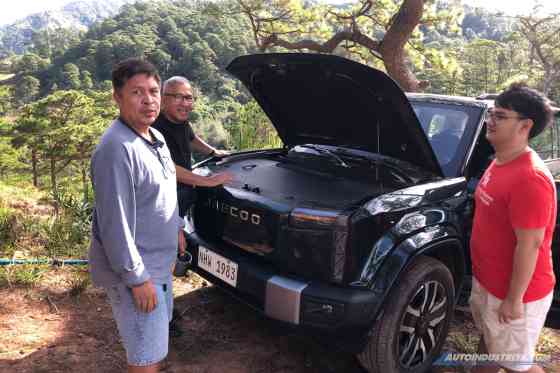
Where engine?
BEV to the outdoors
The Jaecoo EJ6 is an all-wheel-drive, dual-electric-motor SUV from China. On paper, it produces up to 279 PS of power and 385 Nm of torque. Power is supplied by a 69.77-kWh lithium iron phosphate (LiFePO₄) battery pack, which delivers a claimed driving range of up to 421 kilometers on a full charge.
Step inside, and the EJ6 offers everything you would expect from a modern luxury SUV. It comes with fully adjustable seats with reclining backrests, premium upholstery, a large 15.6-inch infotainment display, multiple drive modes, including for off-road driving, and a comprehensive suite of safety technologies. These are features normally found in far more expensive European SUVs.
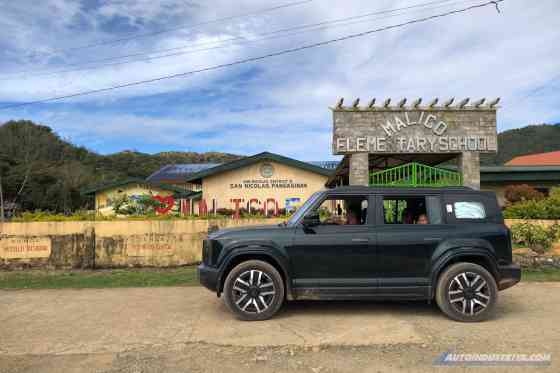
A happy place called Malico
Our destination is Malico, a very quiet place in Nueva Vizcaya. This quaint location does hide a rather dark secret: during World War II, this same mountain town was the site of a brutal Japanese retreat, where soldiers fought to the last man as Allied forces closed in to liberate the country.
Today, however, this is a quiet, cozy destination ideal for camping. Think Baguio weather, but without the crowd or traffic. Located less than 250 kilometers from Manila via NLEX, SCTEX, and TPLEX, the Malico should theoretically be well within the EJ6’s range. Of course, we wanted to leave enough charge to spare for the descent from the mountains and a planned top-up at Petron TPLEX southbound, so I topped up the EJ6 to 100% at Petron NLEX Marilao’s DC charger to ensure I had more than enough juice for the adventure ahead.
The climb up the winding roads from San Nicolas, Pangasinan, to Malico, Nueva Vizcaya proved effortless for the EJ6. With its dual-motor all-wheel-drive setup, the vehicle felt planted and composed through every curve. Being a full electric, the instant torque delivery made short work of the uphill sections, easily keeping pace with (and even pulling ahead of) larger SUVs on the climbs.
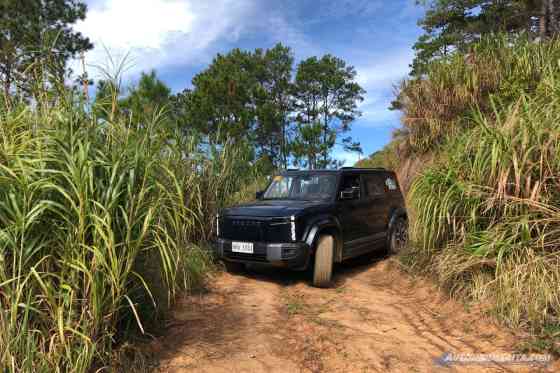
Climbing and descending dirt roads was no sweat for the EJ6
So we have reached the campsite without breaking a sweat, including a minor detour to an already closed road that was infested with ruts. It was tough, as the road used to be a shortcut. The EJ6 proved its worth as a capable SUV, making the trek effortless and still in control even on a very rutted and loose surface.
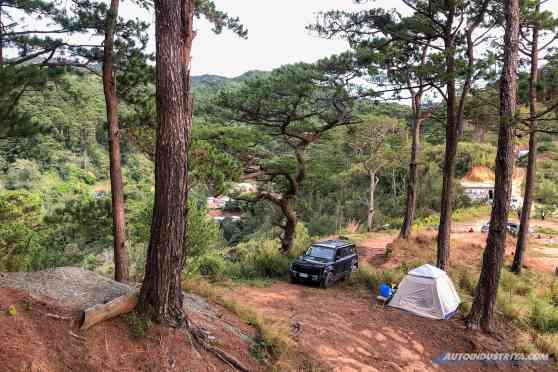
We arrived at the campsite at around 4:00 PM, even tackling another steep dirt incline to reach a flatter section where my family and I could pitch our tent, conveniently with space to park the EJ6 right beside it. I was just happy we finally made it to the campsite the kids had been excited about for weeks. What I didn’t tell them -which is something I quietly kept to myself- was that our ride, the EJ6, was down to just 20% battery juice. That meant the 209-kilometer drive from Petron NLEX Marilao had already consumed 80% of the EJ6’s charge, and that was with the car running in ECO mode for most of the expressway stretch.
Internally, my mind was busy doing EV math. I was estimating kilowatt-hours, downhill regen, and the distance to the nearest charger I’d hoped I wouldn’t need. Lying there under the stars, it wasn’t the wildlife keeping me awake; it was the battery percentage quietly glowing in my head.
That's range anxiety, folks.
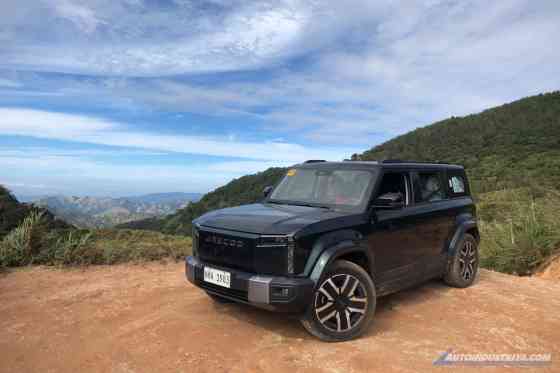
The looong way home
I opened the cargo area of the EJ6 to look for a mobile charger; you know the kind that comes free with every BEV that you can plug into your regular 220V outlet. These things deliver about 2.2 kilowatt-hours of juice to the battery, which is about the consumption of a typical 2-horsepower air conditioner.
Of course, in the EV scheme of things, it's not fast at all, but it would have meant I could plug in the vehicle at a small welding shop that serves the local community just a few hundred meters away. We did meet the owner of the shop at the campsite, and I could just pay him for the charge. In places like this, everybody knows everybody, and solutions are often closer than you think.
But alas, there was no mobile charger in the vehicle. I checked every nook and cranny. None.
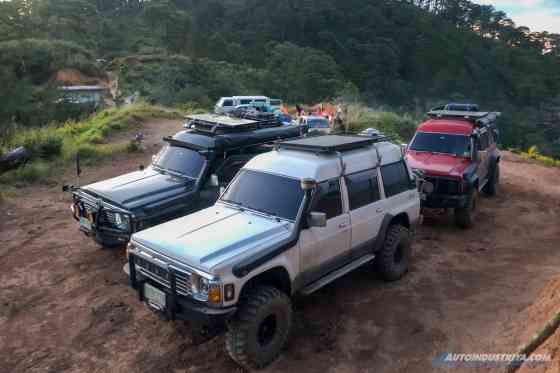
Our fellow campers' rigs
Morning came after a great night around the campfire, accompanied by cool mountain air, and it was time to head home. No, we were not able to charge.
There was no choice but to get along with it and try to manage the drive. I just hoped the EJ6’s regenerative braking, cranked up to maximum, would give me enough juice to top the battery to at least 30% and make it to Petron TPLEX southbound, where an AC charger awaited. The problem was Sunday traffic: in both directions up and down the mountain, the buildup was maddening. Countless motorists were slowing or even stopping to admire (and take videos of) the view. At that pace, the EJ6’s regen barely made a dent. By the time we reached the lowlands, the battery had gained a meager 3%, which evaporated almost immediately once we hit the highway.
Now it was decision time: push on to Petron TPLEX or divert further north to Rosario, La Union, where a Shell Mobility DC charger awaited. Both were roughly 45 to 50 kilometers away, but with the battery down to a critical 8%, every kilometer felt like a gamble. There was also a DC charger at the Department of Energy field office in Rosales, Pangasinan, but when we got there, an employee informed us it hadn't been turned over yet and was not operational despite being ready since October 2025. Taxpayer money well spent, as always.
There is a silver lining: SM City Rosales is just a few kilometers away. offers a 1 free charging port. The catch? Someone’s EV was already plugged in, and they were topping up to also head to Manila. That meant a wait of at least four hours. Perfect. Just another fun twist in the adventure of EV road-tripping.
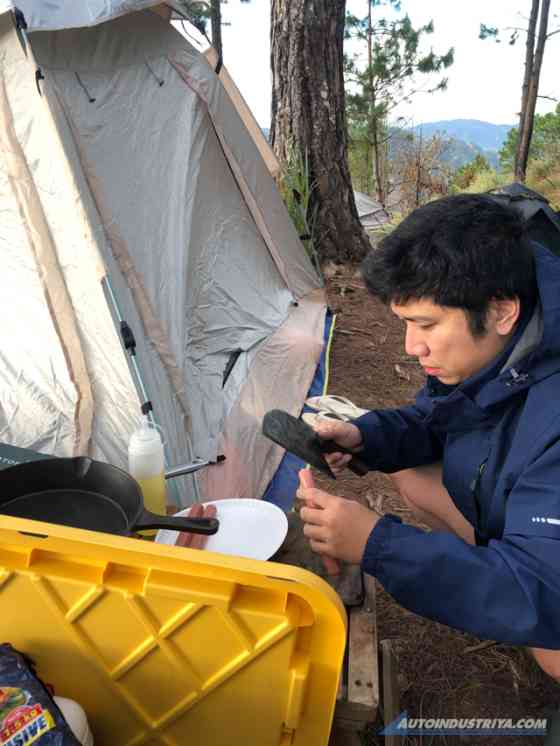
So, that four-hour wait stretched into six, plus our own top-up time, which meant another round of car camping, and this time in a mall parking lot, just to get enough juice to make it to Petron TPLEX. After what felt like forever, I decided it was finally time to head out. Four more hours at Petron’s slow charger followed. Yep, another parking-lot sleepover, just us and the hum of the charger.
With barely 40% battery, we finally hit the road home—it was already past midnight on Monday. To conserve every kilowatt-hour, the expressway crawl was painfully slow. Adaptive cruise control set to 60 km/h became my best friend. When a snail-paced truck appeared ahead, I didn’t even think about overtaking. I simply followed its snail-like pace across three expressways, praying the EJ6 wouldn’t conk out somewhere in the middle of the night.
Mercifully, DC chargers were available at Phoenix Ride and Dine in Valenzuela. We were basically running on the EV equivalent of fumes by this point. After just enough charge to make the final stretch home, we finally set off again, and it was almost sunrise when we rolled into the driveway. Exhausted, electric, and more than a little proud of surviving what could only be described as a mountain-to-metro EV endurance test.
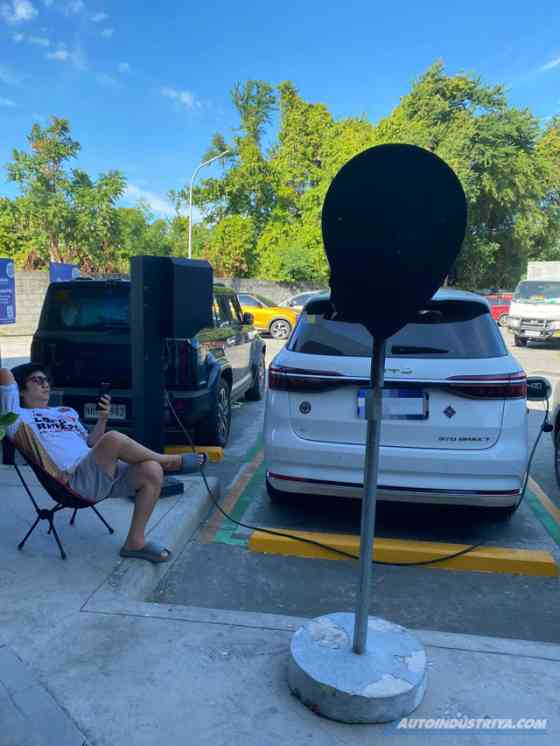
Car camping part 2 at SM Rosales while waiting for my turn
Just a bad idea... for now
Let me be clear: the EJ6 from our friends at Omoda & Jaecoo is a very capable, fun-to-drive SUV with lots of features normally found on very expensive European brands—as long as there are chargers to keep it running. Beyond that, my experience taught me that a camping adventure with a BEV is a bad idea.
It’s a bad idea because most charging stations outside major cities are slow chargers, if they exist at all. You end up spending hours staring at a progress bar while your plans sit in limbo. Meanwhile, our co-campers were already back home, relaxing or sleeping, while we were still on the road, waiting for our ride to have enough juice to get us home.
It’s a bad idea even if the vehicle I was driving came with a portable charger in the trunk. Sure, you can charge anywhere you can find a 220V outlet (even in the mountains), but first you have to find a shop that would let you do so. In my case, there was no charger to begin with, so I had to plan around available chargers.
It's a bad idea because expenses can balloon. Charging is cheaper than fuel, sure, but the time spent waiting inevitably means eating, snacking, or finding ways to kill time, which can all add up. Travel with kids, and you’ll understand; hunger and boredom are expensive companions.
It's a bad idea because instead of enjoying, you're stressing. While I enjoyed the adventure part, it just came with more headaches than expected.