2024 Mitsubishi XForce 1.5 GT CVT

- Make: Mitsubishi
- Model: XForce 1.5 GT CVT
- Engine: 1.5-liter DOHC 16-valve Inline-4 MIVEC
- Max Power: 105 PS @ 6000 rpm
- Max Torque: 141 Nm @ 4000 rpm
- Transmission: CVT, FWD
- Price as Tested: ₱1,581,000
7/10
9/10
8/10
9/10
7/10
8/10
Better Late Than Never
When the B-SUV segment started to boom in the Philippine market, Mitsubishi was lacking a contender of their own. Sure, they had the ASX but that was a compact crossover meant to take on the likes of the Corolla Cross or RAV4. And while it is made in Japan, Mitsubishi couldn’t price the ASX competitively. Ultimately, Mitsubishi pulled the ASX out of the market as it wasn’t able to compete.
With most B-segment crossover SUVs offered in the country made in either Southeast Asia or in the PRC, this allows manufacturers to take advantage of the ASEAN Free Trade Area (AFTA) to competitively price their B-SUVs. Clearly, Mitsubishi had a dilemma on its hands and decided to make a B-segment crossover of its own based on the platform of the popular Xpander/Xpander Cross MPV.
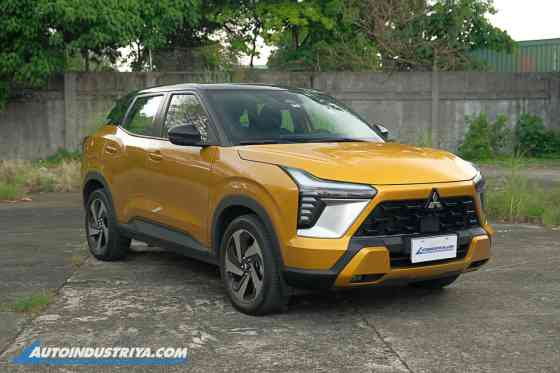
The result came in the form of the XForce. Brimming with style inside & out along with plenty of high-tech features to rival its closest contemporaries, Mitsubishi’s new crossover looks and sounds promising. But is Mitsubishi too little too late to join the lucrative segment? And is the price tag on this top-of-the-line GT variant we’re testing a little too ambitious?
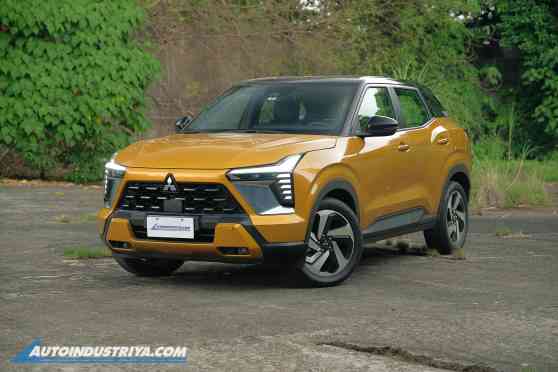
Let’s kick things off with the XForce’s stylish exterior. Borrowing heavily from the XFC concept from which the XForce is based, the crossover oozes sophistication thanks to its futuristic design. From the L-shaped LED lighting elements on the front and rear to the muscular fenders, as well as the 18-inch diamond-cut alloy wheels, Mitsubishi appeared to have let designers have fun with the XForce.
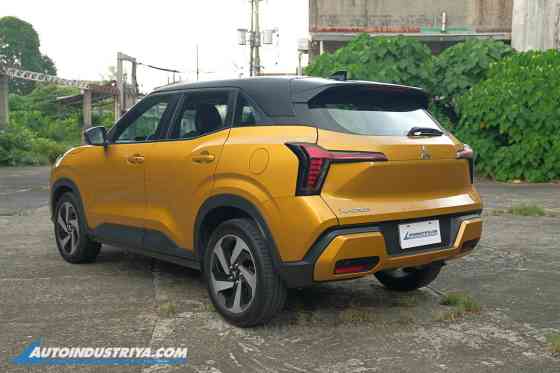
For something that’s meant to be a mass-market crossover, the overall look and design of the XForce appear to be more along the lines of a premium SUV. Combined with its sleek proportions, sporty-looking fascia, and sloping roofline, I cannot help but be mesmerized and admire the XForce from every angle.
Mitsubishi could have gone for a safe look in designing the XForce. But just like the Xpander/Xpander Cross, the automaker decided to go for something flashy and eye-catching and it paid off. Fortunately, style is not all the XForce is about.
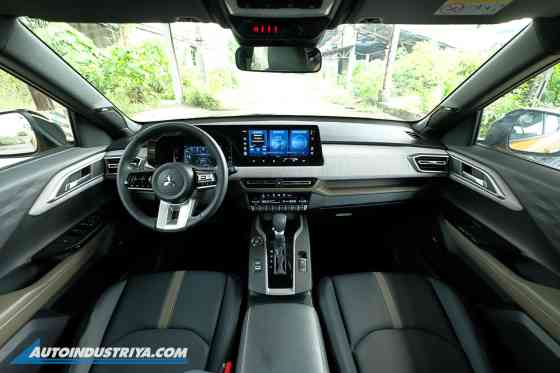
Hop on the driver’s seat and I was surprised by the SUV-like position. Even at its lowest setting, the tall ride height combined with the relatively high seating position means outside visibility is impressive. Then there’s the leather seats which feel supple to the touch. While it may be the synthetic kind, the one fitted on the XForce feels and looks premium. Both the driver and front passenger seats also offered plenty of shoulder and side support which is always a big plus.
Like many vehicles geared to tech-savvy individuals, the XForce comes with a pair of displays on its dashboard. Sitting in front of the driver is an 8-inch instrument cluster while a 12.3-inch touchscreen media display sits on the center dash complete with wireless Android Auto & Apple CarPlay. The instrument panel has crisp graphics and multiple display modes. However, I do wish they made use of round gauges for the tachometer and speedometer but that's just me being nitpicky.
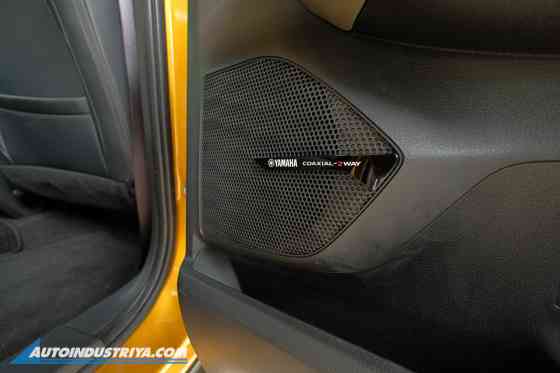
We’ve all heard the hype surrounding the XForce’s Yamaha 8-speaker sound system. While some might have thought it was nothing more than just a marketing stunt, it’s anything but that. With Yamaha’s expertise in music that goes back to the late 1800s, Mitsubishi’s decision to have the company make its sound system was a sound one, pun not intended.
As someone who always enjoys quality sound from sound systems, the Dynamic Sound Yamaha Premium did not disappoint. I originally managed my expectations but after going through several music genres and adjusting the system’s equalizer, Yamaha was able to make one heck of a sound stage. It even comes with a surround sound setting which made the system even more impressive.
Mazda’s Bose sound system is still by far one of the best sound systems in the premium mass market segment. But Mitsubishi’s Yamaha sound stage is not to be dismissed. While the XForce is the first vehicle in the Mitsubishi lineup to have it, we won’t be surprised if other models may soon come with Yamaha sound systems.
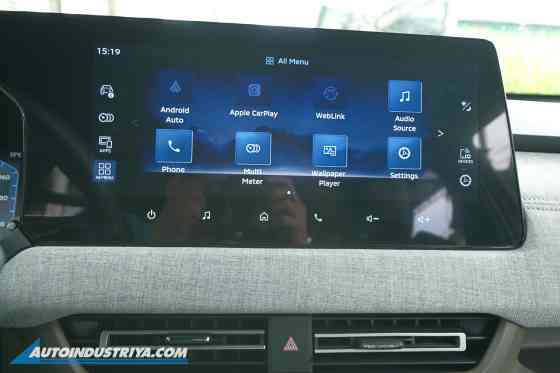
Despite my praises for the XForce’s cabin and amenities, there were some points of improvement I wish Mitsubishi take note of. For starters, the wireless Android Auto sometimes disconnects which means I’m only left with Bluetooth. While this is not entirely bad it’s quite annoying having to reconnect the device - especially when you’re on the move. Wireless Apple CarPlay was working fine, however as it did not disconnect randomly when a friend of mine paired their phone to the touchscreen.
Another thing I wish Mitsubishi could work on is the operating system of the touchscreen display. While it’s loaded with features, the system sometimes hangs or slows down. I’m not sure if the system has bloatware but perhaps an update might fix the touchscreen’s tendency to slow down.
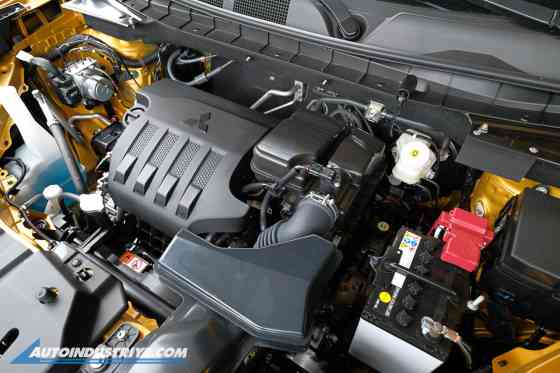
Under the hood of the XForce is a familiar engine. It displaces 1.5 liters, has four cylinders, and produces 105 PS at 6000 rpm with 141 Nm of torque at 4000 rpm. That’s right: the XForce is powered by the Xpander’s 4A91 engine. But compared to the MPV which has a 4-speed automatic gearbox, the XForce has a continuously variable transmission (CVT).
While the 4A91 is a good engine, some of you might already be concerned that it’s underpowered for the XForce. Fortunately, Mitsubishi tuned the engine to deliver torque at low revs despite its peak pulling power at 4000 rpm. This was made possible thanks to the CVT made by Aisin. What the engine lacks in sheer displacement and forced induction, the CVT makes up for in quick engine response and acceleration.
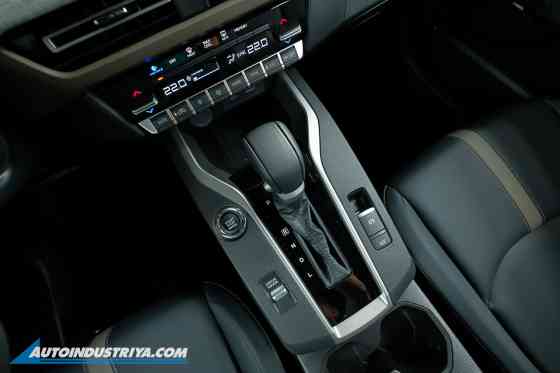
It’s no turbocharged engine but bury your foot on the accelerator and you’ll be surprised by the XForce’s initial acceleration and its ability to reach highway speeds relatively quickly. The 1.5L and CVT combo is nothing new as most brands make use of this setup but the one on the XForce is smooth, delivers quick acceleration, and doesn’t feel rough or underpowered. I reckon it’s in the same level of refinement as the Hyundai Creta and Honda HR-V S in terms of performance despite being slightly down on horsepower.
Need to do faster overtaking on the highway? The CVT comes with Sport Mode that sharpens acceleration and kicks up the revs. But what really impressed us with the drivetrain are the various drive modes. Aside from Normal, the XForce gets Wet, Gravel, and Mud which helps the crossover cover various terrains despite being only a 2WD vehicle.
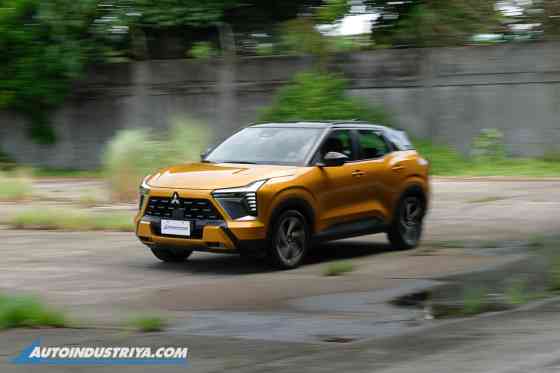
From loose surfaces to muddy roads as well as wet pavement, the XForce was able to hold its own and did not miss a beat. You can check out how we were able to trek through gravel surfaces, muddy terrain, and wet patches of road with ease by checking out the things we liked about the XForce when Mitsubishi invited us for its first drive to Tarlac & La Union.
When it comes to fuel economy, the XForce delivered impressive figures. In light city driving at an average speed of around 25 km/h, the crossover can return up to 11 km/L. On the highway, the XForce is capable of sipping fuel up to 18.5 km/L at an average speed of around 90 km/h. With an even lighter foot, the XForce can average up to 19 km/L in case you’re the kind of driver who likes to hypermile.
Mind you, when we tested the XForce’s fuel economy, there were two of us in the crossover along with some luggage in the back. I have to give props to Mitsubishi for making the XForce’s powertrain fuel-efficient without sacrificing engine response.
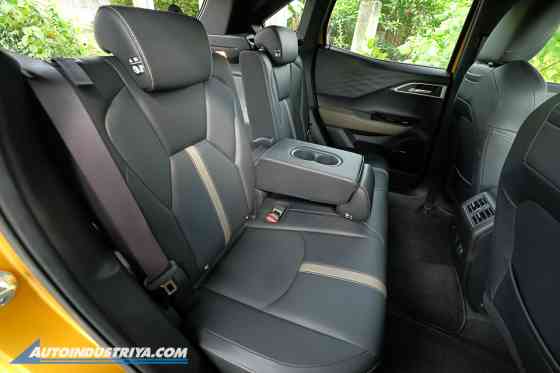
Ride comfort is also another aspect the XForce excels in. This is due to its dampers that have the same diameter as the ones found in the Montero Sport. While it may not be the same model of shock absorber, this allowed the XForce to soften the bumps and make short work of uneven roads, undulations, and pock-marked streets.
Another thing we liked about the XForce is its refinement. Not only does it have good Noise, Vibration & Harshness (NVH) levels at highway speeds, but outside noise was kept to a minimum. Despite being a B-SUV, Mitsubishi made sure that the XForce would always deliver a comfortable and quiet ride no matter the situation.
When it comes to handling, the XForce has fairly sharp steering which is a nice touch. Whether you’re driving around town or heading up the mountains, the XForce will not disappoint. However, I did notice that its steering felt rather numb and lacked feedback. Yes, the XForce is geared towards comfort but I wish more automakers actually allow you to feel what’s happening on the front tires for that added steering feel.
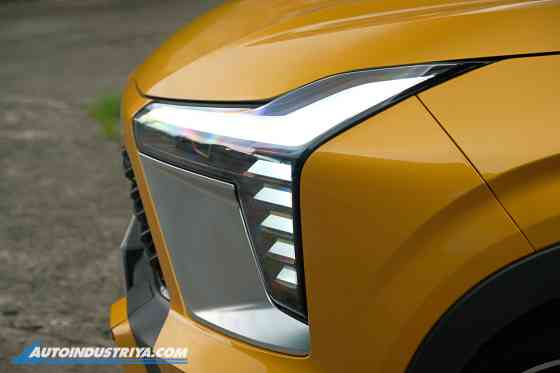
With the XForce 1.5 GT presenting itself as a quality B-segment crossover that can give its competitors a run for their money, Mitsubishi appears to have a winner on their hands. It's fuel efficient, packed to the brim with features, has one heck of a Yamaha sound system, is comfortable, and more refined than some of its closest rivals.
The GT has plenty of features along with a smooth and refined ride quality. In addition, it has advanced driver assistance systems (ADAS) as standard which include forward collision mitigation, blind-spot warning, rear-cross traffic alert, automatic high beam, a tire pressure monitoring system, and lead car departure notification.
There is one big hurdle the XForce has to contend with, however, price. This top-of-the-line model is selling for PHP 1.581 million which is several thousand Pesos more than its contemporaries. With an SRP of nearly PHP 1.6 million, it's in the same price range as bigger crossovers which could hurt its value-for-money proposition. But Mitsubishi is -as far as we know- currently offering a PHP 70,000 discount for the XForce, bringing the price down to a more palatable PHP 1.511 million.