2024 Land Rover Range Rover Sport SE D300

- Make: Land Rover
- Model: Range Rover Sport SE D300
- Engine: 3.0L DOHC 24-valve Inline-6, Twin-Turbo Diesel
- Max Power: 300 PS @ 4000 rpm
- Max Torque: 650 Nm @ 1250 - 2250 rpm
- Transmission: 8-speed AT, AWD, paddle shifters
- Price as Tested: ₱14,347,000
9/10
8/10
8/10
9/10
6/10
8/10
The RR for Enthusiasts
What is a Range Rover Sport? For some, it's simply the smaller sibling to the much bigger Range Rover flagship model. While there is a nugget of truth to this, there is more to the Range Rover Sport than just being a “mini-me” version of the brand's crown jewel.
First launched in 2005, the Range Rover Sport is now on its third generation and has grown not just in size but has also leveled up in terms of style and driving dynamics. While it may still be considered a baby Range Rover by some, it's certainly not lacking in terms of equipment and amenities which we’ll get to later.
But why did Land Rover actually decide to make the Range Rover Sport a reality? They already had the Discovery and the Freelander around the same time they launched the RRS so what gives? Before the vehicle debuted all those years ago, some customers were clamoring for a Range Rover that was smaller, sportier to drive, and still had plenty of features along with the signature Land Rover capability. In addition, some customers wish to drive the Range Rover themselves rather than have a chauffeur drive it for them - hence the Range Rover Sport.
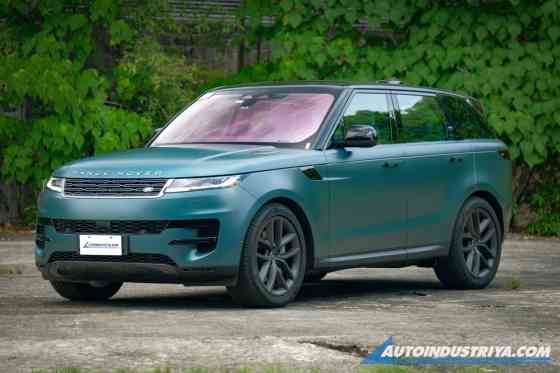
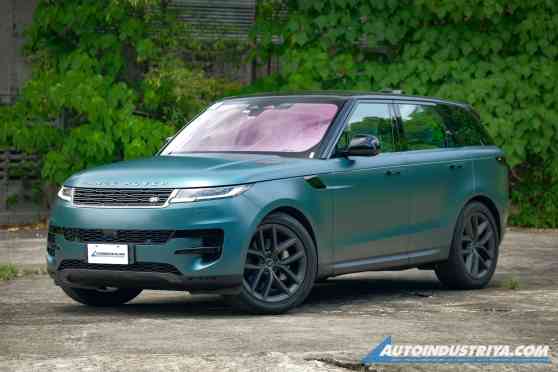
While the Range Rover Sport’s predecessors had a more boxy appearance, the designers over at Solihull decided to shelve that and opt for a sleeker shape for the third-generation model borrowed from the L460 Range Rover. The result is an imposing yet stylish exterior that exudes confidence.
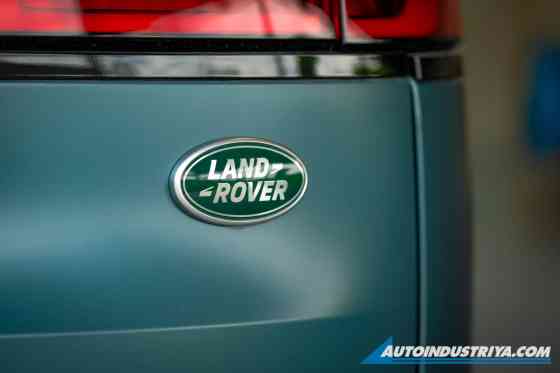
The signature grille design, together with the sharp LED headlights, give the Range Rover Sport its iconic face. Meanwhile, the blacked-out roof provides a striking contrast against the matte-finished Satin Protective wrap which hides the vehicle's Giola Green paint. Then there's the massive 22-inch alloy wheels in a Satin Gray finish that perfectly complements the overall design of the Range Rover Sport.
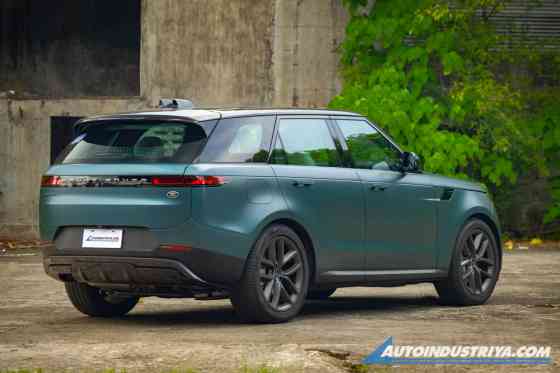
While I wish it came with the same LED taillights as its bigger sibling, the wraparound LED units suit the Range Rover Sport's looks. Combined with the 3D design of the taillights, the black accents on the Range Rover decal, and the blacked-out spoiler, the luxury SUV has a purposeful and commanding appearance.
Climb aboard and the Range Rover Sport welcomes you into a Windsor leather cabin festooned with high-quality materials one might find in a luxury hotel suite. The white leather upholstery is supple to the touch and has that signature quality smell. While I'm not the biggest fan of white leather due to its tendency to become dirty quickly, the color contrast between the neat touches of gray and piano black accents does give the Range Rover Sport its high-end image.
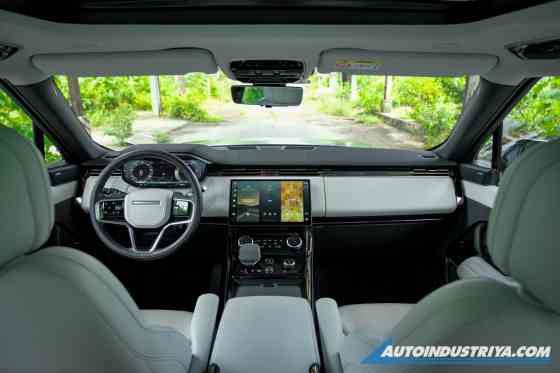
Besides having a lounge-like cabin, the Range Rover Sport comes with a pair of digital displays. One serves as the instrument panel and the other is the high-tech touchscreen media display dubbed Pivi Pro. Both screens come with high-resolution graphics that are pleasing to the eyes. The touchscreen media display has one of the sharpest images that I’ve ever seen and comes with wireless Android Auto & Apple CarPlay connectivity. The system paired so quickly with my device I forgot I was using Android Auto when I first started the Range Rover Sport.
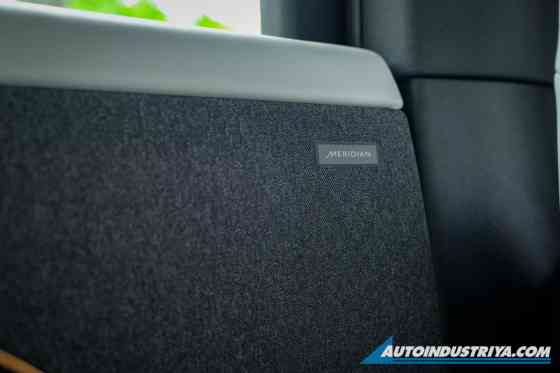
But perhaps my favorite feature to use inside the Range Rover Sport is the Meridian sound system. With a myriad of speakers all around you along with an equalizer that can rival that of home speakers, playing your favorite playlist while inside the Range Rover Sport is quite the experience. Heck, there were times I spent more time inside the vehicle just to listen to my favorite tunes
Another neat feature that I got to use several times when I had the Range Rover Sport was adjusting the air suspension. It has a total of three models available; Access, Normal, and Off-Road. Pull up to a parking slot or garage and set the transmission to 'P', the air suspension lowers its ride height to allow occupants to easily ingress/egress the vehicle. While it may be trivial for some, those who have seniors with them will find this feature very useful.
If there's one thing I wish Land Rover added more into the new Range Rover Sport, it would be the addition of more physical buttons. Yes, I do like what they did with the new Pivi Pro touchscreen infotainment system with its crisp graphics and quick shortcuts, but the fact that I still have to press several buttons to change something means I still sometimes have to avert my eyes from the road.
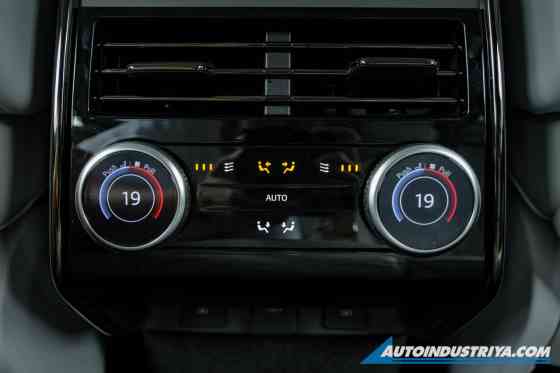
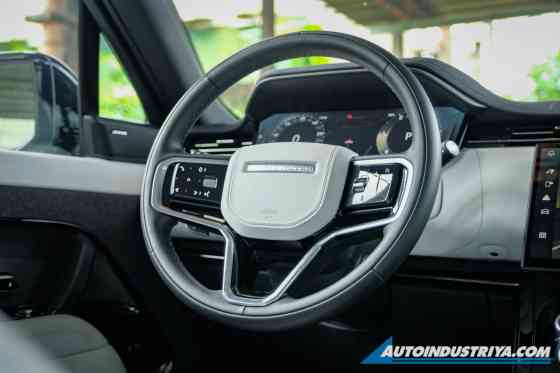
Another feature that I wish the brand changed is the use of touchpads on the steering wheel. Touchpads on a wheel just feel out of place on the Range Rover Sport. The same goes for the climate control system which gets a similar panel. There's nothing wrong with actual switches and buttons for these kinds of functions.
Under the hood of this particular Range Rover Sport is not a gasoline-powered engine. Instead, it has a 3.0-liter twin-turbo diesel inline-six dubbed the D300. It generates 300 PS at 4000 rpm along with a meaty 650 Nm of pull between 1250 – 2250 rpm. Power is then sent to all four wheels via an 8-speed automatic gearbox by ZF.
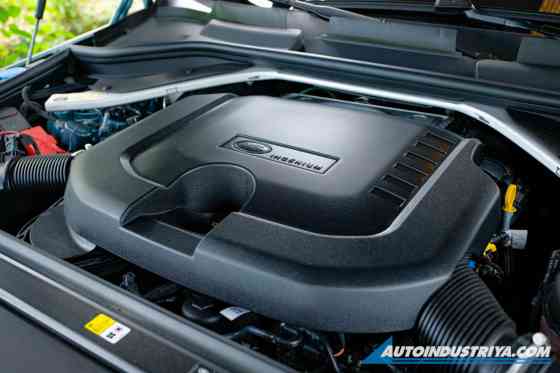
Don't think for once that this diesel-powered Range Rover Sport is a slouch. After a push of a button, the straight-six diesel roars into life. Yes, despite being an oil burner this engine has some growl to it. And before you scoff that this twin-turbo diesel lacks refinement, the Ingenium D300 in the Range Rover Sport is perhaps one of the smoothest-revving diesel engines I’ve ever experienced.
After a cold start, the 3.0-liter diesel straight-six quiets down with a low rumble. I was surprised to hear the engine doesn’t clatter like most turbo-diesels which led me to believe at first it was a gasoline motor. With a light tap on the accelerator, the Range Rover Sport carried on and moved forward without much effort. Paired with a smooth-shifting 8-speed automatic by ZF, the Range Rover Sport cruised along boulevards and avenues with ease.
Take it out on the open road, however, the twin-turbo diesel inline-six shows you what it's made of. On a clear road with no other vehicles around, I buried my foot on the accelerator and was surprised by the engine's V8-like acceleration. The transmission, on the other hand, kept the engine at the optimal powerband and quickly went through each gear. Keep your planted long enough and you’ll be hitting triple-digit speeds in no time.
As much as I wanted to take the Range Rover Sport off-road, I didn’t want to risk damaging its undercarriage, especially for something that has a retail price of over PHP 14 million. However, those who wish to take it off the beaten path will be happy to know it has various modes like Auto, Grass/Gravel/Snow, Mud, Sand, and Rock Crawl. Should you have no spotter with you when you’re going off-road, the Range Rover Sport has an “off-road” camera that shows the driver what’s underneath and in front of the vehicle. This helps the driver go around or move through uneven terrain as the camera serves as their extra pair of eyes.
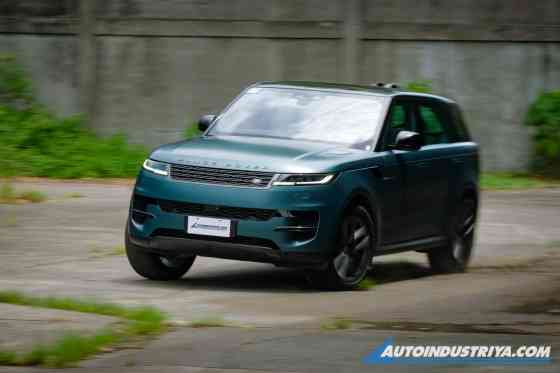
Despite its size, the Range Rover Sport is quite an agile SUV. The electronic power steering is tuned nicely to be as light as possible but also delivers some feedback. It does come with several drive modes like Sport and Economy but I kept it at “Comfort” which is the vehicle's “Normal” mode. Take it on the twisites and the Range Rover Sport will oblige in the corners. But given its tall ride height and hefty bulk, there will be some body roll to contend although the air suspension does a good job of managing it. It's no sports crossover, but the Range Rover Sport will reward spirited drivers.
The Range Rover Sport is wider than your typical SUV so taking on narrow streets can be quite challenging. On town roads and alleyways, the Range Rover Sport literally sticks out like a sore thumb given its immense size. There were times I had to fold the side mirrors just so I could be sure the Range Rover Sport could pass through narrow avenues.
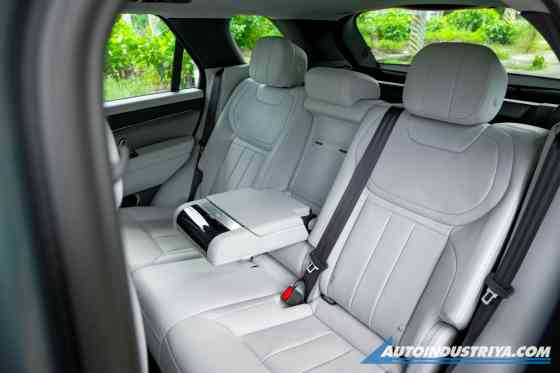
In true Range Rover fashion, Noise, Vibration, and Harshness (NVH) deadening is superb in the Range Rover Sport. The thick glass and even thicker sound insulation materials kept outside noise from loud motorcycles, jeepneys, and other vehicles at bay. Combined with the car delivering a soft ride thanks to the air suspension, the Range Rover Sport is as comfortable as your favorite couch or La-Z-Boy recliners.
With its Range Rover heritage, and endless amount of amenities including a power tailgate, power-folding rear seats, a power sunroof, dual-zone climate control, satellite navigation, and an all-wheel drive system with Terrain Response 2, the Range Rover Sport has all the bells & whistles to take you anywhere in luxury complete with a stump-pulling twin-turbo diesel inline-six.
At PHP 13.990 million, this Range Rover Sport SE with the D300 engine packs quite the price tag to match its long equipment list and refinement. And if you want the exact price tag of the test unit we drove, it’s at an eye-watering PHP 14.347 million as it comes with the XPel Wrap and Black Roof Wrap which is an extra PHP 357,000 combined on top of the SRP.
For those who can afford a Range Rover Sport they want to drive without batting an eye on the price tag, by all means, go ahead. However, several examples are equally capable of being luxurious and can go anywhere they please. But then again, if it lacks a Land Rover (or Range Rover) badge, it’s a no-go for die-hard fans.