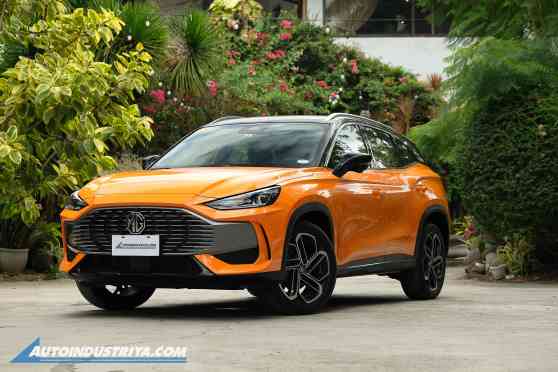
2024 MG One 1.5T Lux CVT

- Make: MG
- Model: One 1.5T CVT Lux
- Engine: 1.5L DOHC 16V Inline-4 TGI Turbo
- Max Power: 170 PS @ 5600 rpm
- Max Torque: 275 Nm @ 2000-4000 rpm
- Transmission: CVT with Super Sport mode, FWD
- Price as Tested: ₱1,458,888
8/10
9/10
7/10
8/10
9/10
8/10
Raising the bar
For the past few years, the MG ZS has been a very common sight on our roads, and value for money is the major factor for that. But if you take money out of the equation and look at a crossover for what it is and what it could have been, we’re more likely to name a few models that can perform better.
Then out comes the MG One. After spending a week with the crossover, something tells me that MG crossovers have gone from satisfactory to great. And that is what we can look forward to from here on out.
The One also represents a new beginning for the MG brand in the country, as it is the first all-new ICE crossover that was launched under the new subsidiary, following the arrival of the Marvel R, MG4, and ZS which are all EVs. With a new nameplate, along with new management, it’s only right to view the MG One crossover with fresh eyes.
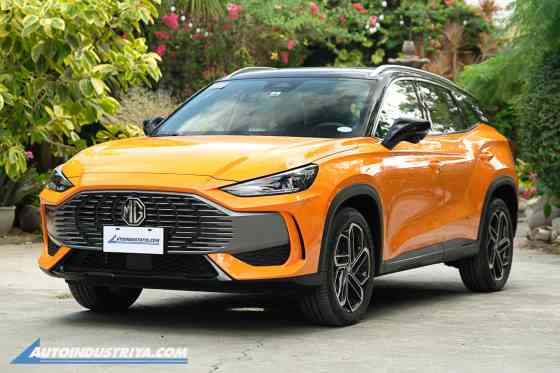
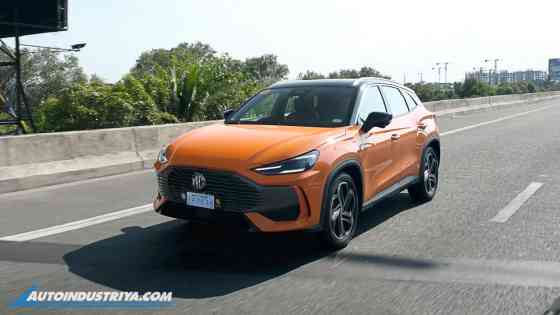
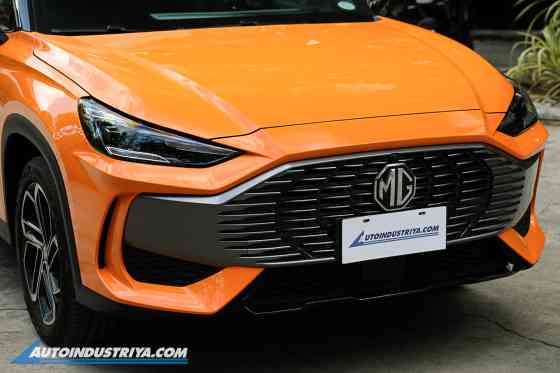
At first glance, the MG One reminds me of how Subaru transformed the Impreza to become the XV, now known as the Crosstrek. While their platforms are not the same, MG seems to have taken some of the design cues of the MG GT sedan to create a sleek crossover with the One. That begins in front with the large front grille, the sharp LED headlights, and the character line that runs from the front door to the rear quarter panels.
While the ZS and HS crossovers had the conventional upright proportions on the side, MG chose the path of vehicles like the Chevrolet Trax and again, the Subaru Crosstrek for the side profile. The result is a sleeker silhouette that blends well to the muscular wheel arches, and the big 19-inch wheels. Add the Fizzy Orange paint job with a black roof, and you get a crossover that’s sure to stand out on the road.
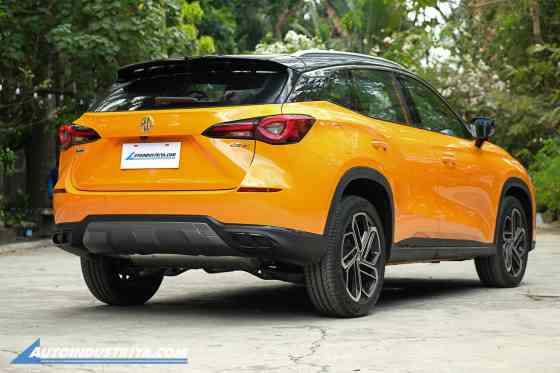
The low roof, and high beltline style on the side result in the One looking like a sport wagon, especially when viewed at the back. In fact, I can see some resemblance to the Mazda6. Now don’t get me wrong, it’s not an exact copycat but it’s more of MG having adopted and refined its style. But with that said, I’m still not a fan of faux exhaust tips; they simply could have left that part empty and it would still look good.
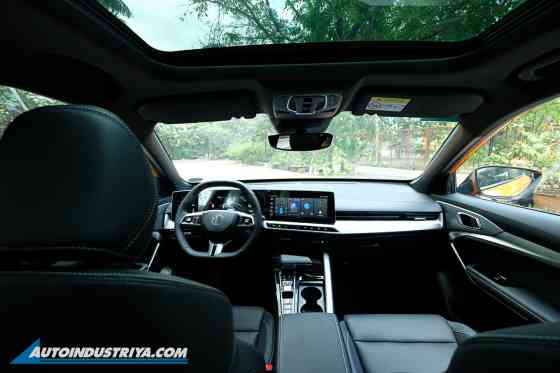
If you’ve been inside the HS or the ZS, getting in the cabin of the One will feel like a complete upgrade. The layout is very clutter-free. The steering wheel shape is different. The display screens are neatly combined like a gamer’s triple-screen setup. The interior materials have leveled up in terms of feel, especially the leather. The wide shift lever actually looks like it was taken from a passenger airplane. None of the controls look similar either like MG has made an entirely new parts bin for the One.
360 cameras? HD quality. The screen’s graphic details are also very crisp, and I like that the infotainment has Apple CarPlay and Android Auto though they seem to not be the wireless type. While that’s the case, the sound quality from the stock speakers is also great; almost like it’s from a premium audio brand.
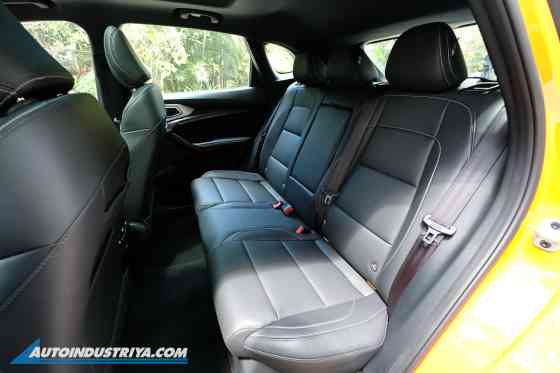
The rear seats are also nice, and you don’t get shortchanged on USB charging, A/C vents, as well as functional pockets on the back of the front seats for your smartphones. Space is good in terms of leg and elbow room, though taller individuals might find their heads a bit closer to the ceiling because of the low roof and the resulting bulge of the sunroof assembly.
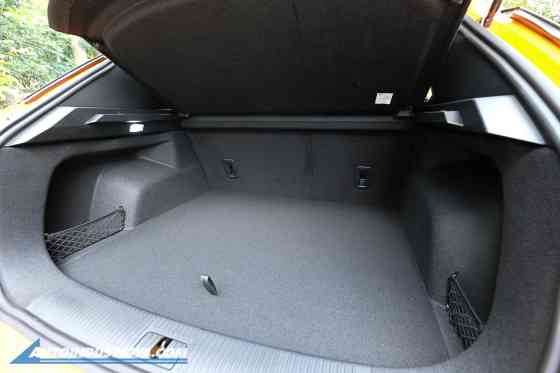
The MG One’s cargo hold measures 34 inches long with the rear seats up, 40 inches wide, and up to 27 inches tall with the parcel shelf tucked away. For more space, the rear seats somewhat give a fold-flat surface to give you up to 61 inches of length.
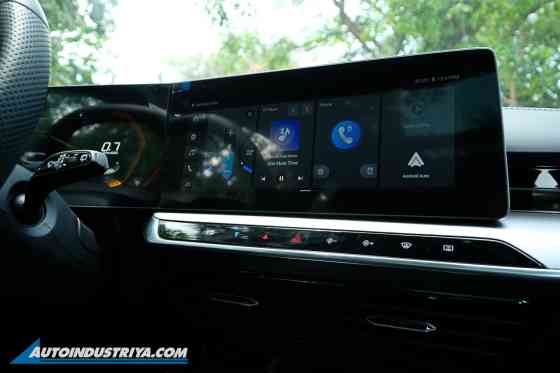
While I might be saying a lot of good things about the MG One’s interior features, there are a few things that I wish MG could improve upon, and those mostly concern the use of the touch panels instead of physical buttons for the A/C climate control, as well as the power adjustment for the mirrors and door locks. They could have traded away a bit of the clutter-free layout for better ease of use, especially on the A/C controls. There were times my finger spent a little too long on the touch panel, and the A/C blower speed shot up to the max setting. It’s just one of the few things that can happen when you use touch panels instead of physical buttons.
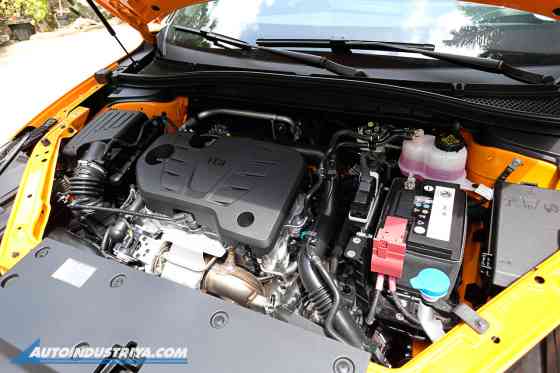
Powering the MG One is a 1.5-liter, four-cylinder turbo with 170 PS and 275 Nm of torque. Do take note that this engine recommends a diet of 95 octane fuel only, or higher. Technically, this belongs in the same engine family as the MG HS, as well as the turbocharged variant of the GT. But unlike the two I’ve mentioned, the MG One has its engine paired to a CVT instead of a DCT.
That difference was immediately felt the moment I started driving the MG One. Simply put, the CVT just makes everything smoother from a driver’s perspective. It responds well to your inputs, and would gladly raise the rpms should you need extra power for overtaking. I don’t recall hearing a droning sound either from the CVT, as the sound-deadening materials and the Continental tires on the MG One do a good job of suppressing NVH.

Like the HS, the One’s engine picks up power pretty well down low, meaning you don’t need high rpms to get things going. It’s a major factor in giving the MG One pretty good fuel consumption averages. During my time with the crossover, the MG One did 10.2 km/l at a 22 km/h average driving in the city. On the highways, the turbo and CVT combination work together to give you up to 17 km/l at an average speed of 79 km/h. The range is also pretty good for a crossover, as I covered over 500 kilometers of mixed driving while still having two bars left in the tank.
Since I had the Crosstrek a week before the MG One, I was pretty much able to compare the suspension characteristics of the two. The Subaru has a hint of sportiness and good body control, while the MG One is geared more towards comfort with a bit of body roll when cornering at speed. For everyday use, the MG One will deliver a plush ride, even with the 19-inch wheels on. However, you lose a little bit of driver engagement as the light steering and soft suspension won’t give you that much excitement behind the wheel. But then again, it’s a compact crossover that’s meant for cruising and relaxing.
While it’s equipped with the latest suite of advanced driving assists such as adaptive cruise control, traffic jam assist, blind spot warning, forward collision, and the like, the MG One could still use a bit more software tweaking. I know, being too safe is not a bad thing, but the ACC’s closest setting still leaves you around 3-4 car lengths away from the car in front. The closest you could get with TJA is around 2 car lengths, which is very much a big window for traffic to cut in front of you. And lastly, the tire pressure warning is also a bit on the conservative side. The warning light already comes on when the tires are still inflated to 2.1 bar or around 30 psi.
In my opinion, the One has indeed raised the bar on the overall experience you can expect from an MG crossover. It’s a lot smoother with the CVT, the interior reeks of higher quality, gives good gas mileage, and better NVH, while still getting a long list of interior and safety features that we’ve become accustomed to before.
Sure, you’re going to have to shell out a bit more for the top-spec Lux with its PHP 1,458,888 price tag, but it still is, in MG fashion, competitively priced when you consider its direct competitors. The Ford Territory Titanium X now costs almost PHP 1.6 million, the GAC Emkoo GL is a few pesos shy of PHP 1.5 million, and it’s only undercut by the Changan CS55 and Jetour Dashing which costs around PHP 1.3 million.
So if you’re in the market for a compact crossover, the MG One simply doesn’t just compete for the value it gives. In my opinion, it’s the MG that can compete pound-for-pound, car for car.