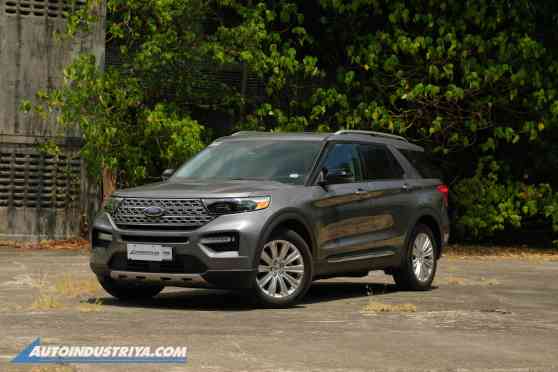
2024 Ford Explorer Limited 2.3L EcoBoost

- Make: Ford
- Model: Explorer
- Engine: 2.3L DOHC 16-valve Inline-4 Gas Turbo Intercooler
- Max Power: 304 PS @ 5500 rpm
- Max Torque: 420 Nm @ 3500 rpm
- Transmission: 10-speed A/T 4WD + Terrain Management
- Price as Tested: ₱3,498,000
7/10
5/10
8/10
8/10
6/10
7/10
Devil in the Details
In the many times that I’ve had the opportunity to drive a Ford Explorer, I’ve walked away from the experience impressed. Many of you -meaning those who want to move up from a pick-up passenger vehicle like Fortuner, Montero Sport, or even Everest, seem to agree. You only need to drive around to see why: the last generation of Explorer is a very common sight on our roads.
Times have caught up though. More new players are coming into the market with interesting and tech-laden takes on the midsize SUV formula that the Explorer has done so well for a decade. With this new competition, does the new generation Explorer still have what it takes to be relevant?
To be blunt, there are quite a lot of hurdles in the way of the Explorer. The first is time… and with it, circumstance. Ford revealed this generation of Explorer at the Detroit Auto Show… in January 2019. But the launch in the Philippines happened in December of 2021. That is a long time between the premiere and the local market launch, and we don’t have to elaborate on what’s been happening all over the world at the time. That’s why the Explorer wasn’t just Limited as a variant, but also in unit numbers.
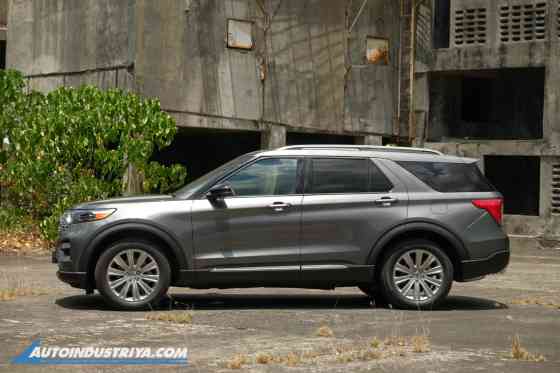
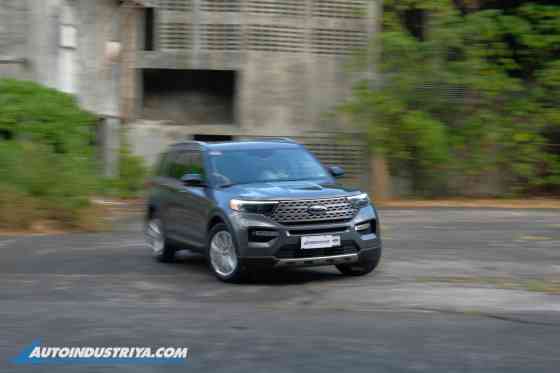
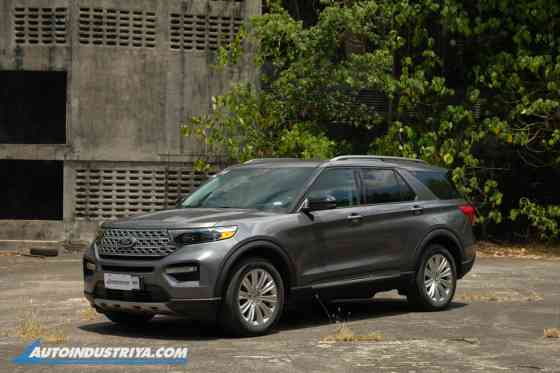
That also explains why the styling feels a little dated. The vehicle we’re driving -an Explorer Limited- was revealed 5 years ago. More importantly, that means the design must have been done a year prior, and when you put it up against a lot of its more direct competitors it seems a bit dated already.
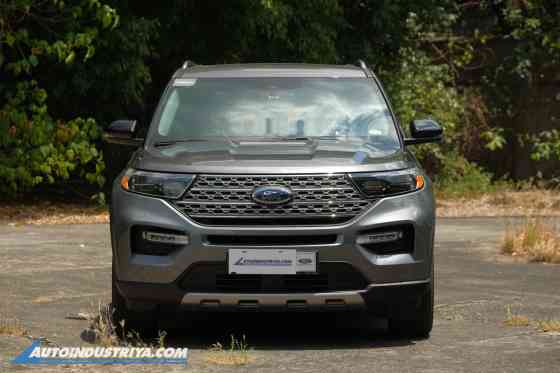
Honestly, I’m not a fan of the front end like the Explorer it replaced; a vehicle that frankly evokes a bit of Land Roverness about it (minus the price). The headlights, the grille, and the bumper design don’t come together as cleanly as I would prefer. The same goes for the wheel design, the plain rear, and those very weird exhaust tips that seem to point backward, but actually point down.
Still, it has the presence of the Explorer that we know. It’s long and wide, as a proper Explorer should be. But it’s hard to get past what could have been if the design team went in a more interesting direction. There is an Explorer facelift that addresses all that (except maybe the tailpipes, but we’re not sure), but it’s not here in the Philippines just yet. Hopefully, we won’t have to wait two years for it.
Perhaps the interior can impress us. We do remember how the Explorer impressed us in 2011 with its space and the use of displays and touch-sensitive panels that were certainly trailblazing (no pun intended) at the time. But such isn’t the case in the Explorer now.
The dashboard looks functional, but also unusual. I do like the presence of a tray below the infotainment screen, but beyond that, there’s not much here that I would call innovative. There was no wow factor that elicited oohs and aahs. The steering wheel looks dated. The way they did the instrument cluster seems plain. The wireless charging pad is small for phones with a case and there’s no wireless Apple Carplay or wireless Android Auto to make it useful. The infotainment screen is also quite small given the size of the vehicle. We’re told there is a larger portrait screen version similar to Ranger/Everest but we didn’t get it in the PH spec.
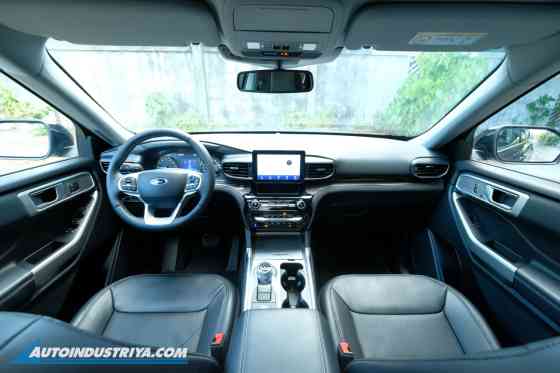
More than just looking for a wow factor, there were also some unusual things we found when it comes to quality. Some of the panels on the dashboard weren’t aligned neatly; like the wood panel on the passenger side relative to the piano black panel. The satin silver plastic material they used inside was also not great compared to the metal (if I remember correctly) they used before. The switches don’t particularly feel great either.
Granted, the Explorer isn’t a premium vehicle like you would get from BMW or Audi, but there are a lot of things that Ford’s quality control in the U.S. didn’t seem to bother checking. The upholstery work on the seats isn’t the same level as the upholstery on other Ford models like Everest; you can see some creases and uneven parts like the material wasn’t level when they stitched it together. Even the carpet was poorly done, with frayed bits coming off of the foam underneath the seats and the shoddy cuts they made to thread wiring through.
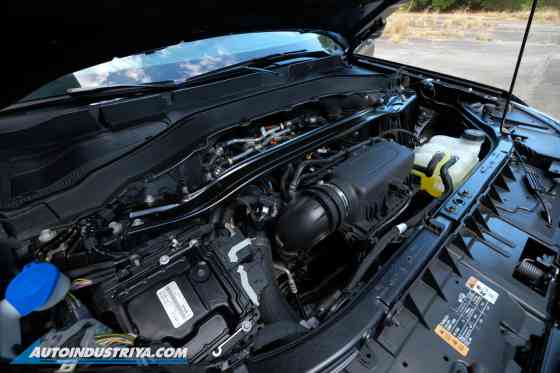
Even when we pop the hood, there are things we notice. I mean, there’s a strut bar like you would find in a performance car, but it’s made of pressed sheet metal. The stay to hold up the hood is also very simple; not even a piece of insulating foam. And then there’s the wiring harness which, for the connector, has all the individual wires exposed for you to see. I’m not a pro at doing wiring, but I can tell if someone didn’t put enough effort into the job.
The Explorer, however, is not all bad. Not even close. Since we’re under the hood, we can see the big change: it has a longitudinal layout instead of a transverse. That means the Explorer is now a rear-oriented four-wheel drive SUV (if that would be the ideal description) rather than a front-oriented four-wheel drive like the previous generation. That helps with things like driving dynamics (if you prefer rear-drive more) and with towing, though that last one isn’t particularly widespread in the Philippines.
The engine is a 2.3L EcoBoost unit, and it pumps out a very healthy 304 PS and 420 Nm of torque that are sent through a 10-speed automatic. We’ve kind of become used to Ford’s 10-speed autos, and the one in the Explorer drives fine. We did feel the shifts at lower speeds, but overall the experience was pretty good. Power is good, as overtaking is easy on two-lane provincial highways, but you’ll have to plan ahead when doing so because there is some lag. If you’re using sport mode it gets a bit easier though.
Speaking of modes, there are plenty to choose from in the Explorer. There are a variety of off-road settings you can use depending on the surface, but be wary that the ground clearance isn’t particularly high at 222mm. Sport mode does enhance throttle response, but expect to pay more for fuel though that’s not really an issue for those realistically looking at an Explorer. Speaking of economy, don’t expect more than 5 kilometers per liter in the city during a morning commute. Yes, it’s better than a V6 EcoBoost version (which isn’t offered here) but still, it gets thirsty. These vehicles really ask for a hybrid setup.
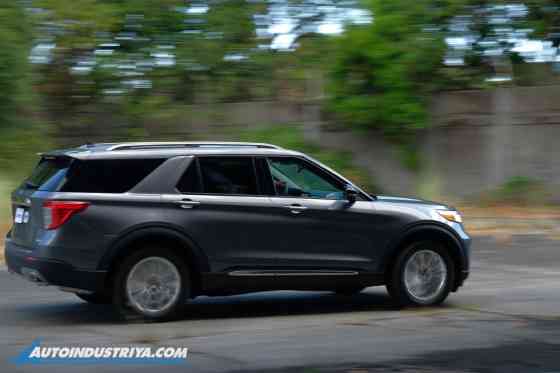
The driving dynamics for such a big vehicle are also a high point. Explorers aren’t that great at handling, but I have a feeling this is much better than what I remember the previous generation as being. They really made a vehicle that feels much smaller when you’re cornering; so if you bring this up to Baguio or Tanay, it should feel nice around the bends.
Another great thing is space or at least a clever use of space. There are some nifty compartments around like the tray below the infotainment display, the door pockets, the many cupholders, and even that concealed space behind the third-row cargo floor.
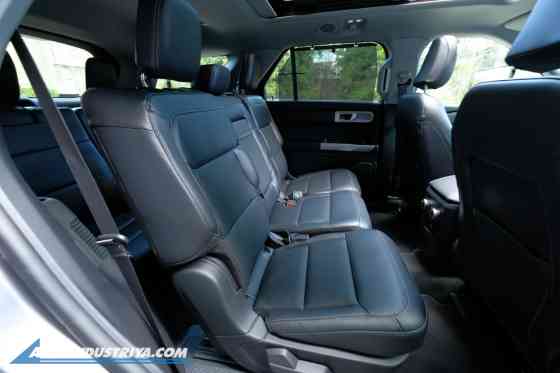
But really it’s the versatility of the cargo area that is nice. The 50:50 fold-flat third row is always welcome, and it’s easily dropped or raised with a push of a button. I wish they did the same for the middle row, but still not bad. The maximum length it can accommodate is up to 73 inches while the width is 48; it can’t quite take on a full 8’ x 4’ plywood board, but still, there’s plenty of space.
Speaking of the middle row, this is where I think Ford could have reoriented the Explorer given the target market. Many of the Explorer owners I know do not use the vehicle as Americans do wherein it’s a family car. These types of vehicles here tend to be used as executive limousines, so maybe ditching the 35/30/35 middle row in favor of two captain’s seats would have worked well, but they didn’t. That style of seating is offered in the Platinum, but Ford Philippines only offers the Limited; that might be the real oversight here. Maybe Ford Philippines should re-orient the Explorer given the philosophy of use of the market, at least based on the people we know that use an Explorer.
Now you may think: Man, this guy is really taking a swipe at the Explorer. That’s a fair observation, but maybe it’s because we hold the Explorer on a pedestal as the standard setter in the midsize SUV category. It should set an example as to what a vehicle in this class should be, not an exemplar of novice attention to detail.
There’s a good vehicle here but it needs polishing to bring it out into the open. The devil was really all over the details, and we have a hard time looking past them because they’re asking 3.5 million for this. There are a lot of choices in that price range already. A new model is coming (hopefully soon) but from what we see, the factory really needs to focus on quality control.