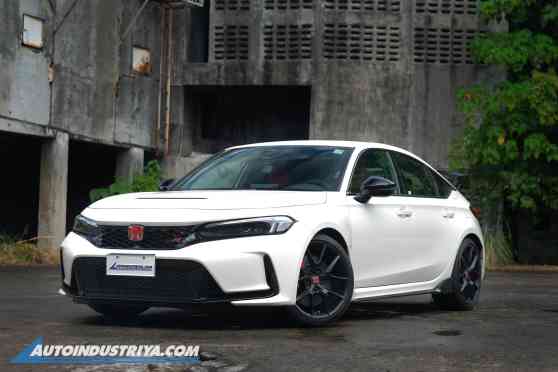
2024 Honda Civic Type R

- Make: Honda
- Model: Civic Type R
- Engine: 2.0L DOHC 16V Inline-4 VTEC Turbo Intercooler
- Max Power: 320 PS @ 6500 rpm
- Max Torque: 420 Nm @ 2600-4000 rpm
- Transmission: 6-speed M/T with rev match, FWD
- Price as Tested: ₱3,880,000
10/10
8/10
9/10
7/10
5/10
8/10
Kaizen R
In a rapidly changing world, there’s always that question of whether we should stay the same or evolve.
Whether in a personal, professional, or business sense, it’s tricky to thread that needle of keeping up with the times without losing the core identity that you’ve built over the years. But in the world of automobiles, Honda seems to always get it right with the Civic Type R.
As a car enthusiast myself, I can’t believe it’s been 27 years since the first Civic Type R was born. But of course, many generations of the Civic Type R have come after the first EK9. From having a screaming 1.6-liter B16B VTEC engine under the hood, to the K20A in the EP3, then having turbo power with the FK2, I’ve witnessed it all unfold.
But what’s most remarkable about the Civic Type R is that while it has grown in size, added a few more features, and came with a new engine, Honda resisted fashion and trends to have an unchanged mechanical template. When many have switched to all-wheel-drive or have gone for dual-clutch gearboxes, Honda has stuck to its guns with the front engine, front-wheel drive format, or the FF, with a manual gearbox.
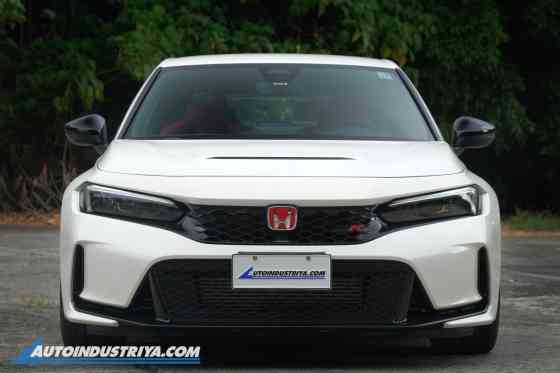
So how does Honda get away with it? That brings me to Honda’s sixth iteration of the Civic Type R called the FL5. The Type R sits at the top of the Civic range, followed by the Civic RS —though the RS is a sedan and not a hatch—and then there’s the V.
My car guy friends and I agree that the previous FK8 Civic Type R looked straight out of Gundam with its boy-racer styling, but that’s no longer the case for the FL5. The new one is cleaner, sleeker, less eye-catching, less dramatic, and caters to more mature audiences - much like the regular 11th gen Civic sedans that Marcus fondly calls tito-ish.
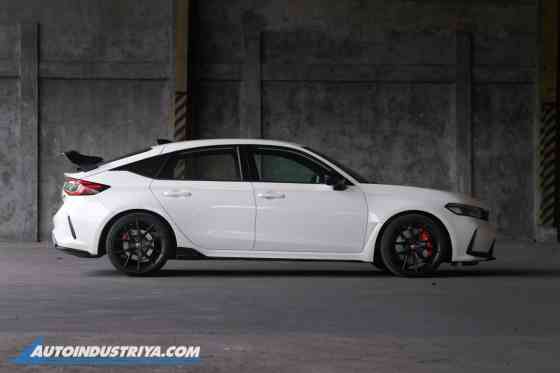
That’s not to say the FL5 is less aerodynamic. Although Honda won’t talk about exact figures, the new FL5 develops more downforce: around 100 kg more at 200 km/h.
Even though the Type R looks close to the regular Civic hatch offered in other markets, the FL5’s body panels are bespoke from the fenders, the A-Pillar to the waist, or the rear end. So even if HCPI decides to offer a hatchback Civic in our market, enthusiasts would have a hard time turning their hatchback Civics into Type Rs, or rather, Tinype Rs.
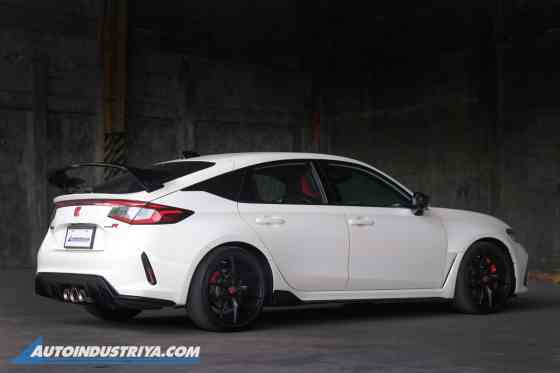
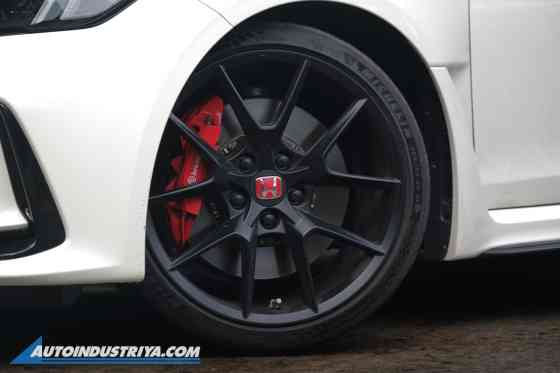
The FL5 is about less than an inch longer, wider, and lower than the standard Civics. The wheels are smaller than the FK8’s - 19s instead of 20s, but it’s 20 mm wider and comes with Michelin Pilot Sport 4S tires. But for me, the FL5 still has a great stance, perhaps it even fits the wheel arches better than the FK8.
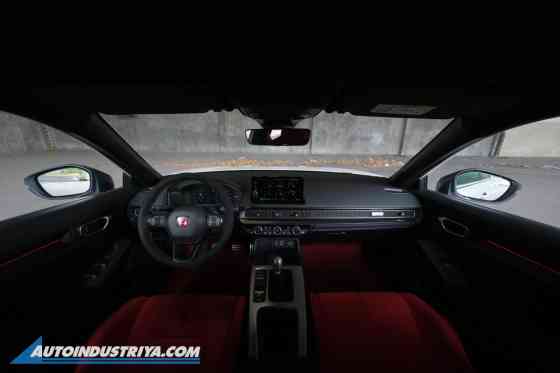
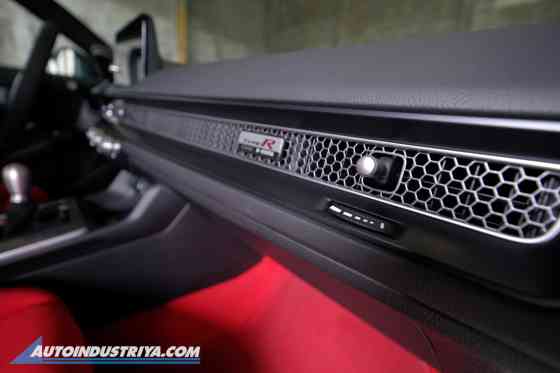
Save for the standard issue Type R starter kit (red bucket-type seats, red seatbelts, red carpet, red H badge, aluminum pedals, aluminum shift knob), the FL5 still has that “Simplicity and something” design language written all over it, and I meant that in a good way. The way the buttons, the controls, the knobs, the switches are placed in the normal Civic, it’s the same with the FL5.
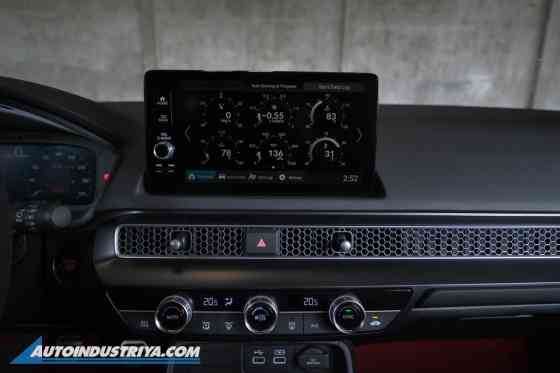
There are some more fancy features for the FL5, such as the specific interface for the fully digital instrument panel and infotainment screen to display the car's vital statistics, as well as store data such as lap times and G-Force readings in the Log R. But if you prefer to have a laid back drive instead, there’s the Bose sound system you can utilize while your phone’s connected via Android Auto or Apple CarPlay.
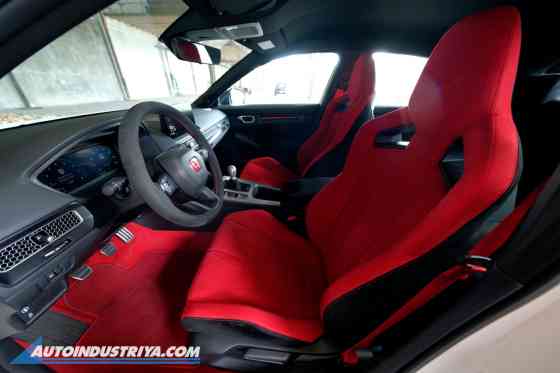
As I spent more time inside the Civic Type R, the more I realized how comfortable it was in the driver’s seat of the FL5. Usually, people opt to install bucket seats on their vehicles for a better “butt feel” at the expense of comfort, but that doesn’t seem to be the case with the FL5 – no such thing as tiis pogi or tiis ganda with the bolstering and the padding of the seats, it’s really something you can live with on a daily basis without developing back issues.
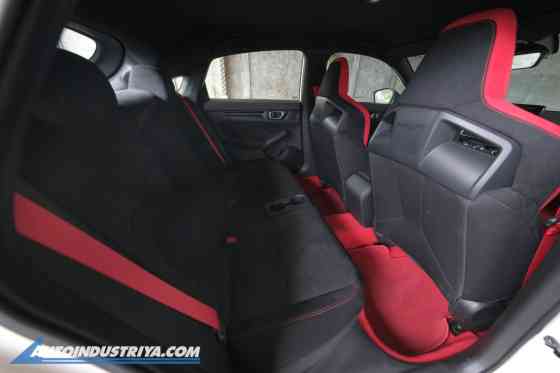
I didn’t spend too much time in the back seat of the FL5 because of obvious reasons. But for the sake of this review, it’s actually not bad. You sit pretty low to the ground which was nice although the big front seats may obscure your view. However, there’s plenty of legroom and you get the same red seatbelts to flex when you take a selfie inside.
The cargo space of the FL5 is not exactly its selling point, but you can actually load plenty of stuff in the back. With all seats up and the cool retractable tonneau cover tucked away, you can fit things up to 36 inches long, 39 inches wide, and 20 inches tall at the trunk of the FL5. Fold the rear seats and you get up to 63 inches of cargo length which should be enough for weekly groceries, or your tools for the weekend’s track day session.
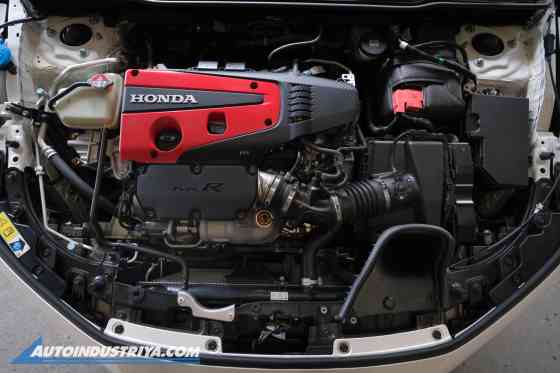
Now onto the main event – driving the FL5. Once you put the shifter to neutral, depress the clutch, and press the start button, the K20C1 engine springs to life letting out a muffled sound with a hint of burbling – a very different experience from the distinct reduction starter hiss that transitions to an angry idling sound of a fully-built Civic with a B-series VTEC.
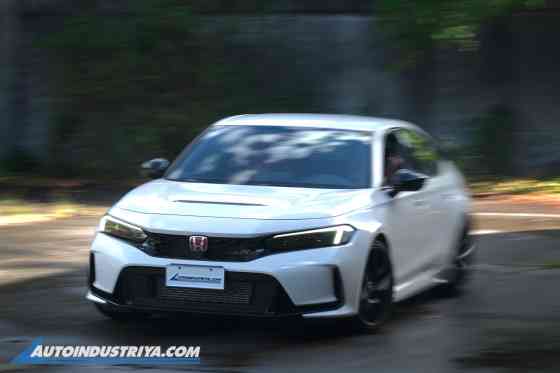
I’ve driven the FK8 exactly a year before the FL5. And once I popped the shifter to first gear, the shift throw was actually much shorter than before, while the shift feel itself remains excellent – worthy of a chef’s kiss. Despite having 320 PS and 420 Nm of torque at your disposal, the clutch is light and friendly – letting you have precise pedal control for a smooth getaway in stop-and-go traffic.
What really surprised me the most was that I did not find myself wishing for a softer suspension. Make no mistake, it's a firm ride with the low profile tires and the suspension tuning, but that's what you expect from a Type R. But it's not in any way punishing.
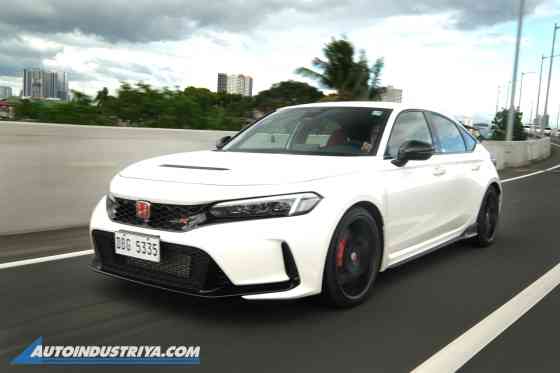
Of course, since the car sits pretty low to the ground you have to exercise caution when going over humps, but I was able to clear most of the Scout area’s speed bumps without scraping the bottom of the FL5. Then there are the front overhangs – you should unlearn the habit of letting the tires hit your usual parking stoppers. With the FL5, the front bumper will be the one to get hit first, so keep that in mind.
Even its fuel efficiency is great for a high-performance car – I got up to 14 km/l on the highway, and 7.5 km/l in the city at an average of 18 km/h. I'm also surprised it has Honda Sensing, so it has things like adaptive cruise control and blind-spot monitors - the latter not present on newer FL5s released in the country, so we've learned. Really, the FL5’s manners make it a manageable daily driver. Up to this point, the Civic Type R performs like, well, a Civic.
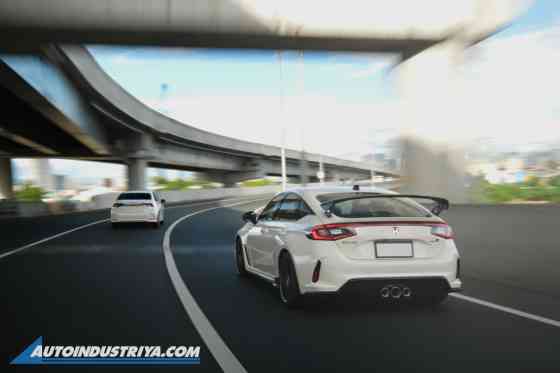
That all changes the moment you enter a winding road, and press that +R mode. From being calm and friendly, the FL5 transforms into a corner-carving hot hatch that would play things in fast forward every time you step hard on the throttle. It’s sharper, stiffer, and slightly louder than usual, giving you a lot of confidence to go faster.
But even under “spirited driving” speeds, the FL5 keeps its composure. Everything is in check from the stability, to the brakes, and especially the drivetrain. Torque steer is very much limited thanks to the trick suspension working with the LSD, and the car doesn’t feel like a front-wheel-drive car – it handles very well like it’s on rails.
Honda claims the FL5 is “slightly better here, slightly better there” than the FK8, and it’s not hard to see with the refinements they made on the exterior, and the interior. As for its driving dynamics, I think you’re going to need a race track, a stopwatch, and great driving skills to explore those new limits.
But overall, what we see with the FL5 is exactly the result of what Honda has been doing ever since the first generation EK9 came out in 1997 – continuous improvement. The Japanese have a word for it – Kaizen.
That is perhaps what keeps the Civic Type R relevant in this day and age. It has grown with the times. It kept its ability to entertain with its technology and performance, but it hasn’t forgotten its original appeal in delivering its civic duty as a car that you could drive every day. No pun intended.
I just really wish I had PHP 3.88 million.