Nissan wants to make “cooler” cars, literally

Nissan wants cars to run cooler and reduce energy consumption
We all know how hot a car’s cabin can get when you park it under the sun, especially in the summer season. That’s the reason why most car owners in the country have their cars tinted, and even opt for those ceramic types that can suppress and dissipate heat faster.
But Nissan wants to take things beyond just installing window films. The Japanese manufacturer is working on using “self-radiative” cooling paint for automobile use.
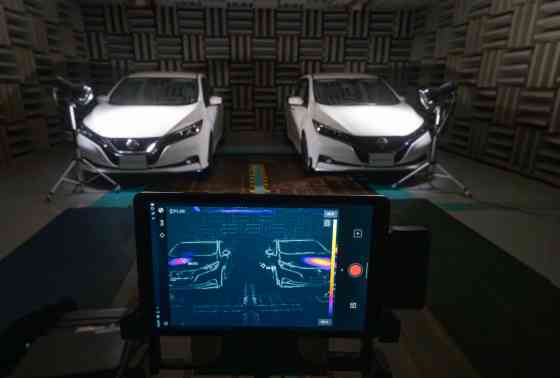
The paint works in the same manner as using special thermal insulating paint in the industrial setting. Generally, much like ceramic window films, it prevents excessive increases in cabin temperature caused by direct sunlight. And because the cabin is cooler, the car’s A/C will have an easier job in bringing the cabin up to your desired temperature. That’s less energy consumed by either the ICE or the electric motor.
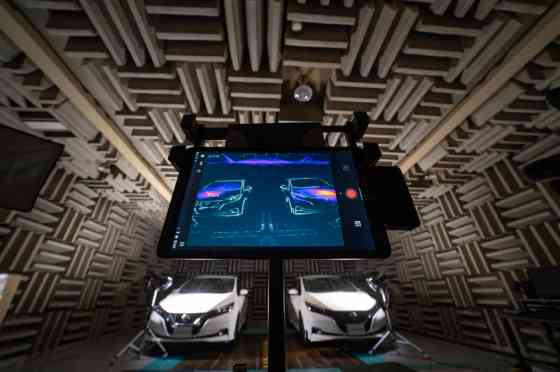
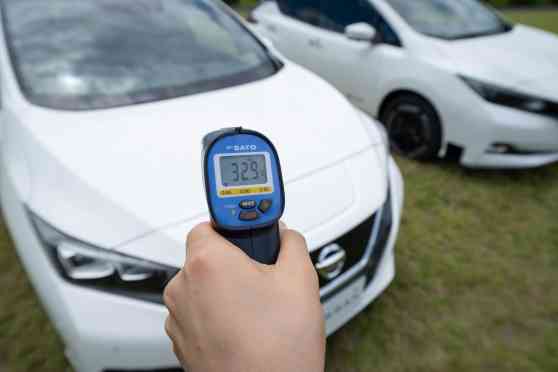
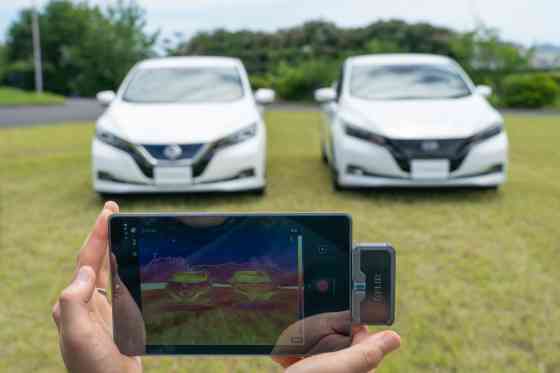
Nissan is developing the paint jointly with Radicool, a company that specializes in developing radiative cooling products. During the development stage, Nissan realized a temperature drop of up to 12 degrees on the exterior surface and up to 5 degrees on the driver's head using the experimental paint. That temperature difference was compared to a normal vehicle using a standard automotive paint.
But what’s unique about it is that the thermal energy blocked by the paint does not remain in the Earth’s atmosphere, but rather reaches outer space. By our understanding, the material does not contribute to global warming.
Nissan is still in the middle of conducting the experiment at Haneda airport in Japan, where the paint was applied to a utility van that’s being used daily to conduct airport services. That’s part of Nissan’s plan to use the paint as a special attachment for commercial vehicles, such as trucks and ambulances, which are often driven under the hot sun.
Furthermore, both Nissan and Radicool are working to further reduce its thickness to commercialize it.