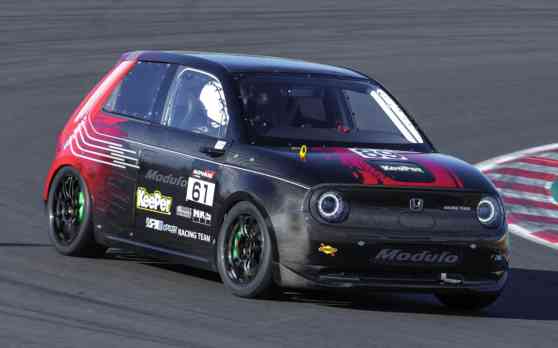
Honda Access Modulo Racing transforms Honda e into a track car

From drag racing to a Tsukuba Super Battle contender
If there's one EV from Honda that we wished was launched here, it's the Honda e.
Inspired by the first-generation Civic, the rear-wheel-drive Honda e (ZC7) is a five-door electric supermini that has proven to be an unconventional yet capable motorsport platform. Originally developed by Honda Access Modulo Racing for BEV drag racing, they have shifted their efforts and turned it into a circuit-focused car, exploring the challenges of EV motorsport.
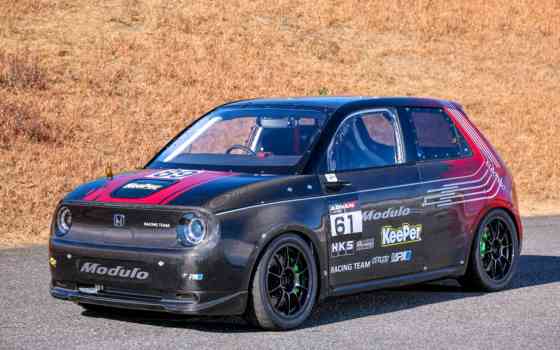
Driven by Ryohei Yasui, Tatsuya Kikuta, and Tomoyasu Inatani, the Honda Access Modulo Racing Honda e ZC7 recorded a blistering 1:07.916 lap time at Tsukuba Circuit during the Tsukuba Super Battle, competing in the Open-FR class. Weighing at 1,250 kg, this mini compact EV produces 154 PS and delivers 314.7 Nm of torque.
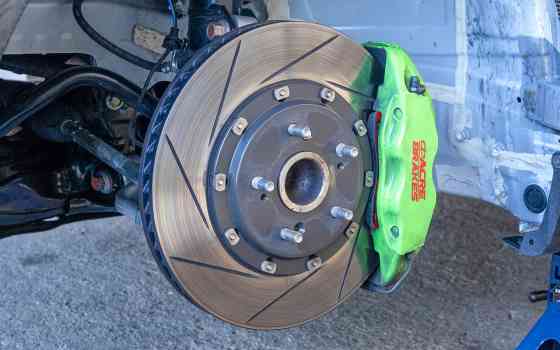
Reworking the Brakes
One of the main challenges the team faced revolved around the brake system, where the absence of a vehicle speed sensor forced the brake control system into failure mode, causing immediate wheel lock-up, an especially critical issue on Tsukuba’s tight, technical layout.
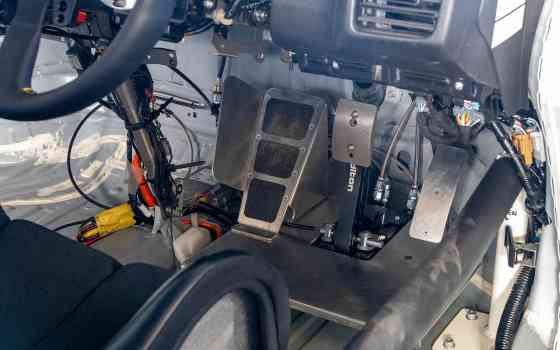
The team replaced the stock brake-by-wire system with a hydraulic Chilton braking setup paired with a Tilton pedal box. This allowed for precise, front-to-rear brake bias adjustment and delivering a firm, consistent pedal feel. Braking hardware includes Acre four-piston calipers, two-piece rotors, Light Sports pads, and Formula Liquid Super brake fluid.
Chassis and Suspension Tuning
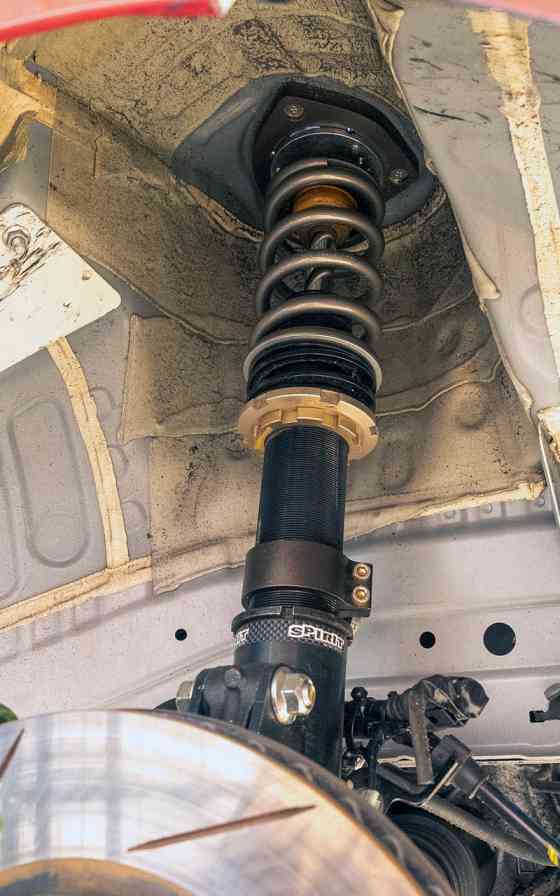
Converted for circuit use, the drag-specific suspension arms that created positive camber were replaced with standard geometry and tuned for circuit performance. A Spirit coilover kit paired with KYB springs was installed to enhance handling precision. Traction comes from Advan A050 tires, 235/45/R17 up front and 245/40/R18 at the rear, mounted on lightweight WedsSport TC105X wheels.
Weight Reduction
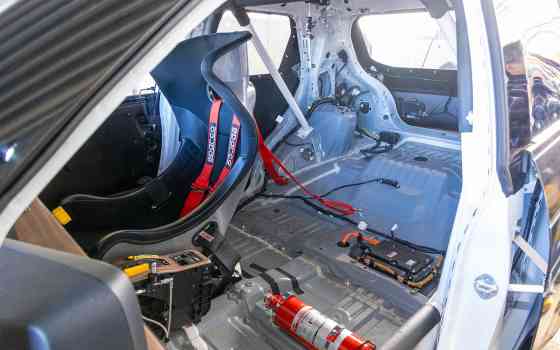
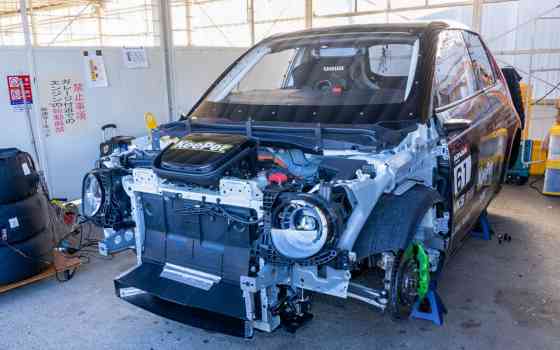
To shave weight without compromising safety, the team replaced standard panels with carbon-fiber-reinforced plastic (CFRP) on the hood, fenders, and doors, with lightweight acrylic windows. A six-point low-profile roll cage ties it all together, delivering rock-solid structural rigidity while keeping mass minimal, perfectly tuned for sharp, responsive performance on the circuit.
Ongoing Development
While the hydraulic braking system resolved the immediate issue, consecutive hot laps during Tsukuba Super Battle revealed rising temperatures around key electrical components, triggering power control. Improving cooling efficiency is now the focus of future development.
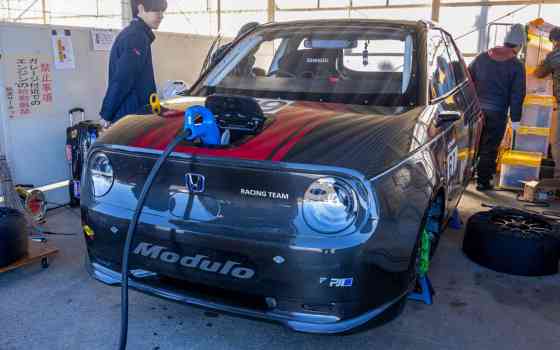
The Honda Access Modulo Racing Honda e ZC7 serves as a rolling testbed, demonstrating how adapting an EV from drag racing to circuit competition, especially on a demanding stage like Tsukuba Super Battle, requires continuous refinement and engineering ingenuity.
What’s your take on electric-powered racecars? Let us know your thoughts in the comment section down below.