Raptor Raiders: Why Ford is pushing to win the world’s fastest and toughest 4x4 rally

Ford: Taking on the ultimate test of high performance 4x4 vehicles
South Africa was never on my bingo card or bucket list.
The long flights, the unusually intrusive visa questionnaire, and all the preparations to go with it almost make a trip to South Africa not worth it. All the doubt, however, will fade away when you actually get there.
The landscape is gorgeous, especially in the morning or afternoon sun, and the breeze is most definitely cold when it sets. The food -especially the grilled meats- is to die for. The people are nice and kind, but we were told not to wander around alone at night in Johannesburg. And then there’s the game preserve where you board modified open-top pick-up trucks so you can check out the wildlife.
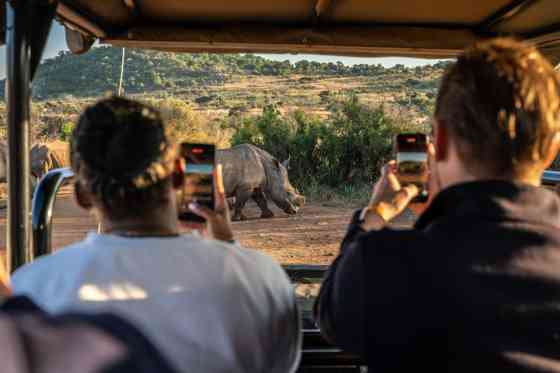
The one I went to was Pilanesburg, which was just a few hours outside of “Joburg”. Here you’ll see a lot of giraffes, elephants, zebras, impalas, and all the other animals you saw in zoos or in your coloring books. I even spotted a pair of lions just staying low and out of sight. Rhinos were aplenty too at the nearest watering hole, but all of their horns had been cut by park rangers; no horns means no value to poachers.
We wanted to hear the lions roar, but they wouldn’t. They just stayed quiet like the predators they are. But we’re not here to visit as if we were National Geographic. We were here for a different kind of wildlife; the kind that roars at full throttle.
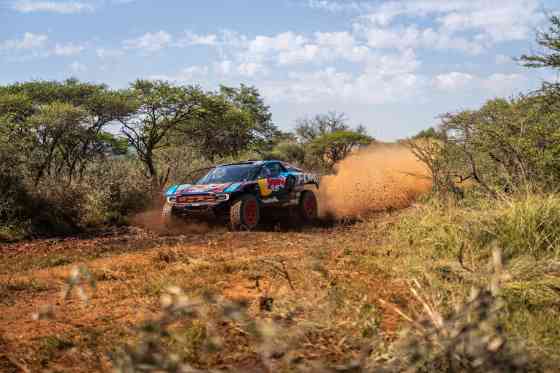
We were here with Ford for the South African Safari Rally, and we were going to get a look at how a professional rally team works.
Earlier in the day, I had just landed in Johannesburg and was immediately whisked off to a private farm. Just as we parked, there was a roar that only a V8 could unleash coming through the trees. And right at that moment, a black car appeared with a cloud of dust in tow.
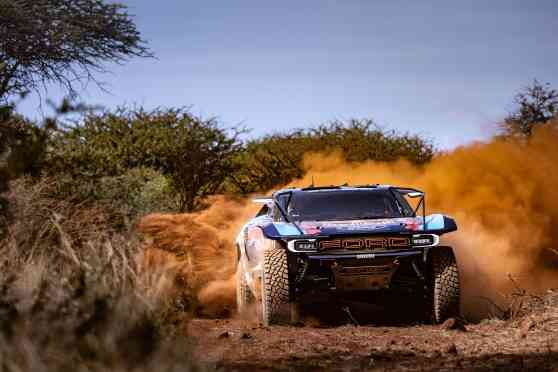
The driver pilots the vehicle into a makeshift service park next to their trailer, with a full crew promptly removing the tires and inspecting the car. Actually, the term car is wrong; it’s really more of a spaceship than a car with its sleek profile, butterfly doors, extremely lifted ride height from the dual Fox Racing shocks on each corner, and chunky BF Goodrich tires.
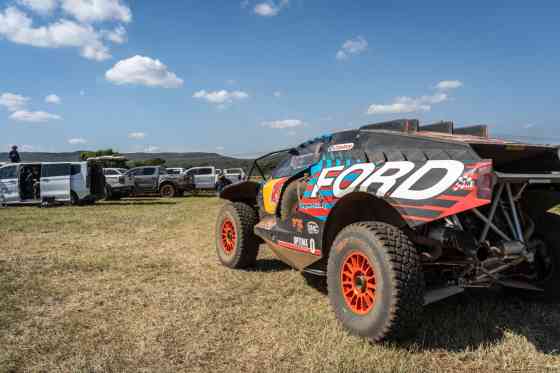
This was the Raptor T1+. It’s a purpose-built spaceframe 4x4 designed to tackle the toughest and most demanding motorsport known to us: rally raid.
They’re not driving on paved roads. Actually, pavement is a luxury. This is rally raid; a motorsport where you must chart your own path and each turn is quite possibly unknown. The toughest of them all was the Paris-Dakar Rally, so named after the two cities that marked the start and end of the rally from Europe to Africa. They still run that rally, but no longer in its original configuration, but they still do drive like that in the W2RC or World Rally Raid Championship. And that’s what brings us to this leg in South Africa.
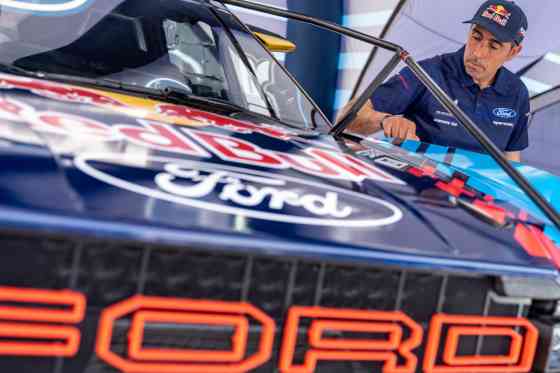
I walked around the two Raptors that are testing out. This is a shakedown session where the drivers and team rebuild and do a few test runs of the Raptors after having been shipped from either their home base in the UK or from the last leg. One car just powered up and is backing up to head out onto the test course.
I get a quick glance at the driver’s name: Nani Roma. He is a legend of the Dakar Rally, as he is the only person still living (as far as we know) to win it multiple times in both cars and motorcycles. And if you’ve ever seen the coverage of the Dakar or any rally raid, you’ll know just how tough it really is, especially on two wheels. Later, I got a chance to sit down with Nani, and he told us he prefers four wheels for rally raid for the simple reason that he feels a little less battered and tired over hundreds of kilometers. I’ll take his word for it: he just survived a battle with the big C.
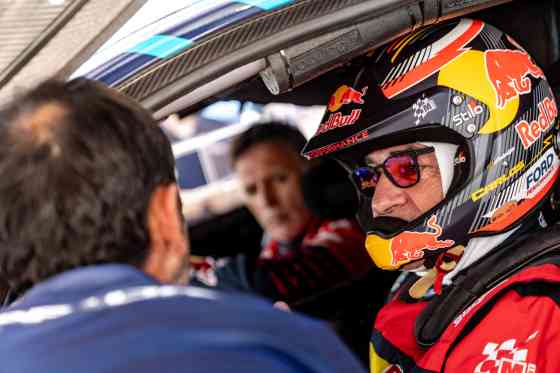
The other car that just pulled into the makeshift service park, however, had a name far more familiar: Carlos Sainz. The many new fans of Formula One may be wondering if he suddenly made a career change, but no. This is Sainz Senior. And he’s not known as Smooth Operator. He is El Matador.
Sainz is a legend in rally, winning the WRC title for Toyota twice, both in Repsol and Marlboro liveried Celicas. In Dakar, he is also a legend after having won the event four times with different cars and teams: with a Volkswagen in 2010, with a Peugeot in 2018, with a Mini in 2020, and became the oldest driver at 61 to win with an Audi in 2024. I was honestly starstruck; I used to watch replays of him driving those Celicas as a kid. I was even offered a chance to ride shotgun with him, but the passenger (or co-driver) seat isn’t made for wider gentlemen.
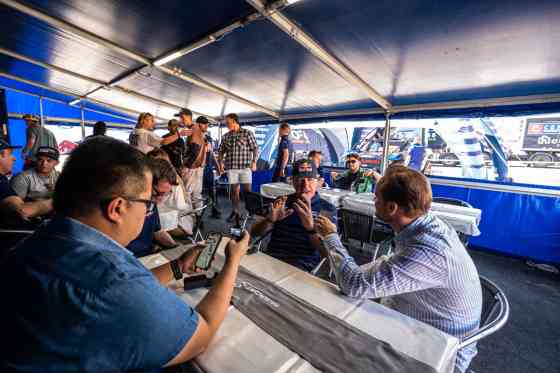
Nevertheless, Ford has some serious experience in the driver’s and co-driver’s seats of their Raptor T1+ rally raiders. Despite both already having achieved so much, both Carlos and Nani are really motivated. I asked El Matador when I got a chance to sit down with him, and he said he’ll keep doing it as long as he can. At 63, he is definitely fighting fit and ready to challenge with Ford. For Nani, the story is the same: he doesn’t want to sit still and is raring to go.
The challenge ahead of them, however, is a daunting one: the South African bush. Nani didn’t mince words: he knows he doesn’t have an advantage here. Many of these drivers tend to have a lot of experience driving in deserts, dunes, and flatlands. The South African bush is a different story for the simple fact that you can’t necessarily see around the corners because of the vegetation. That means rally raid drivers can’t use their most valuable skill: being able to judge the terrain.
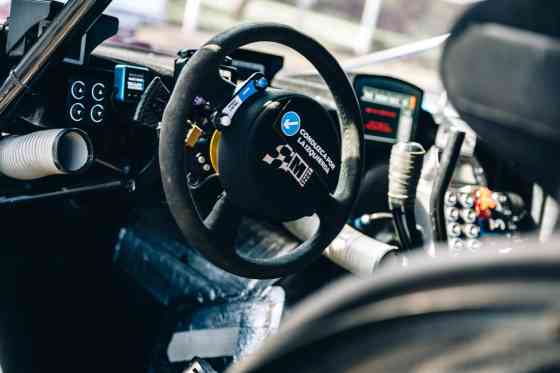
I once rode shotgun with another Dakar champion: Hiroshi Masuoka. I sat next to him during a recce lap for a local event, and it was surprising how he could read the terrain, instinctively knowing how the tire would behave on the surface. I imagine Nani and Carlos are the same, and that gives them the sense of what the traction will be like, and therefore how to drive on it. Here, that instinct will be tested.
Experience is going to be another problem. No, we don’t mean when it comes to driving, as both are clearly overqualified, but rather experience with the landscape. Nani and Carlos have never driven in South Africa at full throttle because the last South African Safari Rally was run over 3 decades ago. They have no lengthy experience competing in this terrain, which is why the shakedown session is crucial, and why the South African drivers will have an advantage.
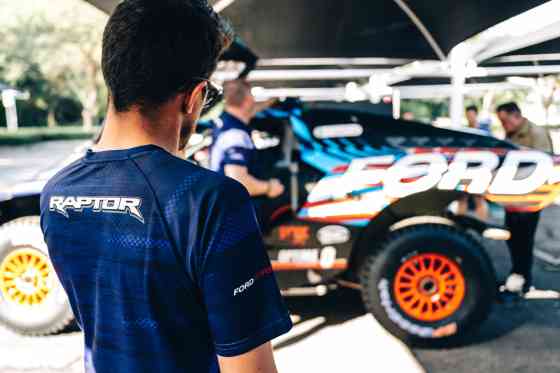
That doesn’t seem to faze the drivers, nor does it faze the team when we caught up with them 24 hours later, this time at the service park at Sun City. You have to love the grassroots feel of this kind of motorsport. Security isn’t insanely tight like it would be in F1, where you need a pass, a QR pass, and/or some kind of baller ID to be able to make it to certain sections on a race weekend, much less the pit lane. That's how organizers make money.
In this rally service park (the equivalent of the pits), it’s far more casual. You can walk from tent to tent of the different teams, ask the mechanics questions, get up close to the cars and bikes, get a whiff of the gasoline, take photos, and chat with the drivers. It feels like a weekend at a local dragstrip or race park with your friends and mates rather than an FIA World Championship event. I love this vibe.
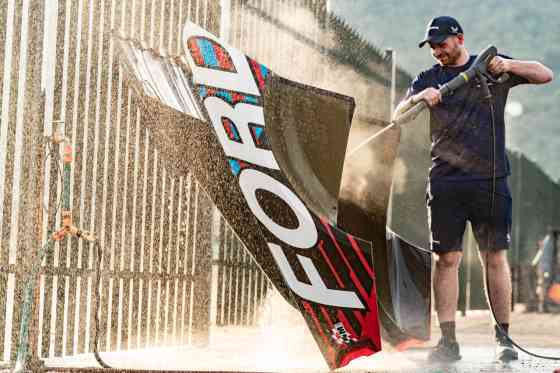
There’s a flurry of activity at the Ford service tent, as the crew was busy prepping the two Raptors for the start of the rally. There’s nothing like the sound of I take a few minutes to observe and film while staying out of the crew’s way. There’s not much in the way of talking or yelling; everyone seems to be working like clockwork. Each crew member knows their part, and they’re working to get it done, from making suspension adjustments, installing those bush bars, fitting the tires, checking the electricals, and even putting on the decals. And then, when all was set, the drivers and co-drivers were strapped in and off they went.
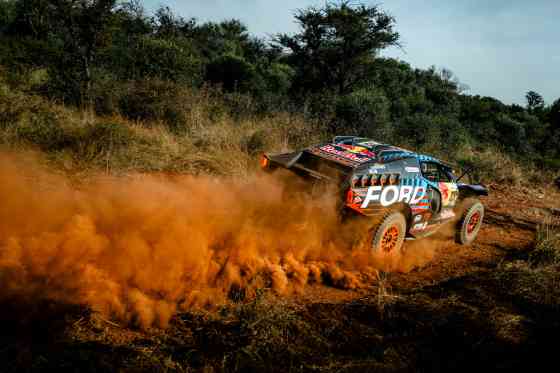
The reason the team works so well is that it is a professional team from the very beginning. This is M-Sport, a motorsport engineering company that has run Ford’s World Rally Championship efforts since 1997. Rally legends like Sainz, McRae, Kankkunen, Hirvonen, Gronholm, and more have driven for Ford’s WRC era, and have helped develop the team that eventually took the manufacturer title in the WRC in 2006 and 2007. So when Ford wanted to establish themselves as a force to be reckoned with in the World Rally Raid Championship, it was only natural to go to M-Sport.
Over at the start line, El Matador and the Ford Raptor T1+ were raring to get going. The helicopter was overhead, our cameras were out, and then I wondered: Why is Ford bothering to do a rally raid? Why is this important for the Ford brand at all? If the company wants to spend money (and motorsport is a lot of money), why not do the more glitzy and glamorous events like Formula One or World Endurance Championship?
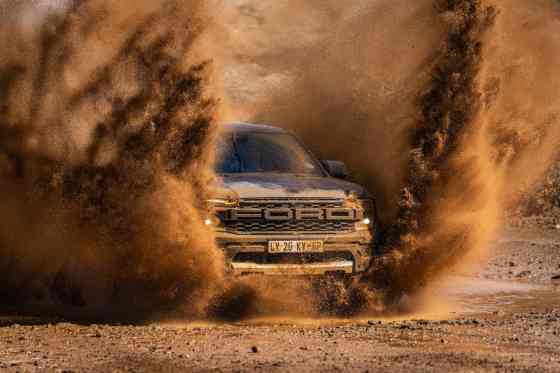
And then as Sainz was flagged off, flooring the throttle, kicking up a plume of dust and making that V8 roar down that start straight, the answer dawned on me: it was Raptor.
Ford is a truck specialist through and through, and whenever we see a Raptor badge on a bona fide Raptor from Ford like the Bronco, F-150, or Ranger, we know it’s about performance no matter the terrain. That’s also why they made sure that all the parts suppliers they partnered up with for the Raptor you find in showrooms are present here in their project.
Rally raid is the ultimate test of all their formula for performance trucks. It takes the machinery like the Coyote V8, the Fox suspension, the brakes, the frame, the transmission, electronics, the driver, the team, and the brand to the extreme, and to survive everything and everyone must work well together.
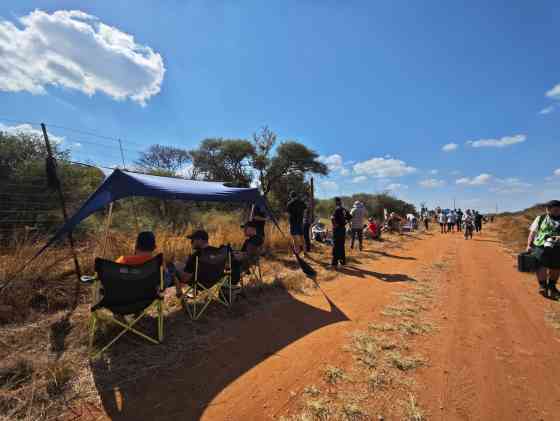
More importantly, rally is the motorsport that connects with enthusiasts. Why? Because it takes a true enthusiast to drive or hike or even camp out early in the day just to get a glimpse of the rally cars or rally raiders to blast past at full speed and take a jump. Nothing glamorous about it: just enthusiasts enjoying cars and enjoying each other’s company.
Success will take time, though. Ford didn’t win the South African Safari Rally, but they were just short of tasting champagne on the podium as Carlos Sainz took fourth and Nani Roma wasn’t too far behind in sixth. As predicted by Roma during our conversation, it was a South African driver who took the win. The home advantage is real, and I’m sure the two Spaniards are looking forward to the next round in Portugal; it’s not quite home, but it’s close enough for them.
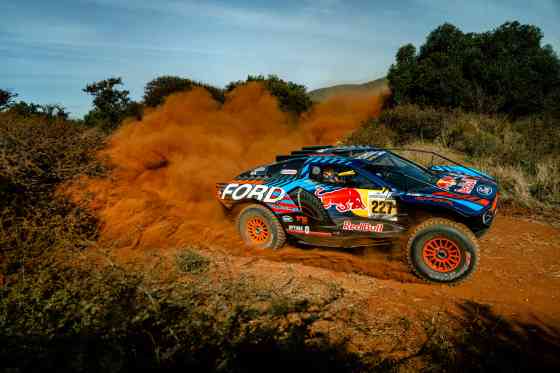
What I really picked up on is the vibe within the team: a challenger spirit that makes it special. Ford is no stranger to this: in the sixties, they built a team with Carroll Shelby at the helm to tackle the 24 hours of Le Mans and beat Ferrari. After a few years of development and heartbreak, they achieved it in 1966 with an all-Ford 1-2-3.
There was even a Hollywood film about that, too. Maybe decades from now, they’ll make an epic film about this rally raid effort as well, but first they need to win Dakar. Given what we’ve seen, we won’t be surprised if it was only a matter of time.