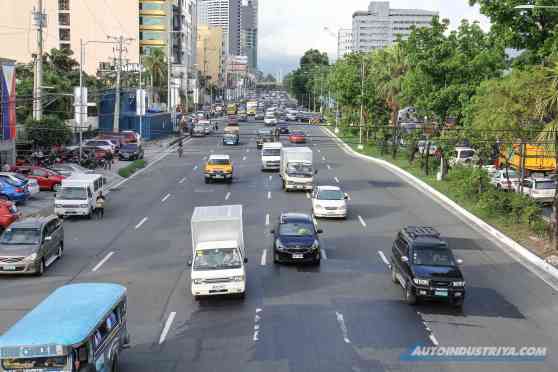
The Good and Bad: Should PH have a phase-out scrappage program?

Is a vehicle phase-out the answer to traffic problems?
As early as the 90s, the idea of phasing out old vehicles has been floating around mainly from international groups like the World Bank and the United Nations to curb air pollution attributed to automobiles. Of course, traffic was not as bad three decades ago, and your box-type Lancer was just ten years old.
That's where the idea of a phase-out comes in, and today we see why. Do you remember when the Sierra Madre range or Mount Samat was visible from Metro Manila when the skies cleared up during the lockdown? Now we can't. That is how dirty the air is today due to vehicle emissions.
And then there's urban traffic, be it in Metro Manila (and beyond), in Cebu, in Davao, and more. There are more people with cars, more buses, more jeeps, more motorcycles, and more e-bikes. The Philippines is trying to keep up with the Build Better More (BBM) infrastructure program (formerly Build! Build! Build!), but cars depart dealerships at a much faster rate than the concrete can settle on new roads.
In a developing country like the Philippines, the term phase-out elicits mixed feelings from the population. One side is all for it, while the other is vehemently against it. What is it about giving cars a fixed lifespan that agitates the opinions of Filipinos? Bring it up, and suddenly, every Juan is an automotive expert speaking eloquently on various issues such as transportation, economics, and traffic management.
Prejudices aside and considering both arguments, I will break it down and look at all angles to find the positive effects of phasing out old vehicles and see how it will negatively affect the population. While I may not reach an agreeable consensus at the end of the article, seeing the advantages/disadvantages of such a move might clear the air for both sides.
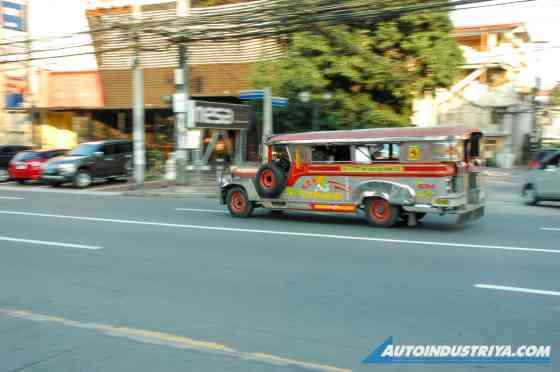
What is a Phase-out?
Simply put: Phase-out is a scrappage scheme based on a pre-determined end-of-life for vehicles in exchange for a certain value.
What that means is after a vehicle reaches a certain age (i.e. 15 years), the current owner will have the option to have the car scrapped and get a rebate. The car is then torn into its components and recycled for various materials like wiring, plastics, steel, and other precious metals like silver, palladium, platinum, and even gold.
The idea is to get older cars off the road and stimulate purchases of more modern and more efficient vehicles, and that's why these programs usually put the funding towards the purchase or financing of a new car.
It is not an easy endeavor to take on by any government. The UK had one of the biggest scrappage schemes in 2009 where owners could get up to GBP 5000 (about PHP 370,000 based on the last 2009 exchange rate). They say they were able to get up to 390,000 cars off the road. A lot of other similar programs now are supported by local governments (particularly cities where pollution is more significant) and even by manufacturers wherein the value is used for a new car that is also from them.
But let's say they push it in the Philippines. What would such a program look like?
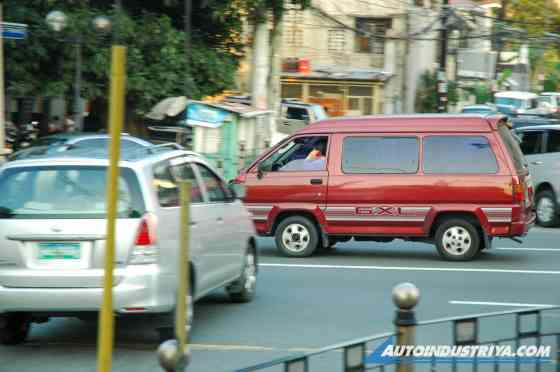
GOOD: Reduced tailpipe emissions
Emissions standards have truly gotten stricter, but the difference is older vehicles do not have to comply with newer standards. That's because older vehicles must meet the same regulatory standards when it was new or first registered.
So, if a vehicle sold here was first registered in 2009, then the standards from that year will apply meaning Euro 2. Compared to the current Euro 4 standard being implemented, the emissions of carbon monoxide, hydrocarbons, and nitrogen oxide under Euro 2 are (at minimum) double for both gasoline and diesel.
Now imagine a diesel engine that was first registered in 1989. Older vehicles emit toxic substances because these are not compliant with the current Euro 4 emissions and fuel standards. That is one of the significant contributors to the rise in respiratory diseases and other related ailments.
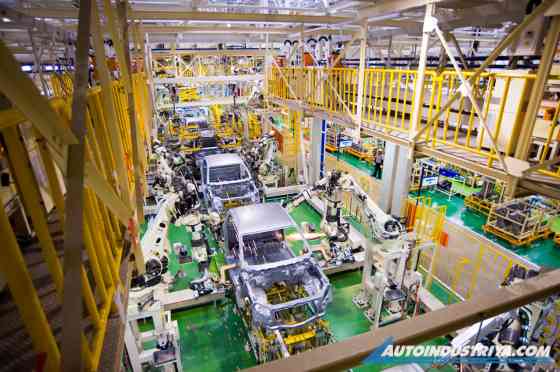
BAD: Production emissions
The problem with getting a newer model in exchange for a scrapped one is the emissions from production. Yes, tailpipe emissions are reduced, but there is a computed CO2 emissions when it comes to producing a vehicle. Production requires electricity, and many countries run power stations using non-renewable sources like coal.
As to exactly (or theoretically) how much emissions depends on the manufacturer. There are even formulas that compute the emissions per car from final assembly all the way to when the materials were first mined or produced.
GOOD: Reduced fuel costs
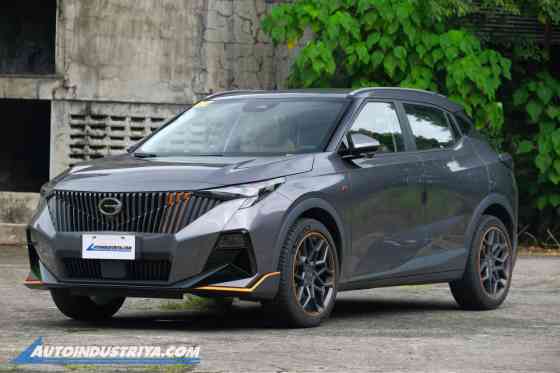
Scrapping old cars for newer ones can stimulate growth in the auto industry. More importantly, if you scrap your old vehicle and use the residual for a downpayment on a newer model, it will be far more efficient with fuel because of the many improvements in internal combustion engines over the decades. Moreover, there are many alternatives like new energy vehicles such as hybrids, battery-electric models, and electric vehicles (EVs) that have little to no tailpipe emissions.
It can't be denied that modern cars are better at being efficient, and electrified cars just reduce exhausts even further and save on fuel costs. Fuel is actually the great equalizer: regardless of whether you drive a new vehicle or an older one, the price of fuel is the same.
BAD: Car payments again
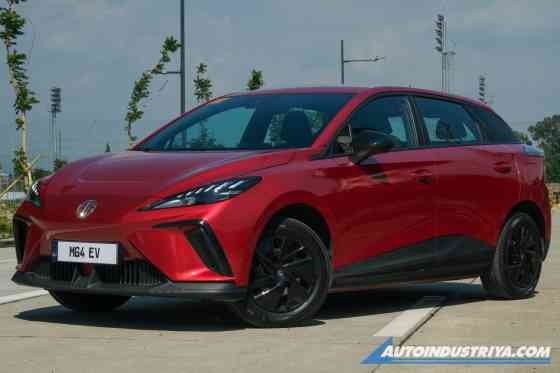
The idea behind a scrappage scheme is to spur demand for newer and more efficient vehicles whilst ending the life of the older ones through recycling. The problem with that model is that the car owner has to make monthly payments for a new vehicle, whereas the older one is already paid for.
Yes, you save on fuel, but car payments aren't fun either. It's a matter of finding that balance that works for each motorist.
GOOD: Reduced maintenance costs
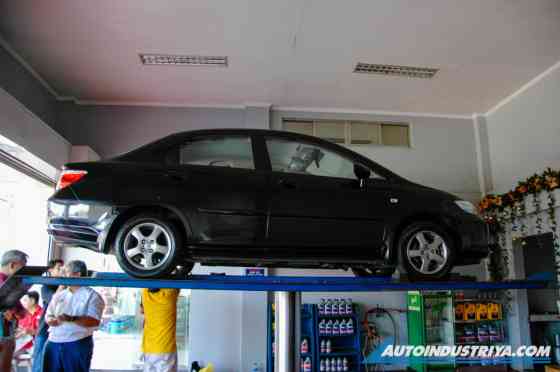
Despite efforts to keep them roadworthy, older models break down much faster (and more often) than newer ones. It is due to the deterioration and aging of mechanical components, rubber parts, and electrical systems.
Automakers will supply parts for their vehicle for ten years after the sale, and most do it until 14 years later. The aftermarket also works to supply spare parts for older vehicles, but nevertheless, maintaining such cars can get quite costly.
Door seals, bushings, and other plastic or rubber parts tend to be the first to go. And then you look at brake pads, pumps, electronics, alternators, aircon parts, and so on and so forth. It can get expensive, and so does the labor. With a newer vehicle, it is more about preventive maintenance rather than repair. That all depends on your usage scenarios of course.
BAD: Effect on many smaller repair shops
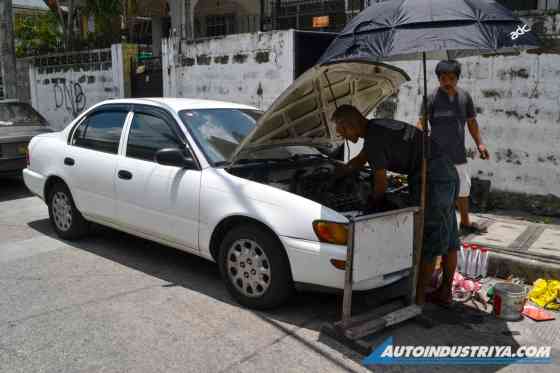
Brand-new models have insurance, and most owners are faithful to the PMS for the warranty. So, old models are the ‘suki’ of vulcanizing shops and ‘talyers.’
Without daily patrons, these small businesses do not have enough capital to survive slow months or weeks. I know of a few former dealership mechanics who have gone out and set up their shop. That dream may not last for very long.
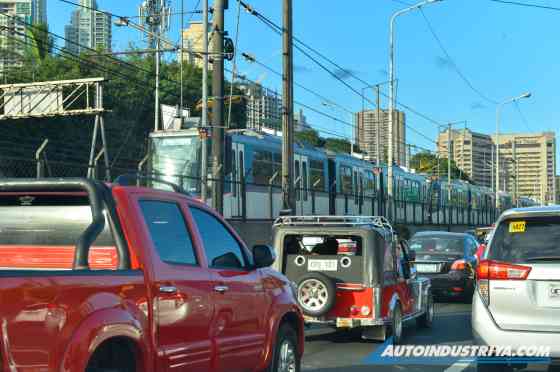
GOOD: Reduced cars
Getting an older car off the road permanently can also give the owner options. If a scrappage scheme allows, the owner can take the value as a cash incentive that can in turn be used for other things, like moving to a place closer to work to shorten the commute.

Commuting could soon be a more viable option if you live in Metro Manila or other major cities. Train networks are expanding, and that should provide a better and more efficient alternative. It may also be a long shot in a tropical country like ours, but you can take it further and bike to work like a few people I know. Aside from being a greener option, it is also a healthier one for you. Just do not forget to lather sunscreen before going out.
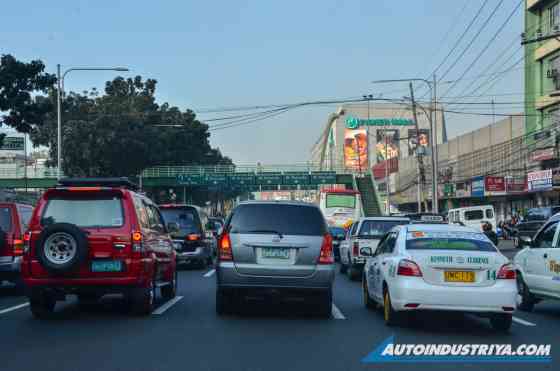
BAD: More cars
Phasing out older vehicles will not guarantee that vehicular traffic will ease up. Sure, we may see 50-100 fewer cars on the road – and that is an overestimation – but most of the people who sell their old automobiles will buy a new one, which brings us back to the same problem regarding traffic.
The only benefit I see is fewer vehicles broken down on the side of the road or accidents that cause traffic.
But still, a scrappage scheme is often directed at a new car purchase whilst getting the older one off the road to be recycled. Traffic will still likely be a problem, but hopefully, the forthcoming expansion of the train network can take on commuters to reduce dependence on the road.
-
Should we look at a scrappage or phase-out program for the Philippines?
While there seems to be no right or wrong answer – for now – regardless of whether the government proceeds with the phase-out or not. What we do know is the solution is going to be multifaceted: more roads, more trains, decentralizing from cities, phase-out programs, and so on and so forth. It's all just a matter of having multiple solutions and making small contributions for the greater good.