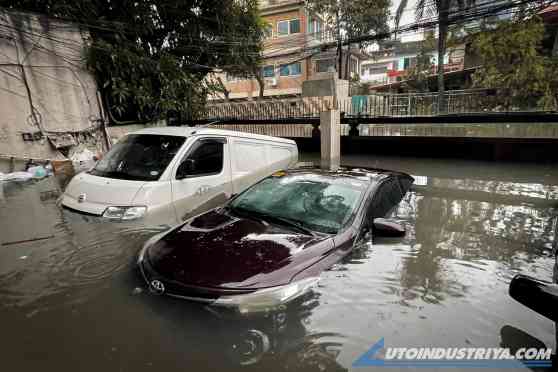
Resurrecting a Flooded Car: Worth the cost and effort?

Real Talk: Reviving a flooded car isn't easy
As someone who lives in an area frequently hit by flooding, the rains brought about by Typhoon Carina were nothing new… or so it seemed.
Manila and the immediate surrounding locales got soaked with rain that rivaled Typhoon Ondoy in 2009. In fact, the Marikina River reached 20.7 meters, just 0.8 meters shy of that 2009 typhoon that we remember so very clearly.
While the waters have now receded and the clean-up is underway, there is now the inevitability of dealing with the damage done to our cars, SUVs, trucks, and vans. Just driving out of my village alone, many cars that were trapped by the floods sit silently on the sidewalk or the garages, unable to run because the water took its toll.
The question remains: Is it worth it to resurrect your flooded car?
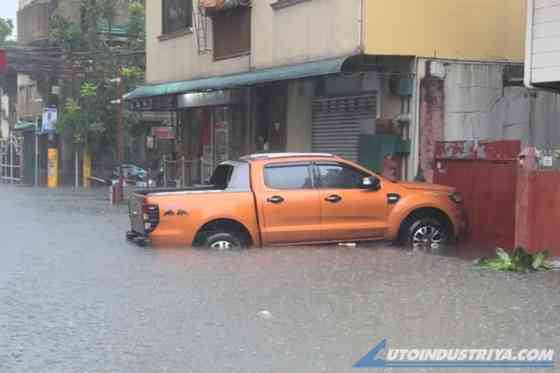
If your car is insured for AOG, then you don’t have to bother reading on. All you have to do is call up your insurance and sort it out. But if you’re not covered by comprehensive insurance, then it gets a lot more complex.
As someone who took on the task of resurrecting a car in 2009 after Ondoy, I can tell you the answer isn’t a simple yes or no. Whether it will be worth it will depend on how deep the water was that affected your vehicle, how old the vehicle is, whether you’re into (or have the time to) DIY, whether you were able to take a few precautions, whether the vehicle was stopped or running when the water damaged it, so on and so forth. And of course, there’s the matter of cost.
To determine the level of complexity, we thought it best to simplify what kind of damage a certain type of car will incur depending on the water depth it was submerged in. This will vary based on the type of vehicle, so we thought it best to look at a common sedan and a very common crossover SUV and do a little measuring to get a better idea.

Level 1: Mild cosmetic damage
Looking at the water levels above, you can already tell that this won’t be that severe and water won’t get in. But that probably isn’t true.
While it may seem like the floor of a typical car or crossover is watertight like a tub, it probably isn’t. Most cars have floors that have a lot of holes to allow for things to go through. If your car has a floor-mounted fuel door release lever or a handbrake, there are holes in the floor to run the cables through. Your A/C pipes and wiring have to pass through holes in the firewall (the metal sheet that separates the cabin from the engine bay).
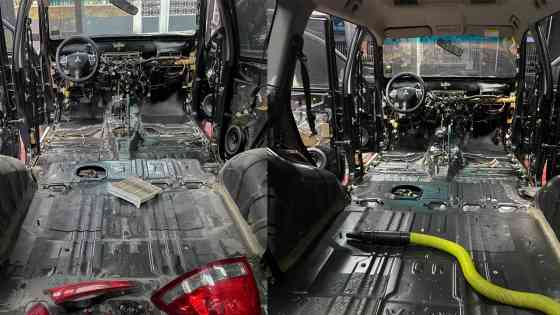
There are grommets or rubber plugs to prevent splashes of water or even insects from getting inside, but it’s far from watertight when subjected to deeper water. And the weather seals on the door aren’t meant to keep water out in a submergence scenario either.
But in a Level 1 type of flooding, as illustrated above, chances are the car will be running fine. Just be sure to check the fusebox and see if you’ve blown any; if you did, have an electrician check.
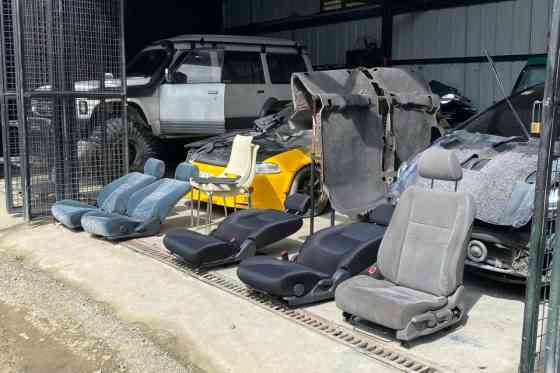
The issue here will be more cosmetic. You just have to deal with a soaked carpet, some crud on the brakes, and debris in the engine bay. If you’re willing to put in the time and effort, and if you have the right tools like a pressure washer, a socket wrench set, a supply of rags, and an electric fan, you can probably get away with doing it yourself. Just remove the seats for cleaning, remove the carpet for washing, wipe and dry the interior and you’re probably (hopefully) good to go.
Or you can just pull into the car wash and have them do it. Typically, these shops charge anywhere between PHP 1,500 to around PHP 3,000 for that job. Speaking from experience, have some charcoal in a food container handy to help absorb some of the odor even after cleaning. Flood waters are smelly things to deal with.
Level 2: Moderate damage, mostly electrical
When the water line or deepest point of submergence reaches the seat cushions or just above them, then we would consider that Level 2. Basically, it’s the same cleaning job wherein stripping the interior becomes necessary, but it tosses in flood damage for the seats that are made of foam. And as you already know, it’s not easy to clean and dry off what is effectively an absorbent sponge.
But while the car may run fine because the flood might not have reached critical engine components that are allergic to prolonged exposure to water. Sure, you’ll probably (on a case-to-case basis) have to rinse off the lower half of your engine bay just from the engine block and below, but there’s a good chance the electrical system wasn’t so lucky.
If you look at any car’s seat, it’s usually close to the level of a lot of electrical systems in the vehicle already. Modern cars will have electronic switches on the center console like an electronic parking brake, electronic transmission, wireless charger, USB ports, 12-volt outlets, and the like. If you were able to unplug your battery before the water reached these parts, then you might be ok with just drying off the car thoroughly (again, on a case-to-case basis).
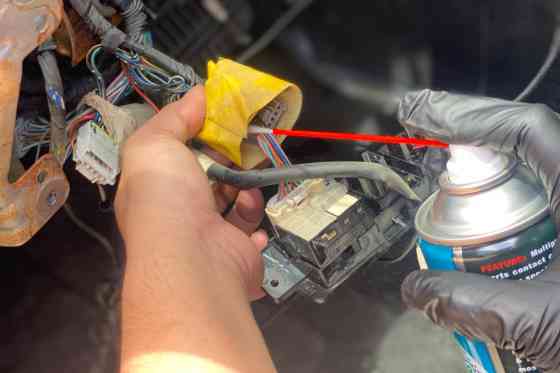
If you weren’t able to unplug the car battery, then most likely some damage was done and some components shorted out. The quick way to find out is to look at the fuse box; if you see several blown fuses, then you’ll know something shorted out.
If you are lucky, the extent of the damage is limited to just replacing fuses. If you’re unlucky, you’ll need to consult a proper shop with the right diagnostic equipment. The costs will vary greatly, but I can tell you it won’t be cheap.

Level 3: All bets are off
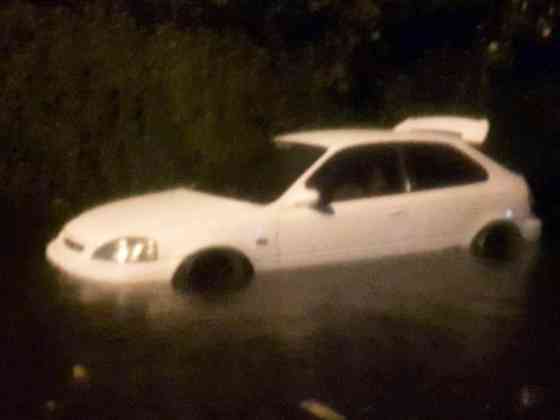
This kind of flood level is something I’m very familiar with, and let me tell you now: there is no sight more depressing to a car enthusiast than your car fully submerged while sitting still in your garage.
Seeing your own car gradually get drowned in floodwater is more painful than witnessing it in an accident because at least in a crash, you know there is someone at fault (probably yourself). In a flood, you’re helpless and powerless. The only thing you can do is remove the battery.
The problem here is everything: cosmetic, electrical, mechanical, and financial.
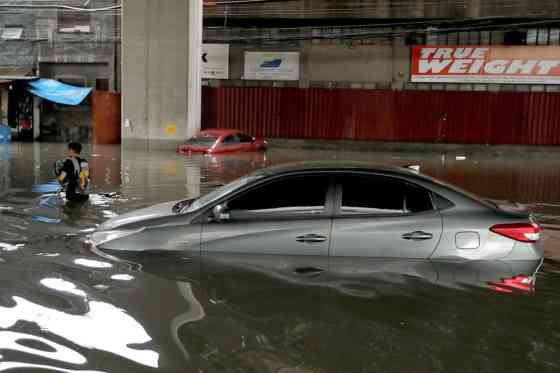
Your interior is going to be drenched, and some interior panels will be permanently damaged. See those nice leather inserts on the door cards? Water gets in there and will likely stay for a while. If the flood was brown and muddy, that gets everywhere too. I remember when the flood receded, there was mud inside my headlights. I just replaced the headlights.
Even if you were able to remove the battery, the electrical system composed of wiring harnesses, connectors, fuses, alternator, ECU, transmission control unit, audio unit, and buttons, will take a long time to dry out, but there is no guarantee that the parts are broken either. Replacing the more complex parts (ECU, head unit, etc.) will also be very expensive on their own and on an ala carte basis. Surplus ECUs typically go anywhere from PHP 4.5k to 6k. Mind you, those are just for standard small cars. ECUs for bigger, more complex cars are even more expensive.
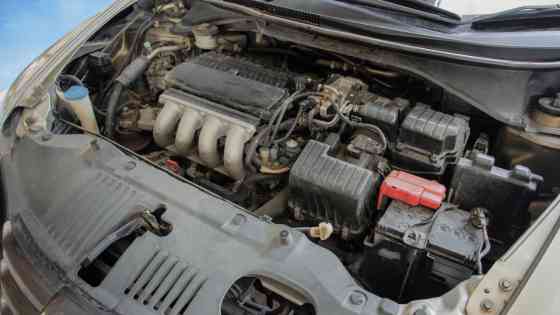
And then there are the mechanical repairs that need to be done. Water finds a way to get to all parts of your engine such as the intake, exhaust, combustion chamber, air cleaner, and so on and so forth. This will necessitate a full drain of your engine, cleaning, new oil, new plugs, new filters, and the like. If you drove your car in the flood and the engine sucked in water, then it’s game over. You’ll need an engine replacement.
As someone who went through this mess and still wanted to retain the car, this is what I would recommend: do not go ala carte. I strongly recommend you just get a surplus engine set complete with transmission because you will likely spend less that way. For instance, a typical surplus 1.5L Toyota 1NZ from a Vios retails for about PHP 40k as a set (with wiring, ECU, etc.) and another PHP 15 to 20k with a transmission. That would solve most of your repair problems as it’s a matter of replacing the engine and many of the systems with an unflooded one. I would even recommend finding a front cut to serve as a donor for any components you may need such as your aircon, radiator, front suspension, and so forth. When you’re done, register the change with the LTO.
Yes, a fully submerged car isn’t fun to fix. If anything, it’s a write-off. But if you really feel the need to retain your car because it’s special and has sentimental value, these are the trials, tribulations, and costs that you may be looking at.
For me, if I were to go through it all over again, I wouldn’t. That’s what the insurance is for.