Auto Essentials: The story of the humble car jack

Origins of the scissor jack and more
It's better to have it and not need it, than need it and not have it.
Truth be told, the jack is one of those basic car tools that nobody wishes they’d ever need or use. But on the flip side, it’s also something you'll wish for when it’s really needed.
While all jacks function to do the same exact thing -to temporarily lift a vehicle for servicing or repair work- not all jacks are the same. Especially since different kinds of jacks have been invented. With that, here’s a brief rundown of the different kinds of jacks built for specific needs.
Bumper jack
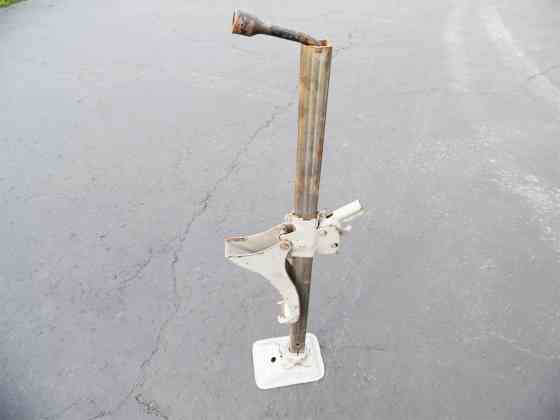
Designed to lift a vehicle by its bumper, its origins can be traced back centuries before the invention of the first automobile. This was original equipment on cars made from the 50s to the 70s when bumpers were made of steel.
Its design was effective and straightforward, but it was also potentially dangerous if used improperly. This was made obsolete when carmakers started using PP plastic for bumpers. That's the main reason why it was replaced by the scissor jack.
This kind of ratcheting bumper jack is still used, but it has evolved to a new form as the high lift jack for 4x4 off-road rigs.
Bottle jack
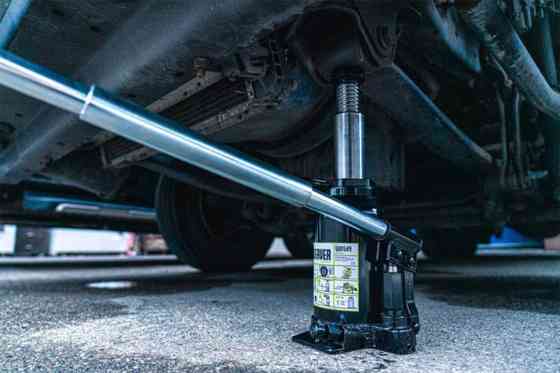
Also known as the piston jack, this is designed for temporarily lifting larger vehicles to facilitate flat tire change. The main advantage here is that it uses hydraulics and a pump, making it very easy to use with very little force.
Because of its robust design, it is more suited for heavier applications such as larger vehicles with high ground clearance. This explains why it is mostly found on SUVs and MPVs as standard equipment, or even as a worthy upgrade for those vehicles.
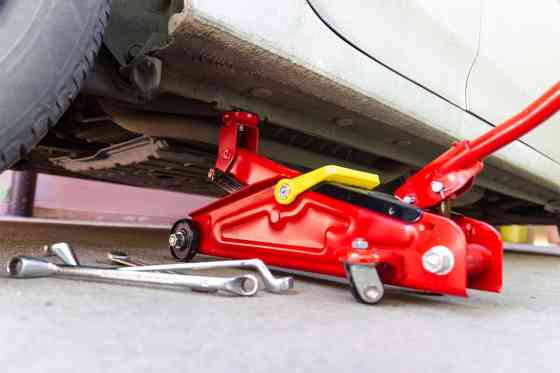
Floor jack/Crocodile jack/Trolley jack
As the name "crocodile" suggests, this has a snout that opens up to lift a vehicle by its chassis and/or subframe. This type (or types) involves using hydraulics, meaning it is capable of lifting/lowering heavier loads.
The difference here is that this type of jack can be easily used with vehicles with lower ground clearance. They also come fitted with caster wheels to facilitate movement but keep in mind that it should be used in conjunction with a fixed jack stand because of the caster wheels.
Because of its wide lifting range, this is mostly used in commercial auto shops, service centers, gas stations, and general use. Some compact models can fit in a trunk.
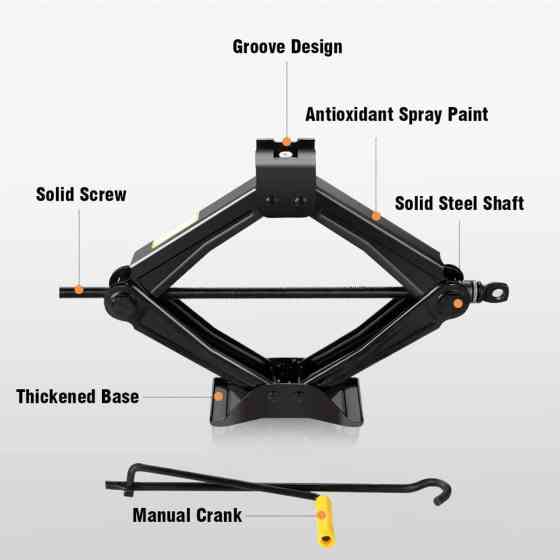
Scissor jack
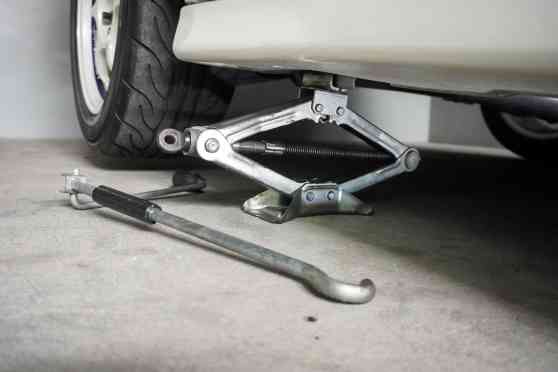
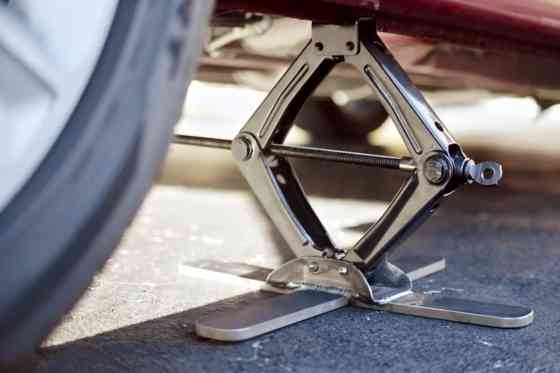
Compared to other types of jacks, the scissor jack will not be the most convenient or easiest to use given that you have to physically turn a threaded bolt using a clunky hook crank to gradually lift your vehicle. But it is lightweight, compact, and free with most new vehicles (though some SUVs may come with a higher lift bottle jack).
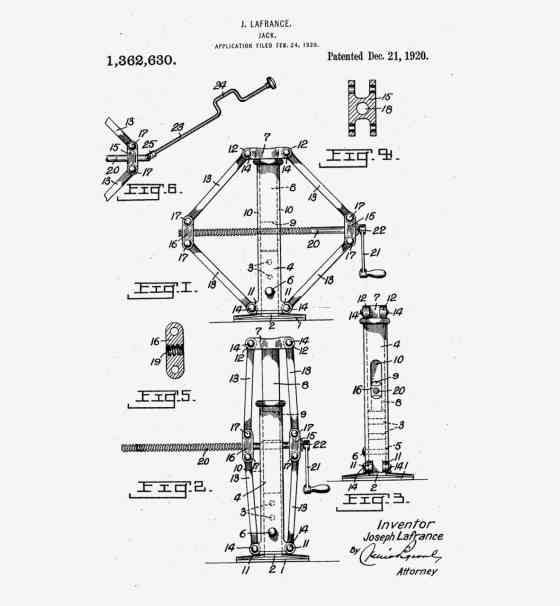
The oldest known patent application for such a device was made by Joseph LaFrance when he submitted his design for a diamond-shaped jack on February 24, 1920. His patent is the oldest one under the name Scissor Jack. However, it wasn’t until 1949 that Wilbur Watson made significant refinements to its design.
By making it collapsible, it became less bulky and easier to store, leading to its widespread use. During the 1960s, most cars relied on bumper jacks that were considered dangerous. As a result, it was replaced with the scissor jack that came as standard equipment for most cars that were manufactured during the 1970s.
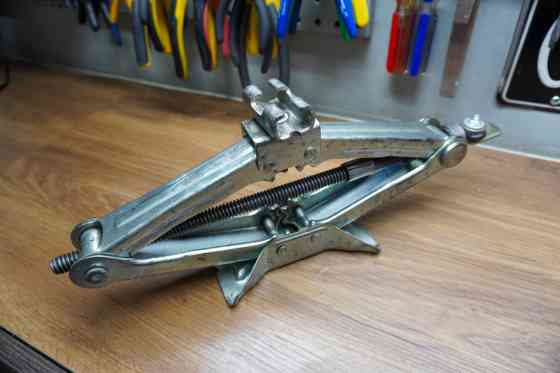
Scissor jacks are low maintenance as these do not rely on hydraulic fluid to operate, meaning they won’t ever leak in their entire service life. You will need to lubricate the threads once in a while to prevent the mechanism from seizing.
While the design principle has remained the same, several advancements have been made to make it easier and more convenient to operate or use.
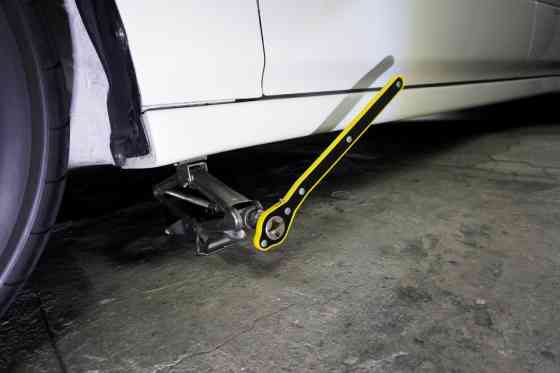
There is the scissor jack ratchet wrench combination. Rather than using a cheap hook crank, a supplied adaptor is bolted onto the end of a jack to accept a matching ratchet wrench. Simple and easy to use, just attach it to the end of the jack and its ratcheting action makes it easy to turn the jack whether raising or lowering the car.
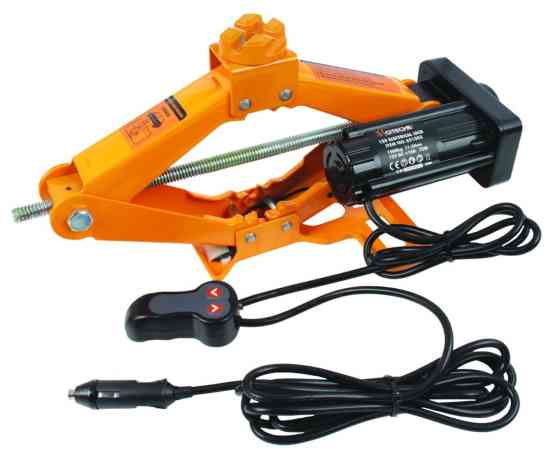
There's also the motorized scissor jack which makes the task of lifting the car much easier by plugging into the 12V outlet on your vehicle. All you need to do is push a switch.
There's also the cross jack which is a basic scissor jack that comes with a cross-shaped base. This makes it much more stable when being used.
If you've read up to this point, then you're probably bored. But remember that everything has a purpose in your car, and knowing the purpose and how to use remedial and emergency tools like a wrench, a fire extinguisher, or even a humble jack will make your drive easier if it ever comes to that.