Auto 101: Is driving slowly more efficient?

Does driving slow really save fuel?
We all love a fuel-efficient vehicle. The longer and farther we drive without filling up for gas, the better it is for our wallets and our state of mind. Any tricks to improve gas mileage will always be welcome for the typical motorist.
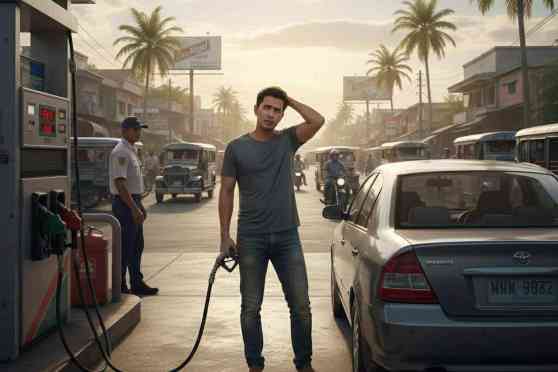
If you grew up riding shotgun, you’ve probably heard it from a parent or relative: “Relax lang sa tapak, para tipid sa gas.”
It sounds logical, right? The slower you go, the less fuel you burn. But once you start driving for yourself, you realize it’s not that simple. In fact, going too slow can sometimes use more fuel, not less. Unconvinced? Let’s break it down.
There’s a sweet spot for efficiency
Every car has what you might call a “happy place” when it comes to fuel economy. It’s similar to riding a bicycle, where you reach a certain momentum where you can happily maintain a steady pace without exerting much effort in balancing and pedaling. It's called the cruising speed.
For most vehicles, that “sweet spot” is somewhere around 60 to 80 km/h on flat roads. That’s also the reason why most expressways recommend those speeds for cruising. At that pace, the engine has somehow reached the point where it’s no longer working that much, which means engine load is light, the gears are at their tallest, inertia is keeping the wheels spinning, and the car is not fighting too much wind resistance yet.
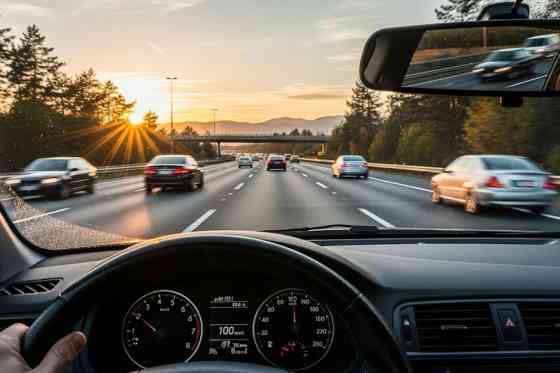
Let’s say you cruise at around 100 km/h or faster, you’ll notice that the fuel gauge dips much quicker - and that bar you see on the fuel economy meter display gets a lot smaller. That’s because the faster you go, the harder your engine has to work to fight against aerodynamic drag to maintain speed.
The same applies when you go too slow. When you’re at “crawling” speeds, you’re actually spending more time making the engine work hard in the lower gears, which doesn’t bode well in terms of efficiency. That’s also the reason why in vehicles with traditional internal combustion engines, the fuel efficiency ratings are much lower in the city compared to highway numbers.
But why is that the case?
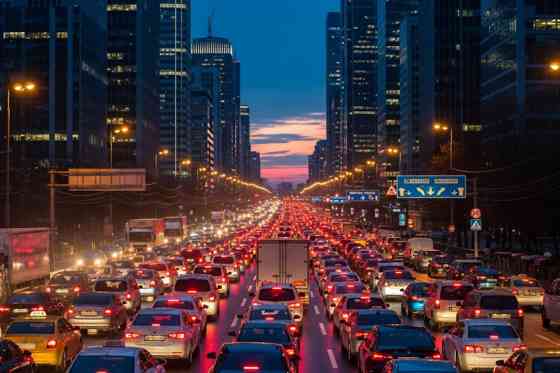
In city traffic, “driving slow” usually means stop-and-go. Constantly braking, accelerating, and idling at traffic lights is guaranteed to bring down your fuel efficiency numbers, as acceleration requires a large amount of energy to increase the vehicle's speed, which directly translates to higher fuel consumption.
Again, going back to the same reference as riding a bicycle, you usually exert more effort pedaling from a standstill than maintaining your balance and cruising at a steady speed, right? Think of your effort as the gas being burned. The more effort, the bigger the energy the engine needs to consume.
So how do I become more efficient in the city then?
Well, slow-moving traffic and gridlocks will always be a deterrent for efficiency, especially if you live in the Metro. But for this feature, let's focus on the person behind the wheel and not the external factors causing lower efficiency numbers.
You just have to remember this: it’s not about being the slowest, it’s about keeping it smooth and steady.
From a standstill, all you have to do is accelerate gently. Take note: gently, not gingerly. Don’t be afraid to put some pedal pressure on the throttle to get some acceleration going, but don’t mash it all the way to the firewall either. The less time you spend being constantly on the throttle, the shorter the time the engine overcomes the weight of the vehicle and reaches the sweet spot.
The same goes when it comes to braking. The faster you kill off the momentum the car has, the more time you have to spend accelerating back up, which means you burn more fuel. Of course, stepping on the brakes will always be inevitable, especially when driving in the city, but anticipating traffic flow instead of reacting at the last minute will greatly help in keeping your foot off the middle pedal for fewer instances.
One tip that also helps is to cruise up gently to a red light, instead of rushing there and ending up making a full stop. If you time it right, you wont kill all the momentum you have and start from a standstill again. It's more efficient to reaccelerate from 10 or 5 km/h than 0 km/h.
When you try to do all those things, you'll likely see full bars most of the time on your fuel efficiency meter. And that’s what makes the difference at the pump.
Is it the same for hybrids and EVs?
Well, hybrids and EVs somehow flip the script. They’re actually more efficient in the city because they can creep around in electric mode or harvest energy when braking. EV and HEV motors also tend to have higher torque at low RPM, making these systems perfect for getting a car moving from a standstill with little or no throttle pressure.
Most notably, hybrids and EVs don’t have multiple gears like a traditional internal combustion engine, because they don’t have a narrow powerband to stay in their efficient operating range. But even then, flooring it or driving erratically will still drain the batteries faster, just like a typical ICE.
At the end of the day, driving like a turtle won’t guarantee you savings on your next top-up. In fact, it can also be dangerous since you could impede other drivers and cause an unexpected hazard. Instead, you should focus on training your right foot to aim for that sweet spot - which is steady, moderate speeds and smooth inputs.
Think of it less as driving slowly and more as driving smart. Because in the end, saving fuel isn’t just about going easy on the throttle; it’s about finding the balance between pace and efficiency.