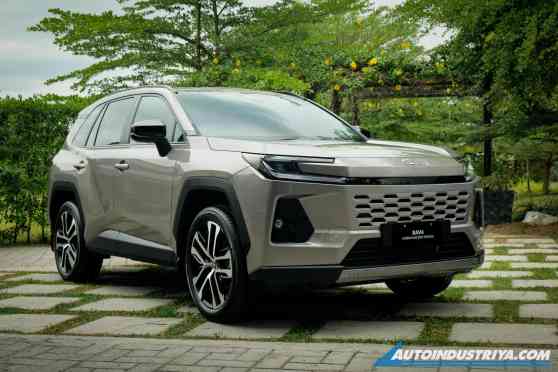
2026 Toyota RAV4 HEV: The promised hybrid?

What we liked about the sixth-generation 2026 Toyota RAV4 HEV
If there’s one crossover SUV from Toyota Motor Philippines that has been relegated to the background, it’s the RAV4.
Ever since the arrival of the Fortuner, the Corolla Cross, and the rise in RAV4 prices, Toyota's once-groundbreaking compact crossover SUV has taken the back seat. Yes, it’s still a favorite among niche customers, but it’s not anywhere near in terms of being the popular Toyota it was.
For 2026, Toyota Motor Philippines is changing things up. With hybrid electric vehicles (HEVs) growing more popular than ever, Toyota has now put the all-new, sixth-generation RAV4 front and center. And finally, they got the price right at PHP 2.183 million to start. That may seem pricey when compared with Chinese hybrid SUVs from BYD, Chery, JAC, MG, and others. However, the pricing of this Japan-made crossover undercuts the Thai-made Honda CR-V e:HEV and the Japan-made Subaru Forester e-Boxer Hybrid.
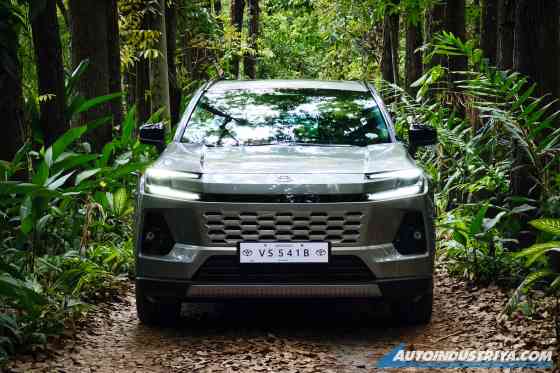
But is a lower starting price and Toyota heritage enough for the all-new RAV4 to make a mainstream comeback? Does the sixth-generation model have enough character, technology, and features to attract buyers? Has Toyota done something about its ride comfort, which has plagued past generations of the RAV4?
Macho, chiseled looks
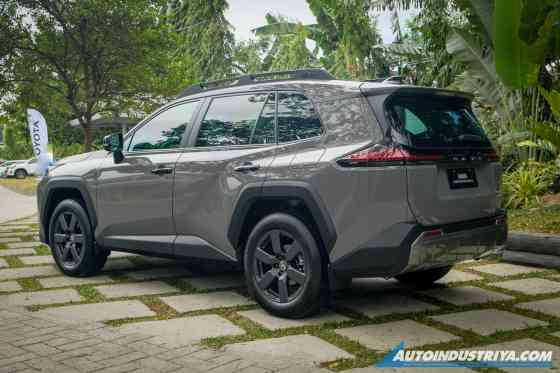
Let’s start with the most obvious first, the looks. While the fifth-generation RAV4 looked great, it somehow lost the rugged and SUV-inspired charm of the past generations. Toyota switched it up for the sixth-generation model, giving it a more chiseled & macho appearance without sacrificing its rugged appeal.
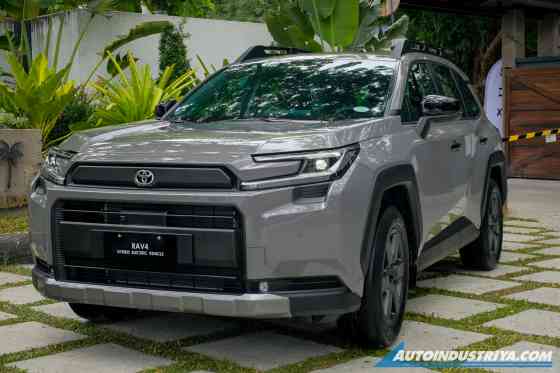
RAV4 Adventure HEV
Yes, it’s more of a soft-roader nowadays, but the RAV4 has always been associated with going off the beaten path (particularly the first-generation). In later years, however, the RAV4 developed a reputation for being a comfortable & reliable crossover SUV that’s practical for everyday use. Heck, the RAV4 even beat the Ford F-150 in becoming the best-selling vehicle in the US in 2024. So, Toyota decided to offer two distinct variants to make it appealing to two different kinds of buyers.
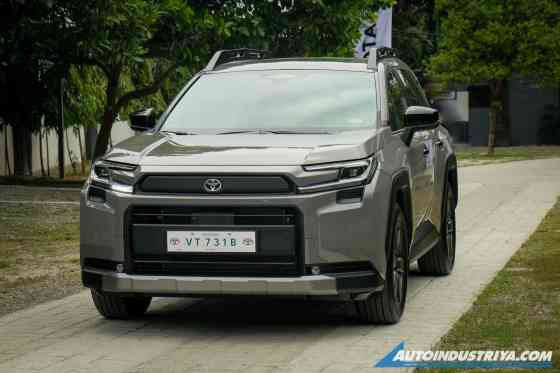
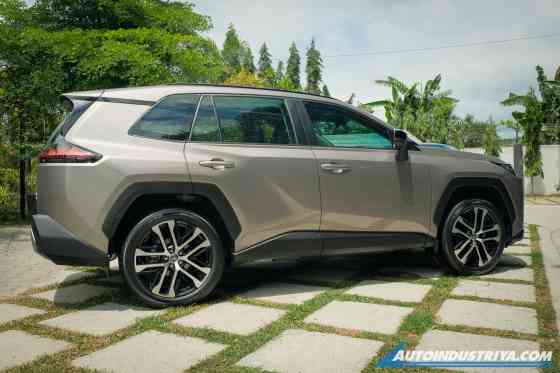
For those who like to have the RAV4 with rugged looks, there’s the RAV4 Adventure HEV. It features the brand’s new “Hammerhead” design, which gives the crossover a more sculpted, high-tech look while also giving the RAV4 an SUV-like appearance. Its C-shaped LED light signatures give the RAV4 Adventure a dynamic appearance that complements the crossover’s futuristic design. Meanwhile, the wheel arches feature overfenders, paired with 18-inch alloy wheels wrapped in 235/60 tires.
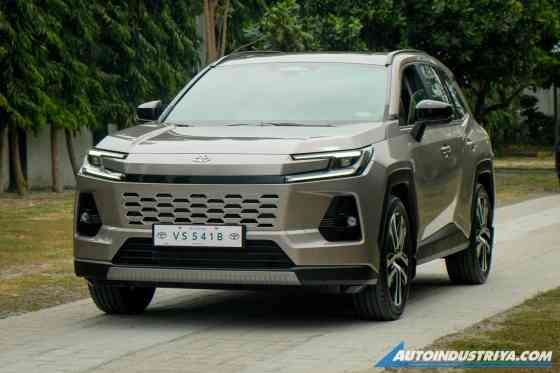
RAV4 Limited HEV
Prefer your RAV4 with a bit more class? Toyota also offers the RAV4 Limited, which gets a more sophisticated look. It also shares the same Hammerhead front fascia design but replaces the Adventure grille with a honeycomb-like grille. The Limited also gets a different bumper with more prominent LED foglights that complement the more upscale look of this particular variant. And instead of having 18-inch alloys, the RAV4 Limited rolls on huge 20-inch wheels wrapped in thinner 235/50 series tires.
The LED taillights on the all-new RAV4 were something I was trying to wrap my head around when I first saw them via press pictures. While their design is acceptable, they look very similar to what Chinese manufacturers would produce. Once I finally saw them in person, however, I changed my mind since they look better in real life. If you’re the kind that wants to strap additional cargo on top of your vehicle, the Adventure variant is the one for you since it has functional roof rails. That’s something the Limited version can only wish to have since it doesn’t come with any.
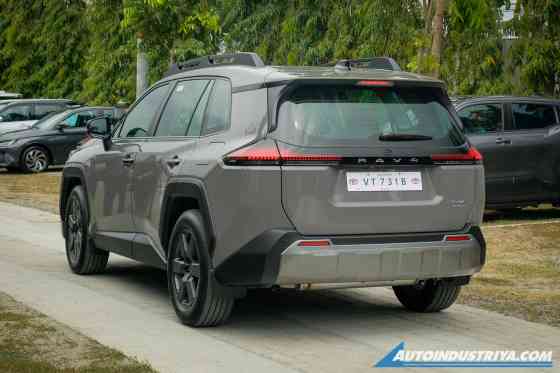
The sixth-generation RAV4 has evolved from a subcompact 4x4 SUV to a much larger compact crossover SUV. While some generations of the RAV4 lost some of their original looks, I’m happy to say that Toyota found a way to bring some of it back for the all-new model. Let’s hope Toyota does this more for their next generation of vehicles.
AWD returns with Hybrid Power
Under the hood is a 2.5L four-cylinder hybrid engine that’s shared with the Camry HEV, called the A25A-FXS. It makes a combined 239 PS with 221 Nm of torque and is coupled to an e-CVT and Toyota’s E-Four AWD system. That’s right, RAV4 fans, the all-new crossover SUV is back as an all-wheel drive model.
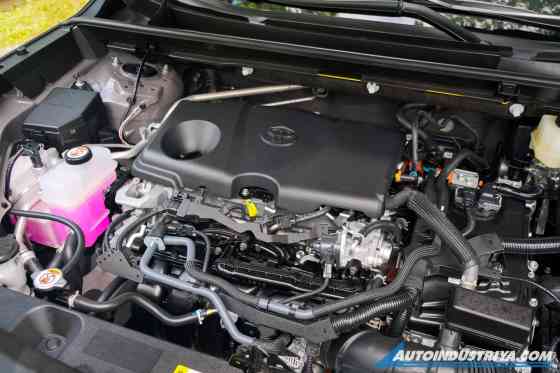
But unlike past generations of the RAV4, which relied on mechanical systems like a transfer case, a propeller shaft, and a rear differential, the new E-Four AWD system uses a dedicated electric motor that powers the rear wheels and can deliver additional grip when sensors detect the need for traction.
This means that under normal driving conditions, the all-new RAV4 HEV remains in FWD mode to save fuel and reduce drivetrain wear. Once it detects slippage in the front wheels, the E-Four AWD system engages the rear wheels to provide additional traction, which is especially beneficial in wet, muddy, or slippery road conditions. It even has dedicated modes like Terrain & Snow when the going gets tough, but we weren’t able to test them since we mostly drove on asphalt.
Out on the road
Like most Toyota hybrids, the all-new RAV4 HEV starts with a beep to indicate the vehicle is on and ready to go. That’s because when there’s sufficient charge in the 1.59 kWh lithium-ion battery, the vehicle starts in EV mode. After getting myself familiar with the controls and buckling up, it was now time to experience what the sixth-generation RAV4 feels like.
What immediately stood out was how the powertrain delivered its power to the pavement. While the previous generation had a similar setup, it somehow felt disconnected. In the all-new model, the RAV4 felt more engaging to drive, which is a welcome change. You can feel what the front wheels are doing since there’s feedback coming to the steering wheel. Take on a corner and the RAV4 feels surprisingly agile despite being a heavy hybrid crossover SUV.
There were times I wanted to try it on curved roads at higher speeds, but I reminded myself of the need to prioritize my safety and that of my companions during the drive. Perhaps I’ll get to test it out more once we do a proper review of the all-new RAV4.
Power-wise, the all-new RAV4 feels sprightly, dispelling the stereotype that hybrids are slow. Even in Normal Mode, when I buried my right foot on the accelerator, the RAV4 HEV lunged forward and even pushed me back a little bit into my seat. It’s no sports car by any means, but the electrified RAV4 is faster than it looks. When I set the drive mode to “Sport”, the powertrain was more than eager to send all available power to the pavement. The sensation can be quite brutal: the vehicle squats during hard acceleration, which even surprised me.
Easy on Fuel and on your back
While I can go on about how deceptively quick the all-new RAV4 HEV is, its best trick is its ability to sip fuel. Across mixed city and highway driving, I averaged approximately 18.5 km/L. These included town roads, uphill & downhill sections, and the occasional wide open provincial roads. One of our colleagues even averaged 21 km/L during mostly highway driving.
At these figures, the all-new RAV4 HEV is as efficient as a hatchback or subcompact sedan while making more power and torque combined. All of this is made possible by the latest-generation hybrid system, which can quickly recharge the lithium-ion battery through regenerative braking. But what really impressed was the electric motor’s ability to power the vehicle at city or highway speeds.
I was able to do this by easing my foot off the accelerator when there’s sufficient charge from the battery. The system would then cut engine power, and I would gently place my right foot back on the accelerator pedal, but only just. This enabled the vehicle to run on battery power for certain distances, including at speeds up to 60 km/h. The trick with HEVs is to adjust your driving style and use a lighter foot to maximize battery use. Do that enough times, and you’ll save yourself trips to the pump, which translates to more money in your wallet.
Last but not least, the all-new RAV4 has a softer ride, which really surprised me. That's because, for several generations, older RAV4 models had a stiff, crashy ride that can be quite harsh on your back. I'm happy to report, however, that Toyota has finally changed it for the sixth-generation crossover. Not only is the ride softer, but the RAV4 remains more composed when going over potholes, rutted streets, and the occasional bumps.
What needs improvement?
While everything looks and feels rosy, there are some aspects of the all-new RAV4 that could be improved. Despite a starting price of nearly PHP 2.2 million, the cabin largely makes use of plastic. While they’re not the hard (i.e., cheap) kind of plastic, I wish Toyota used more high-quality materials. At least the main touchpoints inside the cabin use high-quality materials that feel soft & nice to the touch.
Another aspect I wish Toyota would change is adding more physical buttons. While I understand Toyota’s decision to use more touchscreen controls, I wish in-car features such as dual-zone climate control still had physical buttons and switches. The all-new RAV4 uses a touchscreen-based system that could distract the driver while driving. In my opinion, nothing beats tactile controls for adjusting in-car amenities.
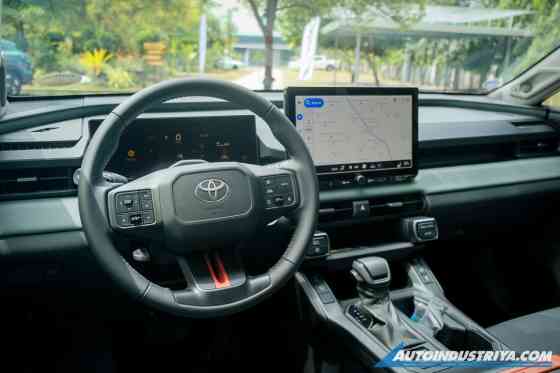
There’s also the matter of setting the various Toyota Safety Sense features hidden away in the digital instrument panel. You can only adjust the pre-collision system and blind-spot monitoring settings when the vehicle is stationary, and changing them via the steering wheel buttons can be tedious. This is something I wish Toyota and other automakers would change because having them buried in the digital gauge cluster is counterintuitive. If the screen fails to display them or breaks, you have a more serious issue to address.
Is it worth it?
With the Toyota RAV4 HEV Adventure selling for PHP 2.183 million while the top-of-the-line Limited retails for PHP 2.499 million, Toyota has essentially given customers the choice of what kind of RAV4 they prefer. There are key changes between the two variants, including a larger sunroof, additional creature comforts, and exterior updates. However, you still get the same 2.5L electrified powertrain that benefits from E-Four AWD.
For years, the Toyota RAV4 became a sort of outlier in the compact crossover segment, becoming a niche choice among compact crossover SUV buyers. But with the popularity of HEVs on the rise, Toyota Motor Philippines decided now was the right time to bring the all-new sixth-generation RAV4.
The only issue, however, is that you can't plug it in. Given what's going on now, that functionality would come in really handy.