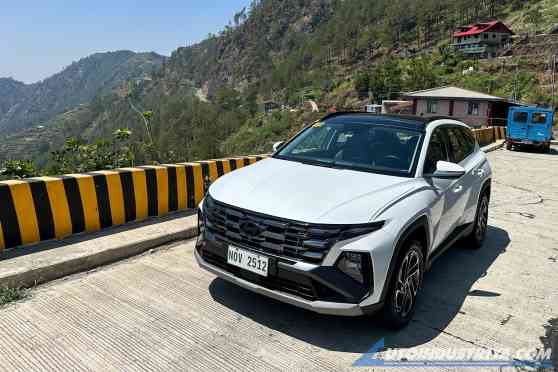
Sagada Drive: Holy Week pause with the Hyundai Tucson HEV

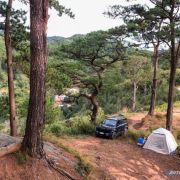
Hitting the pause button in Sagada, Mountain Province
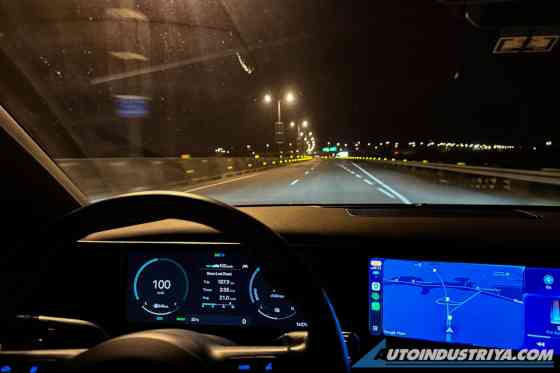
Time check: It was 2:00 in the morning.
I’m cruising along EDSA-Balintawak and merging into North Luzon Expressway on a Holy Thursday, in an environment that feels like a dream.
There was no traffic. No long lines of cars at the toll gate for the so-called exodus. All I saw were just empty lanes stretching into the dark. It was weirdly quiet, in a way Metro Manila rarely allows. It's like the country collectively decided to hit pause before the long weekend truly began.
That’s when I knew this year’s Semana Santa drive was going to be very different.
Obviously, the fuel crisis had a lot to do with it. Prices have climbed into triple-digit territory, which, of course, forced many to cancel their long-distance, out-of-town trips. That's just the way it is when a diesel-loving country now has diesel as its most expensive fuel.
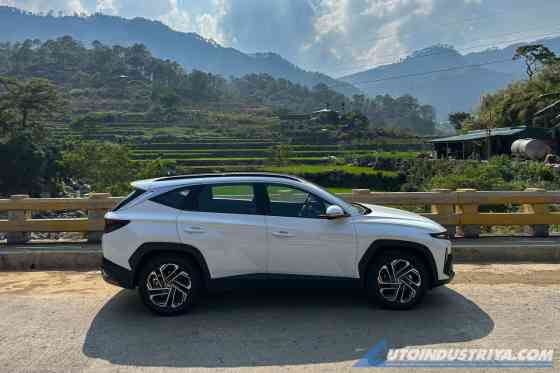
Fortunately, I was behind the wheel of a hybrid for this trip – the Hyundai Tucson HEV. With a 91 octane diet - or in other words, Unleaded instead of Premium, on paper, this should at least save me a few thousand pesos at the pump when the trip's all over.
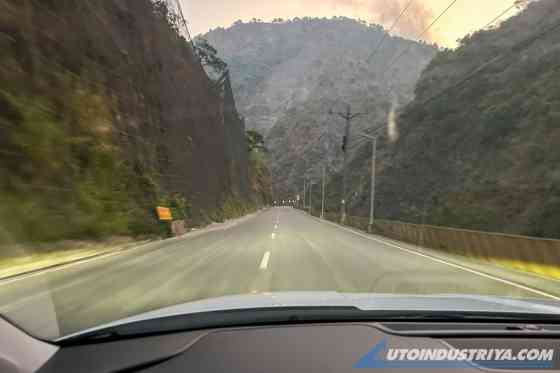
By the time I peeled away from the expressway network and began the climb toward Kennon Road, the sky had already begun to lighten. In the past, this would usually be the start of a slow and stressful ascent filled with vans, MPVs, and family vehicles filled with tourists seeking cooler weather.
This time, though, the climb felt almost surreal in its emptiness. Corner after corner, Kennon Road opened up with no one ahead. It was just the sound of tires tracing the pavement and the steady, effortless pull of the Tucson’s Turbo Hybrid powertrain working its way uphill.
At around 6:00 AM, there was the sight of the iconic Lion’s Head. Shortly after, we rolled into Baguio City, and for a moment, it didn’t feel like Baguio at all.
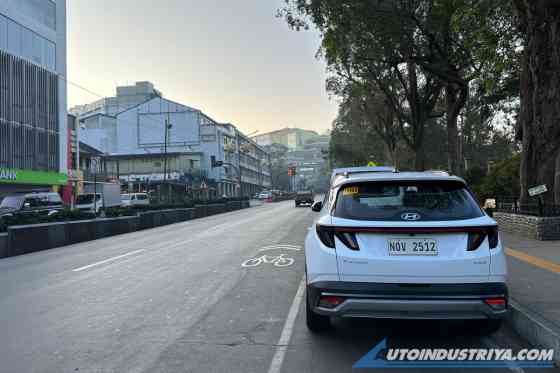
It's the first time I'm seeing the City of Pines with no crowds. No tourist traffic. I had a glimpse of what Baguio was like back in the pandemic days, minus the face mask. Session Road was quiet, and all you feel is that cool mountain air, and a stillness you only ever get this early—or this rarely.
I was able to park the Tucson on a curbside near the Melvin Jones Grandstand – a place where parking slots are impossible to find during peak seasons. We went for a quiet walk around Burnham Park, followed by breakfast beside Baguio Cathedral at Rebel Bakehouse.

With me getting my morning coffee and barely needing to think about the traffic situation, there was a quiet realization that the trip was indeed off to a good start. After paying a visit inside the Baguio Cathedral to pray for a safe trip, by 9:00 AM, we were back on the road and set the map to one of the country’s most rewarding drives—Halsema Highway.
The road narrowed, twisted, and climbed in equal measure. With my favorite road trip tunes blasting on Tucson's speakers, the hybrid crossover was likewise just cruising along and having a good time. Soon after, we were crossing under the famous Halsema half tunnel in Atok, and passed the marker of the former highest point.
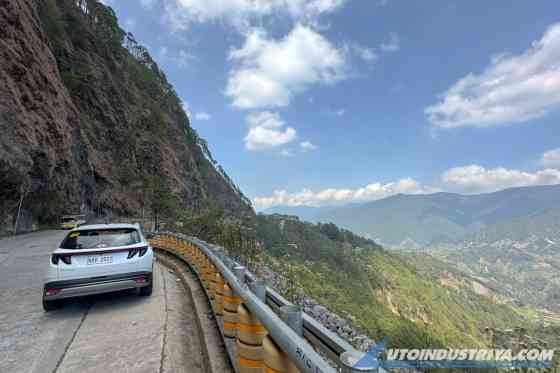
We passed through the high-altitude stretches of Buguias and Mount Data in Bauko, Mountain Province, where the landscape opened into rolling mountains, stepped rice paddies, and deep valleys, with clouds hanging low enough to feel within reach.
Six hours later, we finally arrived at the town where we're having our weekend pause - Sagada.
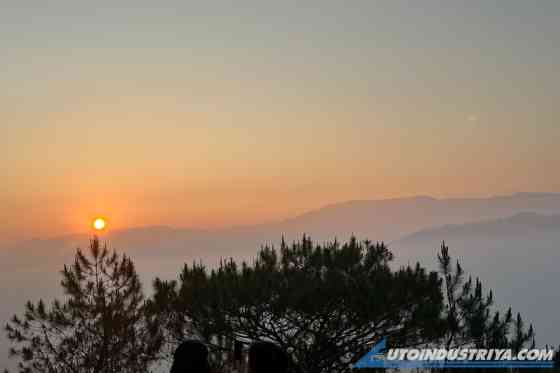
The following morning, we were up early to chase the sunrise at Marlboro Hill for Good Friday. And while the sea of clouds offered such a breathtaking view, getting there equally took the breath out of our lungs. Maybe this was our penitensya, after all.
Once our trentahin selves recovered, the traverse hike brought us to places like the Echo Valley, a wall of limestone rock, and finally finishing on the latter part to Blue Soil.
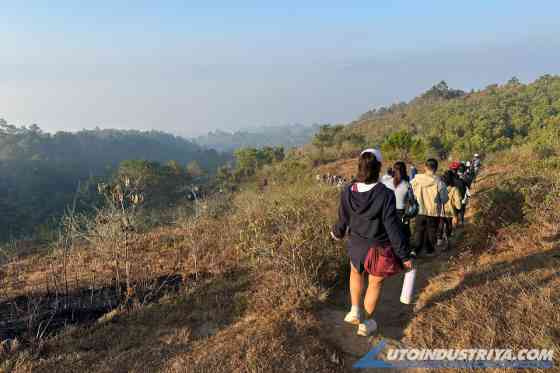
The five-hour hike drained most of our energy for the day, so we decided to cross out the Bomod-ok Falls on the itinerary. Instead, we spent the rest of our Sagada stay with no rush, no pressure, and just enjoying the company of people I've grown up with since I was 12.
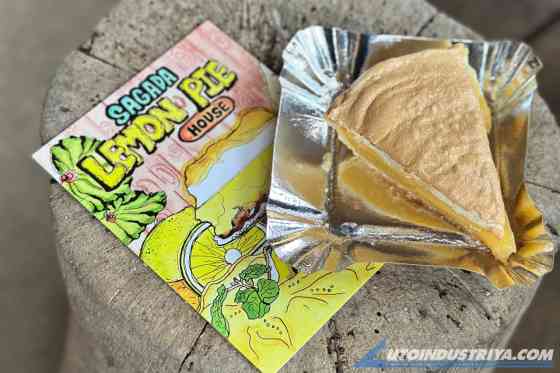
By the time the morning of Black Saturday came around, we had already tried out the craft beer at Cellar Door, had quiet moments at Church of St. Mary the Virgin, and experienced the simple pleasure of lemon pie and Sagada coffee in town. Eventually, it was time to move again after shopping for some yogurt and coffee beans to bring home for pasalubong.
The route down took us through Bontoc, then onward to Banaue in Ifugao, before descending into Bagabag in Nueva Vizcaya. Somewhere along that stretch, the numbers in the Tucson HEV’s instrument cluster started to tell their own story.
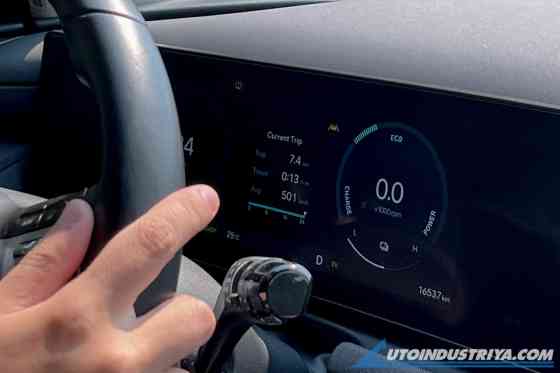
Despite the challenging terrain, the Tucson was returning an average of around 20 km/l, which was remarkable for a drive that involved as much climbing and technical roads as this one. But it was on the long downhill sections in Mt. Polis near Banaue where it became almost unbelievable. At one point, the display even showed figures nearing 500 km/l.
It’s the kind of number that only happens under very specific conditions, as the long descents meant the engine barely needed to work. In conventional vehicles, the downhill sections would simply be a case of using engine braking to slow the car down. But with the Tucson, it perfectly captured what its hybrid system was doing throughout the trip: getting back some of the energy the climbs had taken for later use.
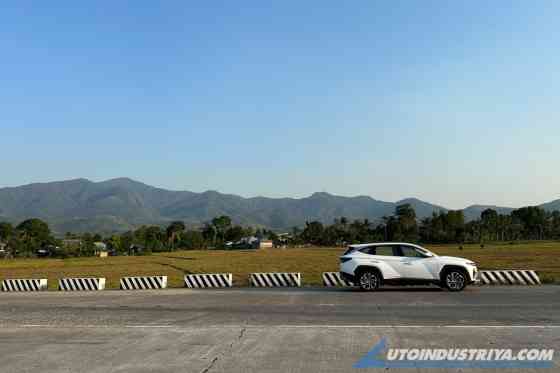
From Bagabag onwards, the drive became second nature to me. The route through Santa Fe, down to San Jose City, and onto the Central Luzon Link Expressway was one I knew by heart, thanks to muscle memory brought by years of driving back and forth to my hometown in Isabela.
So for the first time in the trip, I wasn’t thinking about the road anymore. I was just driving. Or more accurately, just wafting along.
The Tucson HEV slipped effortlessly into that rhythm as I passed by the empty Santa Fe town. After days on the road, fatigue never really set in. It was smooth, quiet, and composed. The cabin remained calm, insulated, and comfortable, while the efficiency stayed consistent, quietly proving just how well-suited the Tucson was for drives like this.
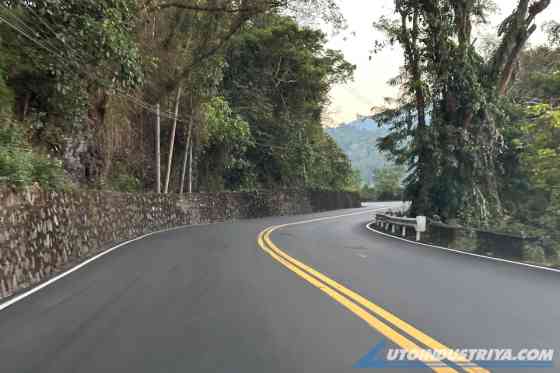
By the time we reached Dalton Pass for the Nueva Vizcaya – Nueva Ecija border, the sun was beginning to dip, casting an orange glow over the road ahead. A few more hours on the road, I reached San Jose for a quick dinner pitstop before setting the course to Santo Domingo, then Aliaga to enter CLLEX. Eventually, just before midnight, I was back in Manila. But the drive wasn’t over yet.
Another hour and a half behind the wheel brought me south to Batangas, just in time for Easter Sunday. The roads were quiet once again, almost echoing the stillness of that 2:00 AM departure days earlier. Lo and behold, the low fuel gauge finally lit up as I was about to press the start/stop button off, reminding me that I hadn't stopped for gas for more than 900 kilometers already.
As the trip finally reached its end, I couldn't help but reflect on the journey that was. It wasn’t about the distance. And it wasn’t about how much I saved in filling Tucson’s tank back to full. Instead, my core memory was filled with the in-between moments that didn’t get planned in the first place.

The empty expressways in the dead of the night. The first light spilling over Kennon Road and Marlboro Hill. That silent walk around Burnham. Coffee beside the Baguio Cathedral. Traversing the long, winding roads of Halsema Highway at cruising pace. The surreal stillness of Sagada, where time didn’t feel like it was moving at the same pace.
The descent into Banaue and Nueva Vizcaya, where the mountains slowly gave way to memory. Then finally, the familiar roads home, where everything felt both distant and familiar at the same time. It was a journey stitched together not by destinations, but by pauses.
Holy Week drives have a way of doing that - making the road feel less like escape, and more like reflection. There’s a sense of shedding the weight you didn’t even realize you were carrying. And towards the end, it feels like you hit the reset button. It’s a quiet kind of renewal where silence turns into perspective, and the hours in between places feel like their own kind of space to breathe.
Sometimes, that’s all we need to rise again. Recharged, reborn, and ready to come back into the same routine that allows us to do things like these from time to time.
And yes, just like having the right set of friends on a road trip, a long drive at today’s fuel prices can still be enjoyable, without thinking about how deep the dent in the wallet would be. You just have to have the right car for the job.