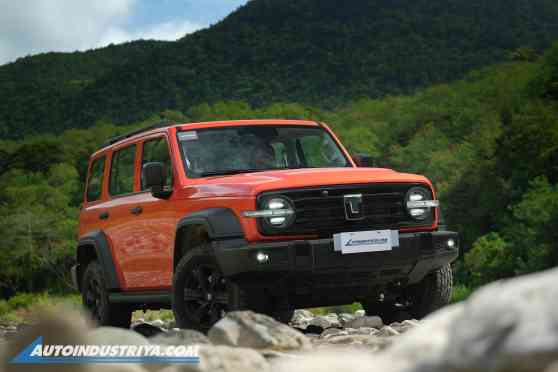
GWM Tank 300 2.0L Turbo AT

- Make: GWM
- Model: Tank 300
- Engine: 2.0L DOHC 16-valve Inline-4 Turbo Gasoline
- Max Power: 217 PS @ 5500 rpm
- Max Torque: 380 Nm @ 1800 to 3600 rpm
- Transmission: 8-speed AT, Part Time 4X4
- Price as Tested: ₱2,678,000
7/10
9/10
7/10
7/10
7/10
7/10
Off-Road Ready?
There has never been a more challenging time to look at a Chinese-made vehicle in the Philippines than now. A decade ago, the problems have been with the vehicles, particularly with quality control and safety. However, as they invested more in R&D, manufacturing, and their QA processes, the vehicles sharply improved.
The problem now is outside the industry’s control. It’s very much geopolitical. And that probably makes things even more challenging for a vehicle called Tank from a manufacturer named after the Great Wall of China. I’m sure many will rip into the vehicle in the comments, bashing it without even trying it. Some will probably make the crass comment about what the main armament is, and how much water it can dish out.
Dark as the humor may be, it’s our job to look past personal leanings and assess: Is the Tank 300 worthy of your attention?
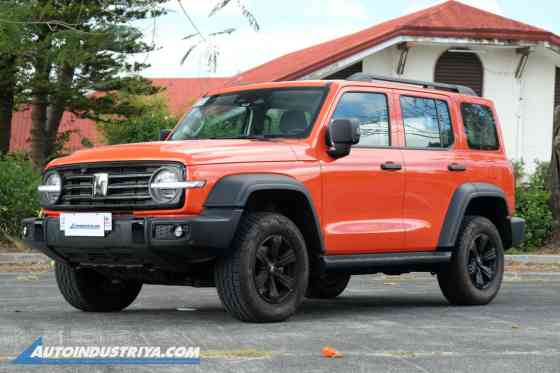
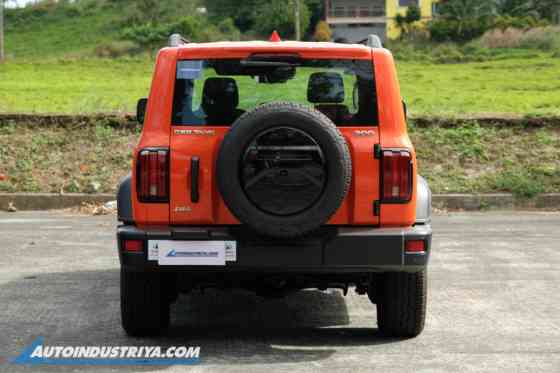
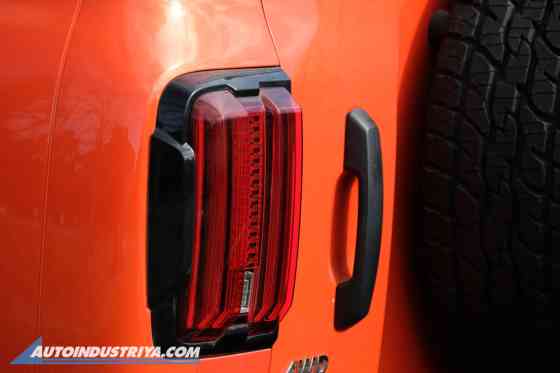
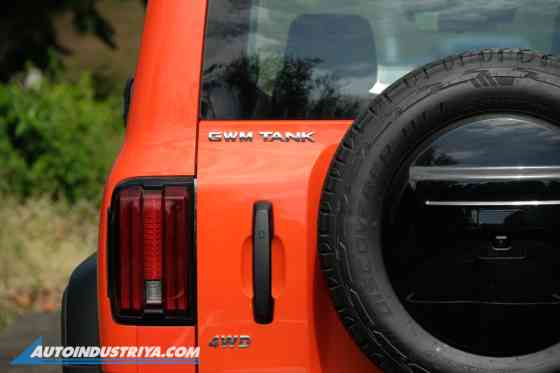
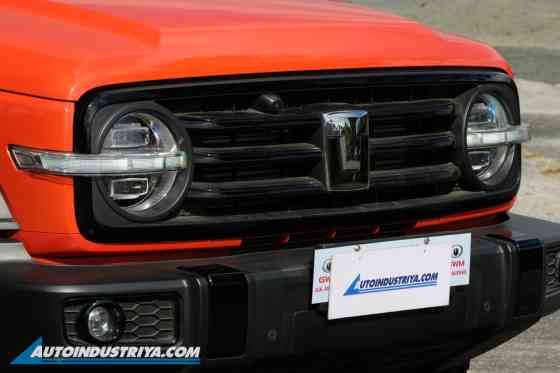
The design team seems to have taken a lot of inspiration from other models, particularly the many popular 4x4s from all over the world. While we can’t really say it’s some kind of facsimile, we can’t help but see the similarities with the front, the headlights, the tall stance, and extended fenders, the classic SUV silhouette, the tailgate-mounted spare, and many more. It’s like a Bronco, G Wagon, and Wrangler entered a room, and the Tank 300 came out after a few months of gestation.
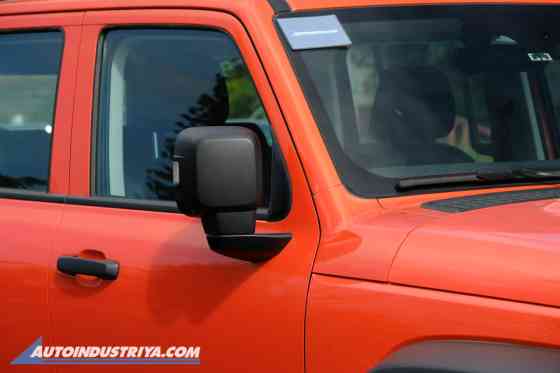
That has been something we’ve noticed in Chinese-made vehicles in the last few decades, but the difference with the Tank 300 is: that it looks decent. Normally, when we see automakers do this, the result isn’t desirable. The Tank is. It’s a beast that certainly has curb appeal, though perhaps orange won’t be my first choice in color. Maybe the gray will be for me.
Beyond the design, what’s important in a 4x4 is what is underneath the body. The first thing you look at is the frame; yes, this is a frame-based vehicle, not a monocoque crossover. And that square tubular steel frame looks very substantial; definitely beefier than many of the pick-ups and PPVs we normally see in our market.
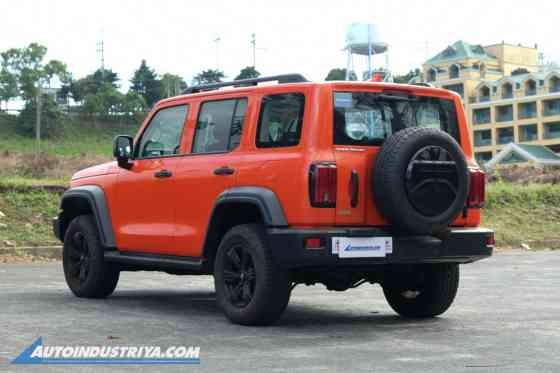
The suspension surprised me though. I half expected solid axles front and rear; after all, the vehicle is touted by GWM as a true 4x4. Instead, the front is a double wishbone independent setup, while the rear is a multi-link independent system. So those looking for the classic kind of articulation may be disappointed. It seems GWM was going for a better ride rather than capability in the classic sense, and perhaps the big indicator is the tires: Tank 300 has A/T on all four corners, but the tread seems more H/T to me.
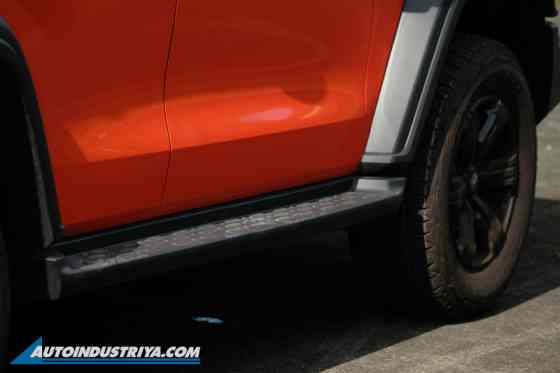
Clearly, the Tank 300 -at least in Philippine spec- leans more towards the on-road side of things. Again, nothing wrong with that, but there are those out there who would consider getting the Tank 300 as a cut-price alternative to a Defender or a Bronco, and they would certainly appreciate certain 4x4 essentials like off-road capable tires. That’s not a big deal for GWM Philippines though; I’m sure they can find a way to offer M/T, R/T, or better A/T tires to customers. They are, after all, also the people who import Sailun.
Where many would be glad to lean towards something more road-like, then it’s with the interior. We’ve become accustomed to interiors that look kludged and hobbled together with these kinds of 4x4 vehicles, but this one is properly premium. In the not-too-distant past, we’ve become used to seeing low-quality interiors from many Chinese automakers, but that has clearly changed. We’ve seen that in several -not all- of these automakers, but that is definitely clear with GWM.
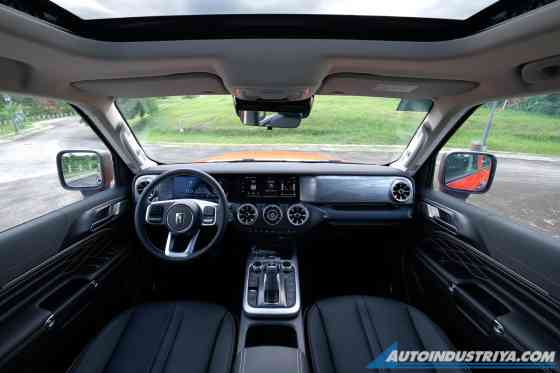
The dash is impressive, featuring two large displays for the driver, the infotainment system, and a large pad on the passenger side that looks quite upscale. The plastics and buttons they used are of a rather high quality. The transmission selector is also quite neat; chunky and positive in its feel. The steering is also nice to the touch. These may seem like minor details, but they are important in conveying the feel of a quality vehicle.
Beyond the impression of quality and luxury (hello Nappa leather seats), there’s clearly attention to presenting the best level of technology for the money. The screens are of the latest variety; crisp, clear, and loaded with all the information you will ever need to know for a drive, and then some. The feature list includes things like adaptive cruise control and the like; normal fare for a vehicle of this price. You get the usual things like Android Auto and Apple Carplay, and the speakers are calibrated just right; not great, but definitely done well. This gets dual-zone climate control plus rear cooling, multiple USB and USB-C ports, 12-volt outlets, and even a 220-volt power outlet.
Really, it’s with the off-road and driving toys where this seems loaded. Yes, it’s a 4x4, and it comes with the expected locking differential as well as drive modes that adjust settings using traction and stability control to prevent you from sliding off or getting stuck. Just to list it all, you’ve got standard drive mode in 2WD high and 4WD high. Snow mode won’t be particularly useful here, but it’s available. Normal mode is available in the 4WD low range, as are other modes for mud, sand, potholes, and mountain mode.
To be honest, I find the modes a bit much; there’s really no need for so many, but it’s a good effort. But what I want to test is the Tank Turn; the ability of the vehicle to physically stop an individual rear wheel to make a really tight turn. It’s not quite like a tank that can pivot in place if the tracks are driven in opposite directions, but it’s a good approximation.
When you press the ignition, there’s a very clear sense that this isn’t a diesel. That I think, is the biggest thing about the Tank 300 that warrants a re-think. Yes, the 2.0L turbo gasoline engine produces a very respectable 217 PS, but a diesel would clearly have an advantage in a vehicle that weighs as much as this. Body-on-frame vehicles are pretty heavy, and the torque of a turbodiesel upwards of 450 to 500 NM will certainly outdo the 380 Nm in the Tank 300. The 8-speed auto does make up for it with a better split in ratios, but still, a diesel would be handy when dealing with the weight.
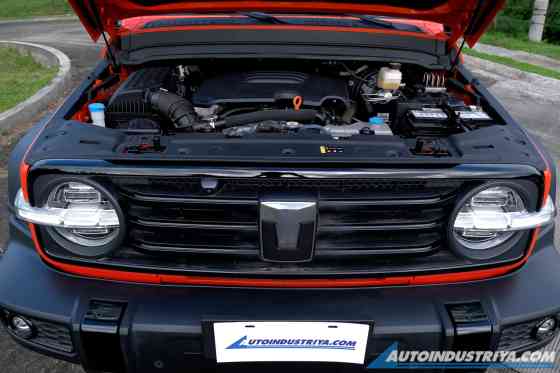
As expected, the Tank 300 is a confident SUV to drive around town. It’s beefy. It’s chunky. It’s like driving around with a suit of armor. You just feel protected. Surprisingly, the vehicle feels light to drive around the city. The transmission and engine work well together to deliver that kind of light feel and acceleration. The problem, however, is thirst. It’s hard to expect much more than 6.5 km/l if you’re in town and experiencing moderate traffic. If traffic is heavier, the thirst goes up. This is where a diesel would make more sense, as the lower RPM and higher torque allow it to go a longer way on full, um, tank. Mind you, we haven’t even factored in passengers yet.
On a winding mountain road, it’s a fairly nice drive. The Tank doesn’t feel heavy or lumbering but don’t expect the agility normally found in midsize crossovers either. The taller profile of the vehicle means a higher CG, but the Tank does well to manage it.
When the pavement disappears, then the Tank comes into its own. I did have misgivings about certain things about the Tank. The abundance of 4x4 tech, while always novel on paper, I always found to be gimmicky when you take off-road. Yes, the different modes used on relevant surfaces work to prevent the vehicle from getting stuck (at least the ones we could test, given the weather), but I do find them to be a bit unnecessary. Just give us good locking diffs (which this has) and a good 4x4 system and we’ll manage.
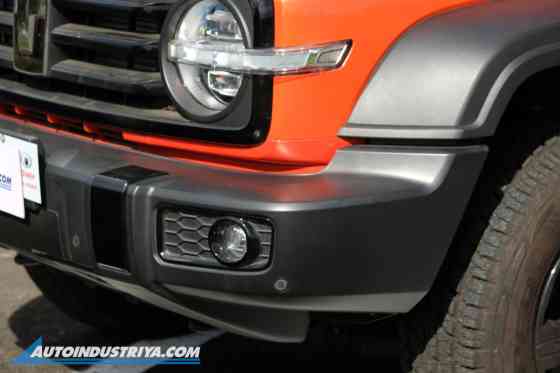
The ground clearance is good. The traction is good on most surfaces. The wading does have me a bit puzzled, as the 700mm claimed is less than many pick-up trucks and SUVs at a much lower price. I did get to use the Tank Turn on the sand up in Daraitan; it does work to reduce the turning radius on the dirt, but I encountered a glitch that had me worried. After the maneuver for our video shoot, the locked rear inner wheel (rear left, in this case) wouldn’t disengage. Only after about 5-10 minutes of fiddling about was I able to disengage it by turning the diff lock on and off.
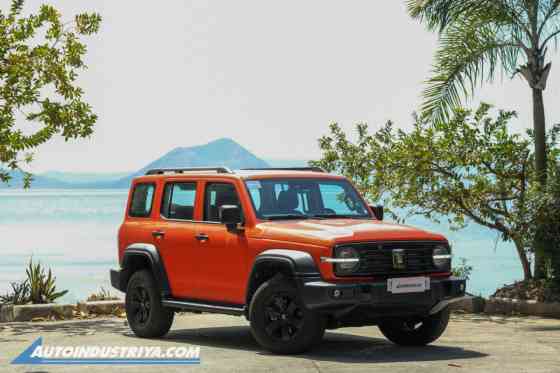
Still, if I had to off-road with the Tank 300, I think it could with a few upgrades like better tires and a snorkel, and maybe some protection for the body that won’t sacrifice the approach and departure angles. Maybe taller suspension too, and a snorkel. There are actually a lot of options available for the Tank 300, as many Australian off-road brands are starting to build the aftermarket for it.
The Tank 300 has a challenge with pricing though: it’s just a bit under 2.7 million. While there is potential here, some may raise their eyebrows at GWM’s proposition versus already proven platforms and brands in the PPV class. Sure, the Tank 300 has the tech, but it could do with a price adjustment to really compel customers to take a chance.