2026 Suzuki Fronx SGX 1.5L AT MHEV

- Make: Suzuki
- Model: Fronx SGX 1.5L
- Engine: 1.5L DOHC 16V Inline-4 + 12-volt Mild Hybrid
- Max Power: 101 PS @ 6000 rpm
- Max Torque: 135 Nm @ 4400 rpm
- Transmission: 6-speed A/T, manual mode, FWD
- Price as Tested: ₱1,299,000
7/10
8/10
8/10
7/10
6/10
7/10
Not quite a HEV, but still efficient
I’ve always been a Suzuki fan... but more on motorcycles, to be specific.
I still remember being around 20 years old when I first saw the Raider R150, a motorcycle that was arguably far ahead of its time when it debuted in 2004. More than two decades later, it still has that same drool-worthy appeal among younger riders, thanks to its sharp design, endless customizability, and, of course, its speed.
Today, however, we’re not here to talk about two wheels. We're looking at Suzuki's latest four-wheeled offering: the Fronx.
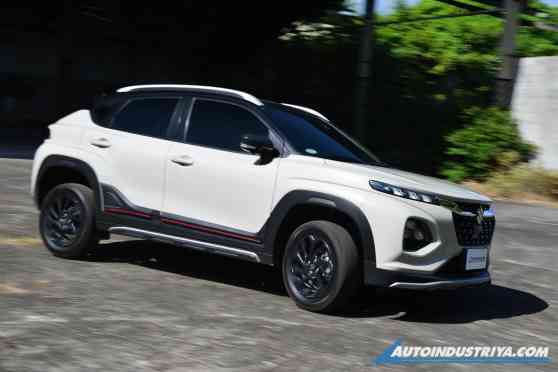
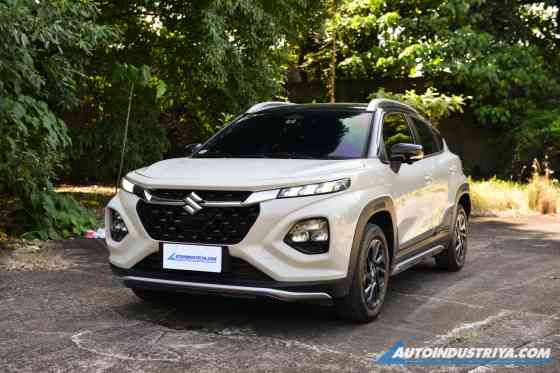
Suzuki has been -and will probably always be a specialist for small vehicles. As a crossover, the Fronx strikes a sweet spot between car and SUV. It gives you just enough ride height (at 170mm) and versatility (with up to 605L of cargo space) for rough roads and weekend errands, while staying fuel-efficient, compact, and stress-free to drive, which is perfect for city life, tight parking spaces, and everyday get-ups and go-outs. This unit we’re testing is the top-of-the-line SGX variant with an SRP of PHP 1,299,000.
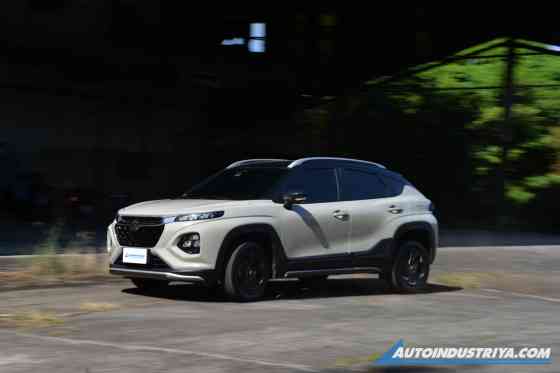
The split headlight design gives it a modern, almost premium feel. The LED DRLs sit high, while the main headlights are tucked lower into the bumper, giving the car a wider, more planted stance. From the side, the coupe-like roofline sets it apart from more traditional crossovers, and around the back, the sculpted tailgate and slim taillights keep things tidy and contemporary.
The dual-tone dashboard gives the interior some personality, while the infotainment screen is crisp and responsive. The steering wheel feels good in the hands, the seats are supportive enough for long drives—more of which I’ll discuss later. The wireless Apple CarPlay and Android Auto work seamlessly, which is a bigger deal than it sounds if you spend hours stuck in EDSA traffic.
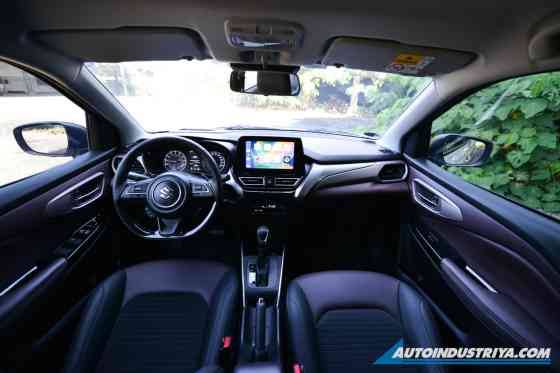
At the back, we Asian-sized passengers won’t feel cramped at all; of course, that's different when we've got much taller individuals there. But for us, we can actually sit back, relax, and still have a bit of knee room to spare. The cabin feels more upscale than you’d expect from crossovers in this class, and around the back, the trunk has enough space to swallow bags, a small cooler, and overnight camping gear for a family of four.
Under the hood, the Fronx runs a naturally aspirated 1.5-liter four-cylinder engine paired with a six-speed transmission and a Belt Starter Generator, or BSG. In real-world terms, that means smoother start-ups, a bit of extra help when you step on the gas, and better efficiency thanks to regenerative braking. You don’t really feel the BSG working, unlike a more substantial hybrid like what Toyota offers; you just notice that the car feels less stressed, especially in traffic.
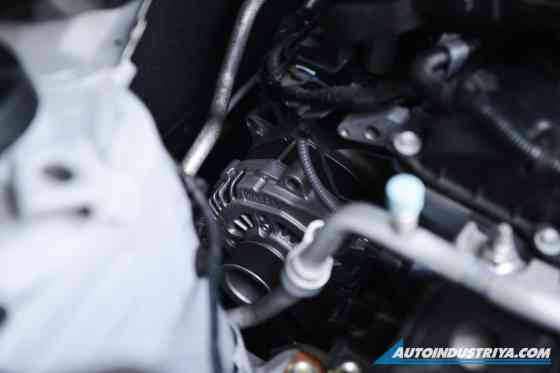
It’s also surprisingly loaded when it comes to safety tech. You get a full suite of ADAS features like adaptive cruise control, hill hold, lane departure warning, automatic high beams, blind-spot monitoring, and more, the stuff you’d normally expect from pricier cars.
Then there are the everyday niceties that make living with the Fronx easier, like keyless push-start, wireless charging, auto engine start/stop, a heads-up display, and a full set of airbags up front, on the sides, and even up top with curtain airbags. Little things, sure, but together, they make the Fronx feel more premium than its price tag suggests.
Just like in many of my motorcycle reviews, I made sure to take the Fronx out on a proper adventure, far away from the city. So, with my family in tow, we packed up and pointed the Fronx north, driving all the way to Lake Tabeo in Kabayan, Benguet, before continuing to Sagada, Mountain Province. By the time the trip was over, I had logged close to 1,400 kilometers behind the wheel.
While driving for 15 hours straight on our way to Kabayan, I was surprised that I didn’t really feel any soreness in my, uh, behind. My seat and back felt fully supported, almost like the car was absorbing the long drive for me. The steering felt light yet communicative, giving just the right amount of feedback.
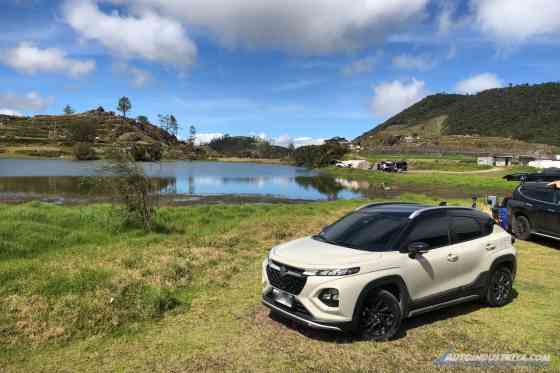
I even checked with the kids in the back. Their only comment? It would’ve been nice if the rear seats had adjustable backrests like our SUV. Fair point, I told them, but that’s the trade-off you get in a crossover that’s basically a car with interior space just a bit bigger than the other car back home.
Even so, packing for a family of four wasn’t a problem. The Fronx’s cabin and trunk handled all our stuff with room to spare. Bags, a small cooler, a tent that sleeps six (according to the seller), and a couple of mattresses. Everything fit comfortably without feeling cramped, which made the long trip much more enjoyable.
On the expressways, the Fronx didn’t even break a sweat. It handled cruising at the speed limit effortlessly, and the dash even showed a very respectable 18 km/L. But when it came to climbing mountains, that’s where the Fronx had its kryptonite. Heading up to Baguio via the old Asin Tunnels was fine, but tackling Kabayan’s steeper inclines meant I had to rely heavily on the Fronx’s manual paddle shifters, moving mostly between first and second gears, with the occasional third.
The steep roads, including the newer routes up to Sagada through Data and Taccong, made me think it could have used a little more oomph, like a turbo or a true hybrid system with an electric motor for extra push.
But then again, that’s the trade-off. The Fronx prioritizes fuel efficiency over outright power, and these moments clearly show why it’s so good on gas. It’s not built to race up every mountain, but it gets you there without guzzling fuel, a balance that makes a lot of sense for everyday driving in the city.
Paddle shifters also help spice things up, letting you pretend you’re an F1 driver for a few glorious minutes in traffic. That said, my biggest gripe is the Engine Auto Start/Stop (EASS). Honestly, this is a feature that should’ve stayed on scooters. Stuck in bumper-to-bumper traffic, and the system cuts the engine before you’ve even come to a complete stop, and suddenly you’re sitting in a rolling sauna, with the air-conditioning also taking a break just when you need it most. The good news is that the EASS can be easily switched off with a button.
The challenge of the Fronx is the price. As efficient and as enjoyable as it is, the pricing of the Fronx puts it at a disadvantage versus its many rivals, including Chinese-made hybrid crossovers at a lower SRP. There's also the fact that it doesn't come with green plates as a mild hybrid, meaning it is still subjected to coding.
Still, the new Suzuki Fronx is a solid all-rounder in my book. Unless you’re planning to go full Takumi Fujiwara in the mountain passes, its 1.5-liter engine delivers just enough shove to get you from Point A to Point B, while sipping fuel politely as a daily driver.