2025 Honda Civic RS 1.5L VTEC Turbo CVT

- Make: Honda
- Model: Civic RS
- Engine: 1.5L DOHC 16V Inline-4 VTEC Turbo Intercooler
- Max Power: 178 PS @ 6500 rpm
- Max Torque: 240 Nm @ 1700-4500 rpm
- Transmission: CVT with paddle shift, FWD
- Price as Tested: ₱1,790,000
9/10
9/10
9/10
8/10
5/10
7/10
Smiles for miles
Let’s face it: everyone wants to own a crossover or an SUV these days, and who wouldn’t? You’re simply spoiled with a lot of choices. Size? By all means, choose: diesel, gas, hybrid, or EV? Almost every manufacturer in the country has it. Price point? Occupied in every budget range you could think of.
So where does the humble sedan -which used to be the primary choice- fit into buyer preferences now?
Enter the Honda Civic RS Turbo. A sedan that I’ve tested before, and it’s been updated for the 2025 model year which came along with a new e:HEV variant. The hybrid costs almost PHP 2 million, while this costs a little less, but still fetches midsize SUV money at PHP 1,790,000.
That is a pretty hard pill to swallow for an everyday car that has less ground clearance, and is less versatile than an SUV. So what gives, then?
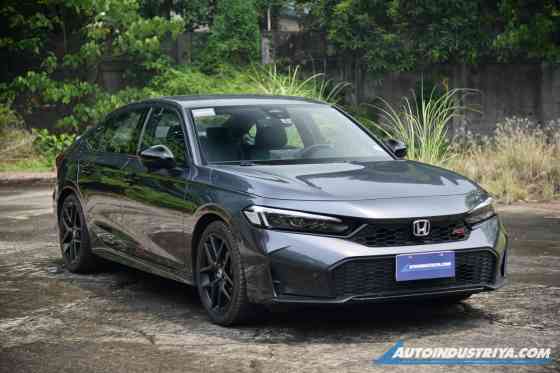
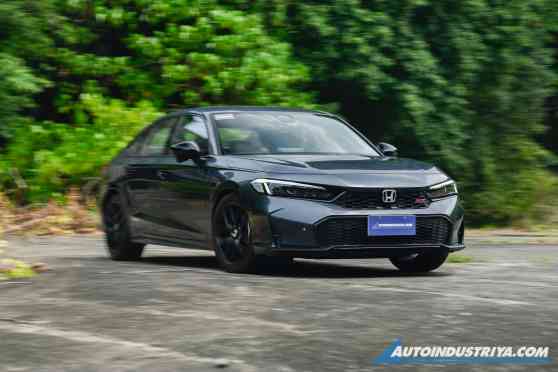
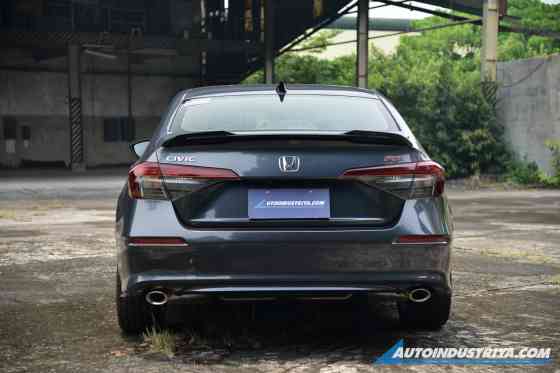
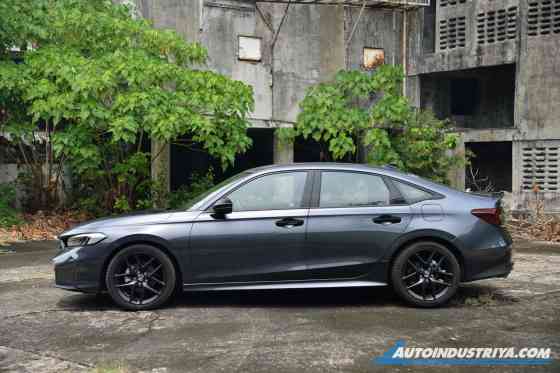
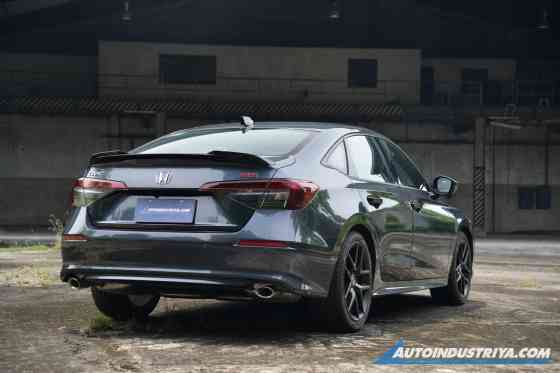
Without a doubt, the Civic scores big for me in the looks department. It’s a far cry from the 90s sport compact it used to be, but the 11th generation redesign simply works. The Civic has ditched the boy racer attitude for something more mature with its low, wide, and sleek posture. It’s like someone got promoted at work and started wearing tailored suits. From being flashy, the Civic has gone classy.
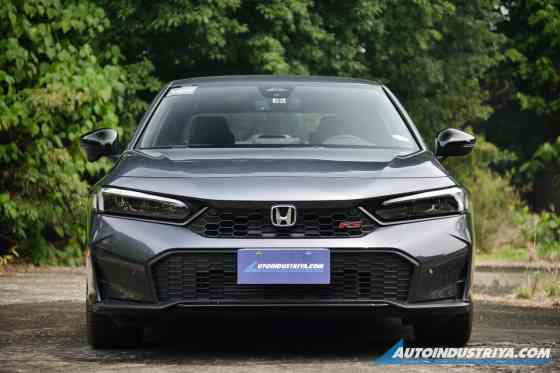
Part of the latest exterior update is a new bumper with a larger lower grille, a foglight delete for the side intakes, and a new RS badge for good measure. Nevertheless, the gloss black treatment on the door handles, side mirrors, and the ducktail spoiler is retained – so does the 18-inch wheels wrapped in Michelin Pilot Sport 4 tires that nicely fills the wheel wells of the Civic RS.
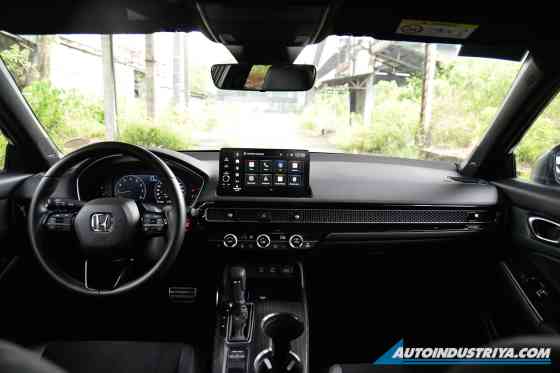
Inside is more or less the same story as it was in my first rodeo with the Civic RS. Everything is where it should be, and the RS treatment inside is sporty without being over the top. There are suede inserts on the seats along with red stitching, while the updated bits consist of Type C charging ports both front and rear, and a slightly bigger touchscreen that now comes with wireless CarPlay and Android Auto. Of course, there’s the 12 speaker Bose sound system so no need to come to Banawe for an upgrade unlike before.
Seating position is quite low so despite the low roof design, my 5’9” frame didn’t have any trouble with headroom when seated in front and in the back. In fact, driving position is one of the nicest things about the Civic, making you feel like you’re driving a low-slung sports car. Blind spots will be less of a worry with the thin A-pillars. But if you still need a hand, there are front and rear sensors, a backup camera, and the lanewatch side cameras – the latter two of which rather feel dated with the camera quality they put out.
Cargo space, on the other hand, is also one of the Civic’s strong points. Size-wise, there’s about 38 inches of length, 40 inches of width, and 15 inches of vertical height. There was plenty of room left when I filled the Civic’s compartment with a collapsible crate, a travel bag, and my crash helmet for a trackday. And the rear seats also fold down 60:40 so if you need more length (ahem) then you've got it.
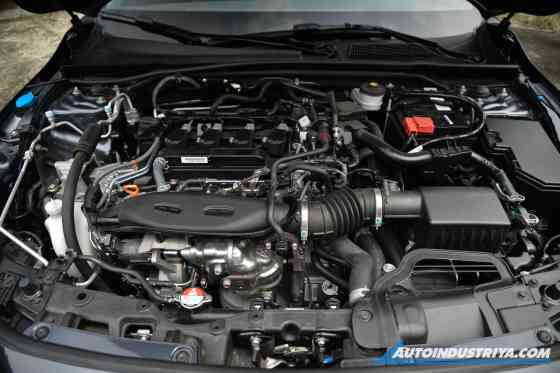
Powering the Civic is still the 1.5-liter four-pot VTEC Turbo that churns out 178 PS and 240 Nm of torque paired to a CVT. Having also driven the more powerful e:HEV version prior to this, the RS Turbo is still quite the charmer in this powertrain setup. While it would probably be gapped big by the hybrid on a straight drag race, the VTEC Turbo version could probably keep up in the corners.
Because it has less weight to carry, the RS Turbo retains that nimble feel when you toss it on the corners. There’s somewhat a better balance also for the ride as the suspension’s oscillation or the up and down movement is less compared to the hybrid. That is evident as I drove through the expansion joints around the Pulilan to San Fernando areas of NLEX.
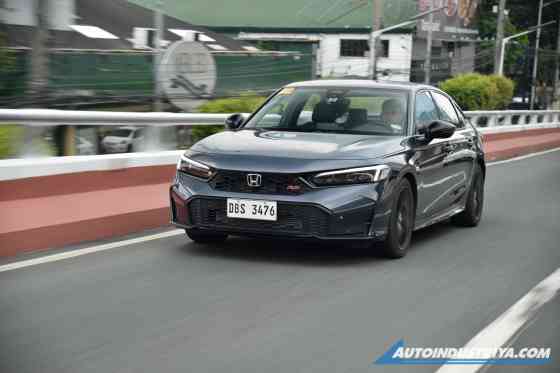
It’s no Type R, but it doesn’t need to be one. It’s really all about balance, and the chassis does communicate well with what the car is doing – at the expense of course, of more road noise. Grip and cornering confidence is at a high level thanks to the Pilot Sport 4 tires the Civic RS has.
Perhaps the only real advantage of the hybrid is that the gas needle drops slower than the RS Turbo. I was averaging around 8.8 km/l in the city, and around 17 km/l on highways – pretty far from the numbers I was doing with the e:HEV as I average 21 km/l there on both city and highway.
Lastly, Honda Sensing is standard on this one, which remains one of the most refined ADAS systems I’ve tested. You have adaptive cruise control with low speed follow, lane keep assist, forward collision warning – all those things work without being an annoyance. That’s something I cannot say to every car that comes with ADAS these days.
However, we go back to the price tag of the Civic RS Turbo, which is PHP 1,790,000. Is it worth the price of admission? Well that depends on who’s holding that much dough.
There are priorities we look at whenever we choose a car. As good as the Civic is, a sedan simply can’t match up to the versatility of an SUV for everyday use. Majority of buyers would agree with me on this. But if there’s anything I realized when I racked up almost a thousand kilometers with the Civic in a week, it’s that the Civic feels designed for a niche buyer group – and that is for people who simply love driving.
For those who can overlook its premium ask, the Civic is a sedan that ticks the boxes – proper performance, sharp styling, and more importantly, soulful driving dynamics. Those alone would make you want to drive it every day and look forward to tackle traffic-free roads. That is something that cheaper, and more tech-laden vehicles in its segment can’t do just yet, and SUVs simply can’t.