Toyota PH studying satellite service hub to augment capacity at dealers

Service capacity need to expand quickly to meet Toyota's new car sales
With great power comes great responsibility may be a superhero movie thing, but it shows that there are consequences that come with success. In the case of Toyota Motor Philippines that also applies: With great sales comes a need for even greater aftersales.
Here’s a fun fact: in the last 10 calendar years from 2014 to 2023, Toyota has sold just a little bit under 1.5 million units in the Philippines. That’s just about 150,000 unit average per year; quite a feat since they first broke past 100,000 annual units only in 2014, and achieved almost 200,000 in the 2023 calendar year. And now, we see that Toyota Motor Philippines is approaching a point where nearly half of all brand-new vehicles sold in the country have a T badge.
The problem is this: it’s actually easy to sell a Toyota, but dealer aftersales infrastructure isn’t so quick to catch up. There are just over 70 Toyota full-service dealerships nationwide. It may seem like a lot, but it’s not enough. Queues are long at dealerships for even basic jobs like a change oil and PMS checks, and queues are also very long for collision repairs because of the backlog.
During the last Toyota event, we were able to catch up with TMP President Masando Hashimoto over dinner, and he relayed that the challenge for Toyota really is in the aftersales field. He says there are reports of customers waiting anywhere between 3 to 4 hours for basic jobs that only really take an hour, but the bays and staff for service are limited. This is especially true for Metro Manila dealerships, as this is where the bulk of Toyota sales are.
Hashimoto says that they are talking to dealers about investing to expand their service areas, but the challenge is the cost when it comes to real estate, construction, equipment, and manpower. It’s a delicate negotiation and one that will take time.
We asked the question to Hashimoto: Can TMP establish its own service facility to meet the overflowing demand?
And the answer was quick: the president of TMP says they are studying that possibility. Specifically, they are looking at potentially having a satellite service facility that can handle body and paint (BP), but eventually can also do other basic PMS requirements.
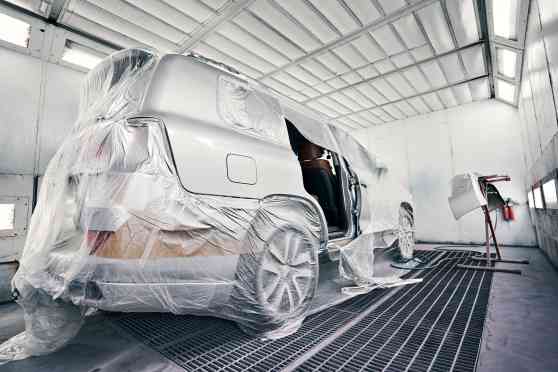
BP is perhaps the most critical here, as collision-related work takes quite a bit longer to complete. BP also has a higher investment when it comes to equipment; for instance, many dealers tend to have just one paint booth that can accommodate a whole car. Some may have two, but the limiting factor is the cost. The head office can definitely lead the way when it comes to investing in having more BP auto paint booths at a satellite service center.
As to how such a service center would operate, we can only guess for now. Will customers be told to proceed directly to an aftersales satellite or will the dealers send the overflow to them? It may be a delicate issue with dealers, as it could be seen as taking business away.
Given that Toyota’s sales performance is only getting stronger, a satellite may be the only option to handle the sales volume of a brand that is set to stay at 200,000 new units per year.