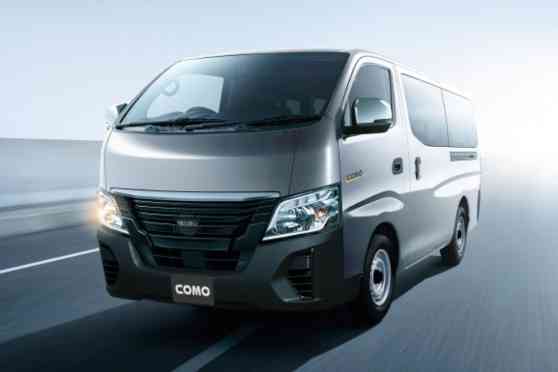
Should Isuzu bring the NV350-based Como to PH?

Besides Mitsubishi PH, should Isuzu bring the Urvan-based Como?
Ever since Nissan officially confirmed it will provide Mitsubishi with an “OEM” van for the Philippines, the local market has been buzzing. Mitsubishi Motor Philippines Corporation (MMPC) has yet to share any details about the upcoming van, although we won't be surprised if it is a rebadged version of the Nissan NV350 Urvan.
With Mitsubishi providing Nissan the Xpander and rebadging it as the Livina, it's no surprise that Mitsubishi decided to go with Nissan for its latest passenger van for the Philippine market. But did you know the NV350 Urvan is also available as an Isuzu?
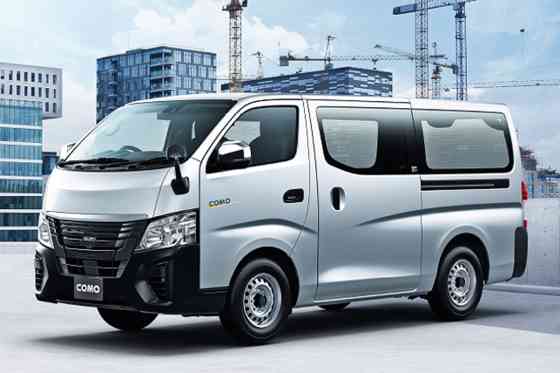
Over in Japan, the Nissan NV350 Urvan is also sold as the Isuzu Como. That's right, Isuzu has also taken the NV350 and rebadged it as one of their vehicles. Unlike the NV350 Urvan, the Isuzu Como is only offered as a business utility van. It has utility rails on the inside, which will allow owners to install equipment and store other types of gear. Its low floor also allows for easier ingress and egress should the van be needed as a passenger van.
Speaking of passenger van, the Como is available as a 6-seater or as a 9-seater van, depending on customer preference. This is made possible thanks to rear bench seats that can be folded away should they be not in use.
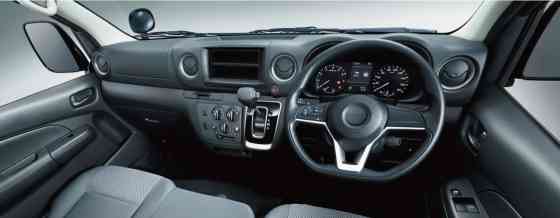
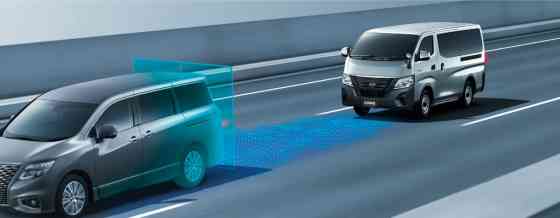
Hop aboard, and those who are familiar with the NV350's cabin will find a similar-looking interior. It gets round aircon vents, manual air-conditioning complete with dials & buttons, a traditional PRNDL gear selector, and a three-spoke steering wheel. It also has other niceties such as automatic headlights, remote central locking, and a host of intelligent driver aids like high-beam assist, front collision warning with autonomous emergency braking, pedal misapplication assist, lane departure warning, and an electronic rearview mirror.
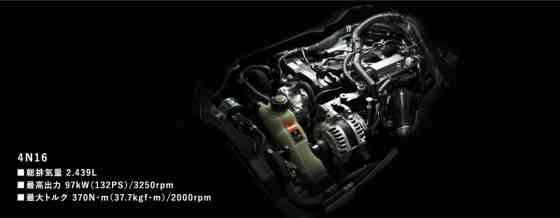
Under the hood, the Isuzu Como is powered by a 2.4L 4N16 turbo-diesel engine derived from Mitsubishi. It's the same engine that powers the Japan-spec NV350 Urvan and makes 132 PS with 370 Nm of torque. The engine is then paired to a 7-speed automatic transmission that drives the rear wheels.
With the Isuzu Como already available in Japan, should Isuzu Philippines try their hand in bringing the passenger van to the Philippine market? Since the brand doesn't have a passenger van in the country, perhaps they could get a slice of the market with the Como.
Do you think the Isuzu Como would make sense in the Philippines? Let us know what you think.