
SC says only MMDA, deputized LGU enforcers can use single ticketing system

SC releases decision on single ticketing systen
Last year, the local chief executives of Metro Manila adopted the single ticketing system through the establishment of the Metro Manila Traffic Code of 2023. Under this, the unified system aims to harmonize the existing national and local laws on traffic enforcement to establish effective transport and traffic management in Metro Manila.
This also included standardized fines and penalties that are reflected in LTO’s Land Transportation Management System. The single-ticketing system also gave apprehended motorists a convenient way to settle their traffic-related violations, as fines can be settled via GCash, Maya, and other digital platforms regardless of the city they have been caught.
However, even with the establishment of the Metro Manila Traffic Code, some LGUs still operate on the understanding that local ordinances remain in effect. This includes the confiscation of licenses and issuance of separate traffic violation tickets by traffic enforcers from LGUs, which create confusion among motorists, and the public in general.
The Supreme Court has finally released a decision regarding this matter.
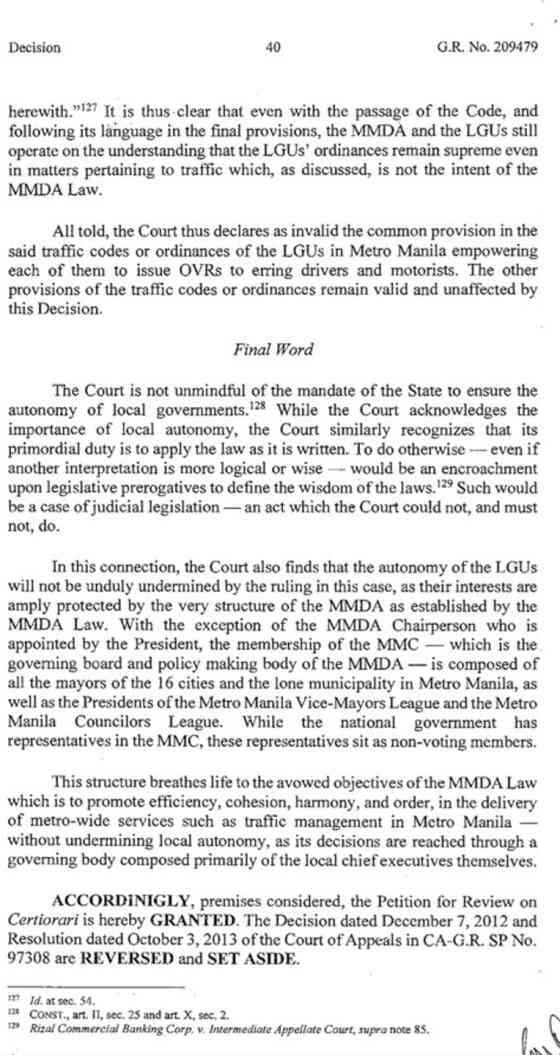
“The Court thus declares as invalid the common provision in the said traffic codes or ordinances of the LGUs in Metro Manila empowering each of them to issue OVRs to erring drivers and motorists.”
By our understanding, the SC basically says everyone should comply with the MMDA single ticketing system, and follow the provisions of the Metro Manila Traffic Code of 2023. Under this, traffic enforcers from Metro Manila LGUs are not allowed to issue traffic violation tickets or confiscate your driving license.
The Supreme Court hopes that “This structure breathes life to the avowed objectives of the MMDA Law which is to promote efficiency, cohesion, harmony, and order, in the delivery of metro-wide services such as traffic management in Metro Manila – without undermining local autonomy, as its decisions are reached through a governing body composed primarily of the local chief executives themselves”.
While an SC decision provides a clear understanding of which traffic laws should be followed, there are still plenty of gray areas and loopholes that can be subject to different interpretations, especially in identifying which LGU traffic enforcers are indeed the ones deputized by the MMDA. But hopefully, this ruling is the beginning of the step towards a positive direction.