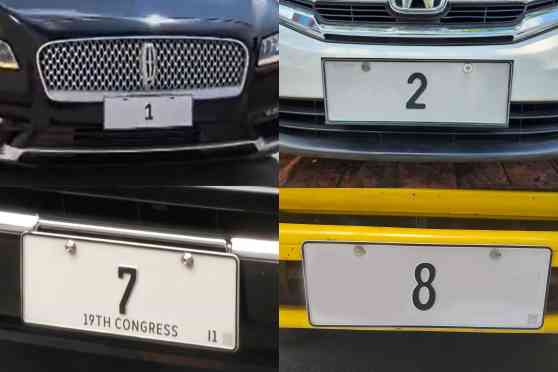
Protocol Plates: PBBM EO 56 tightens rules on low numbered plates

Older 2005 EO on protocol plates repealed
It seems the EDSA busway serves two purposes. The first is to augment the MRT-3 as an alternate bus rapid transit line. The second is to provide temptation for abuse, particularly by the affluent and those in power that possess protocol plates.
Recently, an SUV was spotted on EDSA busway with the 8 protocol plate fitted, sparking outrage online. There were also other incidents involving vehicles with 6, 7 and 8 plates on the busway, triggering the sentiments of motorists and commuters, prompting an order from President Ferdinand Marcos, Jr. to clarify who may use the busway apart from marked emergency vehicles. Only the President (1 or PANGULO), the Vice President (2), the Senate President (3), the Speaker of the House (4) and the Chief Justice (5) may use the busway if needed.
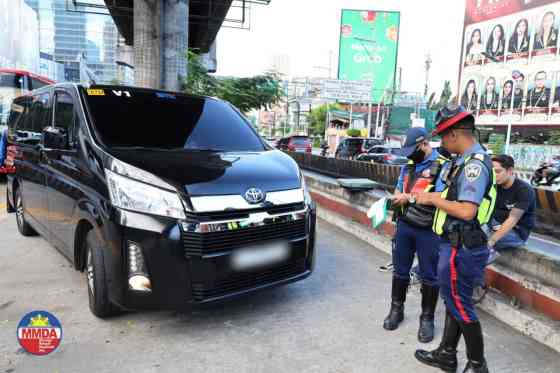
Even the House of Representatives has taken notice and issued a statement: No. 8 plates have been authorized under the 19th Congress. Based on the current rules at the time, protocol plates are co-terminus with the term or tenure of the official. That means all the 8 plates you see on the road are effectively invalid as the 19th Congress began on 25 July 2022.
And now the President has weighed in with Executive Order 56, Series of 2024: Regulating the issuance of low-numbered (protocol) plates to government officials. This new law repeals EO 400, Series of 2005 from then-President Gloria Macapagal-Arroyo.
The rationale is good: the government recognizes the complaints of the public regarding the proliferation and unauthorized use of protocol plates and the need to uphold a code of conduct of government officials (RA 6713). And so, the President has issued a new set of rules to regulate the use of protocol plates.
So what has changed? Quite a few things.
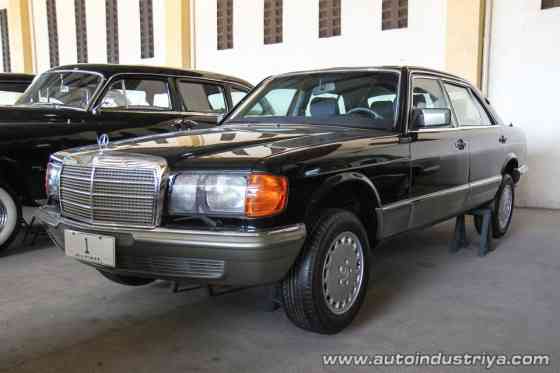
The first is the number of authorized officials that may be issued protocol plates. The notable ones are still on the list of assigned numbers: President (1/PANGULO), Vice President (2), Senate President (3), Speaker of the House (4), Chief Justice of the Supreme Court (5), Cabinet Secretaries (6), Senators (7), Representatives (8), Associate Justices (9), Presiding Justice of CA/CTA/Sandiganbayan/Solicitor General (10), Chairpersons of Constitutional Commissions [e.g. COMELEC, COA, CSC] and Ombudsman (11) and the CS/AFP and C/PNP (14).
The 2024 rules has “de-authorized” protocol plates for the following positions based on the 2015 Department Order of the DOTC (now DOTr): Cabinet Undersecretaries (12), RTC Judges (16), and Metropolitan/Municipal/Sha’ria Court Judges (17).
The number of plates that may be issued have also been regulated. There is no change in the number of sets (pairs) of plates that authorized officials may be assigned: they are allowed to get 2. There is a change with the sets allowed for the President, Vice President, Senate President, Speaker of the House and Chief Justice: instead of 4 sets, they may now only get 3.
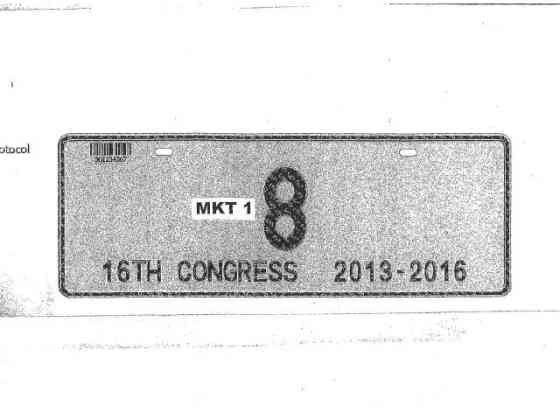
More importantly, EO 56 expressly outlines the validity of the protocol plates that were left rather unclear in previous EOs or DOs. It says that the plates “issued to authorized officials shall be valid only during their incumbency and may only be used for motor vehicles duly registered in their name and/or officially assigned to them”. That means they cannot put a protocol plate on a relative’s car; it has to be their personal owned and registered car.
EO 56 also declares that all previously issued protocol plates based on PGMA’s EO 400 are expired unless the official that possesses the plate is still incumbent; that would most likely be in the case of a few long-serving Senators and/or Representatives.
EO 56 also directs the LTO and other concerned agencies (i.e. PNP HPG) to revoke and/or confiscate all expired protocol license plates. Any violation (e.g. unauthorized use or transfer of protocol plates) will mean sanctions, including administrative sanctions.