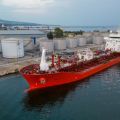
PBBM declares State of National Energy Emergency, authorizes UPLIFT

Philippines now under State of National Energy Emergency
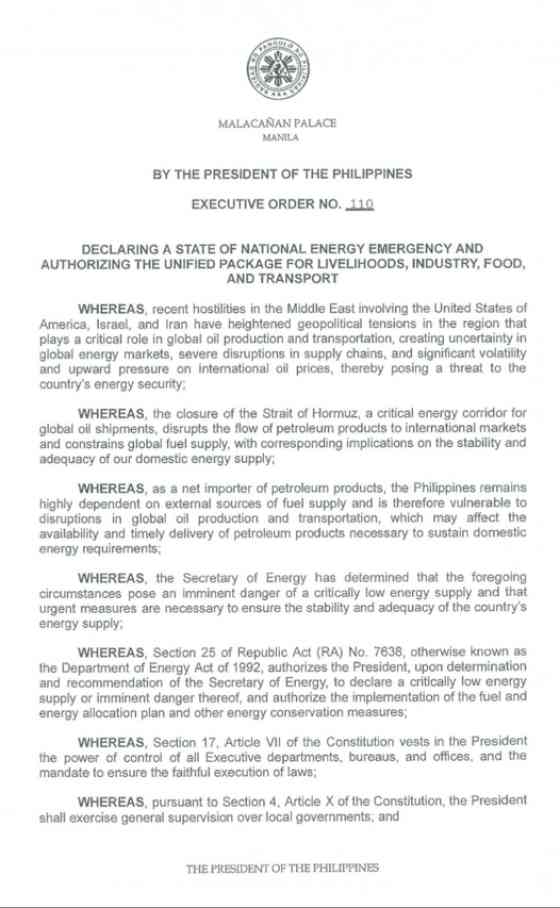
Not two days ago, Malacañang assured Filipinos that there was no oil crisis. Now, President Ferdinand “Bongbong” Marcos Jr. has signed Executive Order 110, declaring a State of National Energy Emergency amid the ongoing conflict in the Middle East. He has also established the UPLIFT Committee to manage the crisis, with himself serving as chairman. The full text of EO 110 can be accessed here.
“Whereas, the Secretary of Energy has determined that the foregoing circumstances pose an imminent danger of a critically low energy supply and that urgent measures are necessary to ensure the stability and adequacy of the country’s energy supply,” reads the EO.
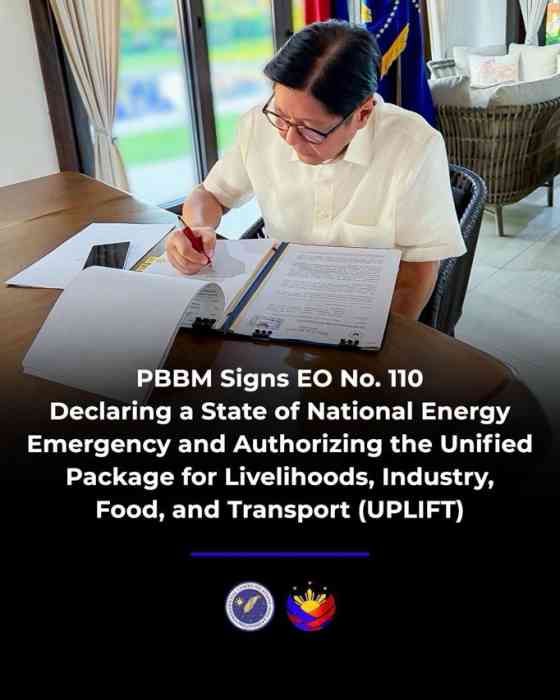
Unified Package for Livelihoods, Industry, Food, and Transport (UPLIFT)
To tackle the oil crisis head-on, the Philippines is rolling out the UPLIFT framework, or the Unified Package for Livelihoods, Industry, Food, and Transport, to coordinate a whole-of-government response to manage energy supply, distribution, and consumer prices, and to support sectors affected by the disruptions.
In short, UPLIFT allows government agencies to coordinate faster and more effectively under a single framework, ensuring that fuel, food, transport, and other essential goods stay available and affordable for everyone.
The initiative will be overseen by the UPLIFT Committee, chaired by the President and composed of top officials, including Executive Secretary Ralph Recto, Energy Secretary Sharon Garin, Transportation Secretary Banoy Lopez, DSWD Secretary Rex Gatchalian, Agriculture Secretary Kiko Laurel Jr., Finance Secretary Frederick Go, DEPDev Secretary Arsenio Balisacan, and Acting Budget Secretary Rolando Toledo.
With the country now under a state of emergency, the government may take steps to stabilize prices of essential goods, including temporary price ceilings on rice, fuel, electricity, and other basic commodities. The hope is that these measures translate to real relief on the ground, helping everyone navigate this crisis more smoothly.