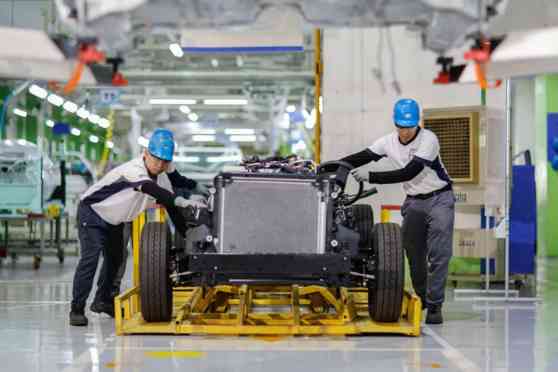
PBBM auto industry budget veto risks PH car manufacturing says PPMA

Philippine Parts Makers Association sounds the alarm after vetoing of budget for CARS, RACE programs
Yesterday, we reported that President Ferdinand “Bong Bong” Marcos Jr. scrapped the allocated PHP 4.32 billion funding for the Comprehensive Automotive Resurgence Strategy (CARS) program, as well as the PHP 250 million budget for the Revitalizing the Automotive Industry for Competitiveness Enhancement (RACE) program.
With both the RACE and CARS programs defunded, the country's plan to entice more manufacturers to build cars in the Philippines is on shaky ground. Following this matter, the Philippine Parts Makers Association (PPMA) has sounded the alarm following the President's decision to veto the proposed budget for both RACE and CARS.
According to the PPMA, the issue goes beyond policy, as it will directly affect whether cars will continue to be built in the Philippines.
“CARS and RACE are critical to the survival of local car manufacturing. Without sustained production volumes, there is no viable auto parts industry, and without parts makers, vehicle assembly cannot survive,” said Ferdi Raquelsantos, president of PPMA.
Compared to other countries in Southeast Asia such as Thailand, Indonesia, and Vietnam, the Philippines has been steadily falling behind in terms of car manufacturing. Thailand has long positioned itself as the region's pickup truck and passenger car manufacturing hub, while Indonesia is known for making MPVs and small SUVs. Last but not least, Vietnam continues to attract new investments for both internal combustion vehicles and electric vehicles (EVs). All of these translate to a vast network of parts suppliers to build cars locally.
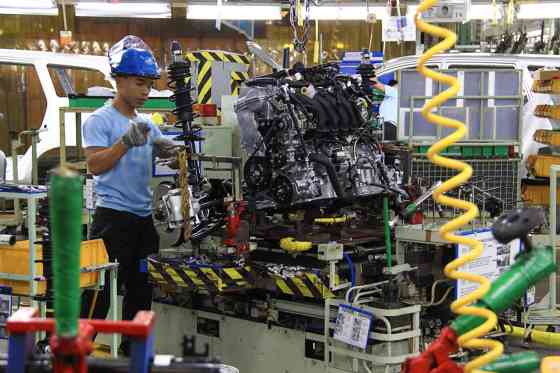
In the Philippines, local assembly volumes remain low, and most vehicles sold in the market are now imported as completely built units (CBUs). This shift, according to the PPMA, has had a direct impact on the supplier base, which forces many parts manufacturers to scale down, diversify away from automotive, or rely heavily on exports to survive.
In the past, the Philippines had one of the biggest auto manufacturing bases in the region, which peaked in the 1990s under the Car Development Program. Here, multiple models were built locally, with local parts suppliers having a strong involvement. This helped parts suppliers to produce a wide array of automotive components, including metal parts, interior trim pieces, and electrical systems.
“We were almost there. The factories are here. The suppliers are here. The workforce and technical know-how are here. What has been missing is policy continuity and long-term commitment,” added Raquelsantos.
The CARS program was designed to rebuild scale by encouraging higher production volumes for locally assembled models, making it economically viable for parts makers to invest in tooling, automation, and quality upgrades. On the other hand, RACE was meant to expand that support to a broader range of vehicles and technologies, including new powertrains.
The PPMA is now calling for a dialogue with the government, particularly senators and members of Congress, to better explain how automotive programs work and why they matter to the motoring public.
“This is not just about manufacturers. When cars are built locally, you create jobs, develop engineering talent, and strengthen supply chains. We want to sit down with policymakers and explain how CARS and RACE help keep car manufacturing alive in the Philippines,” shared Raquelsantos.