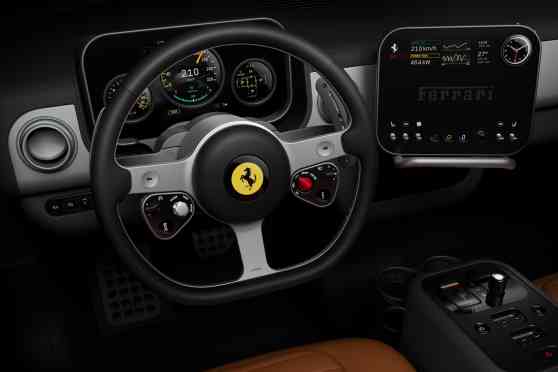
Ferrari Luce: This is the interior of Maranello's first-ever EV

Ferrari Luce EV's cabin is an exercise of function and form
October 2025 will be remembered by Ferrari enthusiasts as the month that the Prancing Horse revealed the chassis of its first-ever electric vehicle (EV). That's right, the brand known the world over for building V6, V8, and V12-powered stallions is set to join the EV market.
Initially called Elettrica, it will be a quad-motor EV that will deliver a combined 986 PS, which will allow it to go from 0 – 100 km/h in 2.5 seconds and reach a top speed of 310 km/h. It can also travel up to 530 km on a single charge thanks to a massive 122 kWh battery pack.
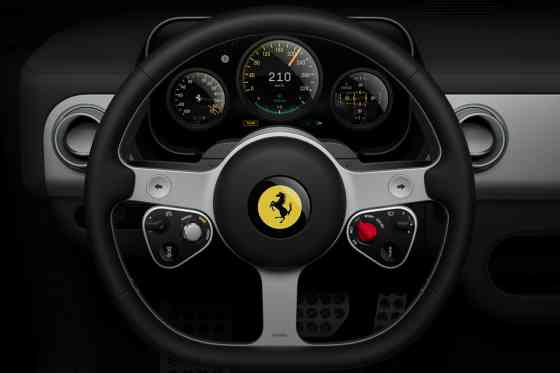
It's now February 2026, and Ferrari has released more details about its upcoming. The automaker has also revealed its official name, its interior, and interface components that serve as a throwback to classic Ferraris of yesteryear, while embracing modern technology.
Say buon giorno to the Ferrari Luce and its exquisite cabin. While many expected Ferrari's first EV to be festooned with screens and touch-sensitive buttons, Maranello had other ideas. With the help of Jony Ive, the former Chief Design Officer of Apple, the Ferrari Luce EV combines tactile controls with user-friendly ergonomics.
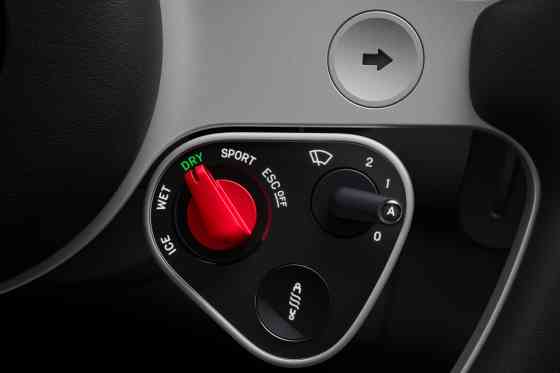
While most automakers today emphasize the use of screens, Ive, together with his design firm LoveFrom, wanted to make use of more physical switches and buttons. The result is an exercise of form and function. Let's start with the steering wheel, which looks like it was taken straight from the 1960s.
The simple yet classic look, combined with the exposed aluminum, immediately catches your attention, along with the flat-bottom design. A total of 19 CNC-machined parts make the Luce's steering wheel lighter than a typical Ferrari steering wheel, but it still comes with controls for the driver to use. These include the signature “manettino” dial, wiper controls, turn signal buttons, cruise control, drive modes, parking sensors, and even a button to set the suspension settings.
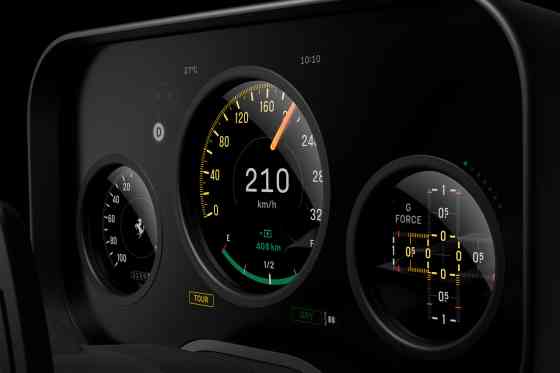
Then there's the old-school style gauges, which are actually OLED screens that were developed with the help of Samsung. This gives the dials a classic look that almost looks analog at a glance and makes for a more engaging display. The speedometer in the middle even makes use of a physical needle, which serves as a contrast to the digital background that shows how fast the EV is going.
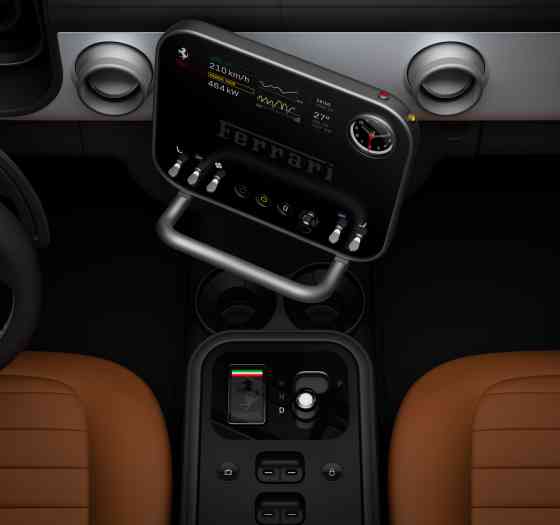
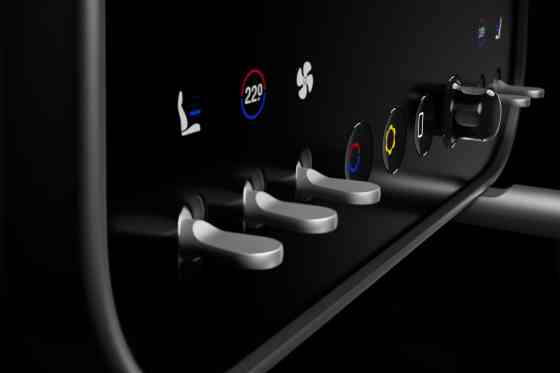
At the center of the dashboard is, you guessed it, a touchscreen media display. But instead of just giving it a screen, Ferrari brought back toggle switches and rotary dials for improved ergonomics. From adjusting the climate control to setting the ventilated seats, as well as adjusting the sound volume, users can easily adjust the cabin setting with ease.
Since the Luce doesn't have a traditional drivetrain, Ferrari was able to make a “center island” that houses the center console. But just like the rest of the cabin, the brand made extensive use of physical controls. These include the gear selector, power window switches, the hazard button, and even the automatic door locks. Did we even mention that parts of the center console and binnacle make use of Corning Gorilla Glass?
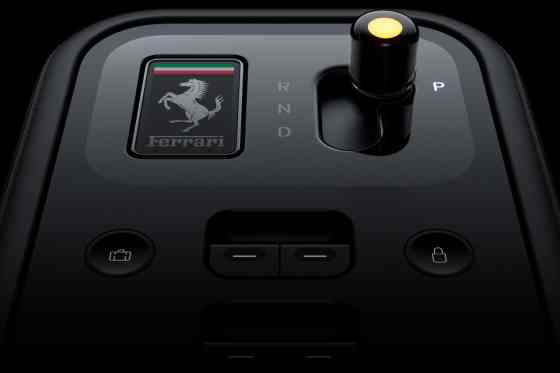
But how do you rouse the Luce from its slumber? Ferrari made use of a glass key that you have to insert into a dock on the console. The key then changes color, and the driver selector wakes up with one heck of a light show.
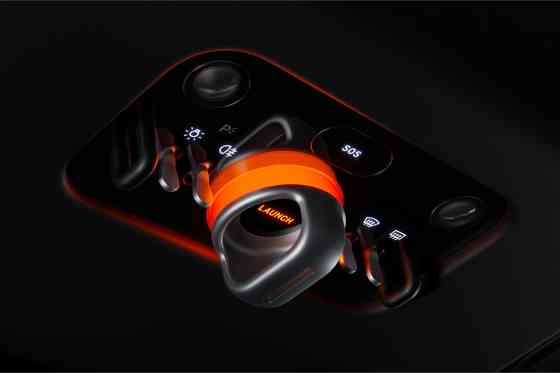
Some of you might be wondering where the rest of the in-car controls, like the headlights, foglights, and even the launch control, are. Well, instead of putting those functions in a touchscreen, Ferrari put them above the driver. That's right, the buttons for S.O.S., headlights, park lights, and even launch control are all placed on the ceiling, which gives the Luce EV a cockpit-like design. We can only imagine the lucky customers who will be able to press the launch control button before setting up for a quick quarter-mile sprint.
While some may lament that Ferrari is charting uncharted territory with the Luce EV, we must give props to the brand for designing such an intricate cabin. Whereas most brands are quick to utilize touchscreens, Ferrari opted for a function-follows-form approach, incorporating extensive tactile controls, such as buttons, dials, and toggle switches.
The Ferrari Luce may not have a piston engine under the hood, but it has one heck of a cabin that serves as a throwback to an era when cars followed function and form in equal measure. We're keeping our fingers crossed that the exterior of the Luce is as great as its interior.