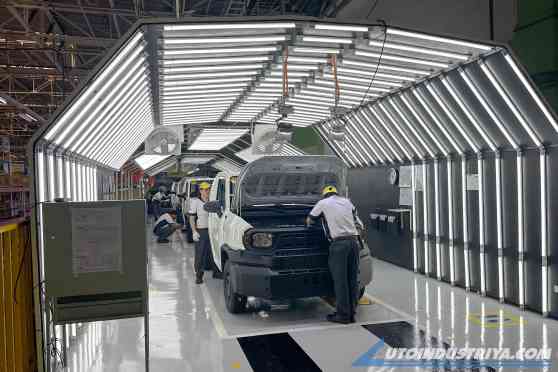
CARS program funding could come from 2025 DPWH unused funds

PH government says CARS program funding issue has been resolved
Concerns were raised among automotive and auto parts manufacturers in the country when President Ferdinand “Bongbong” Marcos, Jr. vetoed the PHP 4.32-billion fiscal support for the Comprehensive Automotive Resurgence Strategy (CARS) Program. This latest development, however, should at least give investors in the country some much-needed reassurance.
The Philippine government has found a resolution to fulfill its commitments to participating car manufacturers and auto parts makers that joined the CARS program. While fiscal support arrearages are no longer included in the 2026 national budget, the Department of Budget and Management (DBM) says the government will now settle its dues to CARS program participants using government savings from 2025, particularly from the Department of Public Works and Highways (DPWH).
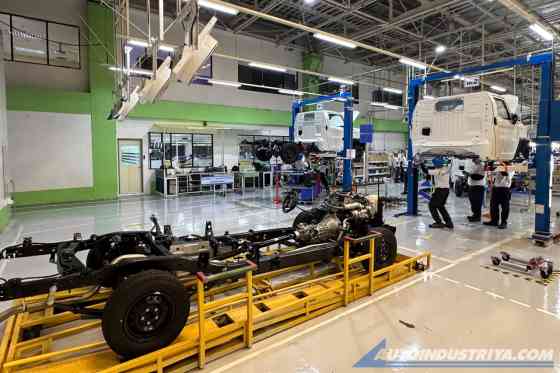
DBM says based on issued and validated Tax Payment Certificates (TPCs), the government has the capacity to settle dues to participating car manufacturers, including Toyota and Mitsubishi, as well as eligible auto parts makers.
“The government’s position is clear: we will not abandon the auto industry. Obligations supported by issued and validated TPCs will be paid in a legal, orderly, and responsible manner, consistent with our fiscal space and established budgetary rules,” said DBM Acting Secretary Rolly Toledo.
Participants of the CARS program, such as Toyota Motor Philippines (TMP) and the Philippine Parts Makers Association (PPMA), have quickly issued official statements that welcome and appreciate the government’s efforts in resolving the funding issue.
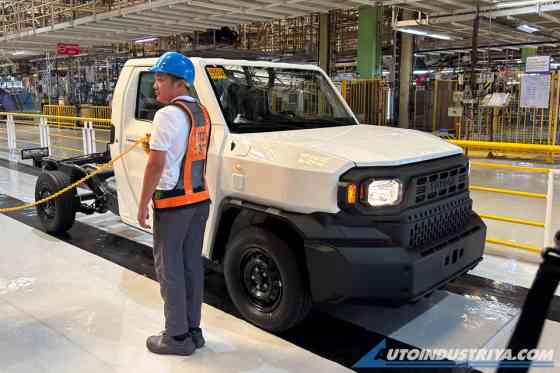
“Toyota Motor Philippines Corporation (TMP) welcomes the Philippine government’s clarification on its fiscal means and reaffirmed commitment to honor its obligations under the Comprehensive Automotive Resurgence Strategy (CARS) Program.
TMP sincerely appreciates the government’s decisive action to reassure investors and stakeholders who have long supported the Philippine automotive manufacturing industry. This move reinforces confidence in the country as a sustainable base for automotive manufacturing.
We remain committed to working closely with the government in revitalizing the Philippine automotive industry as a driver of nation-building,” said TMP.
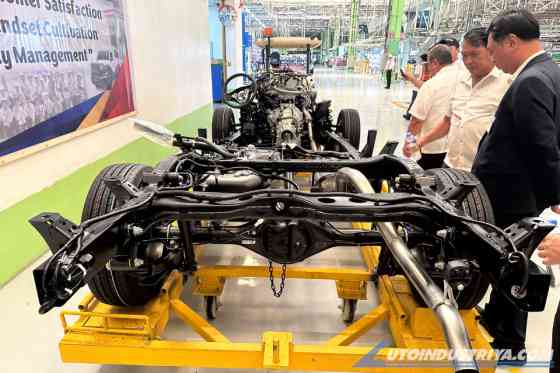
PPMA, on the other hand, also hopes the government could hit the ground running for the CARS program’s proposed successor, the Revitalizing the Automotive Industry for Competitiveness Enhancement (RACE) program.
“The Philippine Parts Makers Association (PPMA) welcomes and sincerely appreciates the government’s announcement that it has finalized a funding solution for the Comprehensive Automotive Resurgence Strategy (CARS) program. We recognize this as an important step in sustaining investor confidence and reaffirming the government’s commitment to revitalizing domestic automotive manufacturing.
PPMA notes that the PHP 4.32 billion allocation for CARS is vital in supporting the continued operations and production plans of the program’s participants, including vehicle manufacturers and the local supplier base that supports them. This resolution strengthens policy stability, protects jobs, and helps preserve the manufacturing ecosystem that the Philippines has worked hard to build over the years.
At the same time, PPMA respectfully reiterates the industry’s strong hope that the Revitalizing the Automotive Industry for Competitiveness Enhancement (RACE) program will be implemented as soon as possible. We underscore that only PHP 125 million is needed to initiate and operationalize RACE, an amount that can unlock significant benefits for the broader industry, especially for local automotive parts manufacturers who are key contributors to inclusive industrial growth.
PPMA believes RACE is the natural complement to CARS, as it strengthens the domestic supply chain by supporting investments in tooling, technology upgrades, quality and safety certifications, productivity improvements, and local content expansion. These are critical interventions that enable more Filipino parts makers to participate meaningfully in local vehicle production and compete within the ASEAN region.
Looking ahead, PPMA also highlights the importance of the upcoming Electric Vehicle Incentive Strategy (EVIS) program, where local parts manufacturers will play a major role in building the supply chain for electric mobility. EVs require a wide range of components that Philippine manufacturers can supply, including wiring harnesses, stamped and structural parts, body components, electronics housings, thermal systems, and eventually power electronics and battery-related components. Strengthening the local parts sector today through programs like RACE will ensure that the Philippines is ready to capture these EV opportunities as EVIS accelerates industry transformation.
PPMA remains committed to constructive dialogue and close collaboration with government, vehicle manufacturers, and stakeholders to ensure that CARS, RACE, and EVIS work together as an integrated pathway toward a stronger, more competitive, and future ready Philippine automotive industry," said Ferdinand Raquelsantos, president of Philippine Parts Makers Association (PPMA).
Last but not least is the Chamber of Automotive Manufacturers of the Philippines Inc. (CAMPI), which welcomed the announcement of a funding solution for the said program.
"The Chamber of Automotive Manufacturers of the Philippines, Inc. (CAMPI) welcomes the announcement of a funding solution for the Comprehensive Automotive Resurgence Strategy (CARS) Program incentives. We thank the concerned agencies - the Department of Trade and Industry, Board of Investments, Department of Budget and Management, and the Department of Finance, for its prompt action to resolve the issue on CARS incentive funding.
This gives renewed confidence in our industrial policy and puts the automotive sector back on track for long-term investment planning. CAMPI and its members look forward to the implementation of the Revitalizing the Automotive Industry for Competitiveness Enhancement (RACE) Program, which will be instrumental in industry recovery and growth.
CAMPI will continue to work with the Government and our auto-supporting industries in coming up with programs and policies to sustain automotive manufacturing in the Philippines," shared CAMPI.