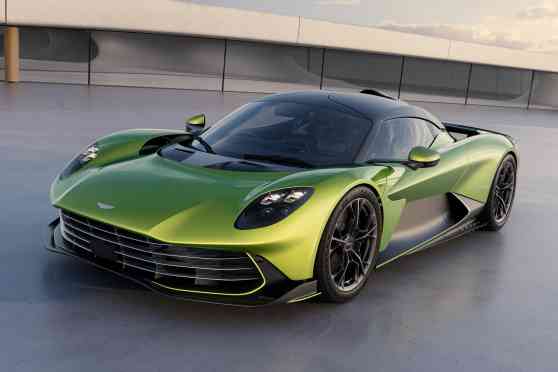
Aston Martin finally launches Valhalla PHEV hypercar with 1079 PS

999 examples only
It’s been five long years since we first saw the Aston Martin Valhalla as a concept, and three years since the production version was previewed. But finally, the British brand is ready to take on the likes of the Lamborghini Revuelto and Ferrari SF90 Stradale.
Aston Martin has launched the Valhalla as its first-ever mid-engine PHEV hypercar. Following the footsteps of the Valkyrie, the hypercar project co-developed with Red Bull Advanced Technologies and renowed F1 engineer Adrian Newey is all about maximum performance.
Back in 2021, the Valhalla’s PHEV powerplant that consisted of a 4.0-liter, twin-turbo V8 and a pair of electric motors promised to put out 950 PS. But Aston Martin hasn’t stopped developing the Valhalla to push the limits of performance. For the production version, the flat-plane crank V8 is now assisted by a total of three electric motors to increase combined power outputs to 1079 PS, and a whopping 1100 Nm of torque.
The Valhalla also debuts Aston Martin’s new 8-speed dual-clutch transmission which takes care of putting that immense power down to all four wheels. Aston Martin says the Valhalla will reach 100 km/h from a standstill in 2.5 seconds, all the way to a top speed of 350 km/h.
Meanwhile, the PHEV system of the Valhalla enables it to drive purely on electric power for up to 14 km with speeds up to 140 km/h. The trio of electric motors minimize turbo lag from the 4.0-liter twin-turbo V8, and give the Valhalla torque vectoring on the front axle. An electronic LSD takes care of putting the power down effectively on the rear.
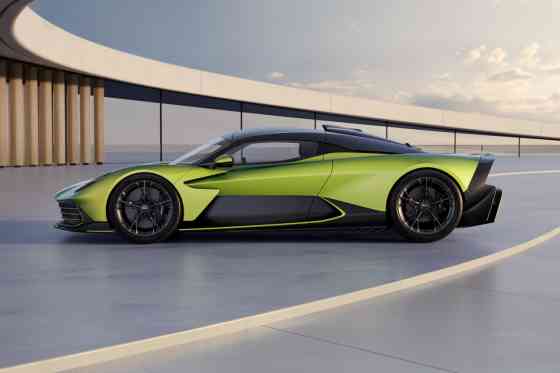
Even though the Valhalla looks more like a toned down version of the Valkyrie, the body is still optimized to produce large amounts of downforce. At 240 km/h, the Valhalla develops more than 600 kg of downforce. To manage those, active aero devices from the front and rear wings are fitted to keep it firmly planted on the ground.
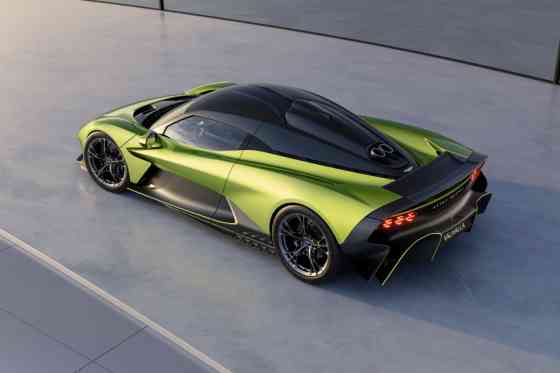
All those active aero, torque vectoring, plus suspension, steering, and braking are managed by the Aston Martin Integrated Vehicle Dynamics Control (IVC). But for those who want an unrestrained experience, the Race mode shuts off all the assists of the Valhalla.
Despite being a three-motor AWD plug-in hybrid, Aston Martin says the Valhalla will only tip the scales at 1654 kg. That is because the Valhalla is built around an F1-inspired carbon fiber monocoque structure with aluminum subframes and push rod suspension in front. The rear gets bespoke Bilstein DTX adaptive dampers while six-piston front and four-piston rear calipers by Brembo clamp down the carbon ceramic discs during braking.
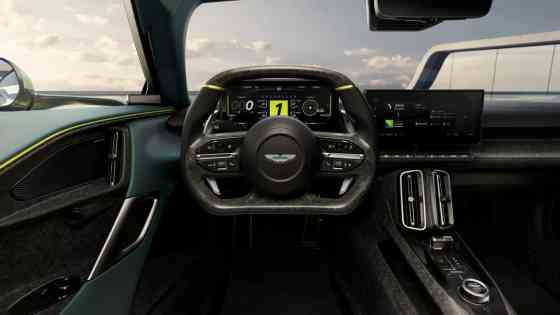
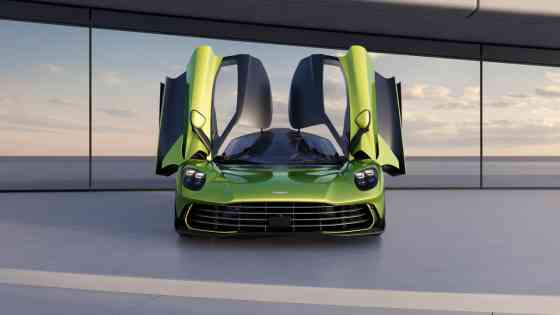
When you open the butterfly doors, the Valhalla welcomes you with raised footwells to provide an F1-style seating position with its one-piece carbon fiber seats. The steering wheel has a flat top and bottom while a large digital instrument cluster provides the information you need when driving. When it’s time to go for a leisurely drive, the Valhalla also has a Bowers & Wilkins audio system and Apple Carplay among its list of creature comforts.
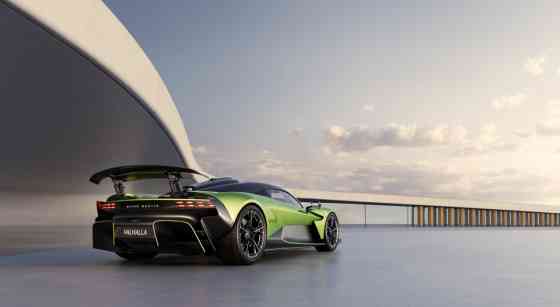
Aston Martin will start production of the Valhalla by the second quarter of 2025, and said that only 999 examples will be built.