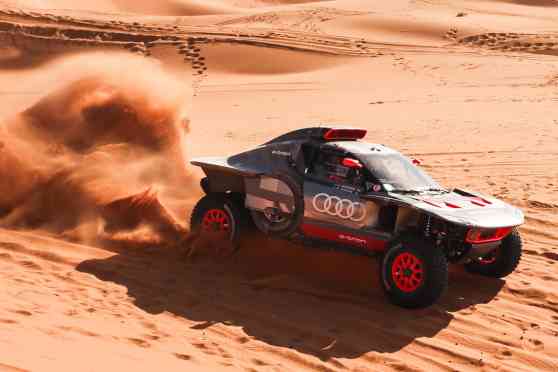
Audi RS Q e-tron is ready for 2024 Dakar Rally

2024 Dakar Rally starts January 5
In the past two years, Audi has pioneered a motorsport breakthrough in the same way they introduced the quattro all-wheel-drive system in the days of Group B rallying – they entered the Dakar rally with the electric RS Q e-tron.
Powered by four electric motors derived from Formula E and a DTM-spec 2.0-liter turbo engine as a range extender, the Audi RS Q e-tron has proved it can finish the world’s most grueling race. This year though, Audi is set for another challenge – win the Dakar rally.
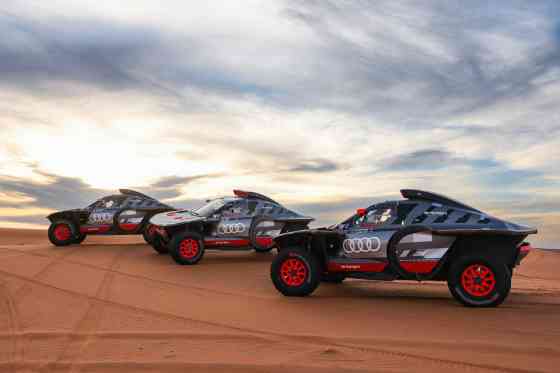
Team Audi Sport has thoroughly optimized the RS Q e-tron’s electric drivetrain, high-voltage battery, and energy converter for its third Dakar Rally. The new set-up of the RS Q e-tron improves comfort and efficiency. The earlier versions of the car focused on its complex drivetrain technology. This time, numerous aspects of the cockpit were refined, resulting in lower noise levels and better protection for the driver and co-driver in terms of hard impacts and extreme loads.
Also upgraded was the electric drivetrain, which relies on a high-voltage battery that draws power from an energy converter. Regulations this year limit the output of the electric drivetrain to 286 kW (390 PS) distributed between the front and rear axles. Many other new revisions reduce maintenance times for the team and make the RS Q e-tron safer and more reliable.
Meanwhile, the DTM-spec 2.0-liter turbo range extender runs on residue-based reFuel. Introduced at last year’s Dakar Rally, the sustainable fuel reduces carbon dioxide emissions by 60%.
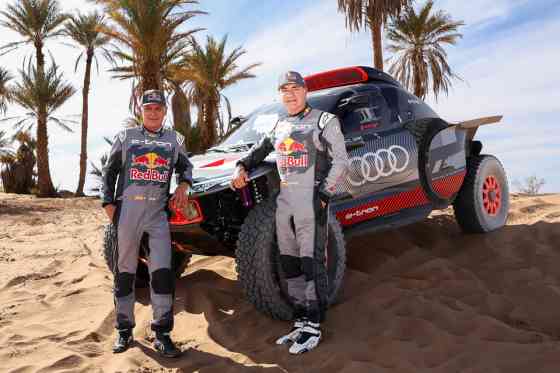
Audi will take on this year’s Dakar Rally with an unchanged three-car lineup, consisting of two-time DTM and FIA World Rallycross champion Mattias Ekström, WRC legend Carlos Sainz Sr., and Mr. Dakar rally himself, multiple-time winner Stéphane Peterhansel.
The 2024 Dakar Rally will start on January 5 at the thousand-year-old city of Alula, crossing the country in the direction of the Empty Quarter and finishing in Yanbu on the shores of the Red Sea. 12 special stages will be held over 14 days in Saudi Arabia, covering a race distance of 4,727 kilometers.