The Toyota Mobility Show: The flex we should have seen coming

Toyota at JMS: A show within a show
The nail that sticks out gets hammered down… or so the Japanese proverb goes.
Collective conformity and compliance are key concepts in traditional Japan, and all it takes is a visit to Tokyo to see. Trains are filled with thousands of sarariman wearing the same shades of black, gray, or deep blue coats and trousers, white shirts, black ties, leather shoes, with briefcases. People are expected to follow all the rules and norms, like how pedestrian lanes are respected, how the average Japanese person lines up patiently for a turn at the smoking booth, and how everyone at a fast food joint will empty their trays and even wipe their own tables after a meal.
You do not want to be the one who sticks out, lest you get a yelling from your parents, your shacho, or be called a baka gaijin in the case of us dumb foreigners. But there are rare cases where you can stick out -like the nail- so long as you’re willing to accept the risk, believe it to be instrumental to change, and want to drive a point.
That just about sums up what we’ve learned, absorbed, and processed from what Toyota did at the Japan Mobility Show. They didn't stick out for the sake of sticking out. They went and did their own mobility show within a mobility show.
As an automotive journalist, I’m honestly getting tired of the overuse of the word “mobility”, but Toyota is starting to make me see otherwise. Toyota chose JMS as the launch pad for their new philosophy: To You, Toyota. It represents the company's renewed focus to, well, do all kinds of mobility for everyone, and at JMS, it came full circle.
On the morning of the event, I found myself huffing and puffing along the halls of the Tokyo Big Sight because we’ve been wagyu-ing the last few days, and also because Toyota had their own hall to themselves on the far end of the facility from where we were dropped off. That was a distance of 1.7 kilometers to fast walk, and it almost makes me wish those personal mobility devices Toyota had at the entry of their pavilion were already operational.
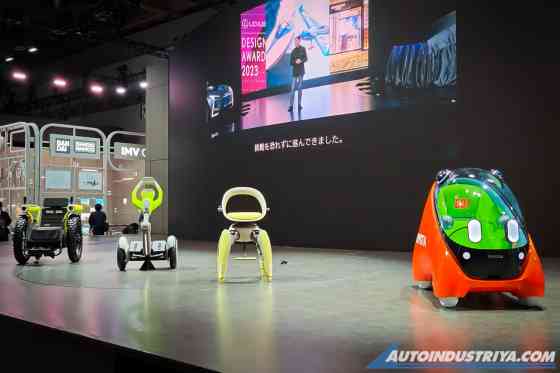
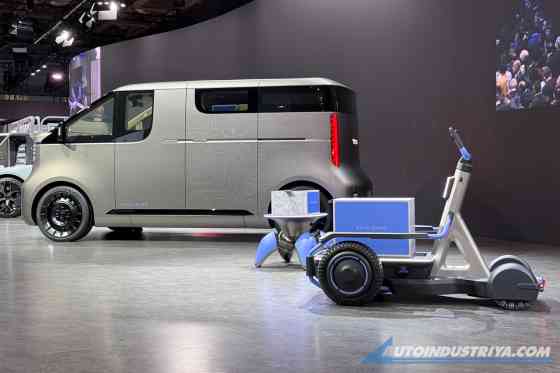
Such devices -while concepts for now- are meant for people who were managing disabilities and medical conditions. There was an off-road capable wheelchair that they had visualized for someone who still yearns for adventure, same with another concept that really reminds me of a Segway. There was also a four-legged contraption that looked straight out of Spiderman and could drop down to ground level if need be. These things may not make sense for us, but for someone else, they might. That’s what Toyota wants to get across.
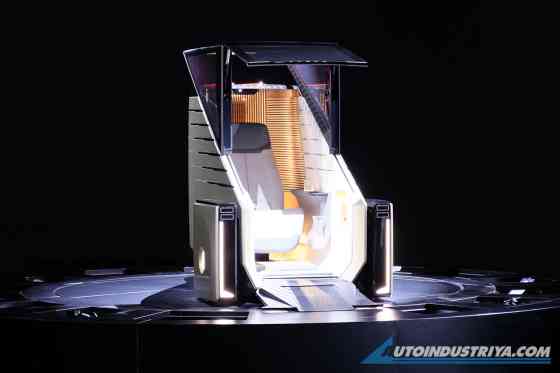
A day before the show, we got a thorough briefing on what to expect at Togo Kinenkan by designers from Lexus and Calty, Toyota’s design studio in California. It really was a mind-blowing moment, as I realized just how much stuff we need to cover for this group alone, as JMS for Toyota won’t just be a series of reveals, but rather a full transformation.
Their global brand strategy will be revolutionized with Daihatsu (entry-level focused), Toyota (mass market volume), Gazoo Racing (sports performance), Lexus (premium, luxury), and even Century (ultra luxury), covering almost the entire automotive spectrum from basic all the way up to bespoke. Yes, it means Century won’t be just a Japan domestic market (JDM) exclusive. Remember how Lexus began Toyota’s rise as a serious contender to Mercedes-Benz? Century will do the same in foreign markets as a serious rival to Rolls-Royce and Bentley.
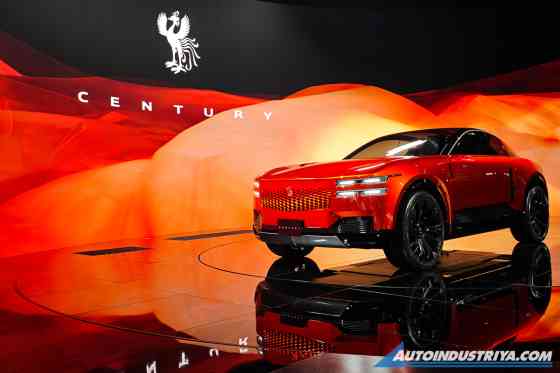
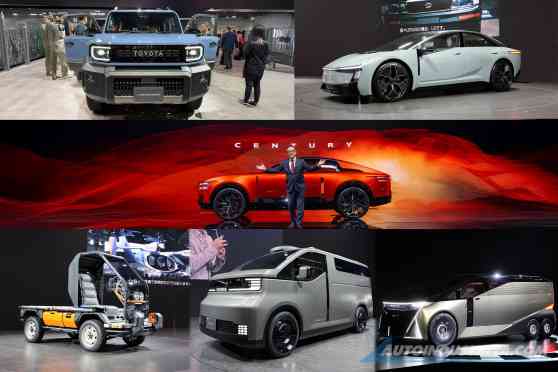
That’s exactly what we saw at the Century pavilion as Akio Toyoda himself led the big reveal of the Century Coupe Concept. Half SUV and half luxury coupe, the concept features a unique door mechanism that is more reminiscent of an MRT than a car, and the vision that an owner can enjoy driving it as well as riding in it with the lie-flat passenger seat.
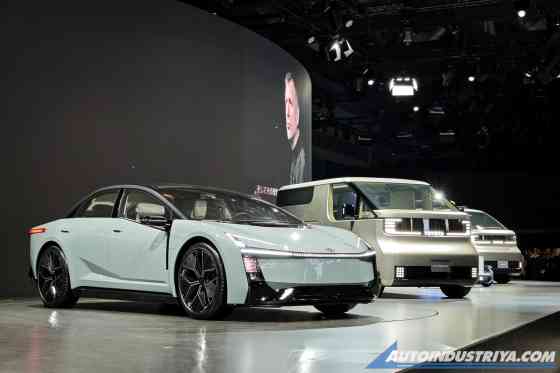
The concept was flanked by the more conventional Century Sedan and a Century SUV, and we were told later on that these would be made in left-hand drive for export markets. Yes, that includes ours, and it means Century will no longer be just a JDM thing for successful individuals and royalty; you can experience it too, outside of Japan, in the future.
With Century about to take the top of the luxury charts, where does that leave Lexus? In a strange twist, Lexus will be freer.
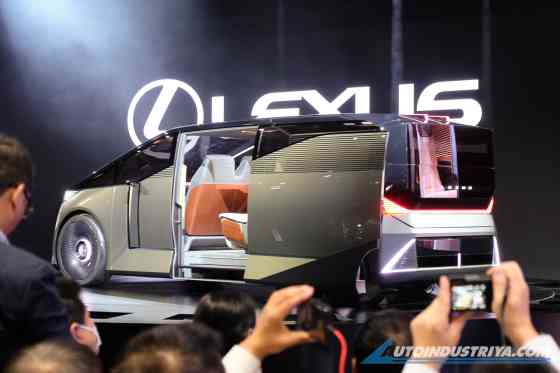
For decades, Lexus has been seen as a very traditional luxury automotive brand focused on cars with impeccable shades of paintwork and supreme silence and comfort. They will still do those things, but now they have the freedom to pursue innovation. The strategy is brilliant when you think about it, as innovation is the next logical step for the customer that already has a quiet, comfortable, and luxurious automobile (or automobiles, helicopters, boats) at their disposal. That’s why we’re starting to see some next-level technologies like the steering yoke, as Lexus believes their role can be to impress customers with innovation just as much as all the other traditional values of the L, and that’s why they will pursue innovation alongside perfection.
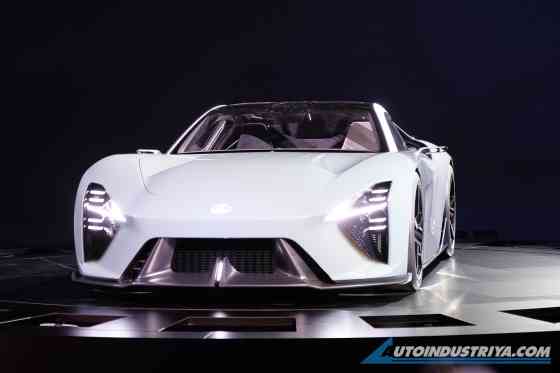
So they arrived at the show with several concepts. The first is the latest iteration of the Sport Concept that was first shown at Pebble Beach and demonstrated -albeit in camouflaged form- at Goodwood, but this is the first time we saw it more clearly and with the interior. This will be the much-awaited LFA successor and still probably 2 years away at least, but that’s short in comparison to the trio of LS concepts they have.
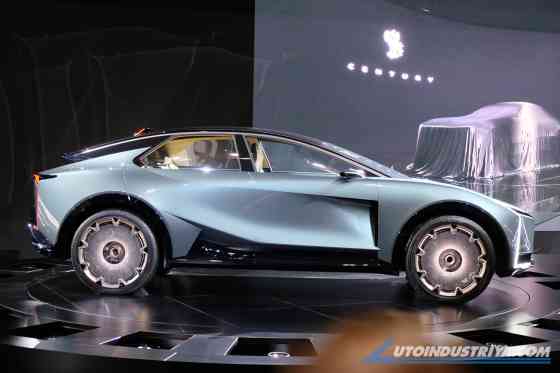
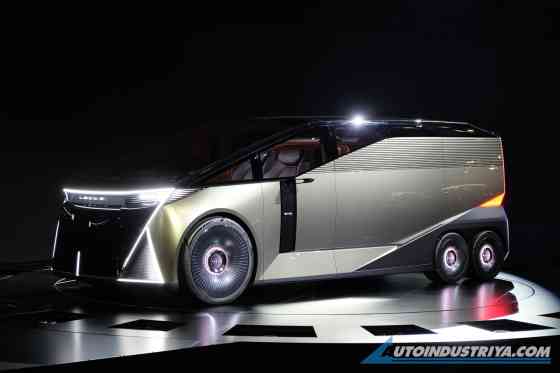
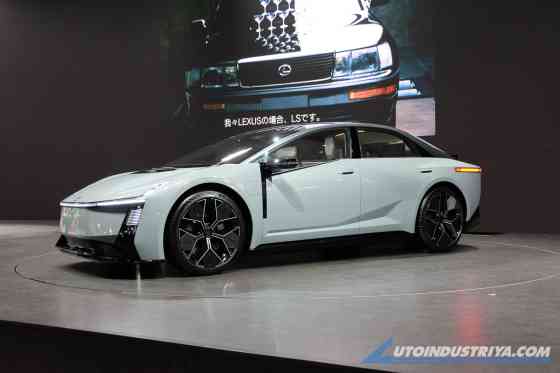
Yeah, I said trio. Lexus will no longer treat “LS” as their Luxury Sedan flagship. Instead, it will stand for Luxury Space, and how they envision that space is up to them. LS 6-wheeler concept that they have just beside it. Think of it like a larger LM, but with two large wheels in front and four smaller wheels at the back; this should reduce the protrusion of the wheel wells in the cabin for more space. There was another LS there, but this time more of a sporty crossover Lexus calls the LS Coupe Concept. It definitely has shades of the BMW crossover coupes, but with typical Lexus design touches, including a rather unusual drawer-type cargo space in the back. And then there was the LS three-wheeler, a single-seater autonomous concept vehicle that is meant to be a luxurious personal mobility vehicle that can navigate extra-tight city streets and park in spaces that would normally fit something like a motorcycle.
On the more affordable end of the spectrum was Daihatsu, although none of the models were particularly relevant to our market in the Philippines. The reason for that is that the Daihatsu in Japan is vastly different from the Daihatsu in Southeast Asia and the Toyota-badged Daihatsus in the Philippines. They don’t have Wigo, Avanza, Rush, or Veloz in Japan, but they do have the Raize/Rocky. Still, we were curious about the K-Open concept, which is the new version of the Copen roadster from before. We want their kei cars and think these would be perfect for Metro Manila with the small 660cc engines, but they won’t export them outside of Japan, nor would they build left-hand drive variations for export to us. Toyota, however, was a different story.
Headlining the mainstream Toyota presence at JMS was the Corolla Concept; yes, the successor to the world’s best-selling automobile nameplate. The new concept definitely plays a lot with the LED lighting and is far sportier and more futuristic than any Corolla before it, but what we like is that they’ll offer the production version with a variety of powertrains, including a new 1.5L 4-cylinder with a dedicated hybrid transmission.
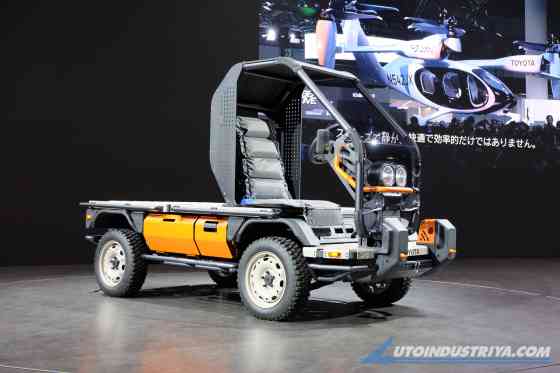
Right beside it is the IMV Origin concept, a vehicle that is essentially a flat 4-wheel drive truck with a tubular single cab that reminds me of a LEGO Technic kit. It is envisioned as a tough vehicle for places like Africa that need mobility for any kind of terrain, and can be shipped in a flat-pack where the end user builds the cab, and configures it to their needs (e.g. flat truck, pick-up truck, etc.) using the many threaded holes on the frame to bolt different bodies to. It’s ingenious, and I would want to see these on the road in far-flung locations.
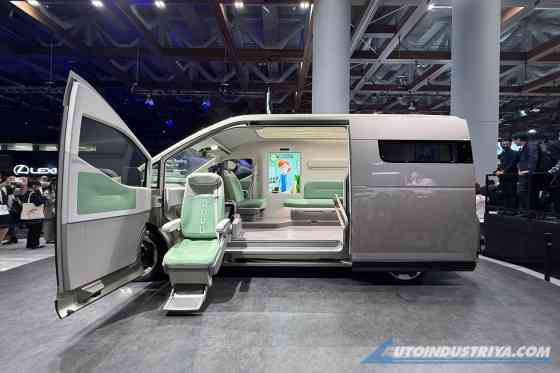
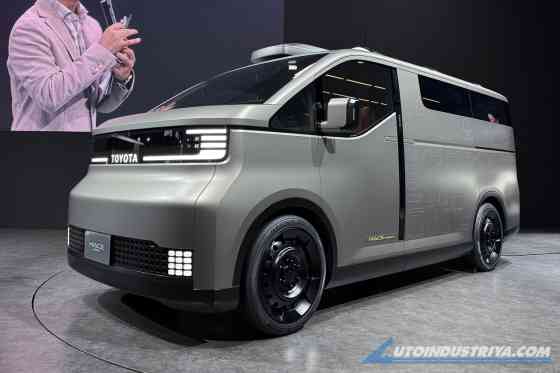
What got us excited, however, was the new Hiace Concept. Clearly, Toyota is going for a new direction for their best-selling van, given the new design, the low floor, and the customizable interior that was shown as a work truck and as a mobile diagnostic clinic.
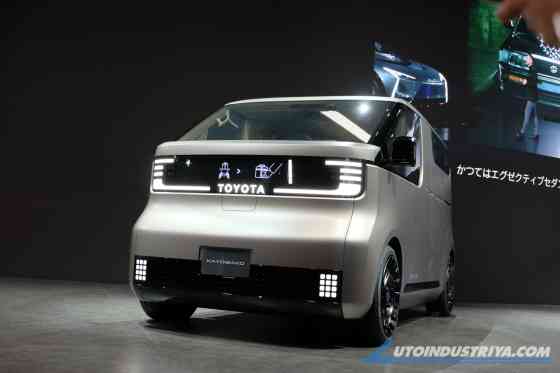
What is curious is that the versions they showed at JMS had no B-pillars, though we expect the future production versions to have those essential structural features.
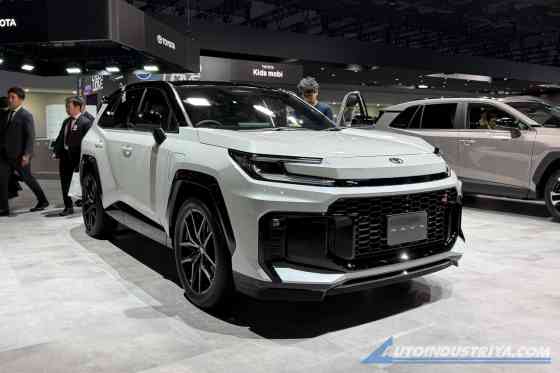
The concepts were nice, but we found ourselves checking out the new RAV4, which will be receiving a new look. The front has been redesigned with edgier details and elements; the same goes for the rear with the new LEDs and the interior with a new dashboard and features.
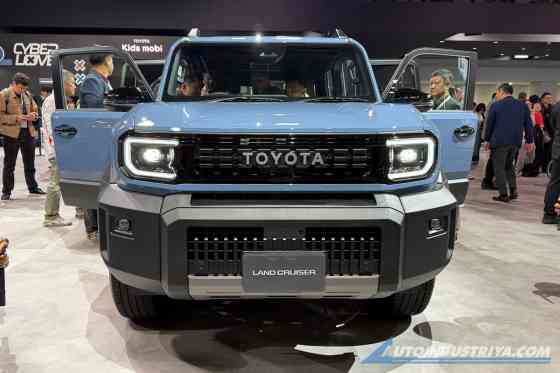
Without a doubt, the vehicle we were gravitating around was the Toyota Land Cruiser FJ. This is a vehicle that the market is definitely looking forward to, and it did get us on Toyota’s naughty list when we published a leak about the vehicle from our very well-placed contacts two and a half years ago. The engine will be the 2.7L, but we’re still waiting for them to announce the diesel.
Just to dispel any misunderstandings: the new FJ is not going to be a premium vehicle. It will instead be a utilitarian 4x4; I would even call it a more pure approach to the classic Land Cruiser 4x4 formula, as opposed to how the term Land Cruiser became synonymous with a luxury 4x4. The plastics, panels, carpeting, and other bits and pieces certainly lend credence to this, as these remind us more of a Tamaraw in treatment, but a larger Jimny in purpose. That in itself is exciting, but the pricing will be the challenge. We’ll tell you about their pricing at a later date.
Gazoo Racing was unusually absent from JMS. Perhaps they want to save their big reveals for a later date and time. Regardless, this is what I’ve always wanted to see from Toyota: a brand that many of us felt had relied too heavily on the value of the T on the grille and the perceived value of resale. And now they’re seeing legitimate challenges to their dominance in our market from new players, many of which are flexing their more advanced electrified technology and integrated feature packages, among others.
Well, they’re now fully awake and ready to work, and that has been echoed by Toyota Motor Philippines president Masando Hashimoto in his speech to us and to the dealers.
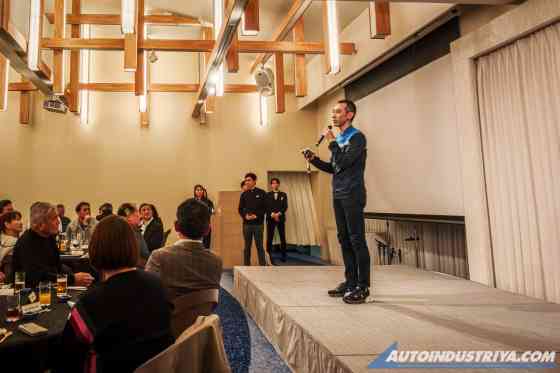
“Complacency is the enemy,” he said to us amidst his speech at the Togo Kinenkan, a place steeped in lore and reverence to the great Japanese admiral Togo Heihachiro of the Battle of Tsushima over a century ago. Hashimoto sees a grand challenge coming his way, too, and he’s rallying his team and his dealers to meet the new players head-on. If he is to win, he wants to do so on merit by elevating the product and the customer experience before, during, and after a sale. And what he is experiencing is something that is happening in other markets around the world: the arrival of China's automakers.
Toyota really stood out at the Japan Mobility Show because they went and did the Toyota Mobility Show within it. Yes, it will sound strange or even alarming to JAMA and the rest of Japan’s automakers there, but Toyota really did its own thing, using the vast resources of its group to serve as many people as possible. Regardless of preferences, wherever they may be in the world, whatever conditions they have to drive in, and whatever personal challenges to mobility they may face, Toyota wants to be there. And in a changing automotive -okay, mobility- world, that’s Toyota’s strategy: To You.
Toyota can’t conform anymore to the traditional values that made it so great, so many decades ago. We need to see the fighting spirit from Japan’s automakers that we all know and grew up with, and Toyota needs to lead the way, especially in the context of China’s push for global automotive dominance. We’ve seen and felt China’s auto shows have started to outshine or even dwarf the big five auto shows of Detroit (NAIAS), Frankfurt (IAA), Paris (MAS), Geneva (GIMS), and Tokyo (TMS, now JMS). Actually, Geneva is no longer active, and we can easily say that Auto China is the new entrant to the Big 5.
Yes, the automotive (okay, mobility) world has changed, but Toyota is clearly standing at the gates with a plan and is definitely ready for the challenge.