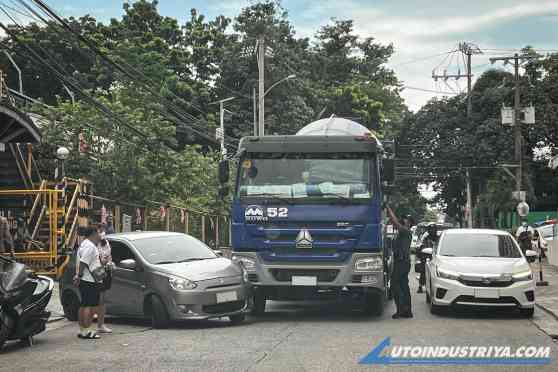
Seven ways to make your car accident less stressful

What to do when you figure in a fender bender
Nearly eighty thousand road incidents occur in Metro Manila each year, caused by either negligence, refusal to follow traffic rules, poor vehicle maintenance, or sometimes purely accidental.
In 2011, a total of 77,110 accidents (or 211.25 per day) were reported by the MMDA Traffic Discipline Office - Traffic Engineering Center Road Safety Unit. Annually, this number goes up as more vehicles ply our roads; in the first half of 2012 alone, nearly 3000 more incidents were reported, amounting to 37,934 incidents.
Traffic incidents are daily risks that we have to deal with as we can only control the vehicle we drive. We motorists should be responsible enough to help minimize these risks by refraining from using our mobile phones while driving, properly maintaining our vehicles, following traffic rules, and driving defensively.
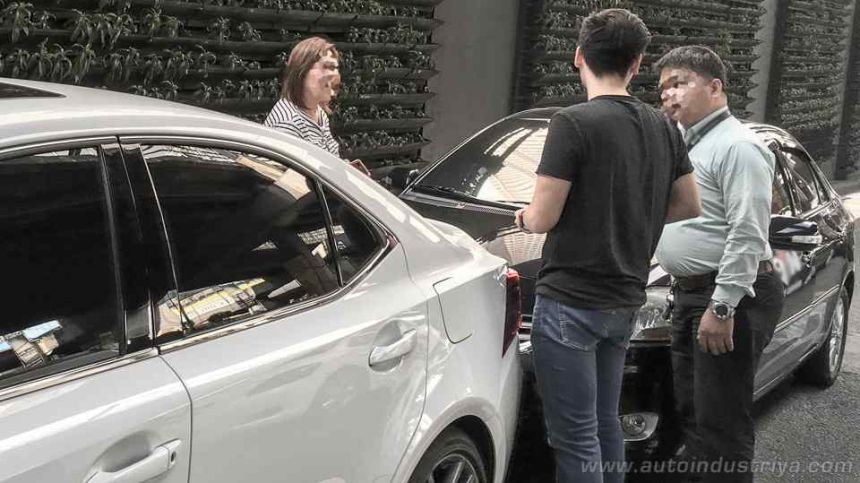
If you do get into the unfortunate situation, please keep in mind the following:
- Keep calm and check if anyone is hurt in case of a major accident
There's nothing you can do anymore, don't panic and try not to get angry. Do not leave the scene. If someone is hurt and needs assistance, call the MMDA hotline at 136 or the PNP hotline at 117 to request a medical team and traffic investigator. - Take pictures of the incident
Make sure you include both vehicles and license plates for proper identification. Don't forget to include the surrounding area as well. This will be very helpful for insurance purposes or ascertaining who's at fault.... especially if the supposedly 'agreeable' party suddenly changes their mind later on. It happens. - If possible, move the vehicle safely to the side of the road
For the sake of safety, your vehicles would be better off stopped on the side of the road to avoid further accidents. If your vehicle is inoperable, quickly turn on your hazard lamps and deploy your emergency warning device three meters toward oncoming traffic. - Exchange information with the other driver
While waiting for the police or traffic investigator to arrive, it would be a good time to exchange information with the other driver. Remain calm and do not make accusations or lose your temper. Write down the date, time, and place of the incident and weather conditions. Get the other driver's license information, vehicle information, and insurance information as well. Extend the courtesy of giving your own information as well even if the other party does not ask for it. - Allow the traffic investigator to take command of the situation
Once the traffic officer arrives, allow him/her to take charge. Ask for the officer's name and responding department for later review of the incident. - File an accident report with the local police department
If possible, file an accident report with the local police department where the accident occurred as soon as possible. This will officially put on record the details of the incident and your respective statements. The police report can also speed up the process of your insurance claim. - Call your insurance provider
Notify your insurance provider about the incident and prepare a written statement of your version of the incident. Make sure to include important details in the statement. Give a copy of the details about the incident you took down, photos, and a copy of the police report to your insurance provider. Know exactly what your insurance policy covers. Do not wait until you get into an accident only to find out that your policy does not cover certain details.
Accidents do happen even on the best of days, and it would be good to keep an emergency kit in your vehicle composed of a working flashlight, pen and paper, a list of contact numbers of law enforcement agencies, and your medical information card.