LIST: Awesome Toyota engines with lots of tuning potential

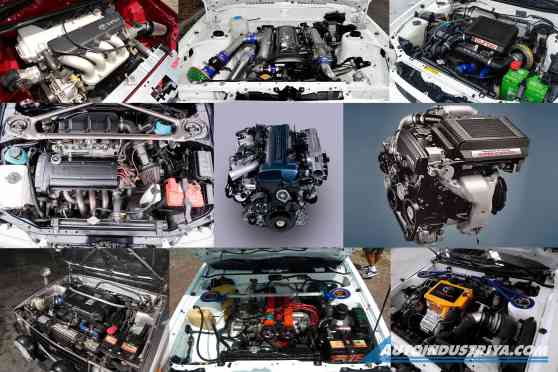
We list down some of the top Toyota engines that are great for tuning
If you currently have a 90s or an early 2000s Toyota as your project car, you'll know that the Philippine market models did not quite get what was the best out there in terms of performance. Sure, they were reliable and practically bulletproof. But when it comes to power, the Toyota engines back then would leave you wanting for more.
When it comes to internal combustion engines and their propensity to generate power, a lot of Japanese car manufacturers are highly regarded for their share of legendary powerplants. But in terms of engine variety, nothing can quite come close to what Toyota has to offer the performance enthusiast.
From small displacement, inline-four, and six-cylinder engines, to big displacement V8 power plants, they come in varying displacements and configurations. As far as generating horsepower is concerned, Toyota has made it very clear that they thoroughly explore every option such as turbocharging, supercharging, multi-valve heads, variable valve timing, and more.
What’s even greater is that these particular engines have been produced in large quantities, which only means that there are more than enough surplus engines to be snapped up. Together with different engine options to choose from, these are the main reasons why Toyota enthusiasts and tuners alike resort to engine swaps in the quest to make their builds more powerful. As such, here’s a brief rundown of some of the wicked and most powerful, factory-built engines, Toyota has ever produced.
2JZ-GTE
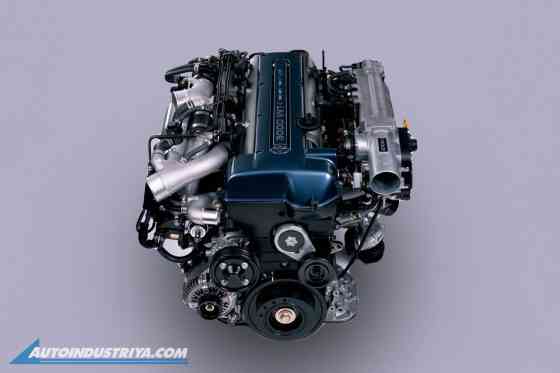
Normally found on the revered Supra RZ (JZA80), this was supposedly Toyota’s answer to Nissan’s RB26DETT engine that powered the mighty Skyline. As such, Toyota’s 3.0-liter, inline-six-cylinder engine, also came with two belt-driven DOHC cams and two intercooled, sequential turbochargers made by Hitachi. The first-gen engine was factory rated at 280 PS and 432 Nm of torque while the second-gen made the same power output while torque levels increased to 451 Nm. In terms of making more power, it is known for having tons of potential coming from all of its six cylinders. Most tuners can easily push 600 horsepower with stock internals and ditch the twin-turbo setup to a single massive turbo along with other requisite power-generating mods.
1JZ-GTE
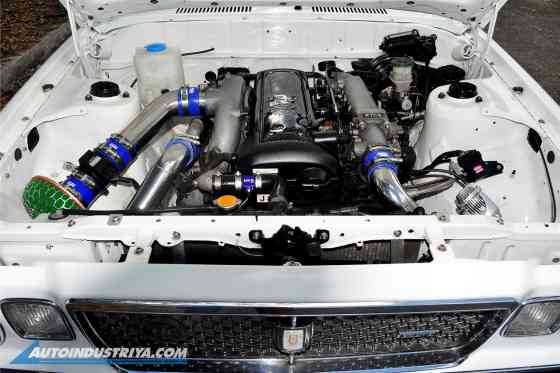
This can be found powering the Supra GT, Chaser, Cresta Mark II, and the Soarer GT from the 90s era. The said engine is a 2.5-liter, DOHC inline 6-cylinder with 24 valves using twin CT12A turbochargers arranged in parallel along with a front-mount intercooler. First-generation 1JZ-GTE’s were factory-rated at 280 PS and 363 Nm of torque. But the most elusive engine model would have to be the third generation 1JZ-GTE with Toyota's BEAMS architecture. This stood for “Breakthrough Engine with Advanced Mechanism System”. Made for performance, the engine sported a reworked head, a newly developed continuously variable valve timing mechanism (VVT-i), and a single turbocharger (CT15B). Factory power figures remained at 280 PS, while torque increased to 379 Nm of torque.
The 1JZ, along with the 2JZ, sees popular use for drift cars due to the power it could potentially generate. That applies not just to Toyota rear-wheel-drive cars, but also even Nissan vehicles such as the Cefiro A31, and the Silvia S13 to S15.
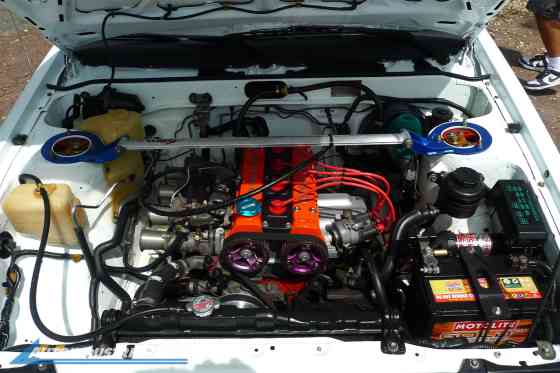
4A-GE (16-Valve)
Developed to replace the classic, twin-cam 2TG, this high-revving engine can be found on the AE86, the first-gen MR2 to the AE92 Corolla. In fact, this was one of the earliest inline-four engines to have both DOHC 16 valves and electronic fuel injection (EFI) making it highly sought after to use for engine swaps. Power output figures vary with the first-gen engine making 130 PS while the last-gen made 140 PS. Early model examples came with Toyota’s TVIS (Toyota Variable Induction System) while late-Spec engines also known as the "Hi-Torque" engines came without. Whether it comes modded with Weber/Solex side draft carbs, individual throttle bodies, factory fuel injection, turbocharged, and more, it is a great-looking engine that remains popular with racers and tuners alike because of its ease of modification, simple design, and lightness.
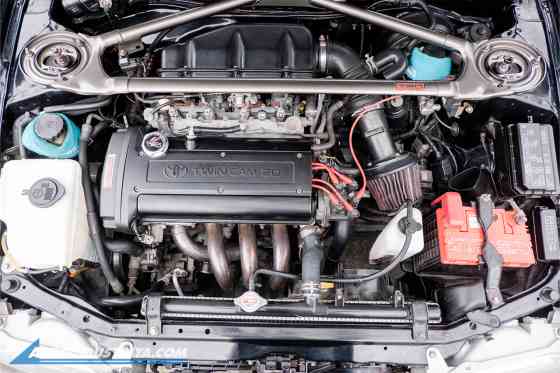
4A-GE (20-Valve)
Specially produced from ‘91 to ‘98 to replace the 4A-GZE, this popular engine had an additional intake valve for each cylinder, making it one of the first production 5-valve engines in history. They also featured individual throttle bodies and Toyota’s Variable Valve Timing (VVT) system on the intake cam. Recognized through the color of its valve cover, the ‘silver top’ was rated at 160 PS while the ‘black top’ put out 165 PS. This was due to a larger diameter throttle body, higher compression ratio, and increased intake cam lift with improved intake ports. It even had a lighter flywheel, a larger plenum, and lighter connecting rods, and revised rubber velocity stacks. In ’97 it even came with a six-speed C160 transaxle that's sought after by enthusiasts.
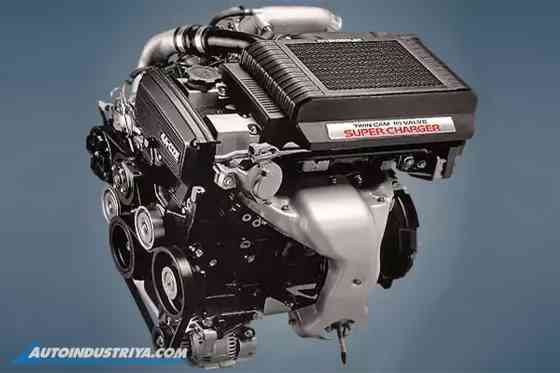
4AGZE Supercharged
The 4A-GZE presents Toyota’s effort to add a power adder in the form of a supercharger to the already powerful 4A-GE engine. Based on the same block and head, the 4A-GZE came with a roots-type supercharger, which necessitated changes to the compression ratio, valve timing, and ports. It was used in the first-gen, supercharged version of the Toyota MR2, rated at 145 PS and 190 Nm of torque while the last generation put out 170 PS and 208 Nm of torque. The good news is that the 4AGZE already comes prepped for forced induction and can be turbocharged without issue. I have even come across a late tuner who experimented with adding a turbocharger to his 4AGZE for a twin-charged induction for loads of boost. Hooked to his first-gen MR2, it was scary fast.
In the Philippines, the aforementioned 4AGE engines are commonly used as a power upgrade for the E90, E100 and E110-generation Corollas, or known as the Small Body, the Big Body, and the Lovelife, respectively. Sometimes, these engines are also put in custom owner-type jeeps used for drag races.
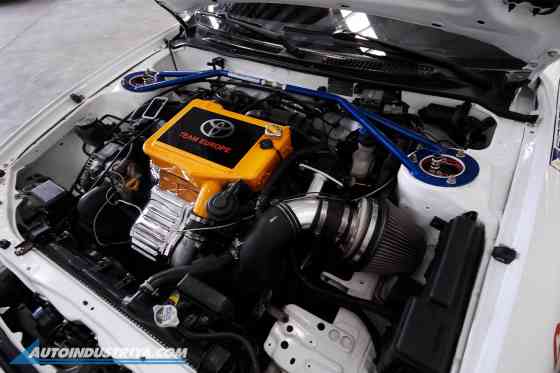
3S-GTE
Based on the naturally aspirated 3S-GE, this 2.0-liter, inline-four engine features under-piston oil squirters and a reduced compression ratio to accommodate the turbocharger. Spanning four generations from ’86 to ’07, the first-gen 3S-GTE put out 182 PS and 250 Nm of torque. By the fifth generation, it was already doing 256 PS and 324 Nm of torque. It was such a well-designed engine with all sorts of high-end engineering, like piston-cooling oil squirters, an air-to-air intercooler, and a twin-entry turbine housing. Yamaha even lent a hand designing its Dual Over Head Cam (DOHC) 16-valve, aluminum cylinder head. It powered cars such as the MR2, Toyota Celica GT-Four, and the Caldina GT-T and GT-Four.
The Philippine market Corona Exsior did not come with a high-performance engine. And hence, Toyota enthusiasts in the country commonly swap out the 3S-FE for the 3S-GTE for a power bump. In some applications, the 3S-GTE is also being used in vehicles such as the RAV4. More recently, the 3S-GTE also sees use for custom off-road rigs, especially those paired to Toyota Hilux/Land Cruiser running gear as they make for instant torque while being lightweight.
2ZZ-GE
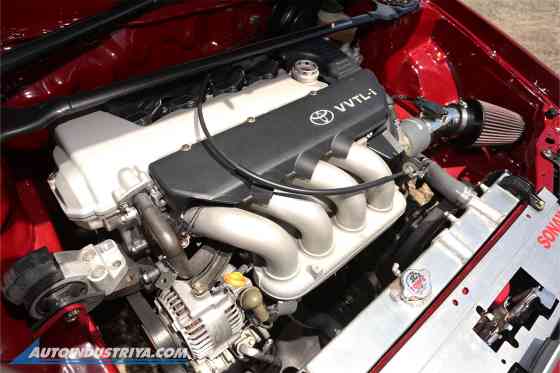
Using their ZZ block, Toyota commissioned Yamaha to design the 2ZZ-GE for high-RPM operation and produce a power peak near the top of the RPM range. Spec-wise, the 2ZZ-GE is a 1.8-liter, inline-four, DOHC, VVTL-i engine with MFI fuel injection. It features forged steel connecting rods and a dual camshaft profile system that can only be found on the ZZ family of engines. This allows it to produce the added power without an increase in displacement or forced induction. Power output for this engine ranged from 166 PS to 192 PS and 141 Nm to 230 Nm of torque. It can be found on the Celica GT-S, Corolla T-Sport, and the Lotus Elise and Lotus Exige putting out 189 PS.
In the local setting, you can find the 2ZZ-GE engine under the hoods of the E90 to E110 Corolla as a more modern performance engine than the 4AGE. Some enthusiasts also put in the 2ZZ-GE in the second-generation Yaris NCP91.
4EFE-TE
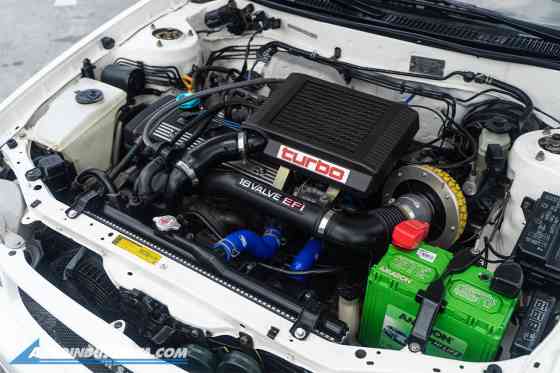
Small but terrible is how this 1.3-liter engine performs as it puts out 135 PS and 157 Nm of torque, making it the most powerful in Toyota's E-range of engines. Once only found under the hood of the JDM Starlet Glanza and GT variants, it has since been a popular engine swap choice for Toyota Corolla enthusiasts. So much in fact that it has become their default choice when doing engine swaps. The turbocharger used on the 4E-FTE was Toyota's CT9 model, with an internal wastegate and featured a low and high boost mode. A solenoid valve and the ECU electronically control the low boost mode, while an actuator connected to the turbocharger controls the high boost. The 4E-FTE also had a top-mounted, air-cooled intercooler.
The 4E-FTE is also seen as a cheap power upgrade for E90 to E110 generation Corollas, especially those that were powered by the 1.3-liter carbureted 2E engine as the 4E bolts right in to the stock Corolla transmission.
1UZ-FE
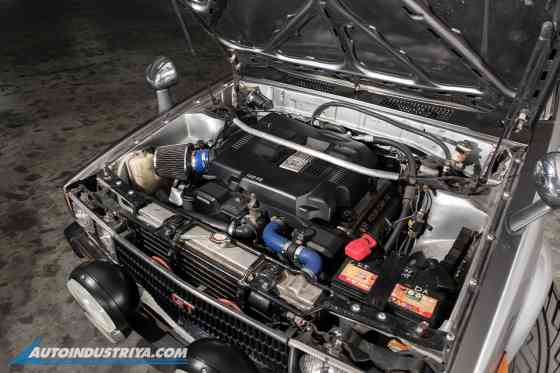
Size matters, like this 4.0-liter, 32-valve, quad-camshaft, V8 engine, generating sufficient power and torque. Found mainly in the Luxury range of cars such as Lexus and Celsior, it also powered several Toyota/Lexus SUVs. Built with 6-bolt main bearings, steel connecting rods, and crankshaft with quad-camshafts. The 1UZ-FE is one stout V8 that’s reliable and smooth. In its standard, original trim with 10:1 compression, the power output is factory-rated at 256 PS with a torque figure of 333 Nm. Design-wise, the 1UZ-FE was good enough to be voted to the Ward's 10 Best Engines list from 1998 through 2000.
Despite its luxury beginnings, the 1UZ-FE is a popular engine in the drift world as it's renowned for being powerful yet durable. We've seen some enthusiasts in the country fit in the 1UZ in a KE70 Corolla, as well as the TA22 Celica.
So, have you decided which engine you're getting for your project car?