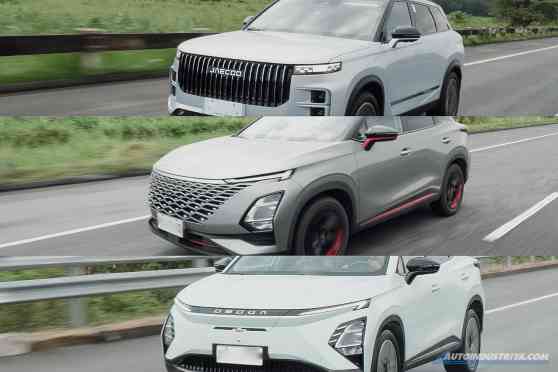
Driven for Economy: Testing the fuel and energy efficiency of Omoda & Jaecoo

600 km eco run aboard the C5, E5 and J7 from Omoda & Jaecoo
If you want to save on fuel costs, ride a scooter. Or at least that's the saying for us who ride motorcycles.
These days, that does not seem to be the case, as a lot of car manufacturers have been driving to innovate with the latest in vehicle technology will get you to more than 20 kilometers on a liter of fuel. While manufacturers promote impressive fuel economy figures, the tests used to achieve them are typically conducted under highly controlled cycles, which may not be entirely doable by average motorists in real-world conditions.
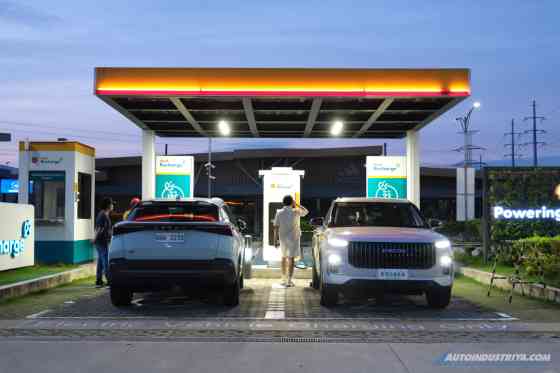
So we thought we'd see for ourselves, and decided to participate in the Mile-for-Mile Challenge of Omoda & Jaecoo Philippines. The goal: assess the performance of three different vehicle technologies in true real-world driving conditions, evaluate the true return-on-investment (ROI) of each vehicle, and demonstrate the practical everyday benefits of each specific vehicle and technology on cost in pesos-per-kilometer.
Unlike every eco run we have participated in, this one will involve a diverse mix of Omoda & Jaecoo models. Representing the internal combustion engine is the Omoda C5, a stylish, practical, and comfortable compact crossover SUV. Representing plug-in hybrids will be the Jaecoo J7, a quick, ultra-efficient, and tech-packed SUV. And representing battery-electric vehicles is the Omoda E5.
What will the results be? Let's get on the road and learn more.

What was planned as a straightforward drive from Laguna to La Union quickly became a test of endurance. The journey, which started early at Shell SLEX Mamplasan in Biñan, Laguna, was complicated by the aftermath of Typhoon Emong. Elyu was still very fresh from the storm’s devastation, facing damaged infrastructure, including pothole-infested roads, fallen trees, and widespread power and internet outages.
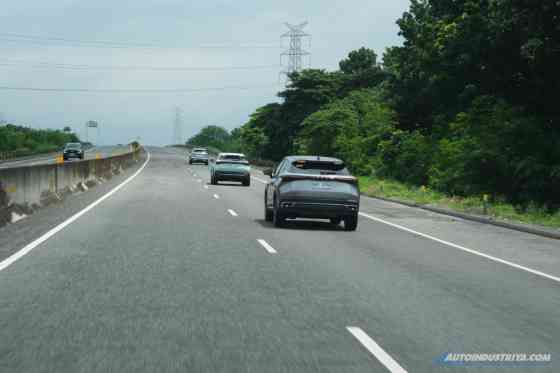
It bodes well, then, that the fleet was an all-SUV one with extra ground clearance. What is unique is that we get to sample three vehicles equipped with a distinct powertrain. The Omoda C5 utilizes a conventional setup with a 1.5-liter turbocharged four-cylinder gasoline engine and a CVT transmission. The Jaecoo J7, on the other hand, is a plug-in hybrid that pairs a 1.5-liter turbocharged gasoline engine with a 150 kW electric motor, drawing power from an 18.3 kWh battery via a Dedicated Hybrid Transmission (DHT). The Omoda E5 represents a different approach entirely, running exclusively on a single 150 kW electric motor fueled by a 61 kWh battery.
The scheduled itinerary included a detour in Luna, San Juan, and a night in San Fernando. After completing the first day’s 383.6-kilometer journey, we began our return, retracing our path along the expressways, a stop in Angeles, and back to Mamplasan. The return trip logged 309 kilometers, bringing the total distance for this two-day expedition to a total of 699.6 kilometers. More importantly, we had no escort clearing traffic, and whatever real-world conditions we encountered would factor into the economy drive.
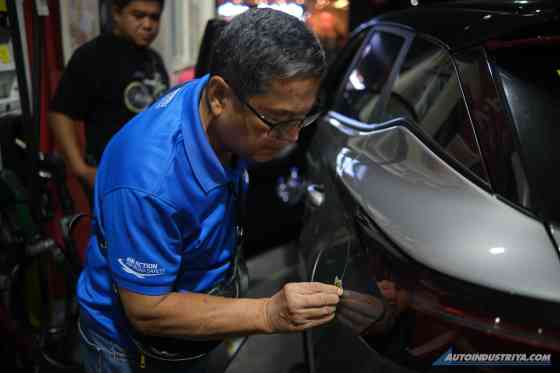
As with any fuel economy drive, our friends from the Automobile Association of the Philippines (AAP) were the official observers. There were some slight variances on the odometers due to a detour that had to be taken, and so the C5, E5, and J7 they were driving clocked in 316 kilometers on Day 1. It is also worth noting that the odometers of the three vehicles showed a slight variance of 2-3 kilometers, which accounts for minor differences in the final distance figures.
So, the results from the Omoda & Jaecoo “Mile-for-Mile Challenge” revealed a notable difference in fuel consumption between the two 1.5-liter engine vehicles over the 625.2-kilometer test.
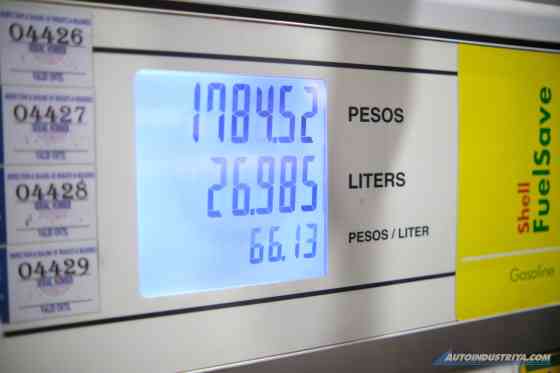
According to AAP’s Observer’s Report, the Omoda C5 used 43.07 liters of gasoline, averaging about 14 kilometers per liter. At a fuel price of PHP 66.13 per liter (recorded at the gasoline station at the time of the challenge), this translates to a fuel cost rate of approximately PHP 4.56 per kilometer.
Now, let’s crack the numbers for the Jaecoo J7. This is less than straightforward since we'll be computing different running costs per kilometer as the crossover runs on both EV and ICE power.
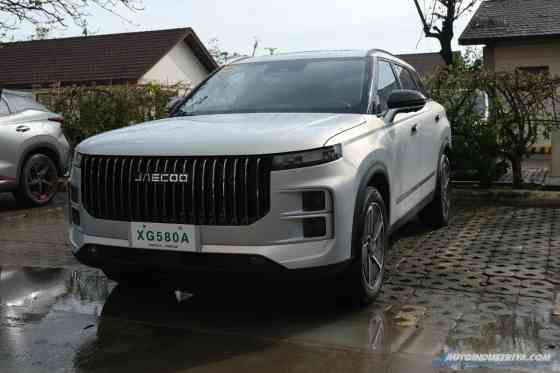
With the total trip amounting to 625 kilometers, the Jaecoo J7 covered a total distance of 106 km on full EV mode. Taking that out of the equation, that means the J7 was in hybrid mode for 519 kilometers, meaning the ICE was running to charge the batteries and provide propulsion to the vehicle. After filling it up again to the brim at the end of the trip, we found out that the J7 consumed 26.9 liters of fuel, giving it an average consumption of 19.29 kilometers per liter.
At the filling station where we filled up the vehicles, the fuel cost amounted to PHP 66.13 per liter. That gives us a running cost amounts to PHP 3.42 per kilometer with the J7.
On the other hand, the power consumption of the electric drive system during the economy run was 7.15 km per kWh, after dividing the total distance traveled in full EV mode by 80% of the battery capacity of the J7. We used 80% since usually PHEVs activate the engines at around 20% state of charge to protect the battery packs.
If you’re always using a DC charger that costs PHP 35 per kWh, that translates to a running cost of PHP 4.90 per kilometer. But if you’re using a home charger where power rates are much lower at around PHP 13 per kWh, the running cost under full EV power is just PHP 1.82 per kilometer.
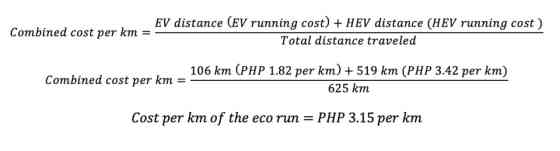
Taking those into account, we’re recalling our college algebra for this. Since we’re talking about two different rates per kilometer, we’ll be combining both to get the average for the economy run. We’ll first add the total distance traveled in EV mode multiplied by the cost per kilometer using electric power, and the total distance traveled in hybrid mode multiplied by the cost per kilometer under hybrid mode, then divide it by the total distance traveled in the combined modes. It goes something like this:
Meanwhile, the fully-electric Omoda E5 concluded its test earlier at Rosario, La Union, after traveling a total of 434 kilometers, which included a short run to Pugo in an effort to bring the battery down as close to 0% as possible. The vehicle began with a 100% battery charge and finished with just 4%, effectively using 96% of its 61 kWh battery. Based on the PHP 35.00/kWh fast-charging rate at Rosario, the cost to fully replenish the battery would be PHP 2,049.60. This translates to a total running cost of approximately PHP 4.72 per kilometer.
Do note that our charging cost, of course, is based on a public DC charger, but charging at home would result in a significantly lower cost of a little over PhP 13 per kWh.
While the test’s results provide a clearer look at each vehicle’s energy efficiency, the test is only one part of the equation. A precise ROI remains elusive without factoring in the full cost of ownership, such as maintenance, depreciation, tolls, parking, and other fees. Ultimately, the choice of a vehicle is a personal one. Drivers should consider their specific needs—be it for short daily commutes within the metro or frequent long-distance trips—to decide which model offers the best value for their lifestyle. The great thing about Omoda & Jaecoo is that they offer the efficiency you need, whether you want an ICE, a PHEV, or a BEV.