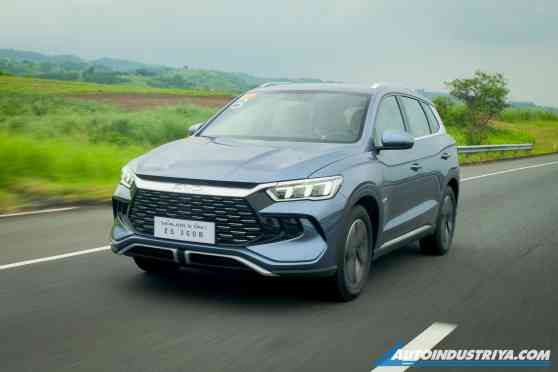
Bay to Bay Drive: We averaged 21.2 km/l with the BYD Sealion 5

First Drive: 2025 BYD Sealion 5 PHEV from Manila Bay to Subic Bay
When BYD launched the Sealion 6 PHEV a few years ago, it caught everyone by surprise. A plug-in hybrid compact crossover that is selling for below PHP 1.55M and ADAS? Nothing can compare directly, which is why many customers were swayed to get one. Pound for pound, it was a good deal.
Topping that will be difficult, but they did it. BYD Cars Philippines followed it up with another plug-in hybrid crossover that’s smaller and cheaper.
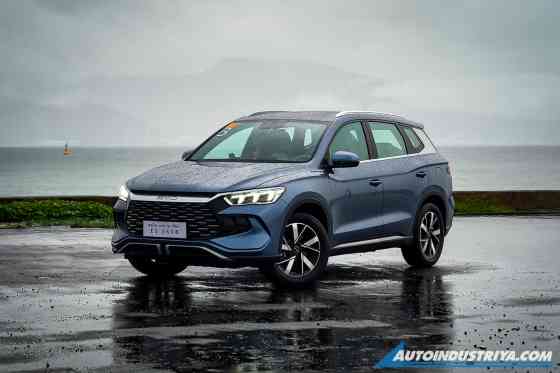
This is the 2025 BYD Sealion 5, and it’s the brand’s most affordable plug-in hybrid crossover yet. But what makes it stand out from the Sealion 6 apart from the fact that it has a lower price tag? Is it still a good buy compared to its more feature-packed sibling? And is the price difference worth it for those who are on a budget but still want a plug-in hybrid for subcompact money?
The Look
First things first, let’s talk about its visual appearance. Frankly, I was never really a fan of the Sealion 6’s design. Sure, it catches your attention, but overall, I find its appearance too polarizing for my tastes. It’s a different story, however, with the Sealion 5 with its more conventional yet sporty look.
The front fascia appears to have some inspiration from Volkswagen with its distinct LED daytime running lights and the bold & stylish grille. It also has a sleek front bumper with faux side air intakes that give the crossover a more dynamic appearance. Not much can be said about the Sealion 5’s side profile apart from the fact that I like BYD’s decision to install a faux metal trim on the D-pillar. Not only does it complement the faux metal accents on the doors, but it definitely adds more zing to the Sealion 5’s appearance.
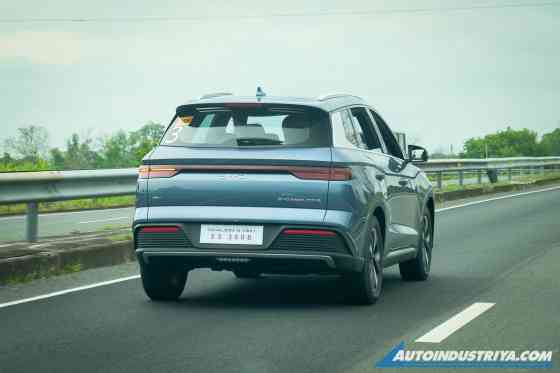
The rear may not be as flashy as the front, but I like how BYD incorporated design elements that appear to have been inspired by Porsche and Lamborghini. Yes, it’s an everyday crossover, but the clean tailgate combined with wraparound LED taillights and the full-width LED light bar gives the Sealion 5 a stylish but not over-the-top look. In an era where car designers seldom practice restraint, it’s nice to see brands like BYD still having some sense of control when it comes to designing vehicles.
No ADAS, but still feature-packed
Given that the Sealion 5 is more affordable than the Sealion 6, it’s expected that there's a shorter list of standard features. One of which is the suite of advanced driver assistance systems (ADAS). Speaking with an executive from BYD Cars Philippines, they told us that while they originally planned to give it ADAS, the Sealion 5’s suggested retail price (SRP) would have been near the Sealion 6’s sticker price.
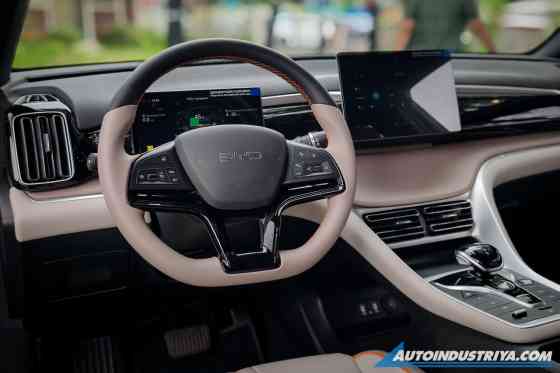
Despite not having intelligent driver aids, BYD made up in other areas of the Sealion 5. It gets the brand’s signature rotating touchscreen and comes with wireless Android Auto & Apple CarPlay for seamless mobile connectivity. It also comes with full leather upholstery, soft-touch plastic trim pieces, standard cruise control, rear parking sensors, automatic climate control, front & rear center armrests, and a host of USB charging ports.
Despite having wireless smartphone pairing, it doesn’t have a wireless charging pad, which would have been a nice feature to have. But then again, charging via a cable or a 12V power socket will always be faster. The lack of power-adjustable front seats may be a downer, but at least the driver’s seat comes with a seat height adjuster.
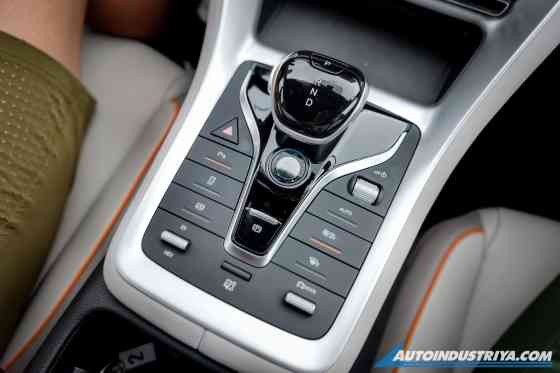
Some might say it could do with more features, but with a competitive price tag of less than PHP 1.25 million, BYD had to position the Sealion 5 with care since it’s going to be a key vehicle that attracts those who are looking at an affordable plug-in hybrid at B-SUV prices.
EV, HEV, and PHEV, all in one.
Like other DM-i vehicles that BYD offers, the Sealion 5 is touted for delivering impressive fuel economy and range thanks to its plug-in hybrid system. It consists of a 1.5L four-cylinder engine that serves as a generator to recharge the Sealion 5’s 12.9 kWh battery pack. This, in turn, powers an electric motor that drives the front wheels and makes 197 PS with 300 Nm of torque. BYD claims that on battery power alone, the Sealion 5 can cover up to 71 km. Not bad, but with both the 1.5L generator in play, the Sealion 5 has a combined system range of over 1,000 km.
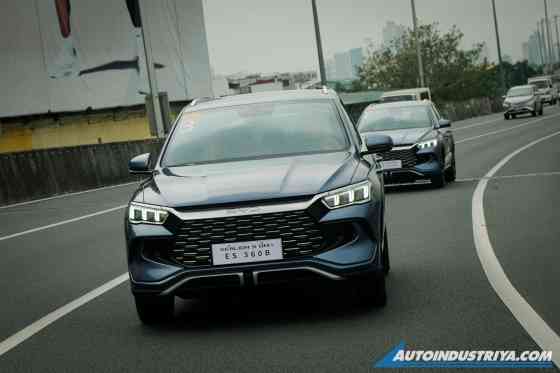
Since this is our first outing with the Sealion 5, BYD decided to give us a challenge, use as little as much fuel and energy for our trip to Subic. With over 180 km ahead of us, we were more than eager to test just how much range we could extract from the Sealion 5. There was a total of three stops wherein the organizers would see just how little energy and resources we were using: Total NLEX Northbound, the SCTEX lay-by bound for Subic, and Ocean Adventure in Subic Bay, which was our last and final stop.
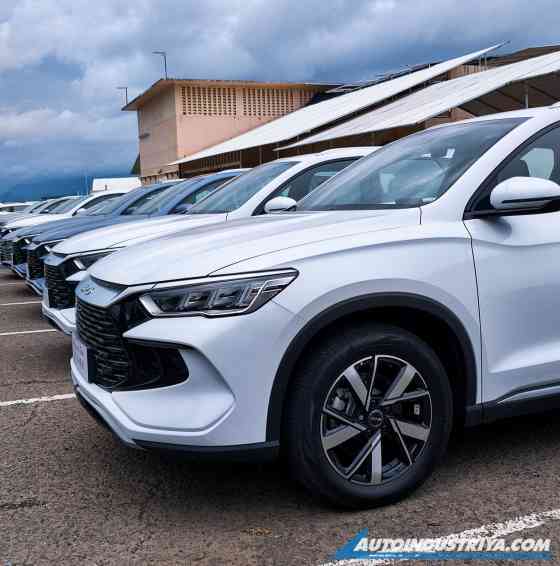
With more than 90% left in the battery and a full tank of gasoline, we had plenty of energy and fuel to cover over 1,000 km. In fact, my companions and I did not even think about taking the fuel eco challenge that seriously as we were more concerned with testing the Sealion 5 under normal conditions.
Fuel (and Energy) Sipper
I volunteered to drive the Sealion 5 first to get a feel for it as well as test out how comfy it is. Since the battery had 90% of charge, I left the crossover in EV mode. That’s right, unlike regular HEVs, the Sealion 5’s DM-i system allows drivers to switch between HEV (1.5L engine charges the battery and provides extra oomph to the motor) and EV modes (electric motor only driving the wheels). This means drivers can use the Sealion 5 without having to use a single drop of fuel, which is great when you’re saving trips to the pumps.
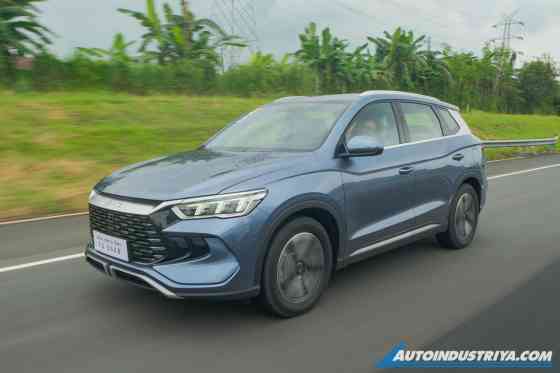
From the time we left BYD Manila Bay, drove up to NAIAX, transitioned to the Skyway System, and entered NLEX, I was driving on battery power alone. At a steady pace between 60 - 80 km/h, I was able to maximize battery usage all the way near the Candaba Viaduct. Once battery power reaches 25%, the system automatically switches to HEV to recharge the battery. Fortunately, we were only several kilometers away from NLEX Total, so we only used a fraction of the fuel. Once we arrived at the gas station, we were able to average 3.9L per 100 km or 25.6 km/L.
After the first stop, I switched places with my companion Zach. Since we’re on the expressway and the battery needs to be recharged, we're going to have to use HEV mode more. But to save on fuel, I told Zach to switch between HEV and EV modes once the battery reaches at least 45%. From the moment we left Total NLEX and entered SCTEX, we switched between the two modes to ensure we used the least amount of fuel as possible.
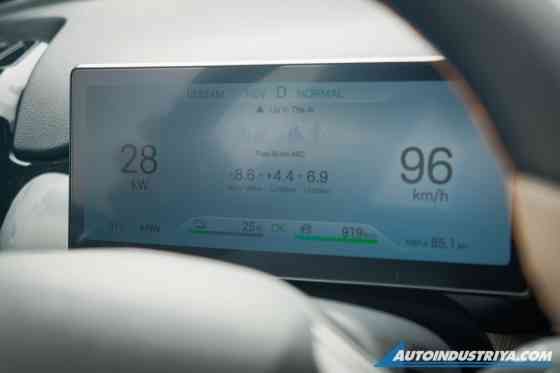
After nearly an hour of driving, it was my turn at the wheel again after we arrived at our second stop, a lay-by along SCTEX before reaching Subic. Since we were mostly running the engine to keep the battery charged as we drove along SCTEX, our average consumption was slightly higher at 5.6L per 100 km or 17.8 km/L. Heck, there was even one time our average consumption was at 6.9L per 100 km or 14.4 km/L. With our final stop at Ocean Adventure in Subic just several kilometers away, I decided to maximize the use of regenerative braking.
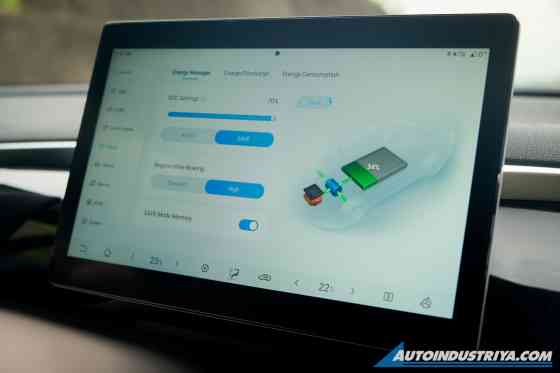
Like the Sealion 6 and Seal 5, the Sealion 5 also benefits from regenerative braking, which helps recharge the battery while on the go. This is particularly useful when going downhill as it generates a stronger charge for the system to use. Combined with HEV mode, the system can recharge the battery with up to 50 kW of power. Heck, the lead car driver, who also happens to be racing legend Georges Ramirez, was able to recharge the battery at 72 kW with regenerative braking.
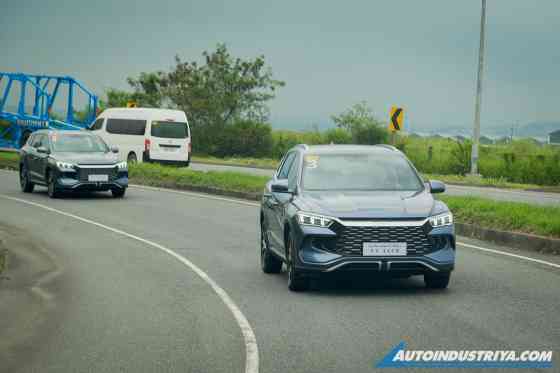
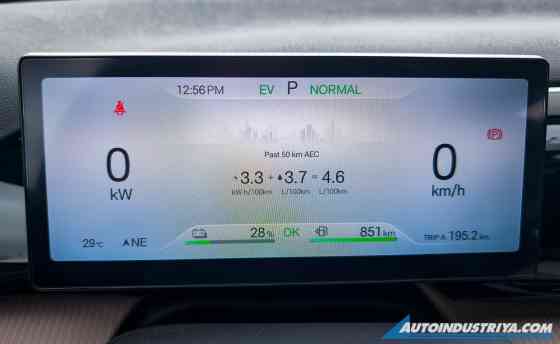
Using this technique and constantly switching between HEV and EV modes, I was able to maximize battery power despite the limited state-of-charge. After all was said and done, we finally arrived at Ocean Adventure with an average fuel consumption of 4.6L per 100 km or 21.7 km/L. Even more impressive was the fact that we only used a fraction of the fuel and still had 851 km of combined range.
After tallying the results, our total average fuel efficiency figure was 4.7L per 100 km or 21.2 km/L. Despite not taking the fuel eco challenge seriously, we were able to edge out nine other cars, with the closest competitor coming in with 4.76L per 100 km or 21 km/L. We were able to do this on stock tires, no fancy hypermiling techniques, and the A/C on full blast throughout the entire drive.
Great, but could be better
So it was able to wow us with its impressive ability to sip fuel over long distances thanks to the DM-i system. However, there are some aspects of the vehicle I wish BYD would improve. First up is the steering feel, or lack thereof. Like most BYDs, the Sealion 5 is geared towards comfort, which is not a bad thing. However, I did notice that at any speed, the steering wheel has little to no feedback and is way too easy to steer.
This is great when you’re parking or maneuvering through tight, narrow streets. It’s not great, however, when you’re traveling at highway speeds or when going through twisty roads, as one can miscalculate their steering input. I wish BYD would make the electronic power steering system deliver more feedback and weight when driving at high speeds.
Then there’s the wireless Android Auto on the touchscreen, which is prone to disconnecting and crashing when used for a long duration. I’m not sure what the exact cause of it but we’re hoping BYD finds a fix for it since it can be annoying. For now, the only other fix is by directly connecting your phone to the system via USB to make Android Auto (or Apple CarPlay) work without any hiccups.
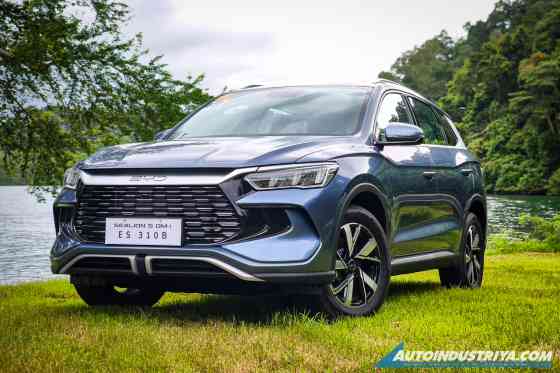
The BYD Sealion 6 impressed the electrified car market when it first debuted, but despite already selling at an affordable PHP 1.55 million, budget-conscious buyers still wanted something that’s more affordable. This came in the form of the BYD Sealion 5, which is slightly smaller and loses some key features that are only available in the Sealion 6.
But with a price tag of PHP 1.248 million, BYD certainly drives a hard bargain when it comes to offering an affordable plug-in hybrid. And in case you plan to pay in cash, the automaker is offering the Sealion 5 DM-i at a special introductory cash price of PHP 1.198 million.
The entry-level Seal 5 Dynamic may be BYD’s most affordable plug-in hybrid, but for buyers who want a crossover instead of a sedan, it’s hard to ignore what the Sealion 5 brings to the table.